An áo dài can be admired as a silhouette, but the garment becomes more interesting when you ask how it is worn, made and remembered. A visitor to Ho Chi Minh City can approach it through a museum, a conversation with a tailor or a carefully chosen rental. These are different experiences, and none needs to stand in for the others. Begin by deciding whether you want to learn, to wear or to commission something. That decision will make both your schedule and your questions much clearer.
History & story
Vietnam Tourism includes the Áo Dài Museum among the city’s specialist museums. A collection setting can connect clothes with documents, images and personal stories rather than presenting them only as costumes for a photograph. Read the labels carefully and distinguish a historical piece from a modern interpretation. Check current visitor information directly before planning the journey.
A museum offers context for the garment
Vietnam Tourism includes the Áo Dài Museum among the city’s specialist museums. A collection setting can connect clothes with documents, images and personal stories rather than presenting them only as costumes for a photograph. Read the labels carefully and distinguish a historical piece from a modern interpretation. Check current visitor information directly before planning the journey.
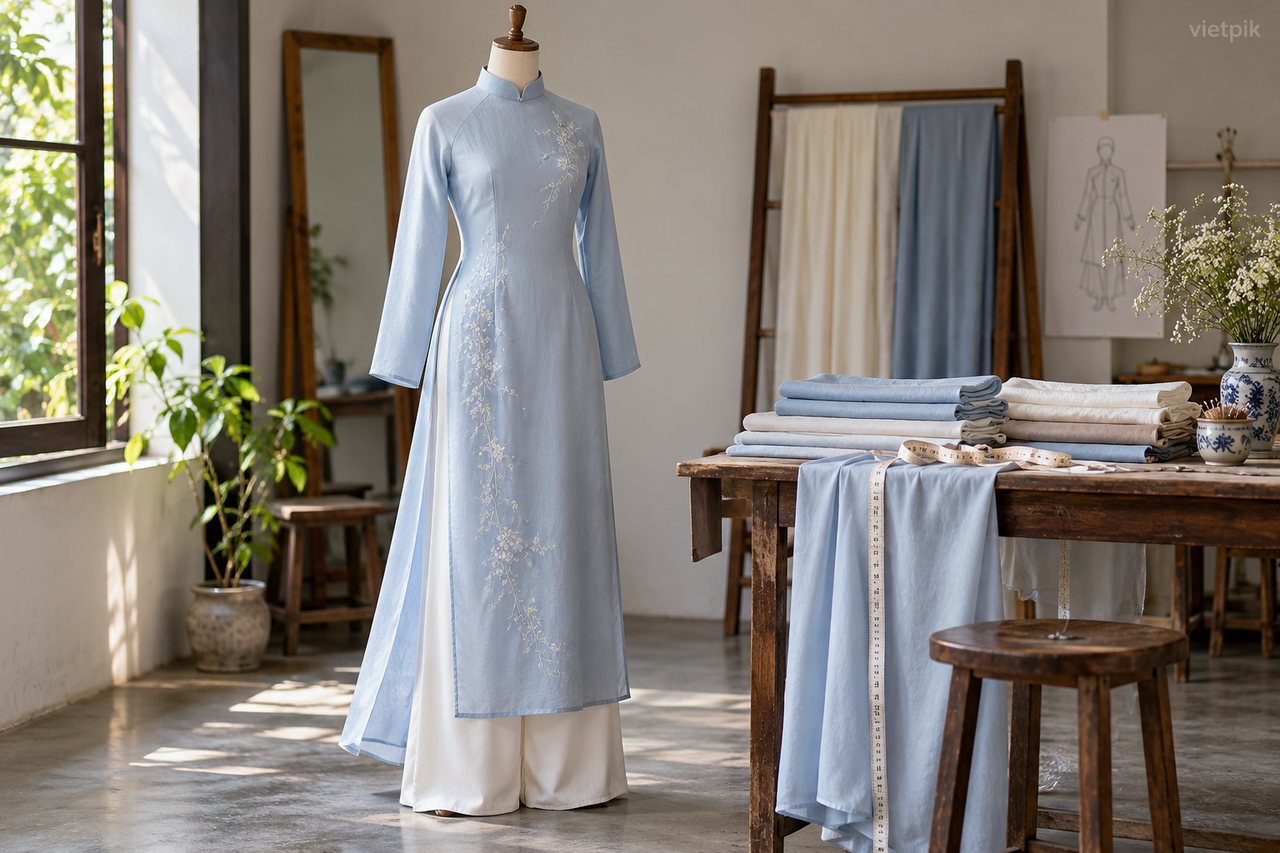
Observe construction, not only colour
Look at the relationship between collar, sleeves, panels and trousers. Ask how fabric changes movement and how a garment is fitted to the wearer. Avoid treating one contemporary cut as the single timeless form. A thoughtful conversation can focus on what this particular maker has chosen and why, without turning a shop assistant into the spokesperson for all Vietnamese dress history.
Rental and tailoring need different plans
For rental, confirm what is included, the return time, condition checks and any deposit before taking the garment away. For tailoring, ask about fittings, alterations and the realistic completion date. Leave time to try the finished outfit while the maker can still adjust it. A rushed last-evening collection gives both visitor and tailor fewer options.
Wear it in a way that respects the setting
Choose a setting where photography is permitted and movement is comfortable. Keep entrances clear, ask before including strangers in a close portrait and follow rules at religious or heritage sites. If a garment limits your stride, shorten the route rather than rushing through a busy street for another picture. The experience should remain comfortable for the wearer and considerate of others.
Save the story and the practical details separately
Keep this cultural article as background and link any actual museum, tailor or rental provider as a separate place. Store the agreed service, fitting appointment and cost in the plan. The illustrated outfit here is an AI concept, not a museum object, a historical reconstruction or a product guaranteed by a named maker.
Original Vietpik editorial. Food photographs illustrate dishes and do not represent a specific restaurant unless stated.
vietnam.travel Last updated: 2026-09-27