Some experiences ask you to stop looking for the next photograph and simply listen. Đờn ca tài tử offers that invitation. A visitor need not understand every lyric to pay attention to phrasing, pauses and the conversation between voice and instruments. Begin with curiosity rather than a demand for instant explanation. In a city itinerary, a musical encounter works best when it has its own unhurried space, instead of becoming background noise during dinner or a hurried extra after a long day.
History & story
UNESCO inscribed the art of đờn ca tài tử music and song in southern Vietnam on its Representative List in 2013. The regional wording matters: this is not a tradition owned exclusively by Ho Chi Minh City. A Saigon visit can be one doorway into it, while its cultural geography extends beyond the city and should remain visible in the story.
A heritage of southern Vietnam
UNESCO inscribed the art of đờn ca tài tử music and song in southern Vietnam on its Representative List in 2013. The regional wording matters: this is not a tradition owned exclusively by Ho Chi Minh City. A Saigon visit can be one doorway into it, while its cultural geography extends beyond the city and should remain visible in the story.
Start with what you can hear
Listen for how a singer holds a phrase and how an instrument responds. You do not need to assign technical names to every sound on the first visit. A short introduction from a knowledgeable host can help; ask for the name of a piece or the role of an instrument after the music stops rather than speaking over the performance.
Ask what kind of session is being offered
A tourist programme, an introductory demonstration and a dedicated listening session may provide different experiences. Before booking, ask who performs, how much of the programme is music, what language the introduction uses and whether food is included. A generic cultural-show listing is not enough to establish that the programme actually features đờn ca tài tử.
Make a good listening space
Arrive before the introduction and silence unnecessary phone sounds. Ask permission before recording, especially if you plan to share a long excerpt publicly. If you do take a photograph, keep it brief and return your attention to the performers. Courtesy helps a small performance feel like an exchange rather than a service being inspected through a screen.
Keep a cultural note, not an invented booking
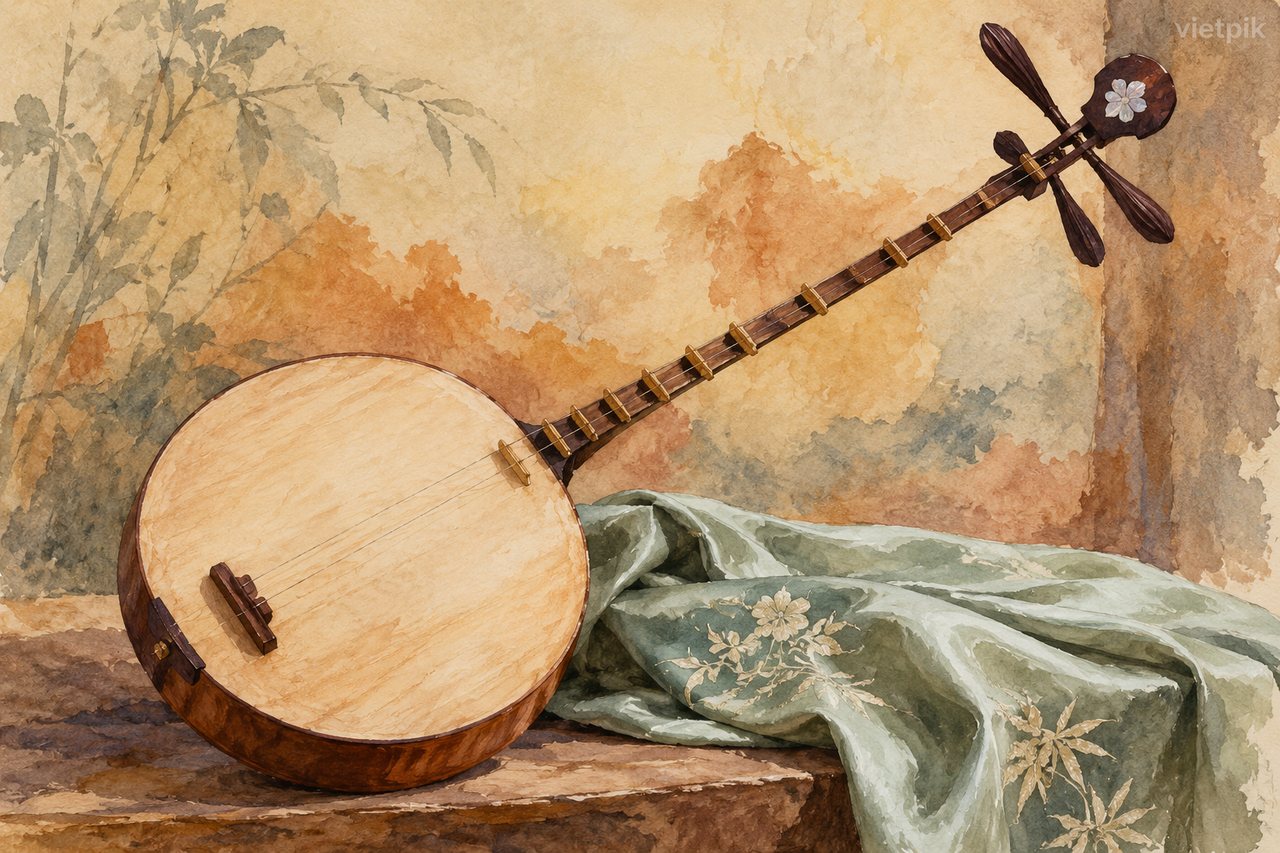
Save this article as preparation, then attach a verified event or venue when a programme is confirmed for your dates. Keep its start time, duration and price separate from the general heritage entry. Afterward, note one sound or moment you want to remember. The accompanying lute illustration is conceptual and does not document a named performer, ensemble or instrument collection.
Original Vietpik editorial. Food photographs illustrate dishes and do not represent a specific restaurant unless stated.
ich.unesco.org Last updated: 2026-09-27