Some food traditions first reach travellers as an accompaniment at the edge of a plate. Give the cracker its own moment: look at the surface, break a piece and listen before tasting. Túy Loan rice paper is an invitation to pay attention to something that might otherwise disappear into a quick meal. From there, curiosity can lead toward the people who make it. Begin with questions about the actual product in front of you, then decide whether a village visit belongs in your trip.
History & story
The local tourism promotion feature presents Túy Loan rice-paper making as a craft passed through generations. It also notes that a precise origin is not established in official records. That is a useful boundary for storytelling: the continuity of knowledge matters without needing an invented founder or a dramatic date of creation.
The craft behind a familiar name
The local tourism promotion feature presents Túy Loan rice-paper making as a craft passed through generations. It also notes that a precise origin is not established in official records. That is a useful boundary for storytelling: the continuity of knowledge matters without needing an invented founder or a dramatic date of creation.
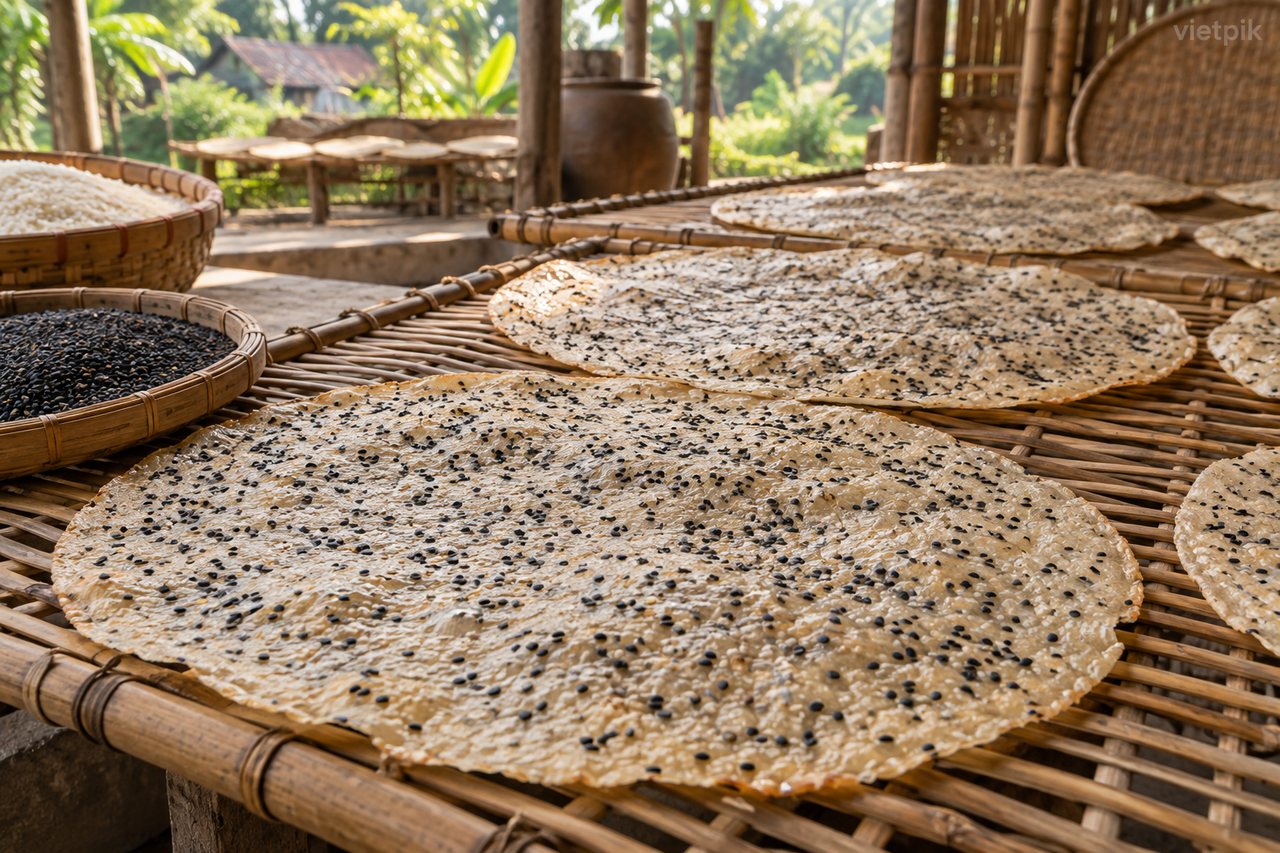
Know which product you are buying
Rice paper is a broad English label. Ask whether the packet in your hand needs further preparation or is ready to eat, and how the producer recommends serving it. A product sold for toasting is not interchangeable with a wrapper used straight from a packet. Keep the maker’s instructions with your purchase so the person receiving it can enjoy it as intended.
Taste for contrast
For a ready-to-eat toasted cracker, begin with a small piece on its own. Notice the surface, thickness and how easily it breaks before combining it with other food. This is a simple way to make a modest accompaniment part of your food notes. Describe the particular packet or serving you tried; one tasting does not establish a standard for every household producer.
Arrange the encounter before the journey
If you want to see production, contact a host before leaving your accommodation. Ask whether work will be taking place, whether visitors are welcome and whether an explanation or demonstration has a cost. Production priorities come first. A quiet day or a closed household should not be treated as a failed attraction: this is someone’s livelihood, not a performance scheduled around your arrival.
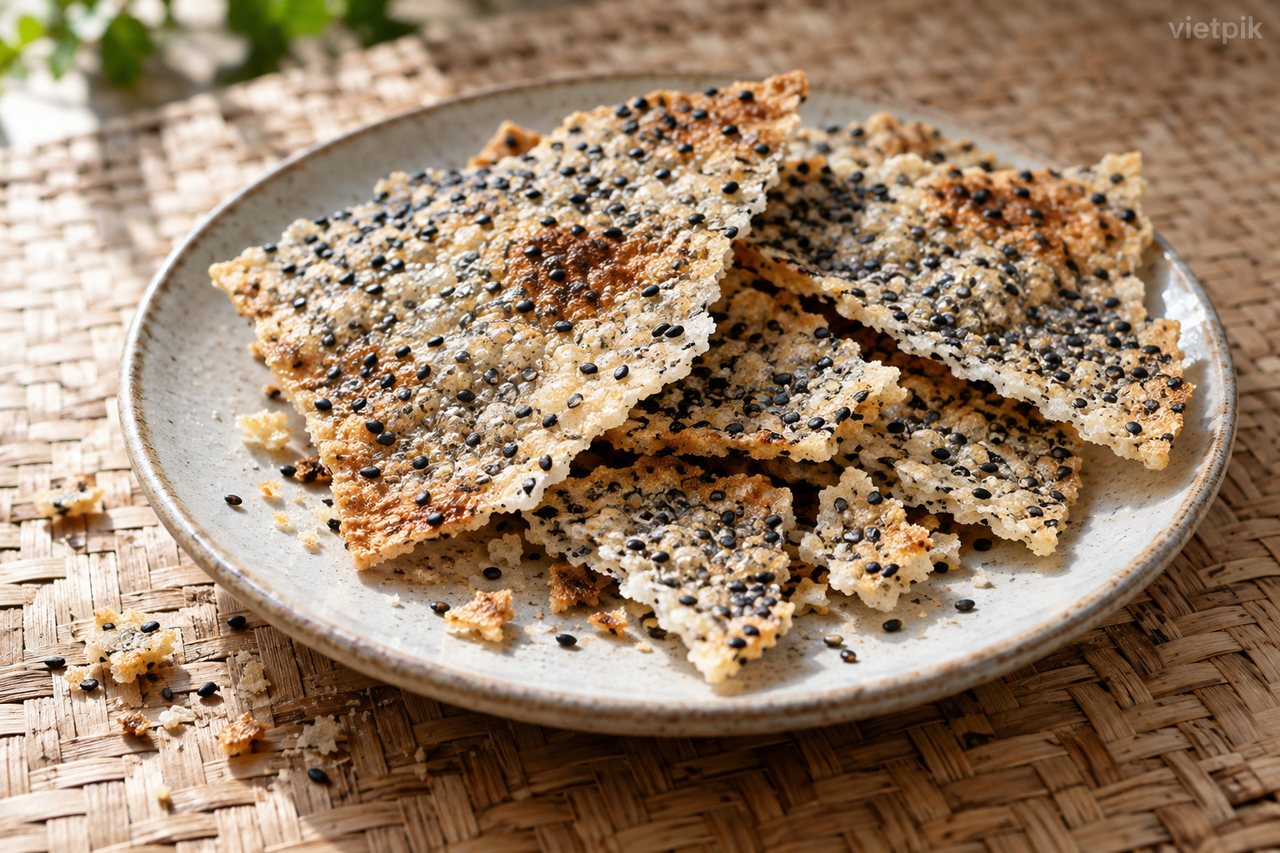
Take home the right information
Before buying, check the producer, ingredients, packing date, storage advice and the condition of the package. Ask how to protect a brittle product during the rest of your journey. If taking food across a border, verify the destination’s current rules independently. A gift becomes more meaningful when the recipient knows where it came from and how to serve it.
Original Vietpik editorial. Food photographs illustrate dishes and do not represent a specific restaurant unless stated.
www.foodtourdanang.vn Last updated: 2026-09-27