A festival can draw you to a place for its movement and leave you remembering something still. At Bút Tháp, that stillness belongs to the patient act of looking: the rhythm of carved forms, the relationship between a figure and its surrounding space, the way light makes a surface legible. A visit during the festival offers two experiences that deserve separate time. There is the gathering of a living community, and there is the art held within a place of worship. Arrive with room for both. Rushing between them can make you miss the reason each is worth the journey.
History & story
Provincial festival information gives Bút Tháp an annual gathering on the twenty-third and twenty-fourth days of the third lunar month. It is a religious and community occasion, not simply an exhibition of old objects. Local reporting from 2026 also records sporting activities around the festival, illustrating how a pagoda celebration can extend into wider social life. Those activities belong to their announced edition. They help explain the atmosphere of community participation without establishing a permanent programme that every future visitor will encounter in exactly the same form.
The festival in the life of the pagoda
Provincial festival information gives Bút Tháp an annual gathering on the twenty-third and twenty-fourth days of the third lunar month. It is a religious and community occasion, not simply an exhibition of old objects. Local reporting from 2026 also records sporting activities around the festival, illustrating how a pagoda celebration can extend into wider social life. Those activities belong to their announced edition. They help explain the atmosphere of community participation without establishing a permanent programme that every future visitor will encounter in exactly the same form.
A work of art with a date and a context
A study published through the Department of Cultural Heritage discusses Bút Tháp's thousand-eyed, thousand-armed Quan Âm sculpture and dates it to 1656. Its artistic interest includes the relationship between the central figure and the surrounding arrangement of arms. For a traveller, that is a useful invitation to look at composition before chasing a checklist of exceptional claims. The sculpture is also an object of devotion. Artistic attention and religious respect can coexist: observe from the permitted position, read the interpretation and let worshippers use the space for its continuing purpose.
Projected dates for the 2027 festival
The customary lunar dates convert to 29–30 April 2027 in the Vietnamese calendar. These dates remain a planning projection until the local organisers announce their programme. Do not infer the opening ceremony or the schedule of sports and performances from the two-day range. The period also sits beside fixed public holidays, so confirm transport and accommodation arrangements early if you intend to stay overnight. This is practical trip planning, not a prediction of attendance or an official holiday schedule. Keep a flexible booking where the ceremony you want to see is not yet timed.
Give the eye a slower itinerary
Try a simple sequence: an introduction to the site, time for the confirmed festival activity, a break, then a quieter look at details accessible to visitors. Choose one material or motif to follow rather than photographing everything. You might compare the effect of carved stone and wood, or notice how repeated forms direct attention. A small sketch or written observation can help you see more carefully without requiring any drawing skill. Avoid blocking a passage while studying a detail; step aside, take your time and return when the space is available.
Turn the visit into a useful art conversation
If you arrange a guide, ask for explanations that connect technique, religious function and historical context. “What should I notice first?” is often a better opening question than “How much is this worth?” For children or friends new to Buddhist art, begin with visible features before introducing specialist terms. Allow different responses: one person may remember a sculptural rhythm, another the atmosphere of the gathering. Comparing those impressions over lunch can become the most enjoyable part of the day, especially when everyone is free to say what they did not understand.
Budget for interpretation, not just transport
Set aside separate amounts for the journey, meals, water and an optional guide. Ask about any current admission or parking arrangement directly; this article does not assign an unverified price. If you combine Bút Tháp with another stop, check the extra waiting and driving cost rather than assuming it is included in the initial quote. A shorter route with good interpretation may serve an art-focused traveller better than a long circuit. Keep optional purchases outside the core budget, and do not confuse a donation with a requirement to participate in the cultural visit.
Protect the detail that brought you here
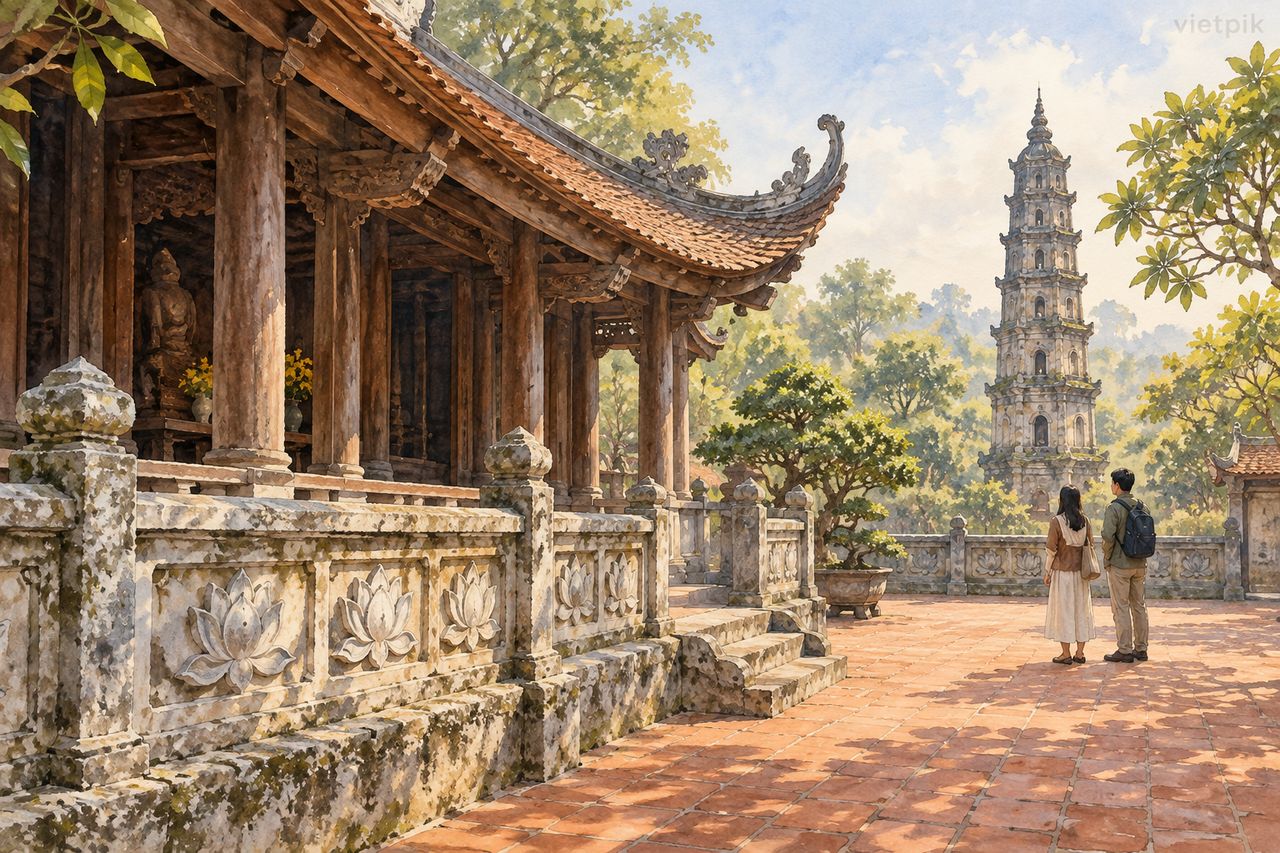
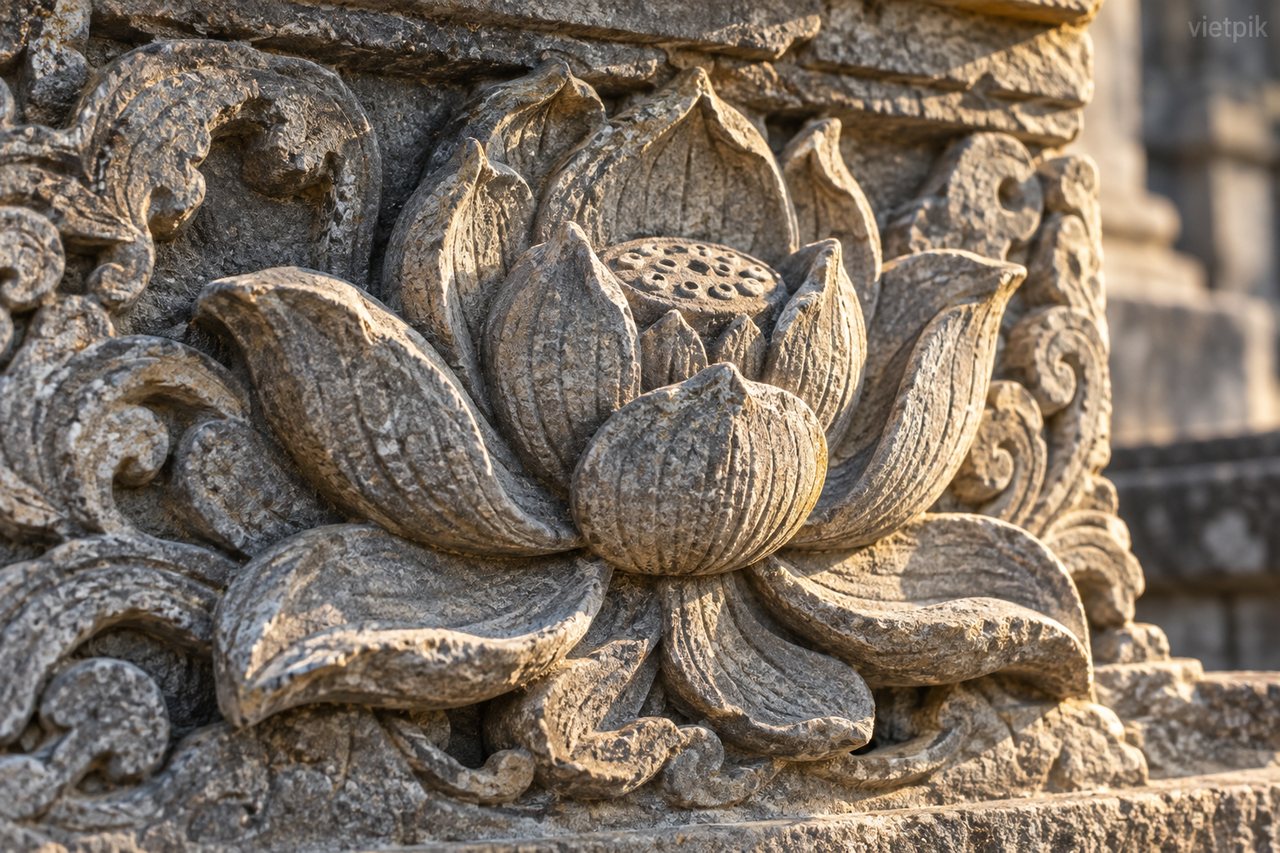
Do not touch carvings, lean on protected surfaces or use lighting equipment where it is restricted. Ask before photographing interiors and accept that some images are better kept as a memory. The illustrations here suggest a temple setting and a generic lotus carving; neither is documentation of Bút Tháp's architecture or its protected works. For a travel journal, a precise note about one thing you noticed can be more valuable than a misleadingly labelled image. Leave with a reason to return, perhaps on a quieter day when the festival and the artwork can tell different parts of the same story.
Original Vietpik editorial. Food photographs illustrate dishes and do not represent a specific restaurant unless stated.
triqua.bacninh.gov.vn dsvh.gov.vn sgddt.bacninh.gov.vn baonghean.vn Last updated: 2026-09-28