A river can be a road, a source of water and a place where a community locates its oldest stories. That is a useful starting point for visiting the Chử Đồng Tử festival around Đa Hòa and Dạ Trạch. Instead of treating the day as a race between temple gates, build your visit around one question: what does the river mean to the people gathering here? A procession, a vessel of water and a song can offer different answers. You do not need to understand every ritual on arrival. A little background, a patient pace and a willingness to ask permission will take you further than a crowded checklist.
History & story
The festival is associated with Chử Đồng Tử and Princess Tiên Dung, whose love story connects the river landscape with ideas of generosity and social boundaries. Read this as a living legend, rather than a biography with every episode independently verified. That distinction leaves room to enjoy the story while asking better questions about its meaning. Which moment does your host choose to tell first? Does the account emphasise love, family duty or the transformation of the landscape? Different emphases can be revealing. Avoid correcting a local storyteller simply because a short travel summary uses another version; ask about that variation instead.
Read the legend as a legend
The festival is associated with Chử Đồng Tử and Princess Tiên Dung, whose love story connects the river landscape with ideas of generosity and social boundaries. Read this as a living legend, rather than a biography with every episode independently verified. That distinction leaves room to enjoy the story while asking better questions about its meaning. Which moment does your host choose to tell first? Does the account emphasise love, family duty or the transformation of the landscape? Different emphases can be revealing. Avoid correcting a local storyteller simply because a short travel summary uses another version; ask about that variation instead.
Notice the water before the spectacle
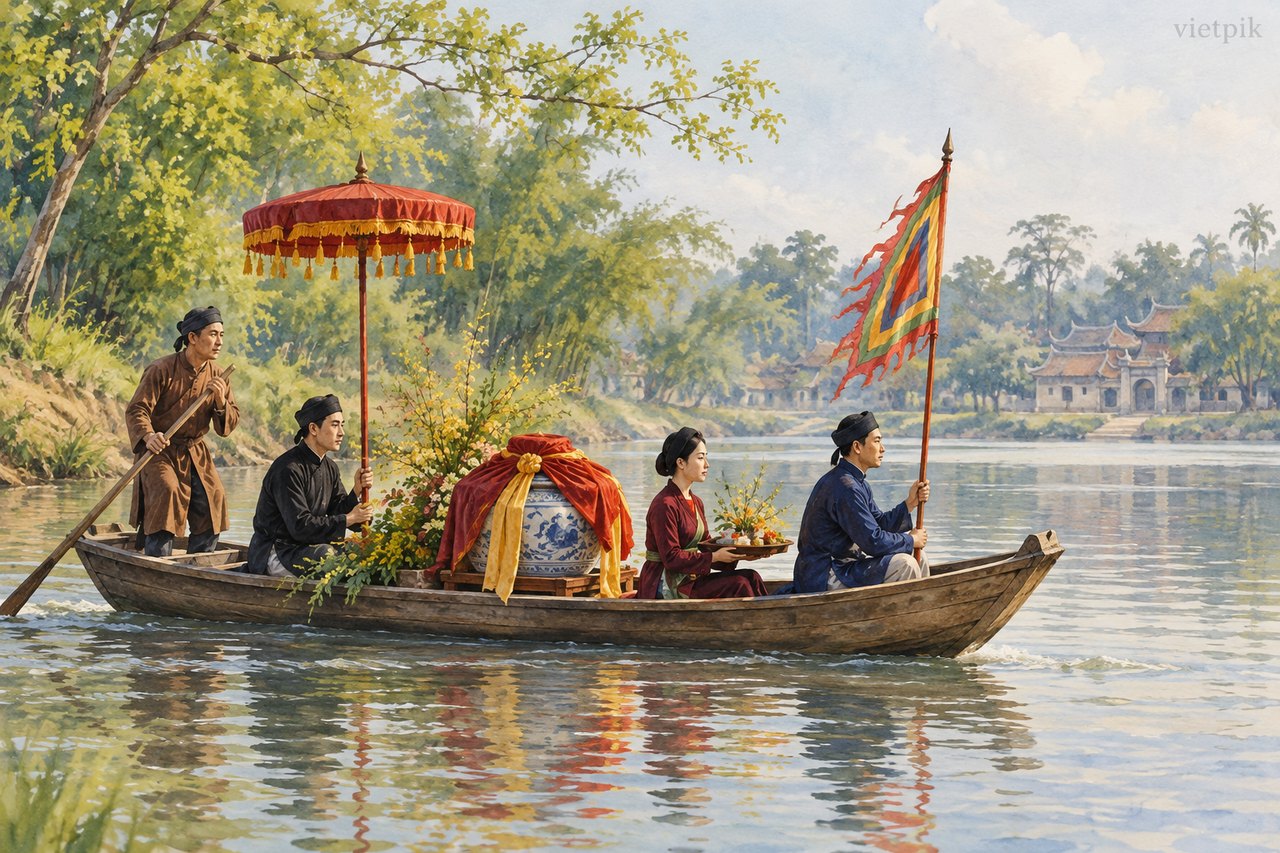
The provincial tourism account highlights the taking of water from the Red River as an expression of agricultural hopes. That is enough context to change how you watch: the vessel is not simply a decorative object in a colourful parade. From a permitted viewing place, follow the movement of the group and the attention given to the water. Let participants complete their work without asking them to pause for portraits. If the bank becomes congested, move back rather than trying to improve your camera angle. Observing from a less dramatic position can make the sequence easier to understand and gives everyone more space.
A spring 2027 planning window
Use 17–19 March 2027 as a provisional planning window, corresponding to the tenth through twelfth days of the second Vietnamese lunar month. The 2026 programme followed that lunar interval, but its particular ceremonies and provincial scale do not establish the 2027 programme. Keep the dates labelled as a projection when sharing a trip plan. Before booking, ask which temple hosts the activity you want and whether the water procession is publicly accessible. A date without a venue and a current programme is not a complete reservation. Retain some flexibility if the main purpose of your journey is one specific performance.
Choose one temple as your anchor
Đa Hòa and Dạ Trạch belong to a connected cultural story, but they should not be treated as interchangeable pickup points. Send the exact intended destination to your driver and verify it against a current local notice. Begin with one site, allow time to walk and listen, then decide whether a second stop will improve the day. For a family group, agree on a meeting place before entering the busiest courtyard. Keep the return journey separate from the wish to see every procession. A short, coherent visit can be more satisfying than arriving at several places just after their principal activity has ended.
Make time for a complete performance
If the announced programme includes traditional singing, choose one session you can hear from beginning to end. Ask for the name of the form and the performers rather than labelling all northern folk music alike. A short explanation after the performance is usually more useful than commentary over the singing. Consider leaving the phone in your pocket for the first few minutes so that you can notice rhythm, exchanges and audience responses. If you later record a short excerpt with permission, preserve the performers' names in your notes. That turns a souvenir clip into something you can identify and learn from after returning home.
Budget for movement and pauses
There is no verified 2027 price list in this guide. Ask separately about transport, waiting time, parking, food and any guide service. If travelling with someone who needs frequent rests, make a shaded meal stop part of the route rather than an afterthought. Carry drinking water and a small bag for your own rubbish; do not leave packaging on the riverbank. Purchases and offerings should remain voluntary choices. A vendor's claim that an object is essential to good fortune is not a travel requirement. Spending deliberately leaves more room for a service or locally made item that you actually appreciate.
Take home a question worth keeping
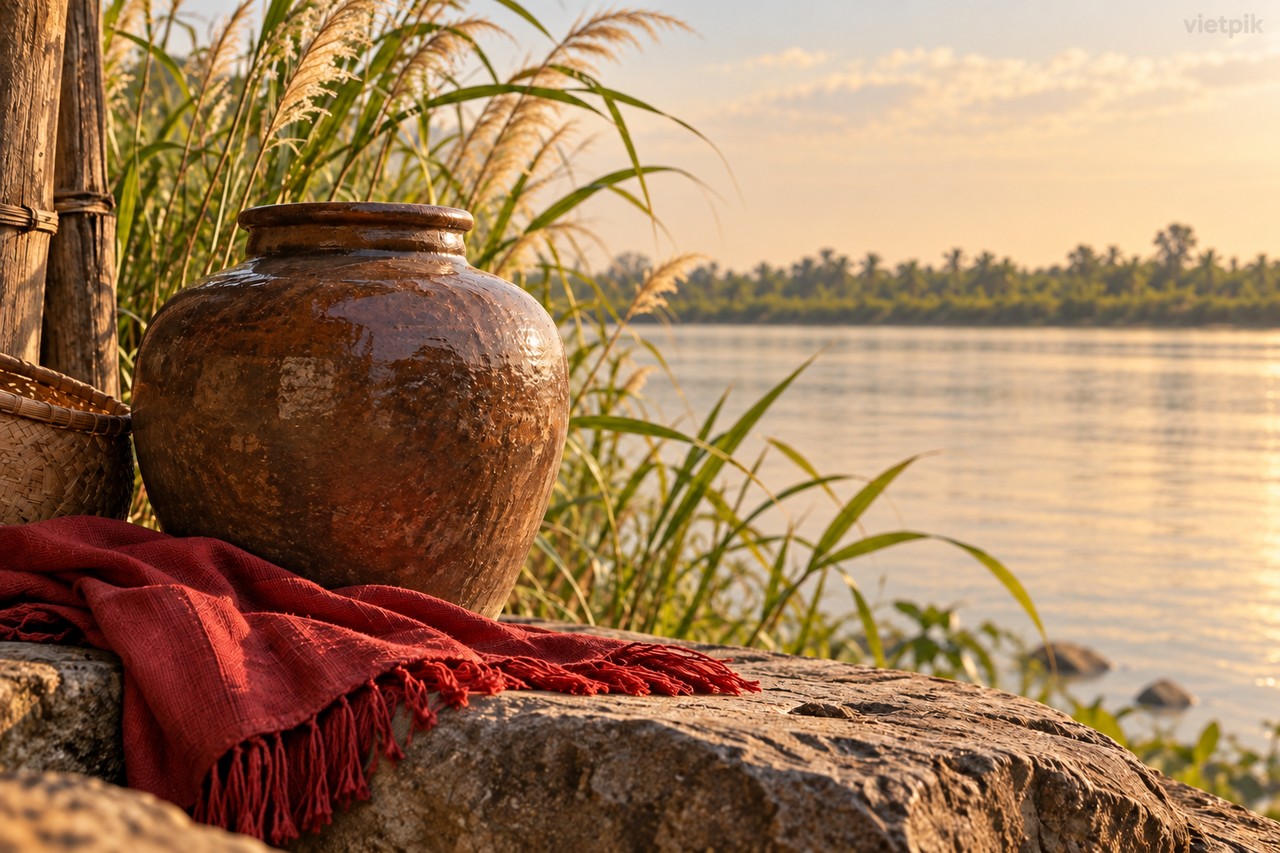
After the festival, try writing down one detail about water, one about storytelling and one about how people made space for one another. Those observations can give your photographs a stronger narrative than a list of superlatives. The accompanying images are editorial illustrations of a river procession and a ceramic vessel; they do not document the actual ceremony, architecture or a future event. Use them as an invitation to pay attention, then let your own visit supply the specifics. A good cultural journey often ends with a more precise question than the one you brought, and that is a worthwhile result.
Original Vietpik editorial. Food photographs illustrate dishes and do not represent a specific restaurant unless stated.
dulich.hungyen.gov.vn dulich.hungyen.gov.vn baonghean.vn lichvannien.com.vn Last updated: 2026-09-28