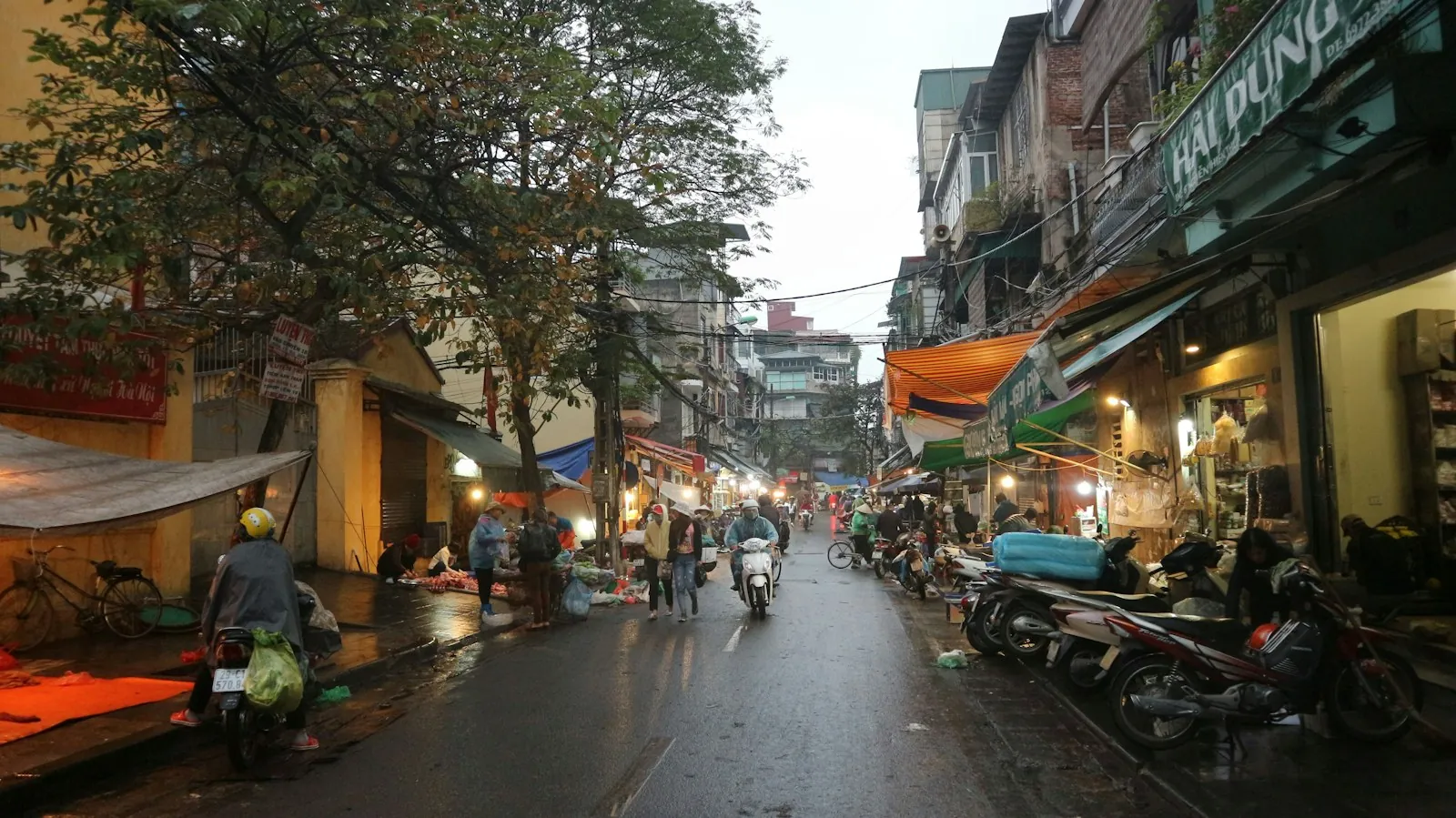
Cổ Loa offers a different way to encounter the history around Hanoi. Instead of beginning with a museum corridor, begin with a community returning to a place it remembers together. The festival brings people, ritual and the idea of an ancient capital into the same frame. For a traveller, the temptation is to reduce that frame to a famous legend or a quick photograph of a gate. Stay a little longer. Ask how neighbouring communities take part, notice the preparation behind the public ceremony and give the site’s historical interpretation time to speak. The reward is a visit that connects a large national story with the smaller actions by which villages keep memory present. Cổ Loa is especially compelling when approached as both a place to learn and a living setting whose daily use continues after the festival flags are put away.
History & story
The local authority describes the annual festival as an occasion to honour An Dương Vương and his role in the formation of Âu Lạc. That commemorative purpose gives the gathering its historical focus. Stories of a magical crossbow and other legendary episodes should be introduced as traditions of storytelling, not substituted for archaeological evidence. Read the site’s interpretation to distinguish material remains, historical accounts and folklore. A guide who makes those boundaries clear can make the experience richer: you learn both what is known about the place and how communities have imagined and remembered it.
An Dương Vương in the festival’s memory
The local authority describes the annual festival as an occasion to honour An Dương Vương and his role in the formation of Âu Lạc. That commemorative purpose gives the gathering its historical focus. Stories of a magical crossbow and other legendary episodes should be introduced as traditions of storytelling, not substituted for archaeological evidence. Read the site’s interpretation to distinguish material remains, historical accounts and folklore. A guide who makes those boundaries clear can make the experience richer: you learn both what is known about the place and how communities have imagined and remembered it.
The Bát xã relationship is part of the attraction
Hanoi’s cultural department describes a festival tradition involving the Bát xã Loa Thành communities. The main gathering is not simply an event staged for an outside audience; local relationships and shared responsibilities are central to it. A 2026 preparation report also describes the selection of a Quan đám, illustrating the work that happens before visitors arrive. Ask what a role means in this particular community rather than translating every participant into a generic performer. That attention makes the ceremony more intelligible without turning it into a theatrical production.
The 2027 main-day milestone
The sixth day of the first lunar month is the traditional main festival day. Its Vietnamese-calendar equivalent in 2027 is Thursday, 11 February. This is a planning milestone, not a verified 2027 ceremony announcement. The cultural department also describes celebrations continuing in individual villages after the main day, but their scope should not be converted into a guaranteed uniform programme for visitors. Keep the opening hour, procession details and any extended activities pending until an official 2027 notice is available. An accurate single date is more useful than an invented multi-day schedule.
Read the landscape at a walking pace
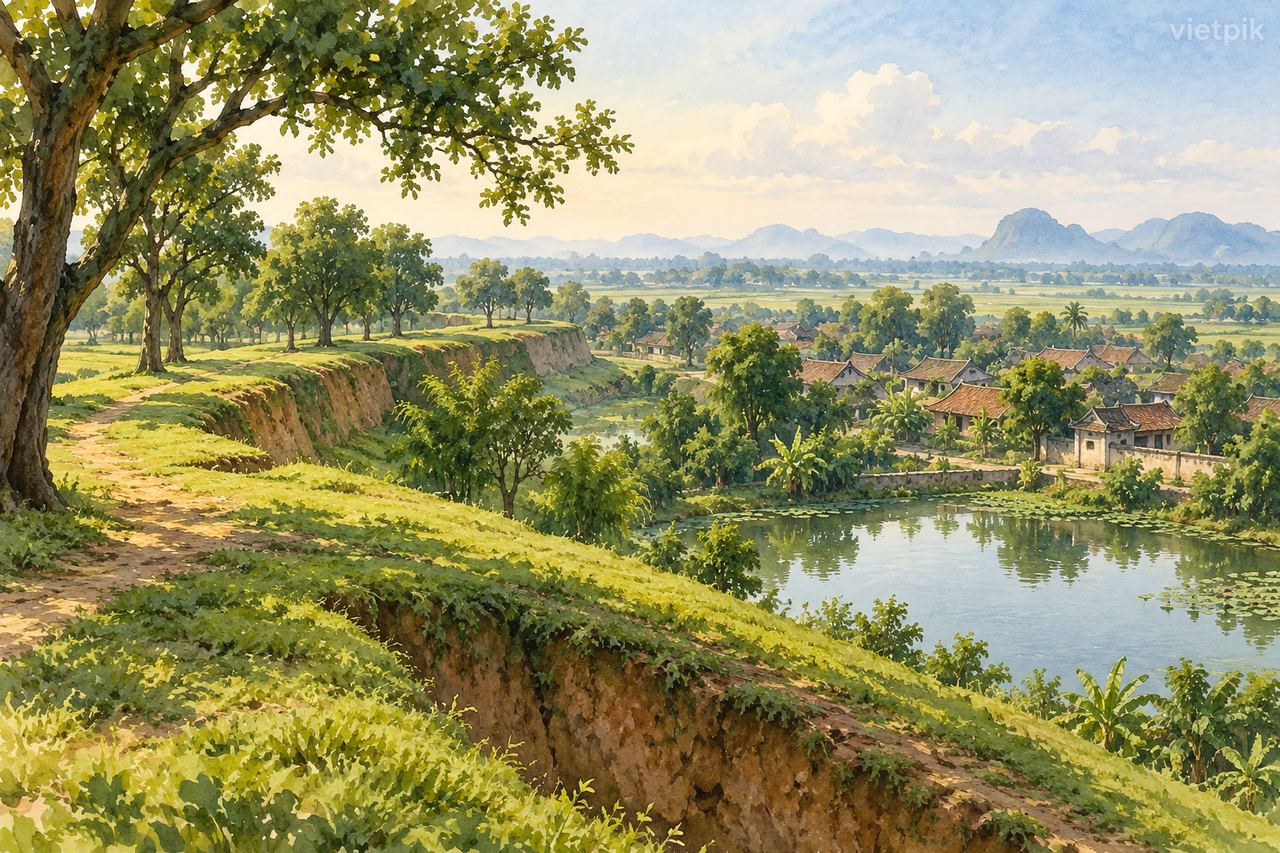
Allow time to understand where you are before following the busiest movement of people. Use the official visitor route and interpretation rather than assuming that every grassy bank or lane is a public shortcut. Stop in a suitable place to compare what you see with the information you have read. The aim is not to reconstruct an ancient capital from imagination in an afternoon. It is to notice how a historic landscape and a present-day settlement occupy the same area, and to leave with questions worth exploring further.
A half-day focus with room to extend
As an editorial planning option, reserve a half-day block at the destination, plus separate travel time from your accommodation. This is an allowance, not a tested transport estimate. If the confirmed festival programme gives you a reason to stay longer, extend the visit instead of rushing away to another appointment. For companions less interested in ritual, agree on a meeting place and a seated break. Avoid promising a fixed sequence of performances to children or visitors who may find waiting difficult.
Eat nearby and keep the practical details clear
Choose a meal that fits the actual exit point of your route. Check the menu, serving size and total before ordering, and do not treat a festival stall as an endorsed recommendation simply because it stands near the site. Record transport, admission if applicable, food and optional guiding separately in your plan. No 2027 price is asserted here. If travelling with a guide, agree whether their service focuses on history, translation or both; those are useful distinctions when deciding what you need.
Remember the site without rewriting it
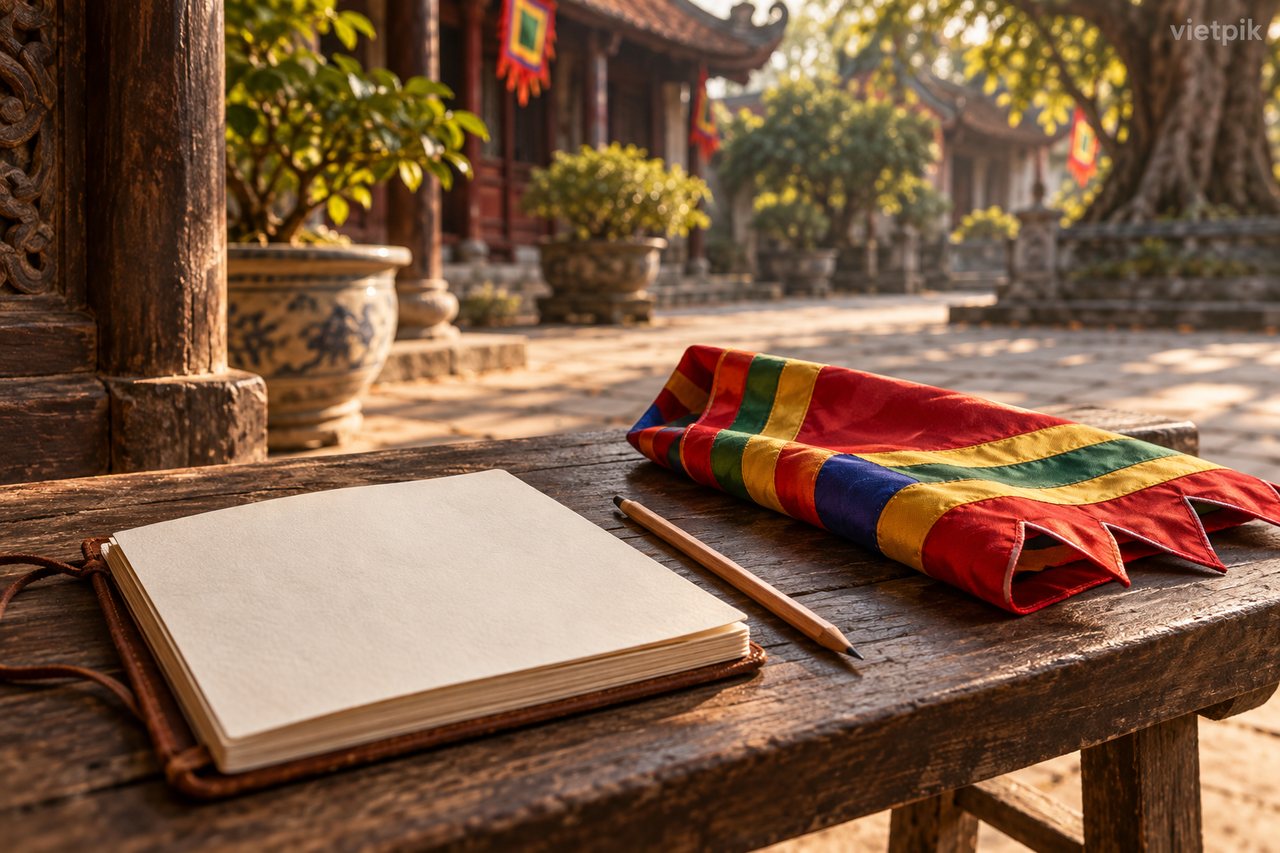
When sharing a visit, identify the date and the specific activities you observed. Attribute legends as legends and historical explanations to their sources. Avoid presenting an AI image as a view of surviving ancient architecture. The illustrations here suggest landscape and preparation; they do not map the ramparts or reproduce an archaeological reconstruction. A strong travel story can still be inviting and vivid while admitting what the writer has not personally seen or what the historical record does not settle.
Original Vietpik editorial. Food photographs illustrate dishes and do not represent a specific restaurant unless stated.
sovhtt.hanoi.gov.vn donganh.hanoi.gov.vn lichvannien.com.vn Last updated: 2026-09-28