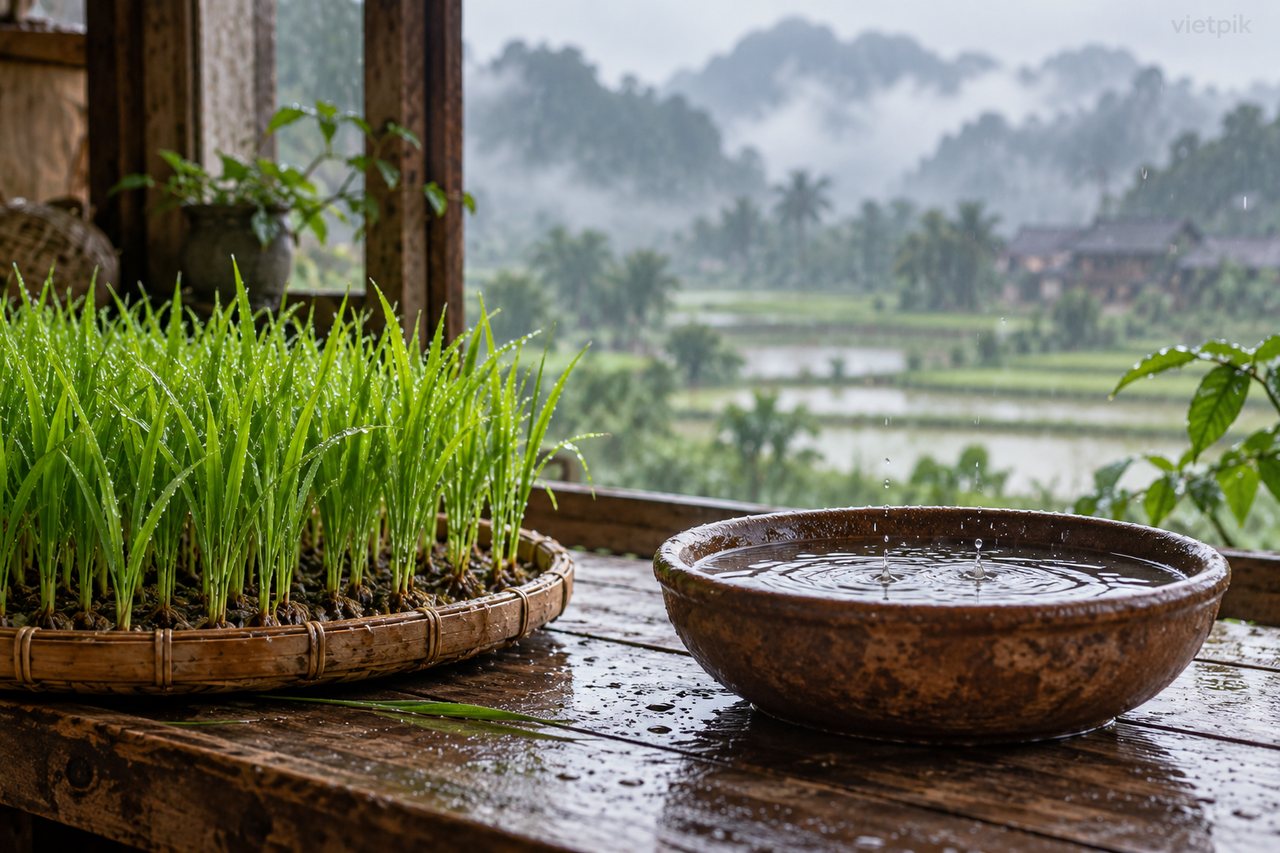
To understand the Dâu Festival, look beyond the outline of a pagoda and imagine the fields surrounding a village. Rain, water and the success of a crop are not abstract subjects for an agricultural community. They shape the hopes carried into a shared celebration. A visit to the Dâu region can therefore become much more than a stop at an old Buddhist site. It is an invitation to consider how religious ideas and the practical needs of village life meet. Take the festival slowly, ask what connects the participating places, and allow the landscape outside the courtyard to become part of what you learn.
History & story
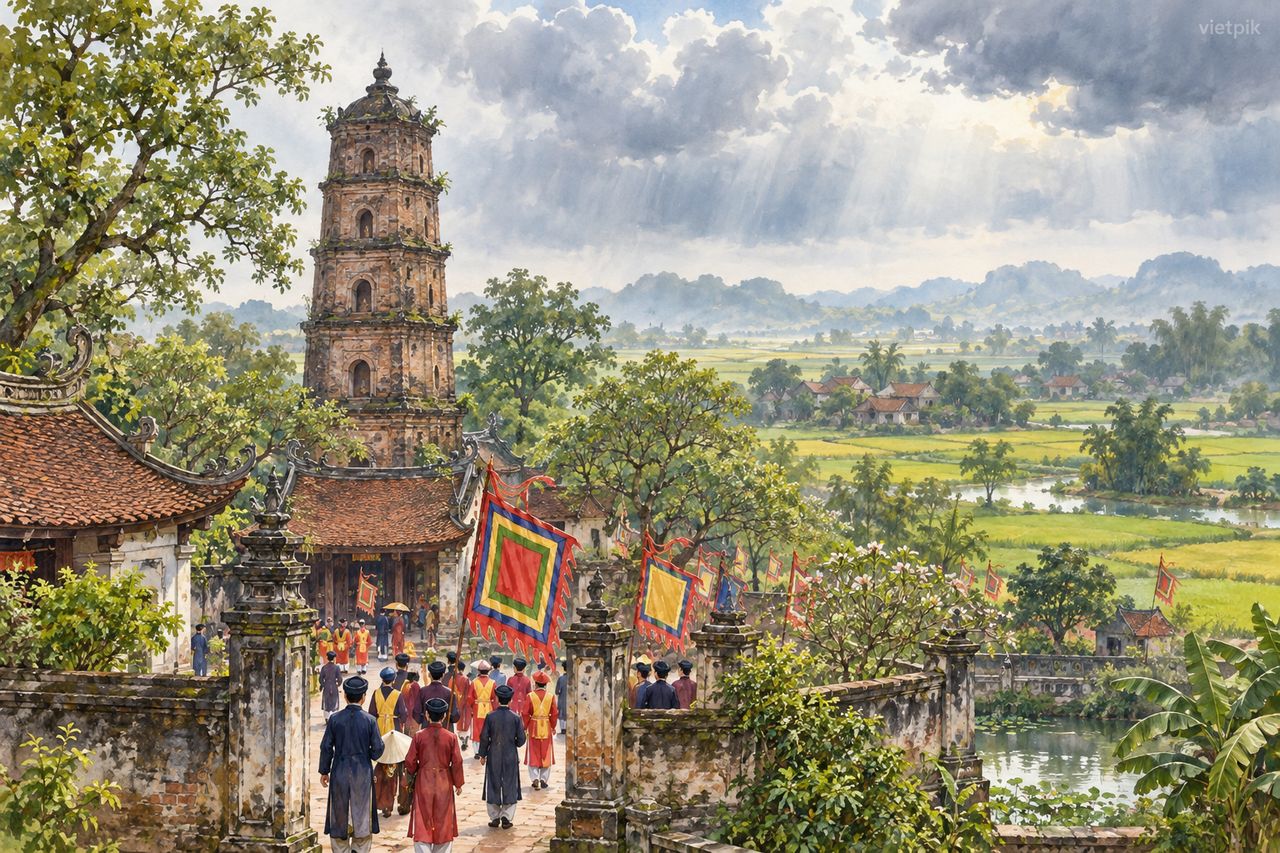
The local cultural account places Dâu at the centre of a network associated with the Tứ Pháp: Pháp Vân, Pháp Vũ, Pháp Lôi and Pháp Điện, commonly understood through cloud, rain, thunder and lightning. It also includes the worship of Man Nương in the regional tradition. The festival makes more sense when read across that network than when reduced to a single landmark photograph. These figures and their stories belong to a religious and cultural tradition; they should not be described as verified meteorological explanations or literal historical biographies.
A region, not just one courtyard
The local cultural account places Dâu at the centre of a network associated with the Tứ Pháp: Pháp Vân, Pháp Vũ, Pháp Lôi and Pháp Điện, commonly understood through cloud, rain, thunder and lightning. It also includes the worship of Man Nương in the regional tradition. The festival makes more sense when read across that network than when reduced to a single landmark photograph. These figures and their stories belong to a religious and cultural tradition; they should not be described as verified meteorological explanations or literal historical biographies.
The cultural meaning of an agricultural hope
The 2026 local report explicitly connects the festival with the agricultural beliefs of the northern delta. For visitors, that connection provides a thoughtful way to look at ceremony: as an expression of dependence on conditions no individual household can fully control. This is an interpretive lens, not a claim that every participant has the same reason for attending. Some may come to worship, some with family and others to learn. The strength of the festival lies partly in allowing these motivations to occupy a shared cultural space without becoming identical.
One reliable milestone, not an invented full programme
The traditional eighth day of the fourth Vietnamese lunar month falls on 13 May 2027. This guide uses that main-day milestone rather than presenting a fixed start and end for the entire regional celebration. Published descriptions differ in how they frame the surrounding days, and the 2026 regional programme should not simply be copied into 2027. Opening ceremonies, processions and related activities must be checked against the new announcement. Save 13 May as tentative, then refine your itinerary when the organisers publish the actual sequence and locations.
A visit built around connections
Begin by asking for an explanation of the participating temples and their relationship. A simple sketch in your notebook can be more helpful than memorising a string of names. Do not attempt to follow every movement if the programme spans several places; choose an accessible public viewing point and one quieter period for looking at the site. If you are travelling with children, use a practical question such as “why was rain so important to a village?” to open discussion. That can make an unfamiliar religious landscape easier to approach without turning belief into a game.
Make the countryside part of the day
Leave time to notice the settlement around the festival rather than looking only for the next ceremonial highlight. From permitted public routes, observe how homes, water and working spaces sit together. Avoid entering fields, courtyards or workshops without invitation. If you add a second heritage stop in the wider area, select it for a clear contrast: Buddhist art, a craft process or a different form of village memory. Confirm that it is receiving visitors. The contrast can deepen the day, but it should not force you to leave the festival before the activity you came to understand.
Plan for a comfortable May outing
Check the weather close to departure and carry drinking water, sun protection and a compact rain layer suited to the actual forecast. Arrange a meal break and a return pickup that do not depend on standing in the busiest part of the festival. Your budget should distinguish transport and food from optional offerings or purchases. Ask for current prices instead of relying on an old travel review. If anyone in the group needs step-free access or frequent seating, contact the site before arrival and plan a shorter route around the spaces confirmed to be accessible.
What remains after the flags are folded
A worthwhile memory of Dâu might be a better question about how a community lives with uncertainty: a crop, a season, a wish for enough water. Write down the local explanation you received and credit its speaker with permission. When sharing photographs, describe the ceremony you actually observed rather than labelling every image with the same broad religious term. Respectful specificity is more engaging than inflated claims of mystery. The festival can open a door to Vietnamese village culture precisely because its hopes are recognisable, even when the ritual language is new to you.
Original Vietpik editorial. Food photographs illustrate dishes and do not represent a specific restaurant unless stated.
triqua.bacninh.gov.vn sdttg.bacninh.gov.vn baonghean.vn Last updated: 2026-09-28