The strongest impression of a village festival is not always its loudest moment. Sometimes it is the care taken before a procession starts: a person straightening a garment, a group waiting for its turn or an object prepared by many hands. At Sóc Temple, the Gióng tradition offers a way to look at that collective work. The story of a hero is carried not only in words, but also in the choices of communities that return to honour him. For an international visitor, the best introduction is therefore not a list of spectacles to capture. It is a short explanation of who is gathering, what the offerings mean and how to watch without getting in the way. Arrive with curiosity, leave room for quiet observation and let the festival become more than a colourful stop on a northern Vietnam itinerary.
History & story
The festival honours Thánh Gióng, the heroic figure of Vietnamese legend. The legend belongs to cultural memory and religious belief; it should not be presented as a documented military biography. UNESCO’s heritage entry covers the Gióng festival of Phù Đổng and Sóc temples together. This article concerns the Sóc Temple celebration, whose timing and local practices must be kept distinct from the Phù Đổng festival. That distinction matters when planning: sharing a revered figure does not make two sites interchangeable or give them one identical annual programme.
Legend, devotion and a living community
The festival honours Thánh Gióng, the heroic figure of Vietnamese legend. The legend belongs to cultural memory and religious belief; it should not be presented as a documented military biography. UNESCO’s heritage entry covers the Gióng festival of Phù Đổng and Sóc temples together. This article concerns the Sóc Temple celebration, whose timing and local practices must be kept distinct from the Phù Đổng festival. That distinction matters when planning: sharing a revered figure does not make two sites interchangeable or give them one identical annual programme.
Look at the offerings before chasing the procession
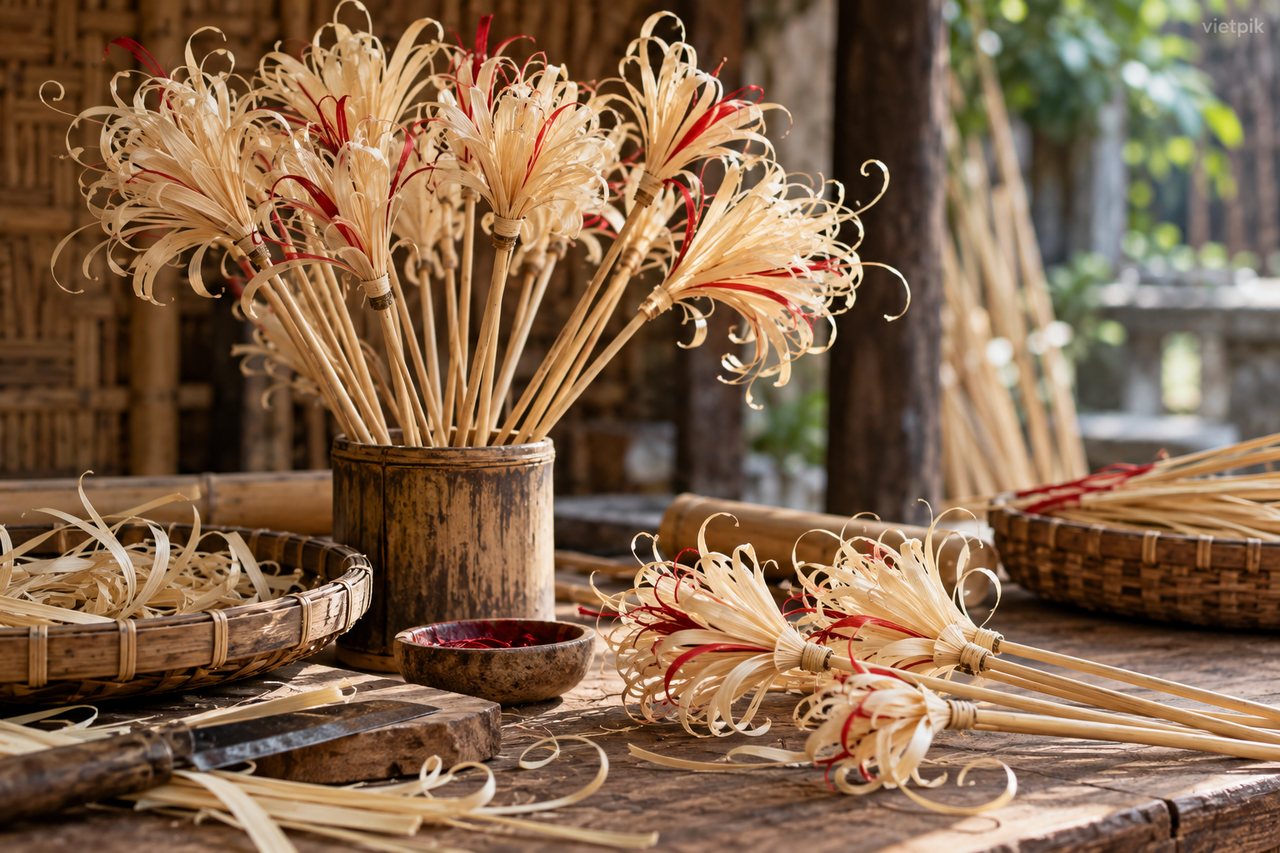
The Hanoi cultural authority identifies bamboo-flower offerings and betel-and-areca offerings among the distinctive elements of the Sóc celebration. Rather than assuming you understand their use from an image, ask a guide to explain the local meaning and the community responsible for preparing them. Pay attention to how objects are carried and presented. Their value lies in relationships and practice, not simply in whether a visitor takes a piece home. Watching carefully can reveal a level of cooperation that is easy to miss when attention is fixed on the next photograph.
2027 planning dates: 11–13 February
The established annual period is the sixth through eighth days of the first lunar month. For Vietnam in 2027, these correspond to 11–13 February. Treat them as planning dates derived from recurrence, not an official confirmation of the 2027 edition. No ceremony hour, procession route or evening programme is asserted here. Published information about the 2026 edition shows that activities and coordination can change from year to year. Recheck the responsible local authority before buying transport or arranging accommodation around a particular performance.
Understand the roles around you
A procession involves participants, organisers, worshippers and onlookers, each using the same space differently. Find out where visitors are expected to stand before moving close. If you do not understand the words of an announcement, follow an authorised steward rather than a crowd movement that may be temporary. A local guide can help translate both language and context. Ask for interpretation during a pause, leaving the ritual itself free from a running conversation beside people who have come to worship.
Choose a visit that fits the group
Plan a flexible outing from your Hanoi base, with travel and waiting time separated from the time you hope to spend at the site. Agree a meeting point that remains easy to find if mobile reception or crowd movement makes communication inconvenient. For a group with different interests, choose one shared observation period and allow a quieter break afterward. It is better to understand one sequence clearly than to pursue several activities that are taking place in different areas without knowing how they relate.
Food, transport and respectful photography
Confirm transport costs and the return arrangement in advance. Select food after checking the menu and price, keeping the meal outside the tightest part of any ritual schedule. Ask before close portraits and do not request that participants repeat a sacred action for your camera. If you are offered an object or souvenir, clarify whether it is a sale, a gift or part of an organised distribution. This article does not set an admission price or claim that every activity is open to tourists.
Let the story travel further than the image
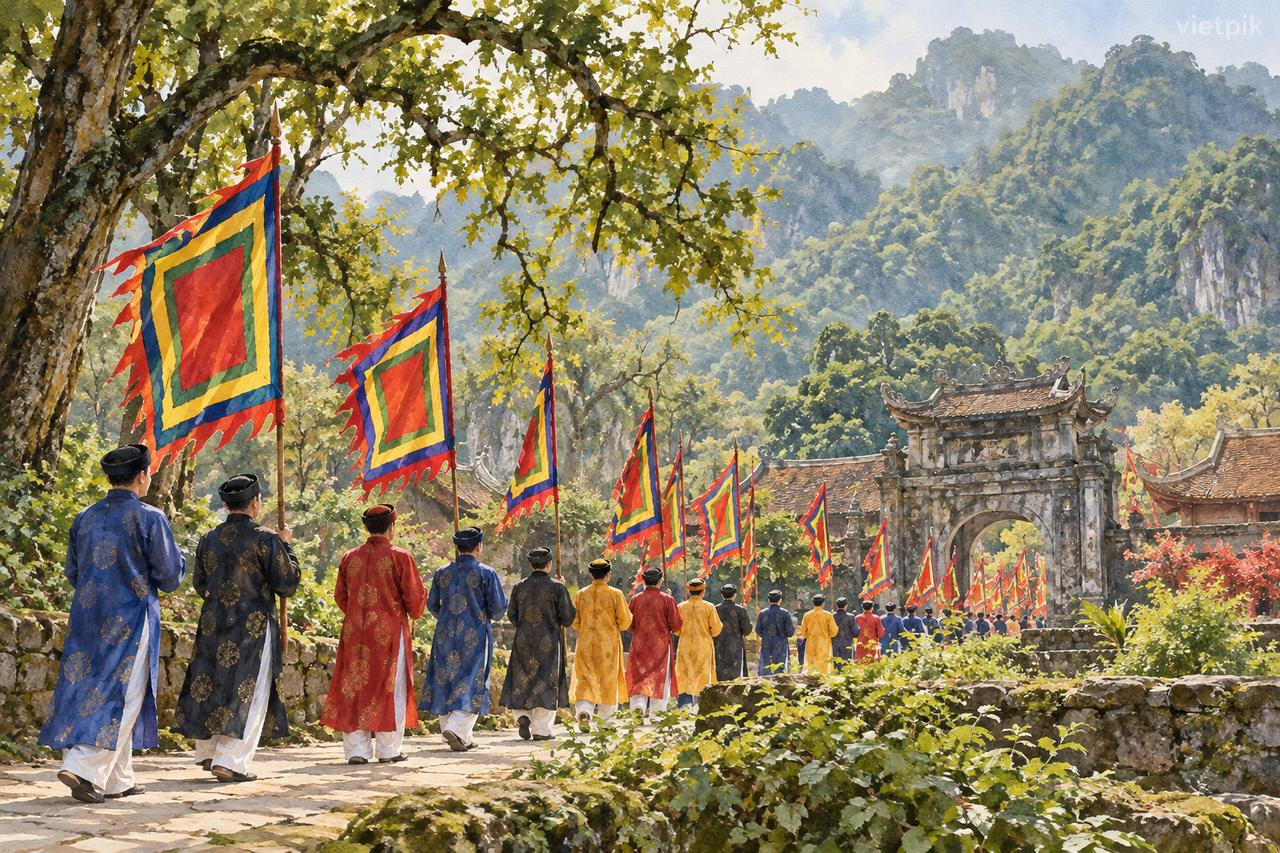
Afterward, record which temple you visited, which day and which practices you actually observed. That makes a review useful and prevents the Sóc and Phù Đổng traditions from being blended into a generic festival description. If you share the accompanying editorial illustrations, retain their captions. They evoke procession and craft; they are not evidence of the exact participants, costumes, architecture or offering arrangement at the 2027 festival. The most convincing travel story is the one that clearly separates imagination, inherited story and personal observation.
Original Vietpik editorial. Food photographs illustrate dishes and do not represent a specific restaurant unless stated.
sovhtt.hanoi.gov.vn sovhtt.hanoi.gov.vn ich.unesco.org lichvannien.com.vn Last updated: 2026-09-28