A wooden sanctuary asks you to look differently. Instead of searching immediately for the largest feature, notice the repetition of columns, the change from an open courtyard to a shaded passage and the way people adjust their movement around worship. The autumn festival at Keo Pagoda adds another rhythm to that setting. A visit can hold both attention to buildings and attention to the community using them, provided you do not try to turn every ceremony into an architectural photo opportunity. This article concerns Keo in the former Thái Bình area. Establishing that identity is the first step toward a day that feels considered rather than hurried.
History & story
Older tourism descriptions locate this Keo Pagoda in Duy Nhất, Vũ Thư, Thái Bình; the current provincial grouping is Hưng Yên. It is not Keo Hành Thiện, which has its own setting and festival traditions. When arranging transport, use the full destination and verify it against a current local source. Do not borrow a boat-racing description or procession timetable from the other site just because an online result says 'Keo Festival'. A little care with names protects the meaning of what follows. It also makes your later photographs and recommendations more useful to someone trying to visit the same place.
Distinguish Keo from other temples with the same name
Older tourism descriptions locate this Keo Pagoda in Duy Nhất, Vũ Thư, Thái Bình; the current provincial grouping is Hưng Yên. It is not Keo Hành Thiện, which has its own setting and festival traditions. When arranging transport, use the full destination and verify it against a current local source. Do not borrow a boat-racing description or procession timetable from the other site just because an online result says 'Keo Festival'. A little care with names protects the meaning of what follows. It also makes your later photographs and recommendations more useful to someone trying to visit the same place.
Understand remembrance without flattening belief
The autumn gathering honours the monk Không Lộ, whose memory is carried through religious practice and local storytelling. Accounts of spiritual powers belong to the tradition of belief; they should not be presented as independently demonstrated events. You can appreciate the role of those stories without turning them into either literal proof or a joke. Ask how the festival's principal actions relate to remembrance. A guide may be able to explain the sequence at an appropriate moment, after worship rather than over it. The aim is not to master every symbol in one visit, but to recognise that the movements have a context beyond their visual appeal.
An October 2027 window, pending the programme
The national tourism description gives the core autumn festival as the thirteenth to fifteenth days of the ninth Vietnamese lunar month. For 2027, those dates convert to 12–14 October. They are a customary planning window, not a confirmed schedule for the complete festival edition. Additional activities may be announced separately, and a description from an earlier year cannot establish their timing. If you want to attend a particular procession, verify both its time and where visitors may stand. Keep the spring festival separate in your notes: this article and its calendar entry concern the autumn gathering, so the two should not be combined into one event.
Look slowly at timber, light and space
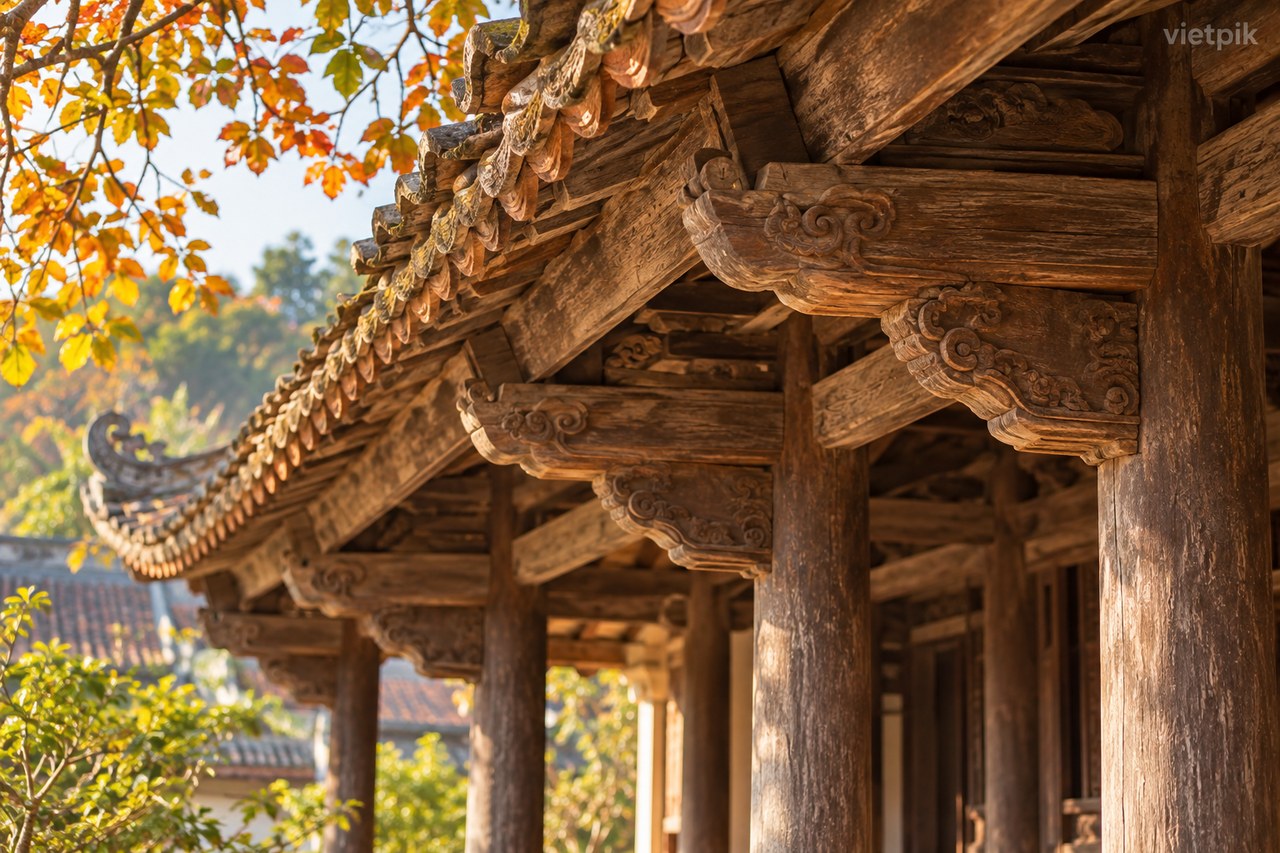
Set aside a quiet portion of the visit for observing the buildings from permitted areas. Compare the visual rhythm of a veranda with the openness of a courtyard, and notice how light brings out grain or worn surfaces. Do not touch carvings, lean equipment against old timber or cross barriers for a symmetrical photograph. If you want technical architectural detail, ask for a reliable interpretation rather than guessing the age of a beam from its colour. A sketch of the way spaces connect can be more useful than dozens of close-ups. It encourages you to understand the whole setting while leaving fragile surfaces undisturbed.
Choose between a festival day and a quiet visit
A festival day and an ordinary day can offer different rewards. The first brings communal activity; the second may make close architectural observation easier. Decide which matters most to you, especially if you are planning a photography-focused visit. Do not become frustrated with worshippers for occupying a place that exists partly for their worship. If your schedule allows only one day, choose one principal aim and treat the other as a welcome addition. Check current access and weather before departure, then allow enough time to rest. A realistic intention makes it easier to enjoy the setting as it actually is.
Plan a return journey before the crowd
Confirm where the vehicle can stop during the festival and whether the driver will wait or return at an agreed time. Do not rely on a pickup pin that could fall inside a temporary restricted area. Ask separately about parking, waiting charges, meals and guiding; this guide has no verified 2027 prices. Keep luggage light enough to carry without brushing against people or objects in narrow passages. A small bottle of water and a planned meal break are usually more useful than a bag full of optional purchases. Any offering or donation should follow the site's instructions and remain a voluntary choice.
Keep the building and the gathering together
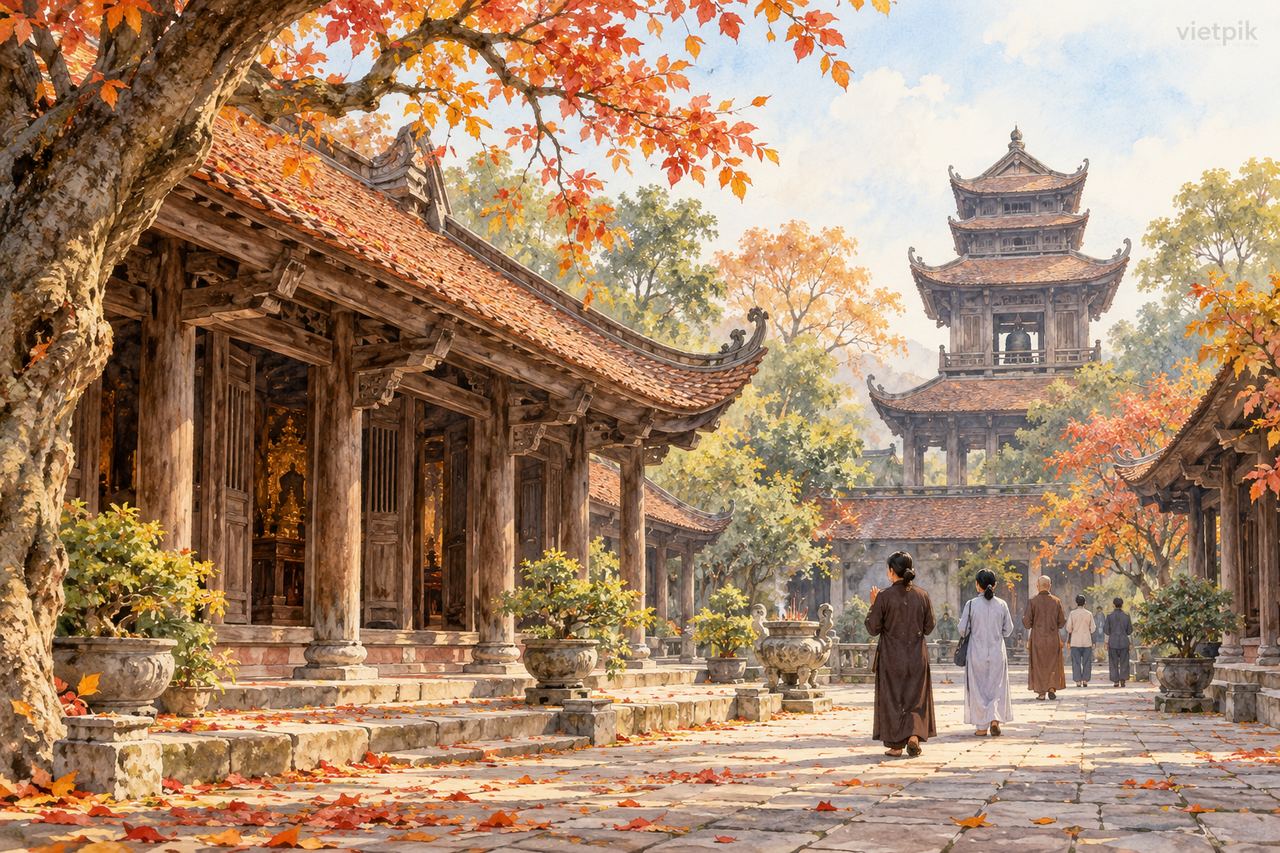
After leaving, write down one observation about the architecture and one about the way people used the space. Together they form a fuller memory than either a catalogue of structures or a list of performances alone. If you heard an explanation about a ritual, preserve its source in your notes. The AI images in this article evoke a wooden pagoda and timber details; they are not measured reconstructions of Keo's bell tower or documentary photographs of its festival. The real encounter should supply the specifics. A meaningful visit recognises that a historic building is also a place where people continue to gather, remember and practise.
Original Vietpik editorial. Food photographs illustrate dishes and do not represent a specific restaurant unless stated.
vietnamtourism.vn lehoi.com.vn baonghean.vn lichvannien.com.vn Last updated: 2026-09-28