Some journeys are organised around a landscape; others begin with a question about belonging. The Kinh Dương Vương Festival at Á Lữ offers both. Its river setting and community rituals lead visitors towards the stories through which generations have imagined their origins. You do not need to share the same ancestry to appreciate the care given to remembrance. Come as a guest, listen to how local people name the figures they honour, and notice how a story becomes a gathering. This is a rewarding festival for travellers who want to understand why a place matters to people, beyond what can be measured or photographed.
History & story
Kinh Dương Vương belongs to the ancestral narratives of Vietnamese tradition and is honoured at the temple and mausoleum complex in Á Lữ. Accounts of the festival connect him with the cultural genealogy of Lạc Long Quân and Âu Cơ. These are origin traditions and objects of worship, not independently established biographies from the remote dates sometimes quoted in commemorative speeches. Holding that distinction does not diminish the festival. It lets a visitor respect the community's belief while describing clearly what kind of knowledge is being shared: a remembered origin, expressed through ritual and place.
Tradition, legend and historical care
Kinh Dương Vương belongs to the ancestral narratives of Vietnamese tradition and is honoured at the temple and mausoleum complex in Á Lữ. Accounts of the festival connect him with the cultural genealogy of Lạc Long Quân and Âu Cơ. These are origin traditions and objects of worship, not independently established biographies from the remote dates sometimes quoted in commemorative speeches. Holding that distinction does not diminish the festival. It lets a visitor respect the community's belief while describing clearly what kind of knowledge is being shared: a remembered origin, expressed through ritual and place.
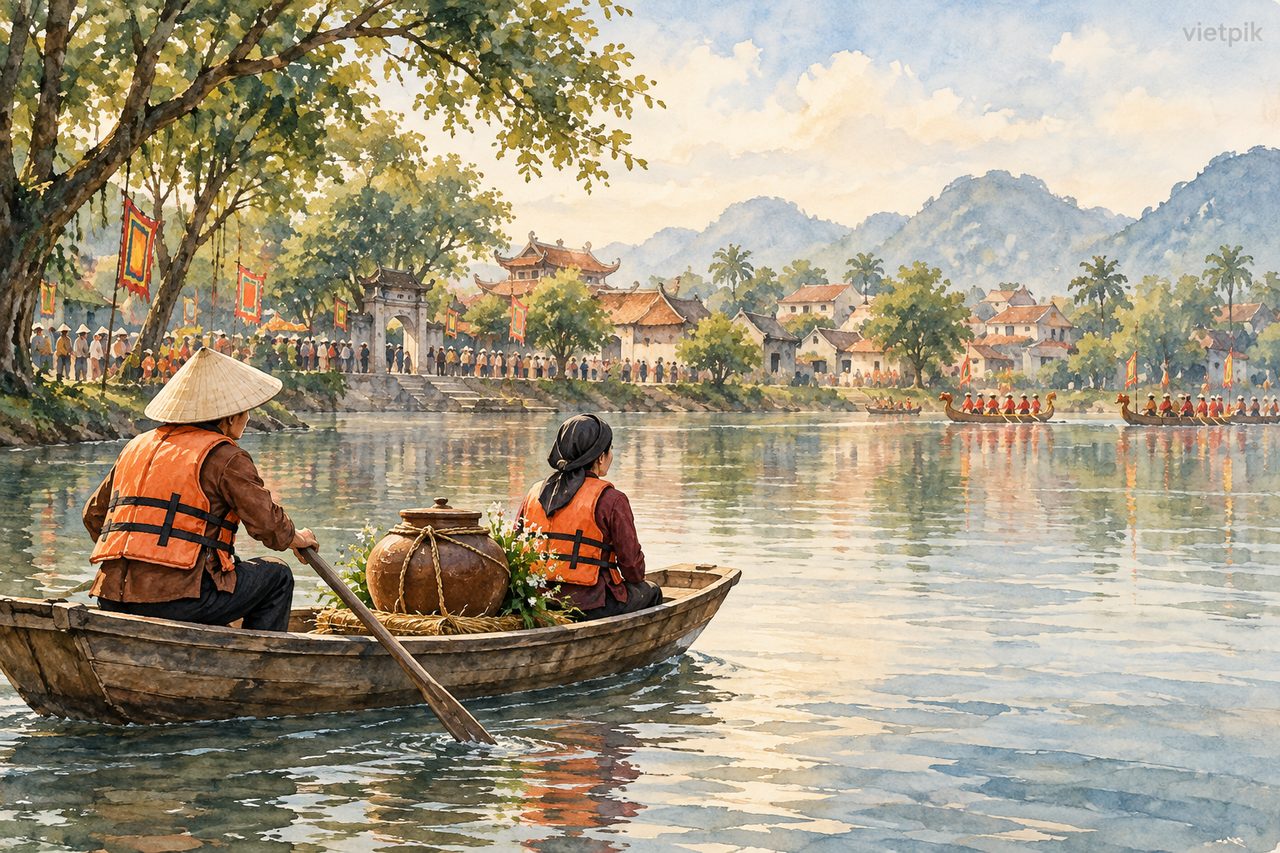
Why the river belongs in the story
Reporting on the festival describes water-related ritual and processions linking the temple and mausoleum. The detailed sequence has varied between editions, so a visitor should not expect every action from an older report to occur at the same hour. Water offers a useful point of attention: look at how it is carried, where participants gather and which parts of the movement are open to spectators. Ask a local interpreter to explain the meaning rather than inventing a universal symbolism. The most revealing answer may be specific to this community and its own practice.
A three-day window for 2027
The customary festival runs from the sixteenth to the eighteenth day of the first Vietnamese lunar month. For 2027, the corresponding dates are 21–23 February. This is a traditional-calendar projection; it does not confirm the opening ceremony, individual procession times or the duration of accompanying activities. Earlier reports include rituals outside the central three-day period, another reason not to turn the window into a complete timetable. If a particular ceremony matters to you, check the local announcement and ask about the exact viewing location before fixing your arrival time.
Visit with one clear cultural question
Choose one question to guide your visit: how does the community tell its origin story, what connects the temple to the mausoleum, or how are younger people involved? A focused question makes the experience easier to absorb than a list of every ritual term. Read the interpretation at the site and distinguish what is written on a sign from what a participant tells you. Both can be valuable, but they serve different purposes. Give conversations time, and avoid asking someone to explain a ceremony while they are actively responsible for carrying it out.
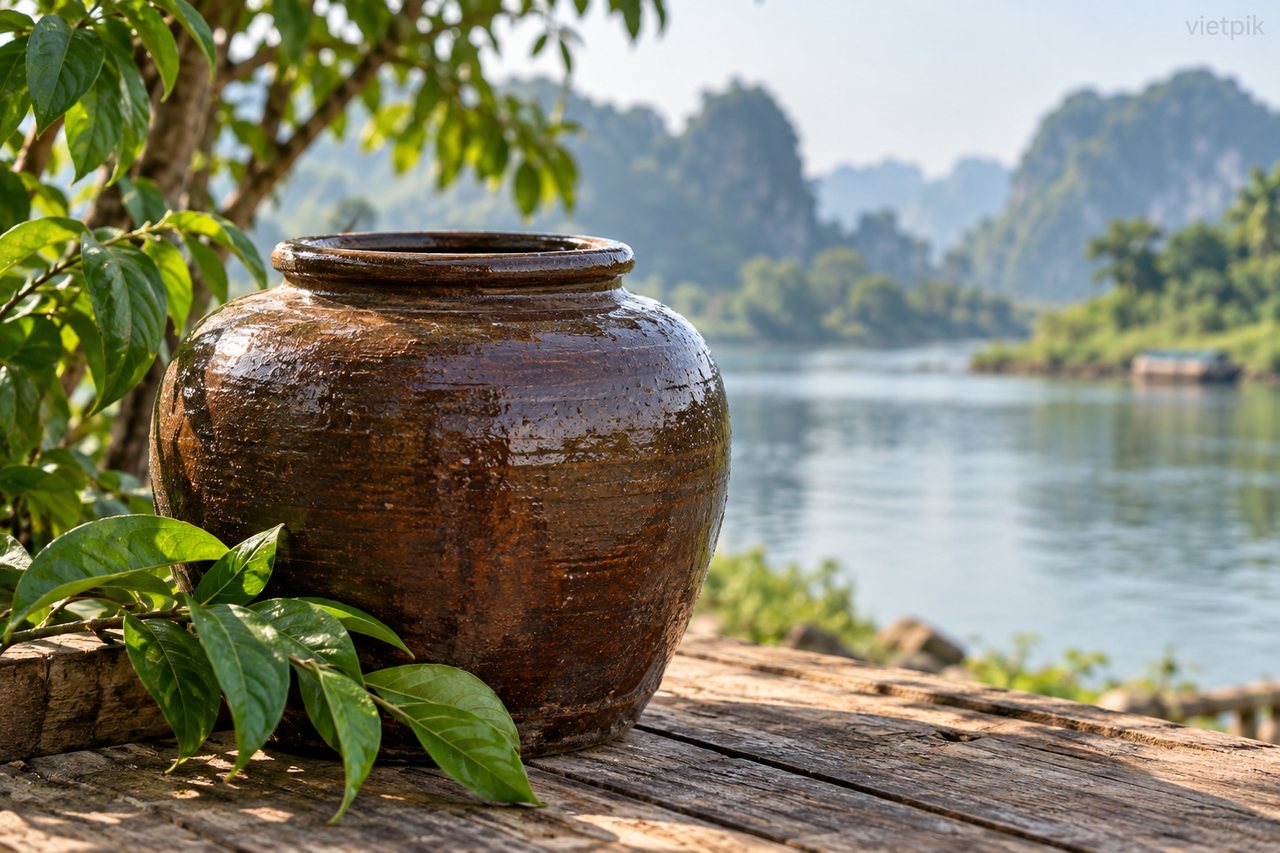
Connect the visit without overfilling it
The wider Thuận Thành area offers other cultural stops, including Buddhist heritage and craft traditions. Choose a connection by theme rather than proximity alone. A visit concerned with belief might pair naturally with a pagoda; a visit about how stories are transmitted might lead towards a craft or interpretation session. Confirm opening and travel arrangements for the second stop independently. It is perfectly reasonable to finish after the festival, sit down for lunch and reflect on what you have heard. Leaving room in the day often produces a better conversation than adding another compulsory destination.
Practical spending and comfort
Plan for transport, a proper meal, drinking water and optional guiding. Ask the driver where a festival-day pickup is feasible, rather than assuming the vehicle can wait at the closest gate. Pack shoes suitable for walking and a light layer that works in a worship setting. Keep personal offerings separate from compulsory travel costs: participation does not require imitating another family's spending. Check posted arrangements for admission or parking when they become available. The point of the budget is to make the day workable, not to attach a price to sincerity or belonging.
A guest at a living place of remembrance
Keep the ritual route clear and ask before photographing worshippers closely. If a place is temporarily reserved for ceremony, use the pause to observe from the public area instead of trying to bypass it. Afterwards, note the distinction between legend, documented history and your own interpretation. That simple habit makes a travel story both warmer and more accurate. The value of Á Lữ is not that it supplies an easy answer to every question about origins. It offers the chance to see how a community continues to gather around those questions with care.
Original Vietpik editorial. Food photographs illustrate dishes and do not represent a specific restaurant unless stated.
bacninh.gov.vn www.vietnamplus.vn baonghean.vn Last updated: 2026-09-28