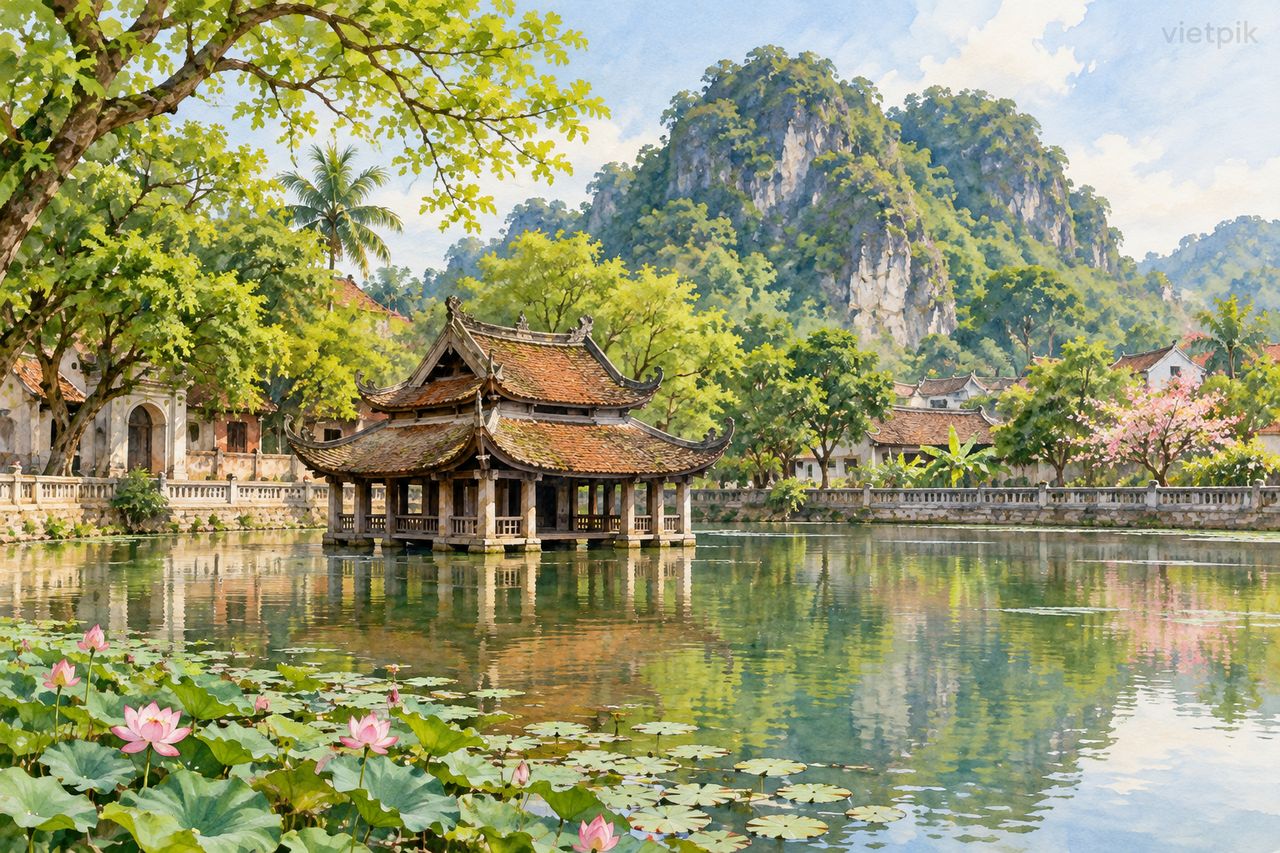
Thầy Pagoda is an invitation to read a landscape at more than one level. A visitor may first notice water, roofs and the hill behind them, yet the festival asks for attention to something less immediately visible: the stories and practices that connect a community to the place. Faith and performance meet here without becoming the same thing. A ritual may belong to worshippers, while a public presentation opens a different doorway for a visitor. Approach both with interest and give each its proper space. For a trip beyond central Hanoi, the festival offers the possibility of a day that combines looking, listening and learning rather than simply moving through attractions. Its lasting impression may be a small detail understood well: the role of a revered figure, the work behind a puppet or the reason a village returns to a particular lunar date.
History & story
Hanoi’s cultural authority links the festival with Từ Đạo Hạnh, a Buddhist master associated with the Lý period and with local traditions surrounding water puppetry. Where accounts describe him as a founding figure of the art, present that as the cultural tradition in which he is revered, not proof that one person alone invented every form of Vietnamese water puppetry. This distinction respects the story without flattening a complex artistic history. Ask how the figure is remembered here, and compare that explanation with the interpretation available at the site.
Từ Đạo Hạnh and the story of the place
Hanoi’s cultural authority links the festival with Từ Đạo Hạnh, a Buddhist master associated with the Lý period and with local traditions surrounding water puppetry. Where accounts describe him as a founding figure of the art, present that as the cultural tradition in which he is revered, not proof that one person alone invented every form of Vietnamese water puppetry. This distinction respects the story without flattening a complex artistic history. Ask how the figure is remembered here, and compare that explanation with the interpretation available at the site.
Ritual and folk performance open different doors
Official descriptions distinguish religious rites from folk performance in the festival. That gives visitors a useful framework: a procession or offering sequence is not simply another show, and an announced performance is not necessarily a sacred ceremony. Read the programme before deciding where to spend your time. If a particular form of water puppetry is your priority, confirm that it is actually scheduled for your visit date. An association between a place and an art does not mean a performance runs continuously throughout the day.
2027: the traditional core falls on 11–13 April
The customary festival core runs from the fifth to the seventh days of the third lunar month, with the seventh as the principal day. In Vietnam’s 2027 calendar this corresponds to 11–13 April, with Tuesday, 13 April as the principal-day planning marker. These dates are derived from recurrence and calendar conversion. They are not an official 2027 announcement. The 2026 programme included a longer period of related activities beyond the core days, so neither that extension nor its opening hour should be copied into 2027 without a new source.
Let the setting explain the experience
Choose a public viewing point from which you can take in the relationship between water, built space and the surrounding landscape. Notice how movement changes when a ceremony is taking place. A quiet look before an activity begins can make its use of space easier to follow later. Do not enter a performance area, climb onto structures or cross a restricted boundary to reproduce an image. The place has functions beyond the visitor’s viewfinder, and those functions are part of what makes it worth visiting.
A route for culture, with a realistic pause
Give the festival the main place in your outing and add a meal nearby rather than building a chain of distant stops. For visitors interested in architecture or religious art, allow reading time alongside any scheduled activity. If walking or steps are a concern, ask about the exact route before committing. Agree where the group will meet after a performance and leave a flexible return window. These are planning choices, not a promise about the current condition or accessibility of every part of the site.
Ask about the work behind the performance
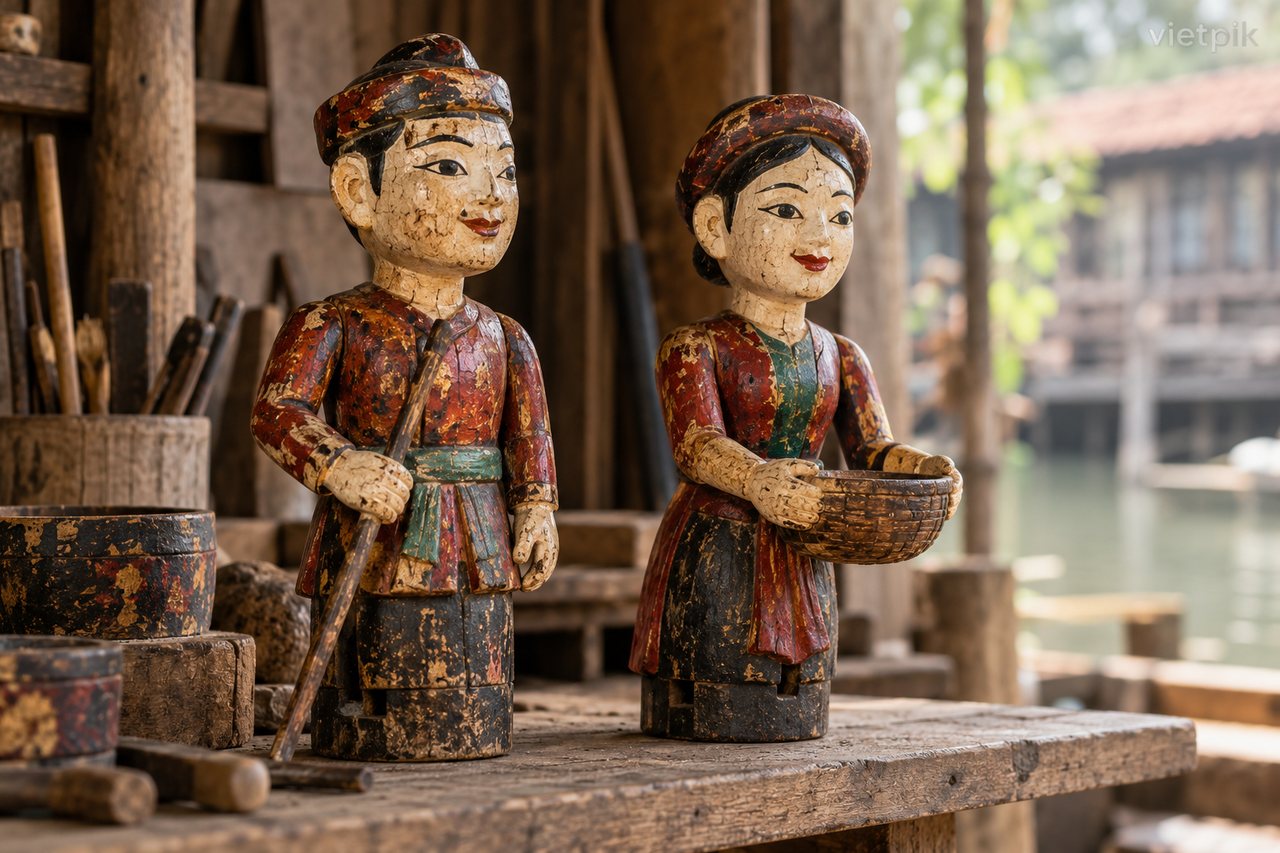
A puppet can be a starting point for conversation about materials, movement, music and the people who maintain a performance tradition. Ask questions after a presentation or at a designated interpretation space, not while performers are working. Avoid touching an object unless invited. If buying a souvenir, distinguish a contemporary craft item from a historical object or an instrument actually used in a show. That clarity lets a purchase become a meaningful memory without attaching an invented provenance to it.
Leave with a story you can explain
Before sharing the visit, separate what you learned from a source, what belongs to local belief and what you observed yourself. Include the date if you describe performances, because programmes change. Keep transport, food, any admission and optional guide costs as separate plan items; this article does not verify 2027 prices. The AI images evoke a waterside cultural setting and puppet craft. They are not photographs of the real festival, measured architectural reconstructions or documentation of a particular artisan’s work.
Original Vietpik editorial. Food photographs illustrate dishes and do not represent a specific restaurant unless stated.
sovhtt.hanoi.gov.vn sovhtt.hanoi.gov.vn amlich.vn Last updated: 2026-09-28