Historical travel is most engaging when a place becomes more than the background to a famous name. Yên Thế invites that wider view. The festival recalls a long struggle, but it also offers a way to think about the communities and landscapes that sustained resistance. Give the visit room for a timeline, a local explanation and a pause to look around. A theatrical programme may provide an emotional entry point, while the interpretation at a historical site can help you organise what you have seen. Together, they can turn a commemorative outing into a more thoughtful encounter with Vietnam's modern history.
History & story
The commemoration traces the uprising's beginning to 1884 and the leadership of Lương Văn Nắm, known as Đề Nắm. Official reporting on the 2026 anniversary also describes Hoàng Hoa Thám, or Đề Thám, taking the leading role after Đề Nắm's death in 1892. This sequence matters. Reducing the whole movement to one famous portrait can hide its development and the people involved at different stages. For a first visit, keep those two names and their relationship in your notes, then ask the site's interpretation to fill in the broader context.
Begin with more than one leader
The commemoration traces the uprising's beginning to 1884 and the leadership of Lương Văn Nắm, known as Đề Nắm. Official reporting on the 2026 anniversary also describes Hoàng Hoa Thám, or Đề Thám, taking the leading role after Đề Nắm's death in 1892. This sequence matters. Reducing the whole movement to one famous portrait can hide its development and the people involved at different stages. For a first visit, keep those two names and their relationship in your notes, then ask the site's interpretation to fill in the broader context.
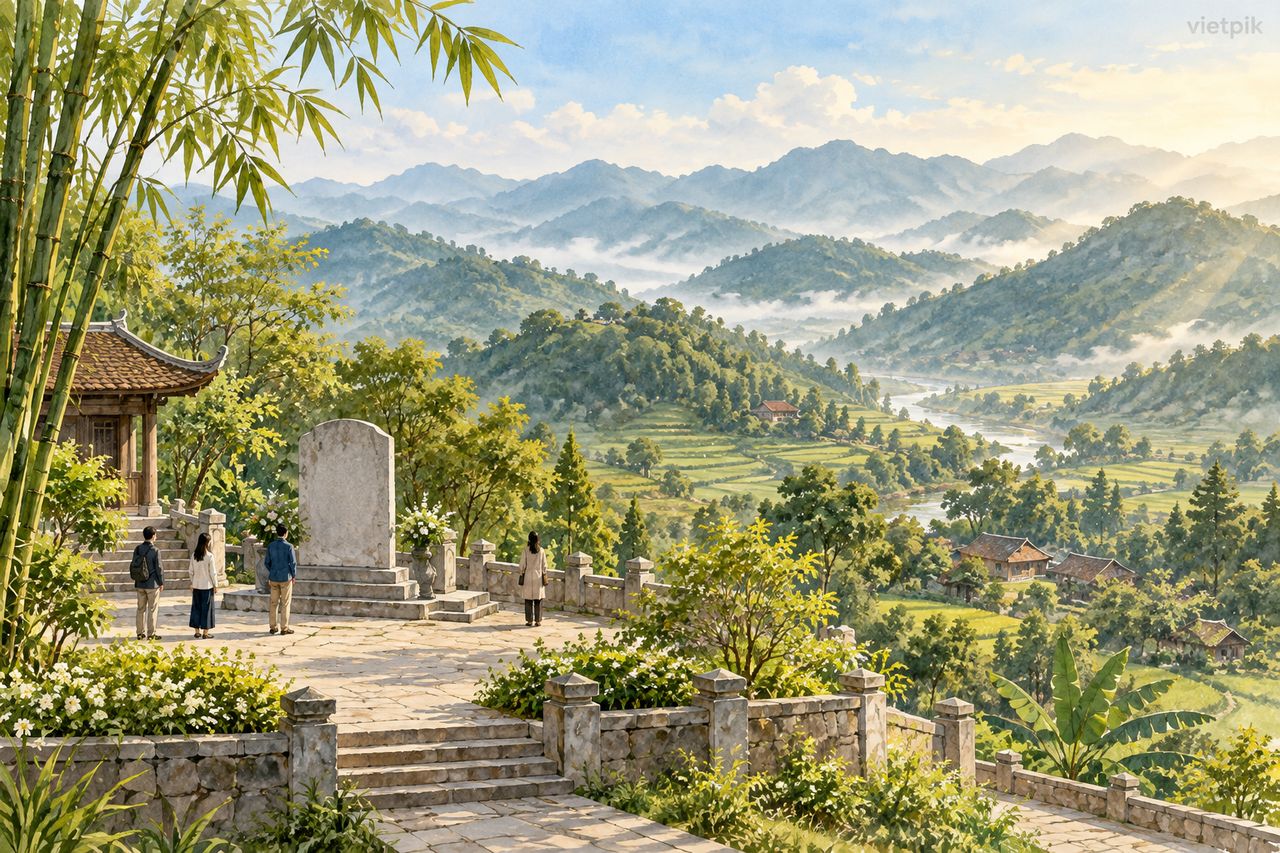
A commemoration in the present
The 2026 anniversary ceremony took place at the Hoàng Hoa Thám historical site in Yên Thế, within present-day Bắc Ninh province. It formed part of a wider festival week, demonstrating the distinction between an anniversary date and a programme spread around it. Visitors should read performances, ceremonies and exhibitions as contemporary ways of remembering the uprising. They are valuable cultural expressions without needing to be treated as literal reconstructions of every historical detail. If a scene interests you, note it and ask what source or episode the organisers used to interpret it.
16 March 2027 is a solar-calendar milestone
Unlike the lunar-calendar festivals in much of this series, the Yên Thế commemoration uses 16 March in the Gregorian calendar. The 2027 milestone is therefore 16 March 2027, marking 143 years from 1884. That date does not confirm the opening, closing or duration of a 2027 festival week. The programme still needs an official announcement. Do not convert “16/3” as though it meant the sixteenth day of the third lunar month. Keep the calendar type visible in your plan, especially when combining this visit with nearby spring festivals that follow a different system.
Use a timeline to make the visit clearer
A short timeline can help you follow a historical site without becoming overwhelmed by names. Add each new event only when you understand how it relates to what came before. If you are travelling with friends, let one person ask about chronology while another asks about the local landscape or daily life. Discuss the answers afterwards rather than competing to photograph every panel. The goal is not to finish a lesson at speed. It is to gain a coherent picture that makes future reading, or another visit to a related site, more rewarding.

Plan the journey around the event you want
Choose whether your priority is a commemorative ceremony, a cultural performance or an ordinary historical visit. Those may require different arrival times and different amounts of waiting. Once a programme is announced, reserve a sensible block for the chosen activity and arrange the return journey around it. Do not build a whole day on the assumption that the main event will be in the morning; earlier editions have included evening activity. If you decide to stay overnight, check the accommodation's actual location and transport connection rather than relying on a broad regional label.
Budget for the route you actually choose
For a day trip, list the round-trip journey, meals, water, guiding and any verified site charges. For an overnight visit, add the room and local transfers as separate items. Ask a transport provider about waiting after an evening programme and confirm a clear pickup location. A quoted vehicle price is not automatically a full travel budget. Leave optional shopping or donations outside the essential total so that travellers with different spending preferences can still share the itinerary comfortably. No prices in this article are presented as verified 2027 rates because those service arrangements have not been confirmed.
Let remembrance retain its dignity
Observe the ceremony from the public area, keep conversations quiet during formal remembrance and ask before taking close portraits. Do not use props or pose on protected structures to manufacture a dramatic historical image. A landscape photograph, a careful note or a conversation with a guide can tell a stronger story. When you later share the visit, explain which festival edition you attended and which historical period it recalled. That gives readers a way to understand the relationship between present-day Yên Thế and the struggle being remembered, without confusing performance, place and historical evidence.
Original Vietpik editorial. Food photographs illustrate dishes and do not represent a specific restaurant unless stated.
nhandan.vn vietnam.vnanet.vn baonghean.vn Last updated: 2026-09-28