Bánh canh cua offers a different noodle experience from a light vermicelli soup. Give the bowl a moment to settle, then use a small spoonful to explore how the cooking liquid holds the noodles and toppings together. The dish can look abundant, which makes it especially important to ask what the regular portion actually contains before ordering the most elaborate version. Choose according to appetite rather than the size of the photograph on a menu. At the table, compare the first few bites before adding condiments and leave yourself time to eat comfortably. A travel day does not become richer simply by squeezing in another stop; sometimes the better decision is to let one lunch last long enough for you to remember it clearly.
History & story
Bánh canh is a family of dishes, so the added word cua matters: it identifies crab as the focus of this version. This guide covers the Saigon meal rather than treating every bánh canh recipe in Vietnam as identical. Ask about the noodle itself and the toppings being served; neither a shared name nor a similar colour guarantees the same preparation.
A city version within a wider noodle family
Bánh canh is a family of dishes, so the added word cua matters: it identifies crab as the focus of this version. This guide covers the Saigon meal rather than treating every bánh canh recipe in Vietnam as identical. Ask about the noodle itself and the toppings being served; neither a shared name nor a similar colour guarantees the same preparation.
An example is not a universal recipe
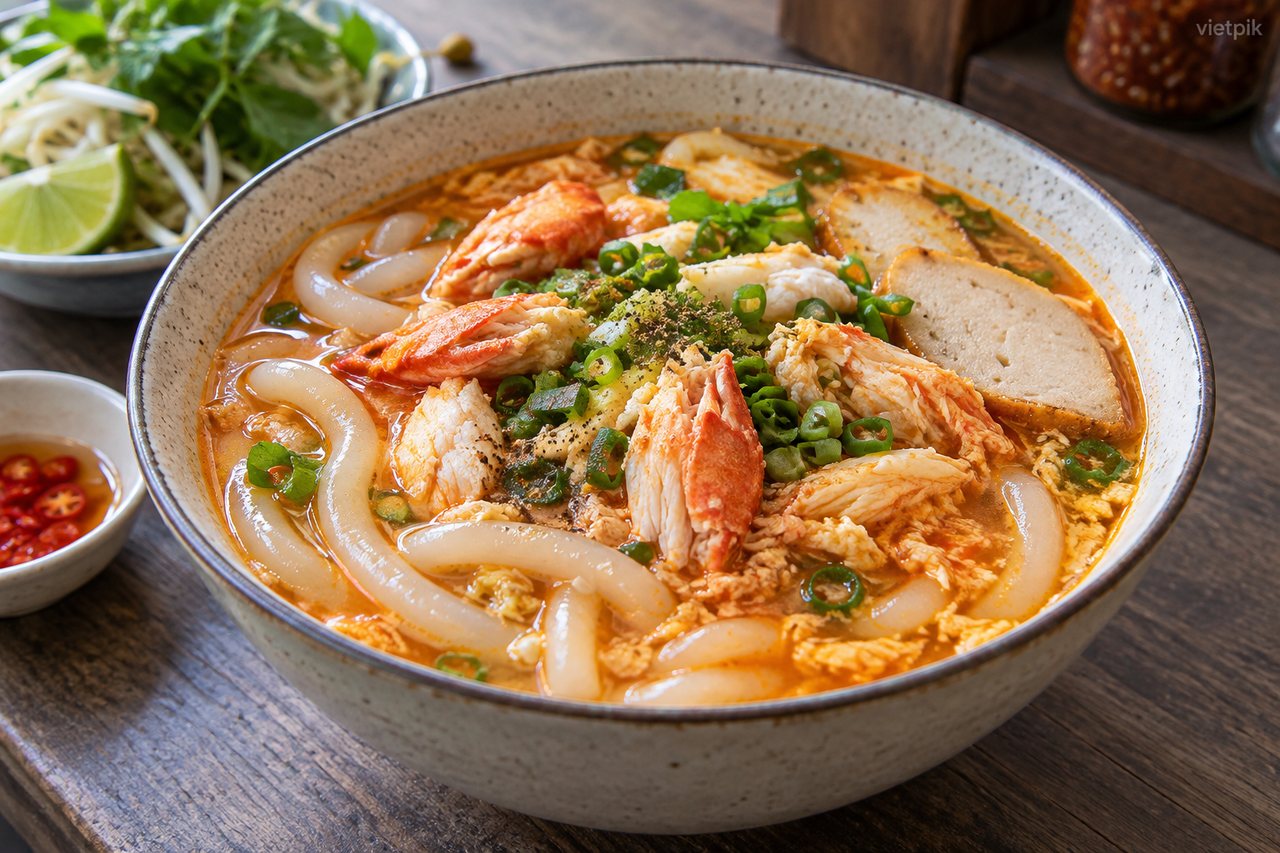
MICHELIN’s account of a local bánh canh cua specialist describes crab meat in an orange, silky soup with fish cake and egg, with further additions available. This illustrates the range a bowl may contain. It does not mean that every shop includes those ingredients or serves the same quantity. Ask which toppings are part of the listed price.
Notice noodle and broth together
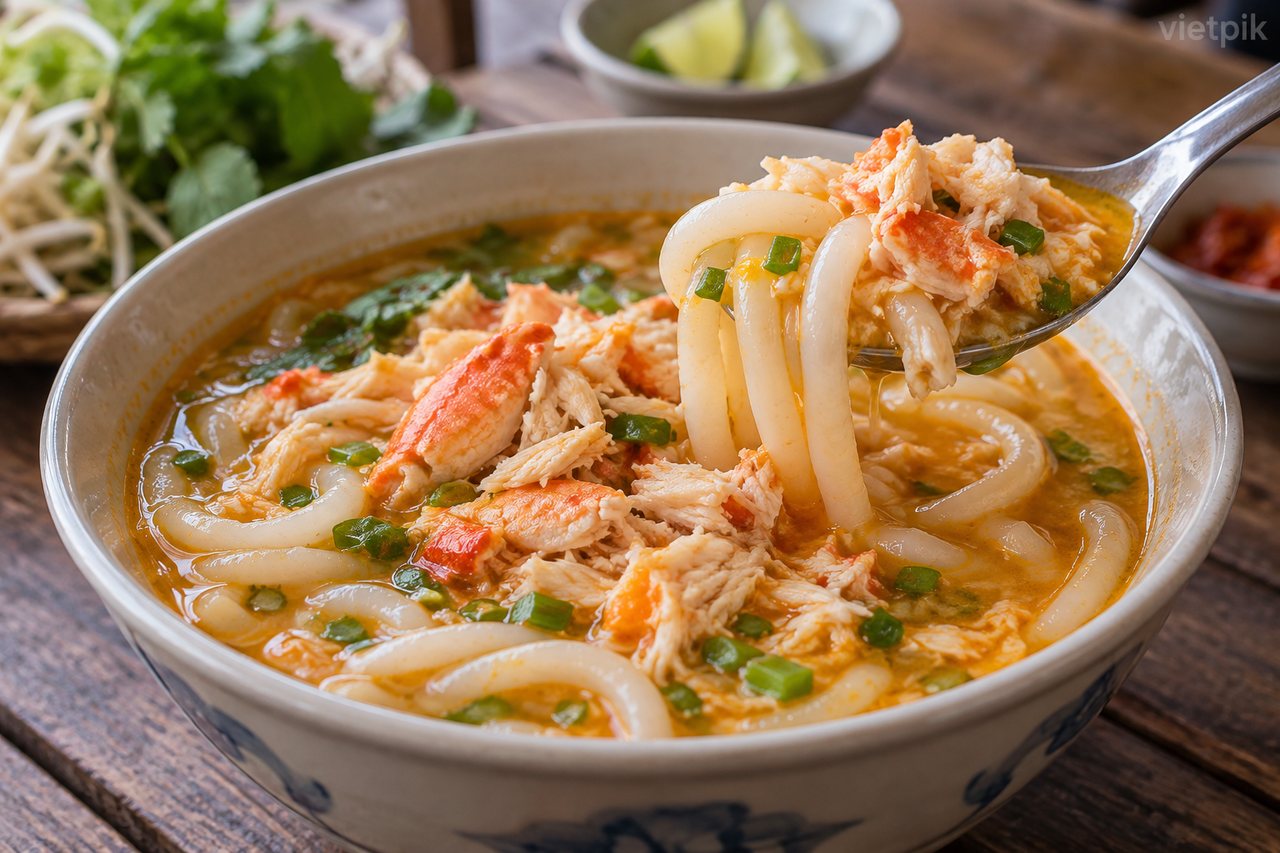
Take a little noodle with a small amount of liquid, then compare it with a spoonful containing a topping. Notice how the textures relate rather than searching only for the largest piece of crab. If a separate sauce is offered, try it on a small bite first. The whole bowl need not be seasoned in exactly the same way.
Ask about the part you are paying for
Clarify whether the menu refers to picked crab meat, a portion with shell or a special combination. Confirm extras individually, including fried dough or other accompaniments. If the dish is to be shared, ask for suitable bowls and serving utensils. A clear order makes it easier to compare value without assuming that a dramatic presentation means a better meal.
Save the regional version accurately
In your plan, keep this Saigon-style article linked to the specific restaurant you choose rather than replacing the restaurant’s own menu. Note the noodles, broth texture and toppings in your review. Prices remain venue-specific and should come from a current menu. The illustrations introduce the food but cannot verify the crab portion or presentation at any real business.
Regional identity and kitchen variation
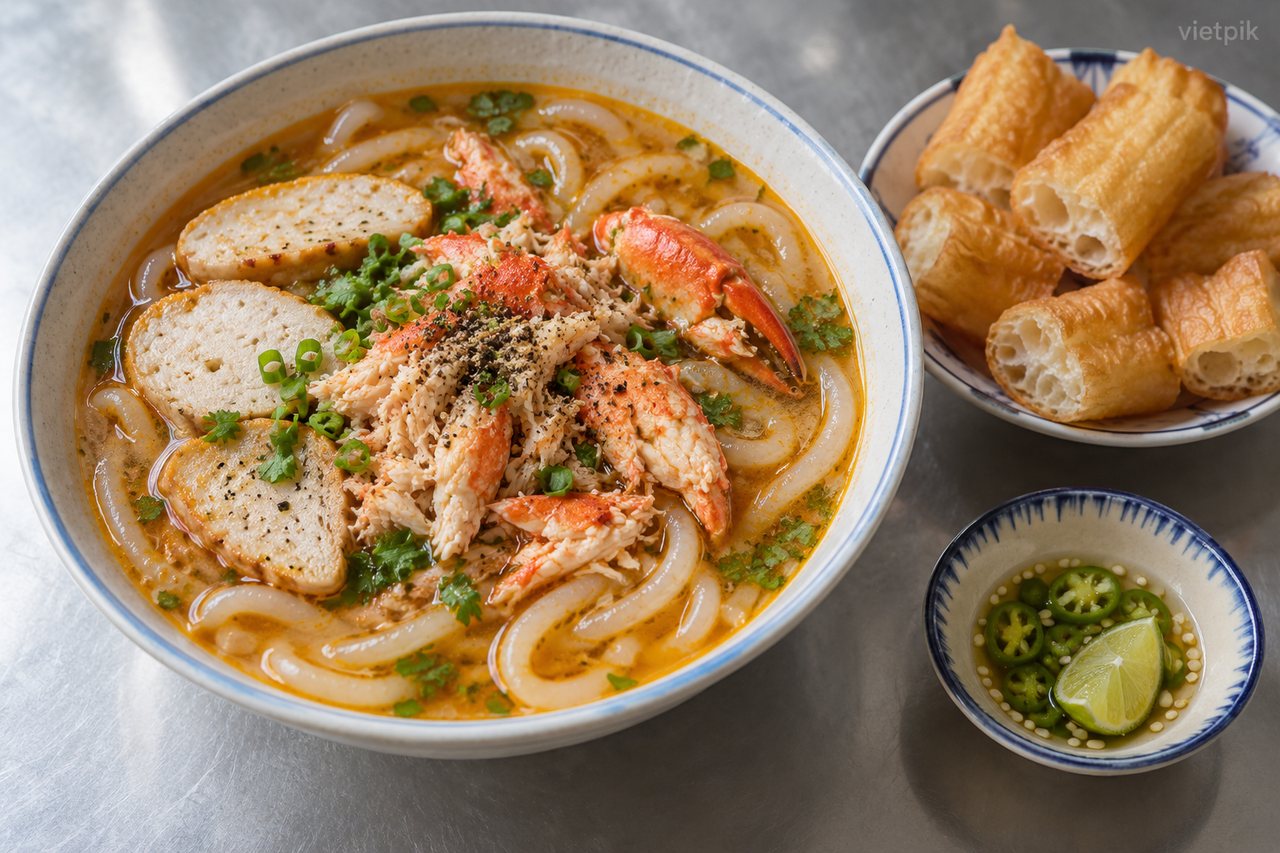
This is a Saigon-focused crab bánh canh entry. The thick noodle category contains other regional preparations with different main ingredients, so do not replace their names with bánh canh cua. Even within this version, flour blend, broth thickness and the form of the crab serving vary. Those details are a better comparison than a claim that one province always cooks it a single way.
Bánh canh noodles, crab and broth with variable toppings. A local documented example includes fish cake and egg; other recipes may differ.
Crab is shellfish. Ask about fish cake, egg, broth ingredients and the actual noodle flour blend.
Original Vietpik editorial. Food photographs illustrate dishes and do not represent a specific restaurant unless stated.
guide.michelin.com Last updated: 2026-09-27