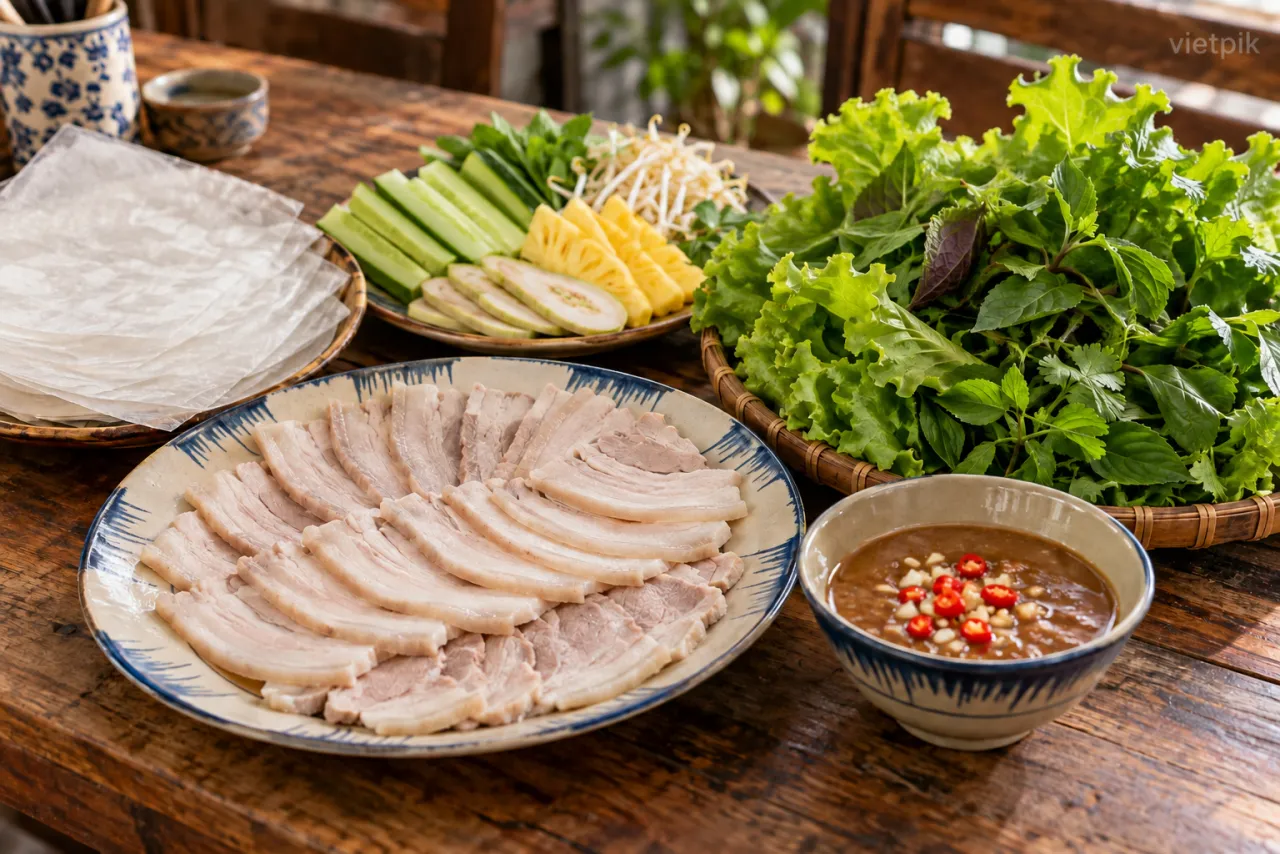
Some meals reward a little participation. With bánh tráng cuốn thịt heo, you can approach the table as an invitation to build each bite rather than a test of how neatly you can roll. There is no need to turn the first attempt into a photograph. Start small, see what holds together, and adjust the next roll to your own appetite. In a tightly packed travel itinerary, this is a useful reason to leave the phone aside and give lunch some breathing room. The dish is closely associated with Đà Nẵng, but the most useful questions at the table are immediate ones: what comes with this portion, which sauce is being served, and how many people is the platter intended for? Answer those before ordering, and the meal becomes easier to enjoy at your own pace.
History & story
Bánh tráng cuốn thịt heo is presented as a Đà Nẵng specialty by Vietnam’s tourism website and appears in accounts of the city’s food culture. The sources reviewed do not establish a single inventor or a dependable founding date for this specific dish. Its regional association is retained here without turning broader rice-paper traditions into a precise origin claim.
A local specialty, without an invented birthday
Vietnam’s tourism website identifies pork rice-paper rolls as a Đà Nẵng specialty. That gives visitors a useful regional connection, but it does not establish an inventor or a reliable date of creation. Enjoy the local association without attaching a grand origin story to every component of the platter.
Understand what you are ordering
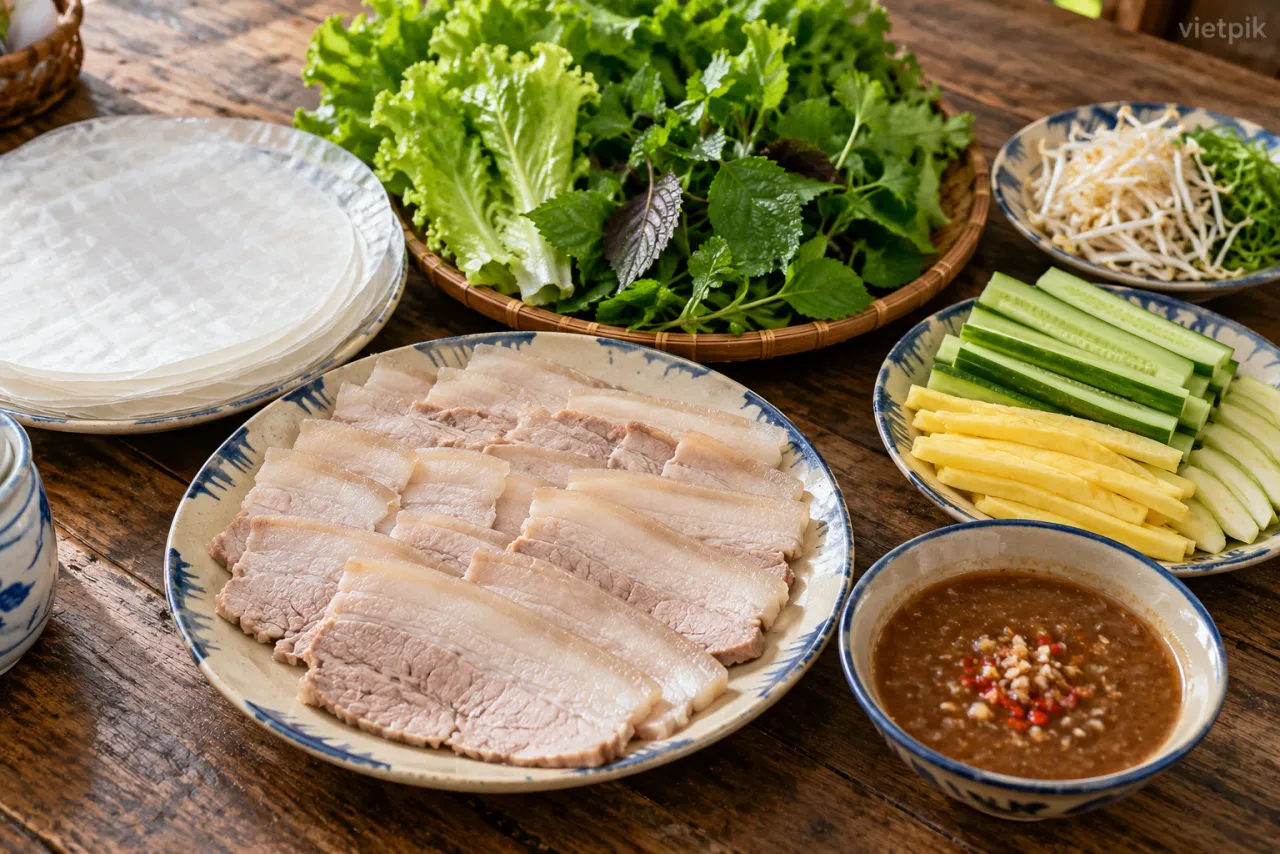
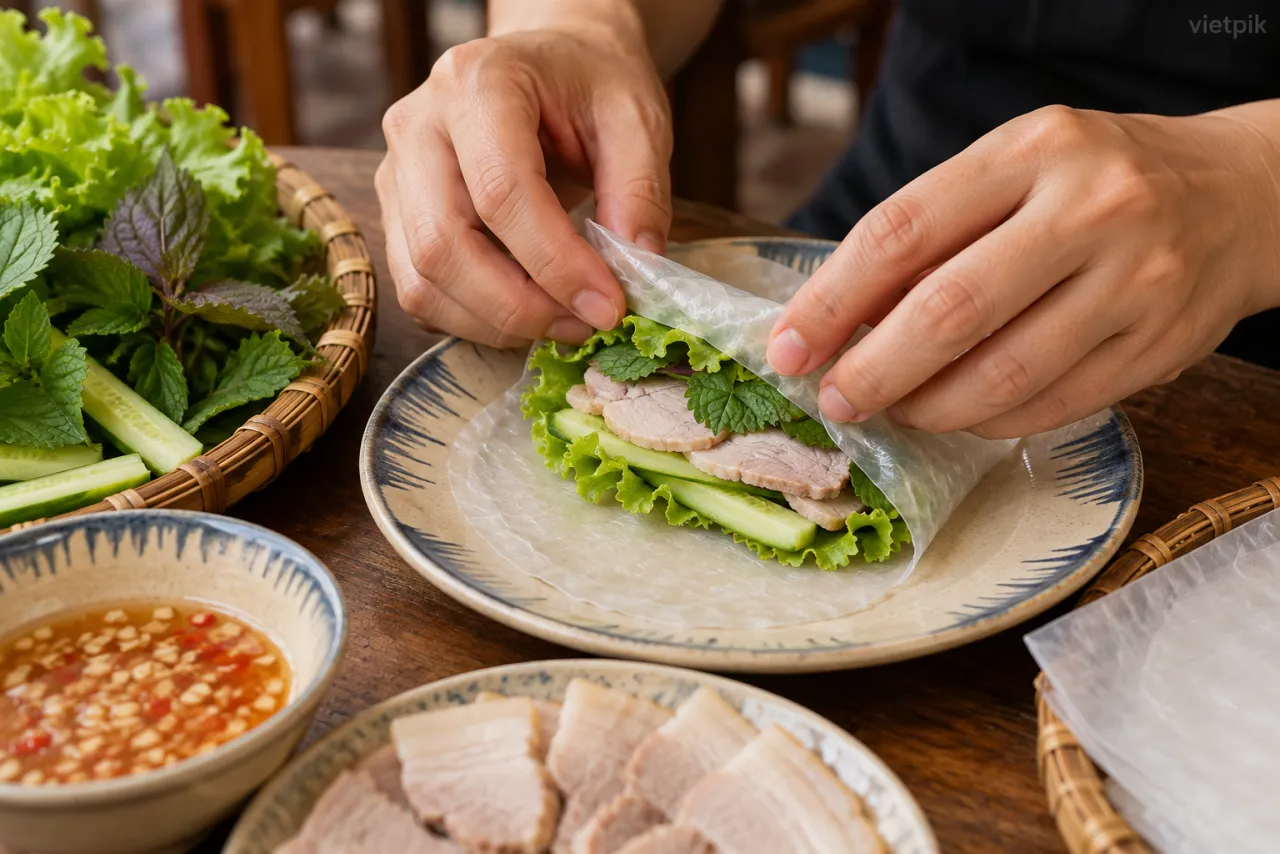
The familiar platter brings sliced cooked pork together with rice paper and fresh vegetables. The cultural journal Văn Hóa Nghệ Thuật describes a Đà Nẵng version using boiled pork with skin at both ends and mắm nêm. Treat this as a recognizable style, not a guarantee that every venue prepares the meat in exactly the same way.
- Ask how many diners a portion serves.
- Check whether extra vegetables, wrappers or drinks cost more.
- Ask the server to demonstrate one roll if you are unsure.
Give the dipping sauce its own attention
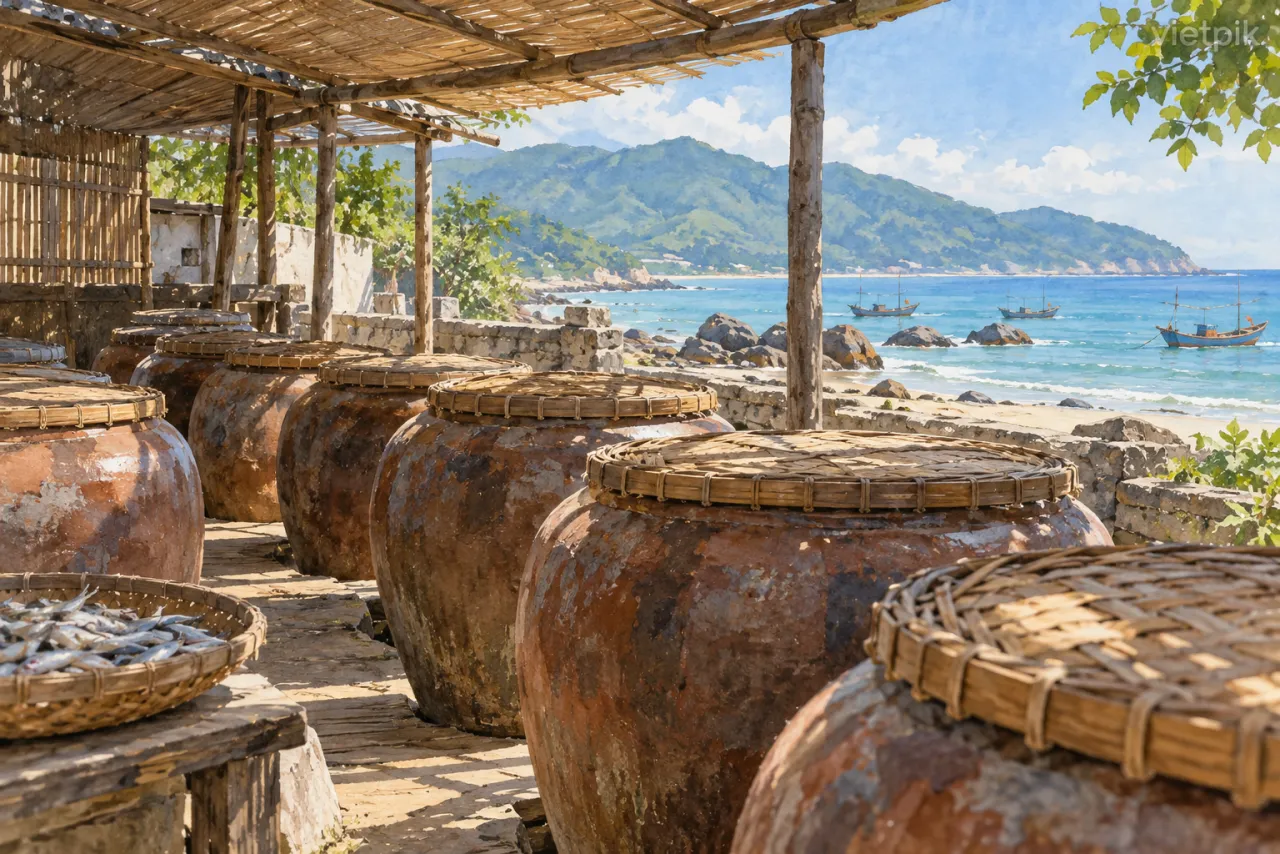
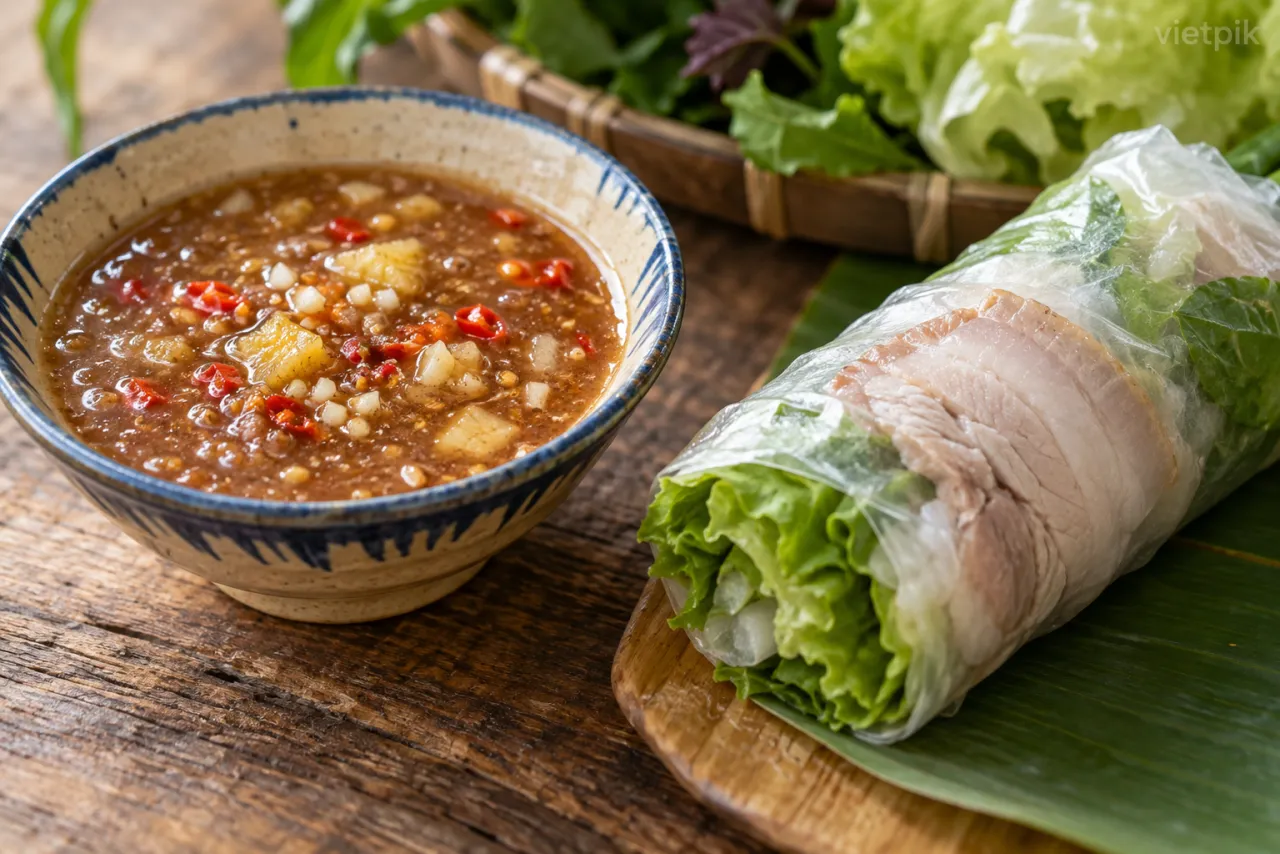
Mắm nêm is a fermented fish-based accompaniment associated with this dish. Ask for a separate dipping bowl if you want to control each bite. If you dislike a strong sauce, ask what alternatives the kitchen actually offers. A different sauce changes the experience, but comfort matters more than forcing yourself through a flavour you do not enjoy.
A gentle way to begin
Keep the first roll small enough to handle. Add the ingredients you want to compare, take a bite, then decide what to change. You might prefer more vegetables or a smaller amount of meat. If a wrapper tears, use the plate and try again. There is no reason for lunch to become a performance for the rest of the table.
Check ingredients, then plan the meal
Do not infer that the meal meets a dietary requirement from the vegetables or rice paper alone. Ask about the sauce, seasoning and preparation. When saving this dish to an itinerary, also choose a verified venue and leave time to sit down. A dish entry is a starting point for choosing lunch, not evidence that a particular restaurant has accepted an order.
Cooked sliced pork, rice paper, fresh vegetables and dipping sauce; accompaniments differ by venue.
Ask about fish in the dipping sauce and all seasoning ingredients. Confirm individual requirements directly with the kitchen; the platter is not an allergen declaration.
Use serving utensils for shared plates and ask before photographing other diners.
Original Vietpik editorial. Food photographs illustrate dishes and do not represent a specific restaurant unless stated.
vietnam.travel vanhoanghethuat.vn guide.michelin.com Last updated: 2026-09-27