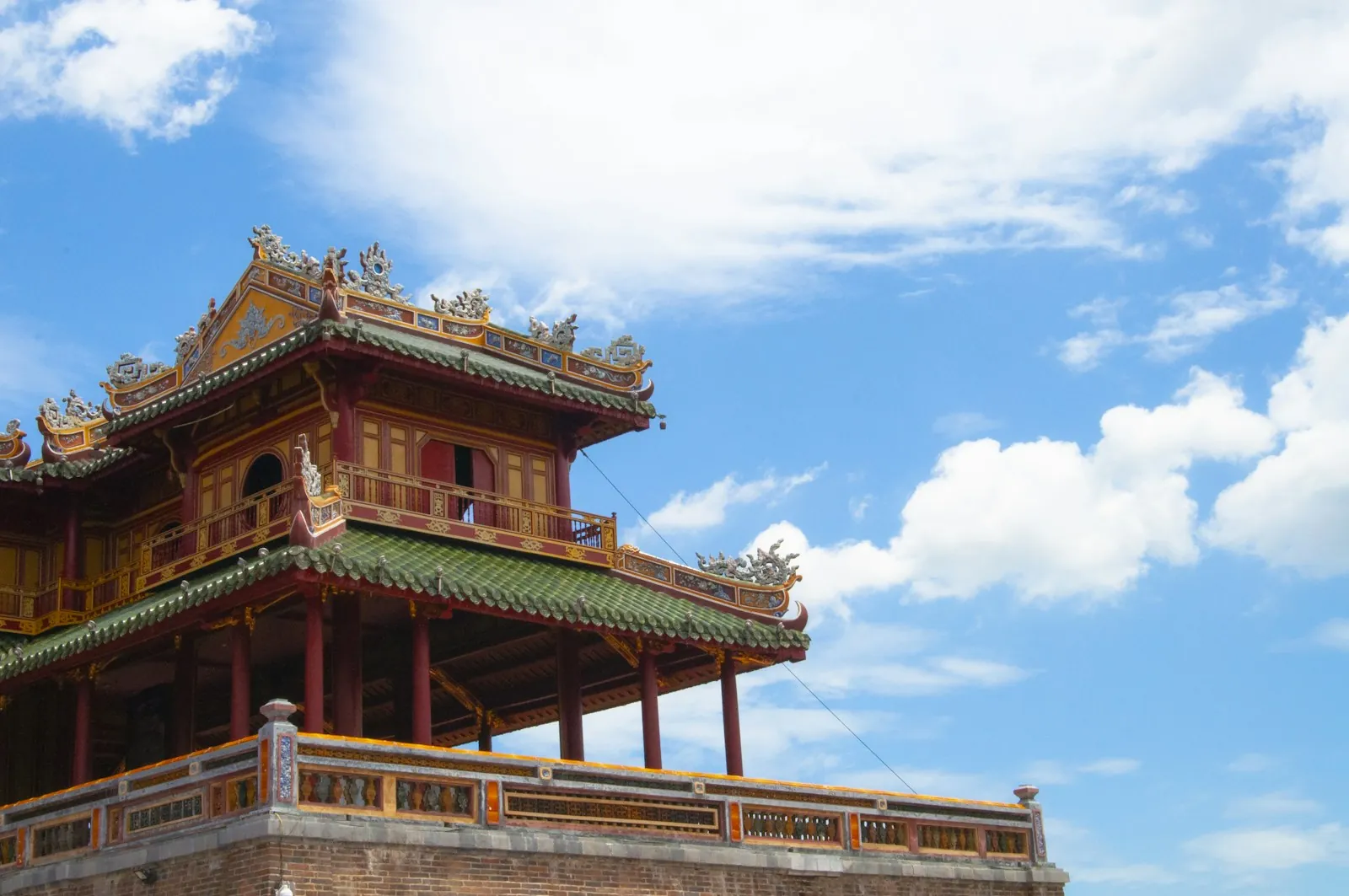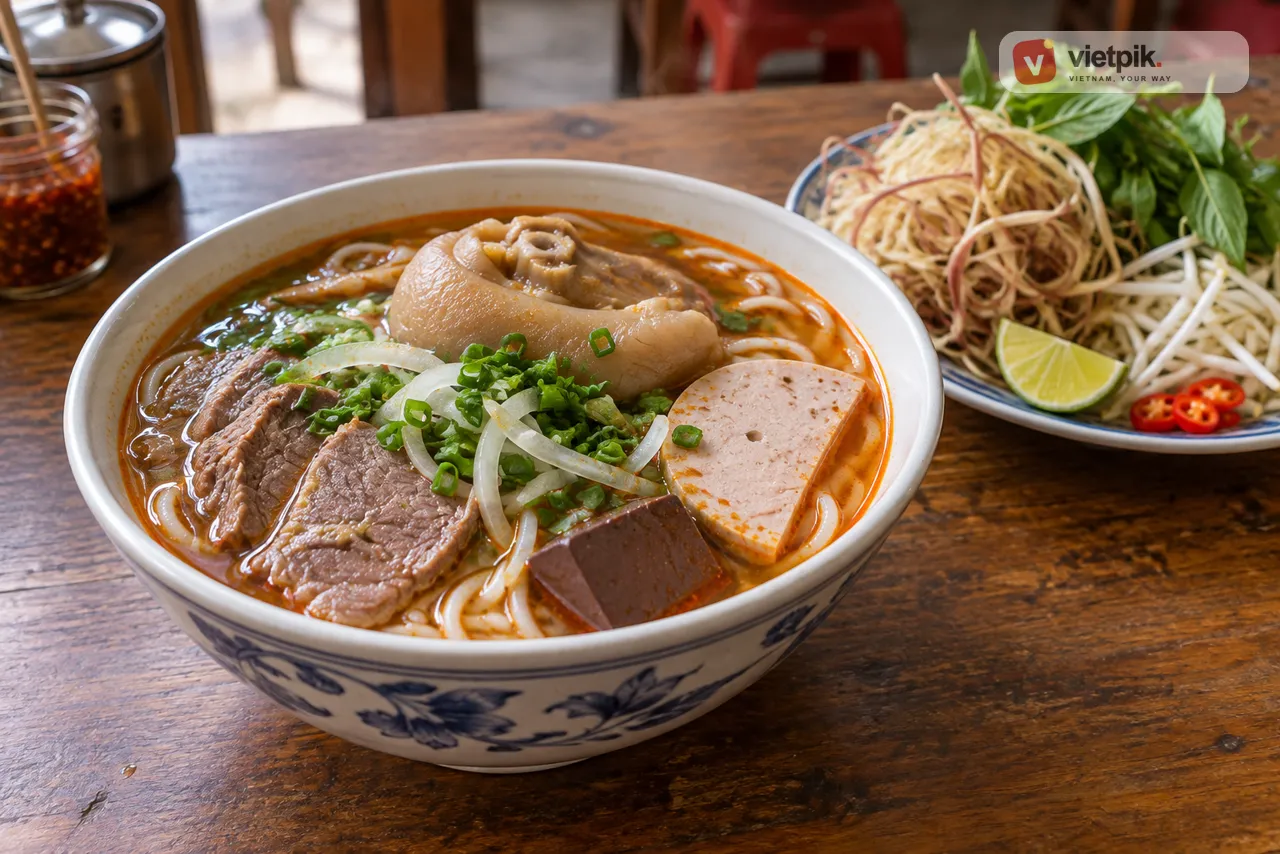
Bún bò Huế is a rice-noodle soup from Huế in central Vietnam, a city whose food culture developed through both courtly refinement and everyday street cooking. The bowl is recognised by thick, round rice noodles; a clear but full-bodied beef-and-pork broth; the perfume of bruised lemongrass; fermented shrimp paste; and a red layer of chilli oil. Beef may be the ingredient named in the dish, but traditional bowls can also contain pork hock, Vietnamese pork sausage and cubes of congealed pork blood.
In Huế, diners often shorten the name to bún bò. Elsewhere, Huế is retained to identify the dish’s origin and distinguish it from other Vietnamese preparations called bún bò. It is not simply a spicy version of phở: the noodle shape, aromatic structure, stock, toppings and table herbs are different. A good bowl balances savoury stock, the salt and depth of fermented shrimp paste, citrusy lemongrass, controlled heat and the freshness of banana blossom, herbs and lime.
Recipes vary from household to household and city to city, so no single topping list should be treated as universal. This guide follows the culinary structure documented by Vietnam’s official tourism authority and uses the Wikipedia article supplied by the project owner as a comparative overview. It separates widely documented characteristics from origin legends that cannot be stated as settled fact.
History & story
Bún bò is inseparable from Huế, the former imperial capital in central Vietnam. Huế cuisine is often discussed through two connected traditions: the elaborate standards associated with the Nguyễn court and the resourceful cooking of local households and street vendors. Bún bò belongs to the city’s living food culture rather than to a single documented inventor. Stories about a woman called Cô Bún and the noodle-making village of Vân Cù form part of local culinary memory, but the exact date and authorship of the dish remain debated. What is firmly established is the geographical identity: in Huế the dish is commonly called bún bò, while speakers elsewhere add Huế to mark its origin.
What makes a bowl recognisably Bún bò Huế?
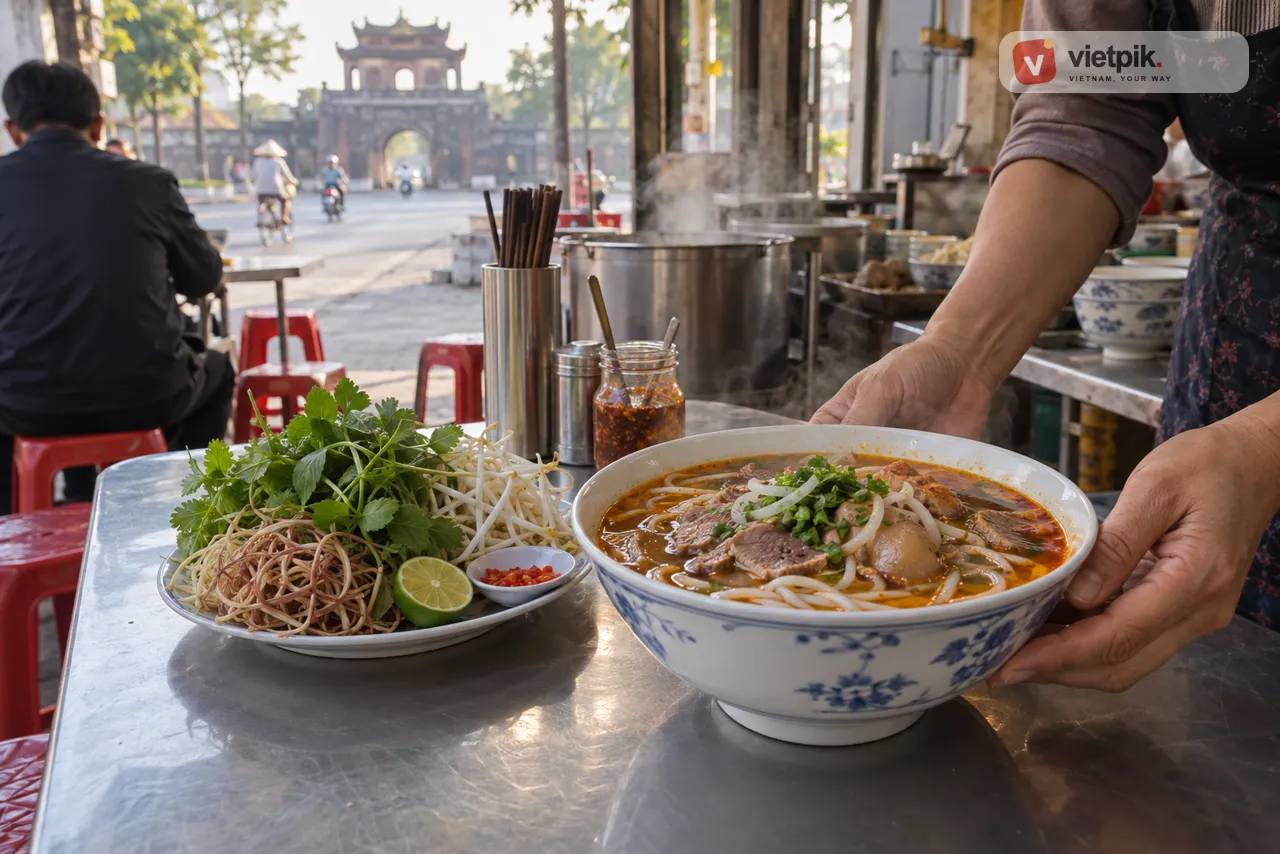
The first clue is the noodle. Bún bò Huế uses a thicker, rounder strand than the flat bánh phở found in phở. The broth should carry lemongrass before the chilli announces itself. Fermented shrimp paste provides salinity and depth, while carefully simmered beef and pork ingredients give the liquid body without turning it cloudy or heavy. The red surface usually comes from a seasoned chilli or paprika oil rather than from a tomato broth.
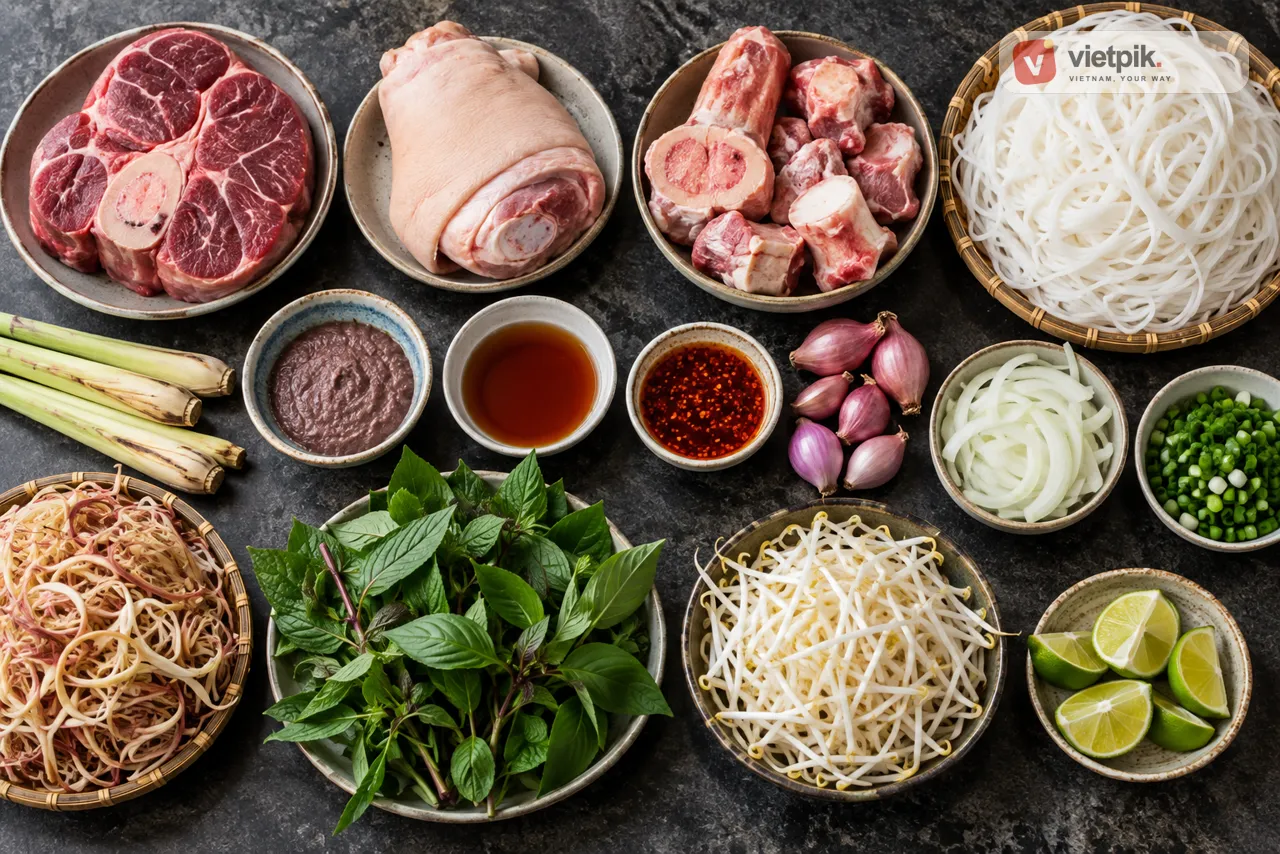
The anatomy of the bowl
- Noodles: thick, round rice vermicelli with enough resilience to sit in hot broth.
- Broth: beef and often pork stock scented with bruised lemongrass and seasoned with fermented shrimp paste and fish sauce.
- Meat: sliced beef shank or brisket, with pork hock, oxtail, sausage or blood curd depending on the kitchen.
- Aromatic oil: chilli, shallot and sometimes paprika or annatto create colour and controlled heat.
- Fresh side plate: banana blossom, herbs, bean sprouts, lime and chilli bring crunch, perfume and acidity.
How the broth develops its depth
The official Vietnam Tourism recipe begins by cleaning and blanching beef cartilage and shank, then simmering them in fresh water while impurities are skimmed away. Bruised lemongrass releases aromatic oils over the long cook. A separate mixture of oil, scallion, paprika and fish sauce brings colour and savoury character; diluted fermented shrimp paste is incorporated with care so it enriches the broth instead of dominating it. Cooking times and proportions differ, but patience, skimming and seasoning in stages are more important than simply making the soup hot or spicy.
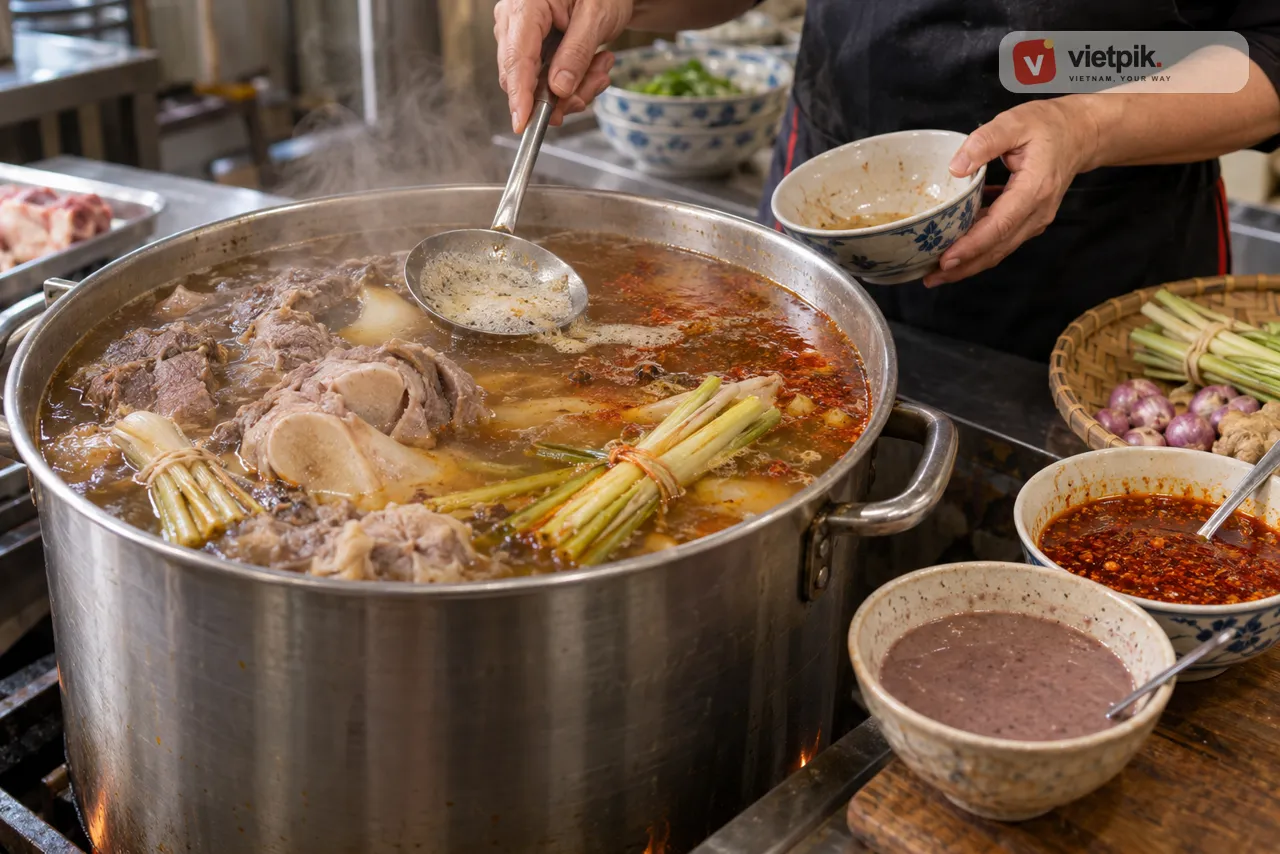
From Huế mornings to tables across Vietnam
In Huế, bún bò is closely associated with the morning and with modest eateries where stockpots begin working before the city is fully awake. As the dish travelled, cooks adapted it to local expectations and ingredient supply. Southern bowls are often larger and may taste sweeter, with more herbs and toppings. Northern interpretations may emphasise beef, tendon or a cleaner savoury profile. These versions are part of the dish’s continuing life, but a menu using the Huế name should still retain the central grammar of thick noodles, lemongrass, fermented shrimp paste and a deeply seasoned stock.
How to taste it
Begin with the broth before adding anything. Notice lemongrass first, then the fermented depth and chilli warmth. Add a small handful of herbs or banana blossom, not the whole plate at once, and use lime only if the bowl needs acidity. If you are unfamiliar with fermented shrimp paste, ask before adding extra. The best comparison between bowls is not which one is hottest, but how clearly stock, lemongrass, seasoning, noodles and toppings remain distinct while supporting one another.
Core components: thick round rice vermicelli; a stock made from beef bones and commonly pork bones or pork hock; beef shank or brisket; bruised lemongrass; fermented shrimp paste; fish sauce; shallot or onion; chilli oil; scallion and coriander. Traditional or common additions include pork hock, Vietnamese pork sausage, congealed pork blood, oxtail or crab cake. Table accompaniments may include sliced banana blossom, bean sprouts, Vietnamese mint, basil, perilla, Vietnamese coriander, sawtooth herb, lime and fresh chilli. Exact combinations vary by cook and region.
Fermented shrimp paste contains shellfish. Fish sauce is normally used. Pork, blood products and gluten-containing processed sausage may be present even when they are not obvious from the dish name; ask the kitchen if you have allergies, dietary restrictions or avoid pork.
Taste the broth before adding chilli, lime, fish sauce or shrimp paste. Add herbs in small amounts so the bowl stays hot and the lemongrass aroma remains clear. In Huế the dish is strongly associated with the morning, although restaurants in other cities may serve it throughout the day.
Original Vietpik editorial. Food photographs illustrate dishes and do not represent a specific restaurant unless stated.
www.vietnam.travel vietnam.travel en.wikipedia.org Last updated: 2026-09-27