The first thing you notice may be the grilled pork, but the small grains underneath deserve equal attention. Cơm tấm is a meal built through combinations: rice, a chosen topping, something fresh or pickled and enough sauce to bring the plate together. In Saigon, learning three short menu words can make the difference between ordering at random and choosing a lunch you really want. Let the dish occupy a comfortable gap between visits rather than treating it as a snack to squeeze into an already crowded route. Sit down, look at the components and take a bite that includes a little rice. The point is not to assemble the largest possible plate; it is to discover the balance that makes you want the next spoonful.
History & story
Broken rice is the defining ingredient, while the surrounding plate can change. MICHELIN’s account of Saigon cơm tấm discusses the dish through local cooks and the familiar sườn–bì–chả combination. Origin stories should be read as stories unless supported by stronger historical evidence. A traveller can appreciate the city’s attachment to this everyday meal without naming a single inventor.
The rice belongs in the story
Broken rice is the defining ingredient, while the surrounding plate can change. MICHELIN’s account of Saigon cơm tấm discusses the dish through local cooks and the familiar sườn–bì–chả combination. Origin stories should be read as stories unless supported by stronger historical evidence. A traveller can appreciate the city’s attachment to this everyday meal without naming a single inventor.
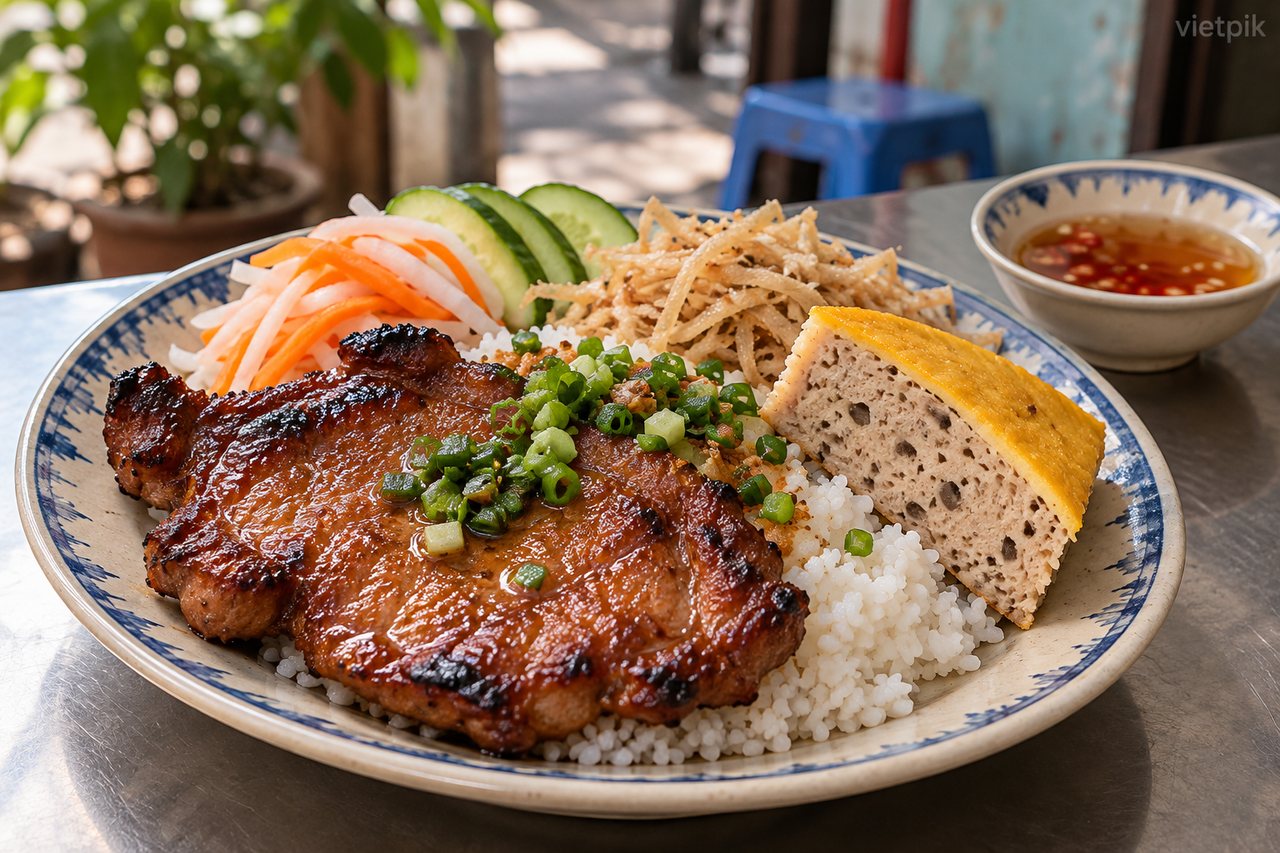
Three words that help you order
Sườn refers here to grilled pork; bì to shredded pork skin, often with other components; chả to the savoury steamed egg-and-meat loaf. Ask what is included in the listed plate and whether a fried egg is an extra. These distinctions matter more than a loosely translated label such as special rice. A server can point to the components if the menu photographs are unclear.
The regional detail is in the balance
This article follows the Saigon plate, with grilled pork and a selection of accompaniments, rather than claiming that all broken-rice dishes taste the same. Even within the city, marinade sweetness, the amount of scallion oil and the strength of the accompanying sauce vary. Record those features instead of assuming every difference is explained by a north–south divide.
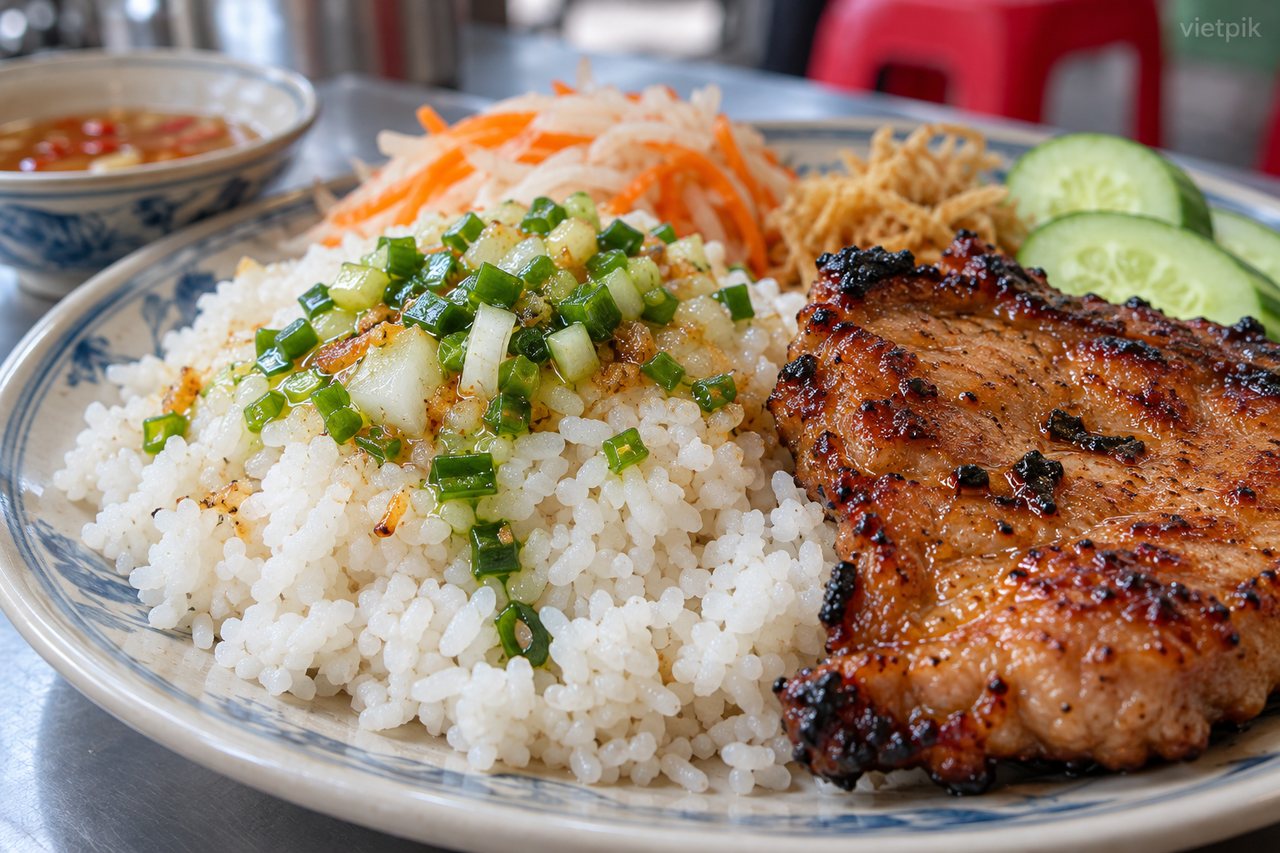
Build one satisfying spoonful
Try the rice and pork before pouring sauce over the plate. Add a little sauce where you will take the next bite, then bring in the fresh or pickled accompaniment. This leaves room to adjust. If sharing, agree which components each person wants before cutting the meat, and order extra rice only when the portion in front of you calls for it.
Save the combination, not only the dish name
Your plan entry can say cơm tấm sườn bì chả and link the restaurant that actually offers it. Keep the quoted price for that combination separate from drinks and extras. After the meal, a short note about the rice, pork and sauce will help you compare future visits more accurately than a photograph of an unidentified oversized pork chop.
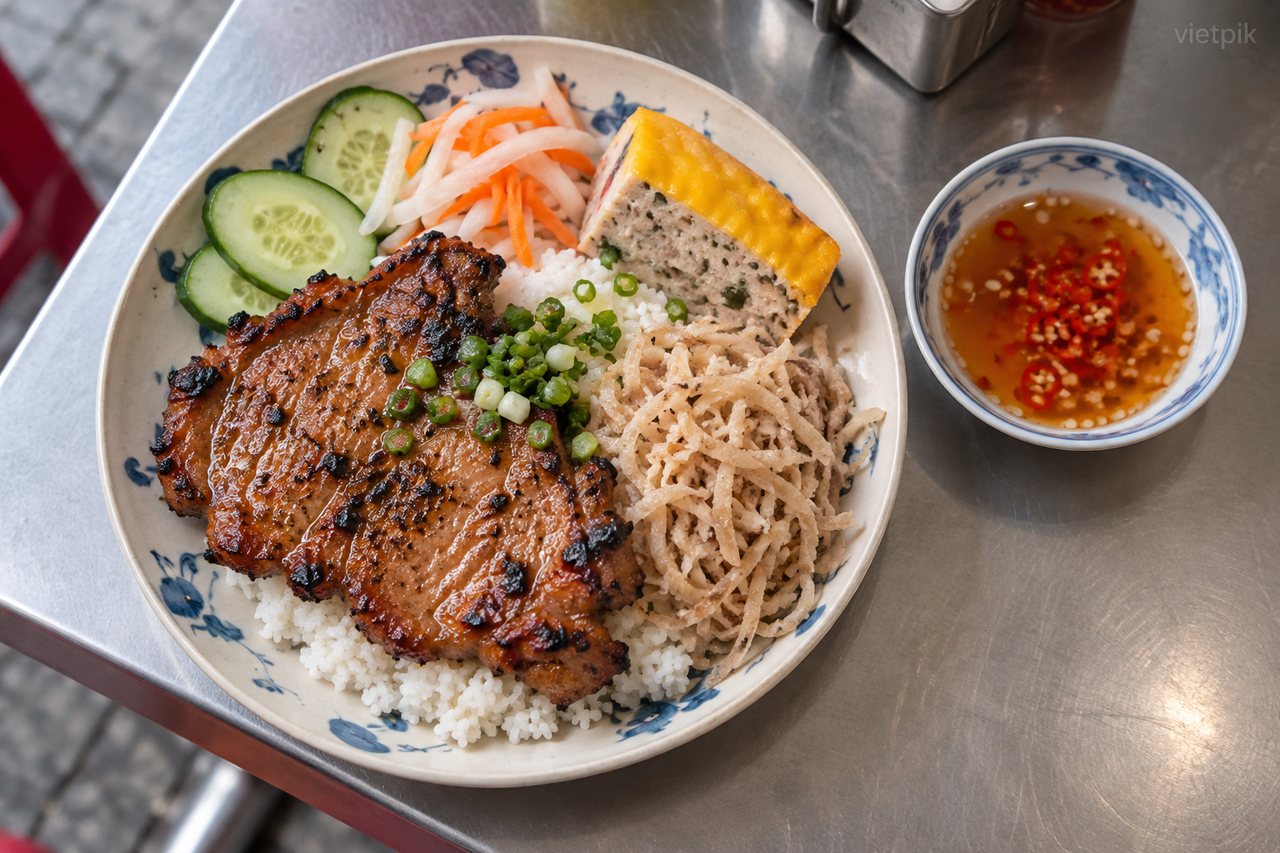
Broken rice, grilled pork and optional shredded pork skin or steamed egg-and-meat loaf, with sauce and accompaniments specific to the kitchen.
Egg and fish sauce may be present. Ask about soy, wheat and other ingredients in marinades and meatloaf.
Original Vietpik editorial. Food photographs illustrate dishes and do not represent a specific restaurant unless stated.
guide.michelin.com Last updated: 2026-09-27