The most useful first question at a hủ tiếu counter is wonderfully short: soup or dry? That choice changes how the meal arrives and how you experience the noodles, even before you decide on the toppings. Hủ tiếu Nam Vang is a good place to begin exploring Saigon's noodle vocabulary because it invites comparison without demanding an expert palate. Look at the bowl before mixing, try a mouthful as served and let the next bite answer a question: do you prefer more broth, a little seasoning or a different balance of greens? Give the meal a proper pause in your day. It deserves more attention than a photograph taken while a driver waits outside, and the version you enjoy may become the breakfast you choose again before leaving the city.
History & story
Vietnam Tourism identifies Nam Vang as one of the hủ tiếu styles encountered in Ho Chi Minh City, alongside other regional versions. Treat the full dish name as useful information rather than shortening every noodle bowl to phở. This guide follows the city’s serving culture; it does not claim that Saigon invented the dish or settle the history of its movement between communities.
A place in Saigon’s noodle repertoire
Vietnam Tourism identifies Nam Vang as one of the hủ tiếu styles encountered in Ho Chi Minh City, alongside other regional versions. Treat the full dish name as useful information rather than shortening every noodle bowl to phở. This guide follows the city’s serving culture; it does not claim that Saigon invented the dish or settle the history of its movement between communities.
Read the toppings before ordering
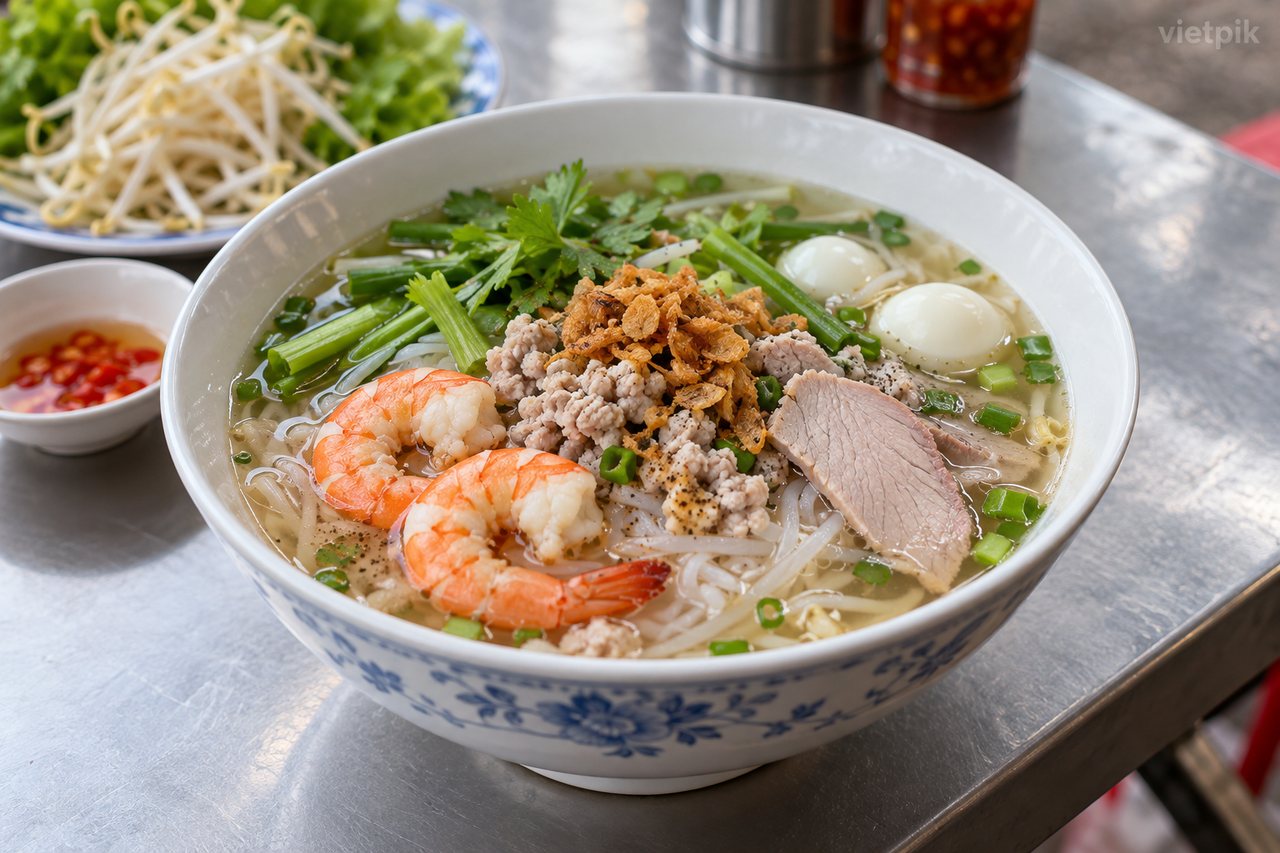
Local tourism descriptions include shrimp, minced pork and quail egg among possible toppings. The combination is not fixed. Ask what a regular bowl contains and what changes in the special version, especially if you prefer to leave out offal. A clearly specified ordinary bowl can be more satisfying than an expensive assortment chosen without understanding it.
Khô and nước are different experiences
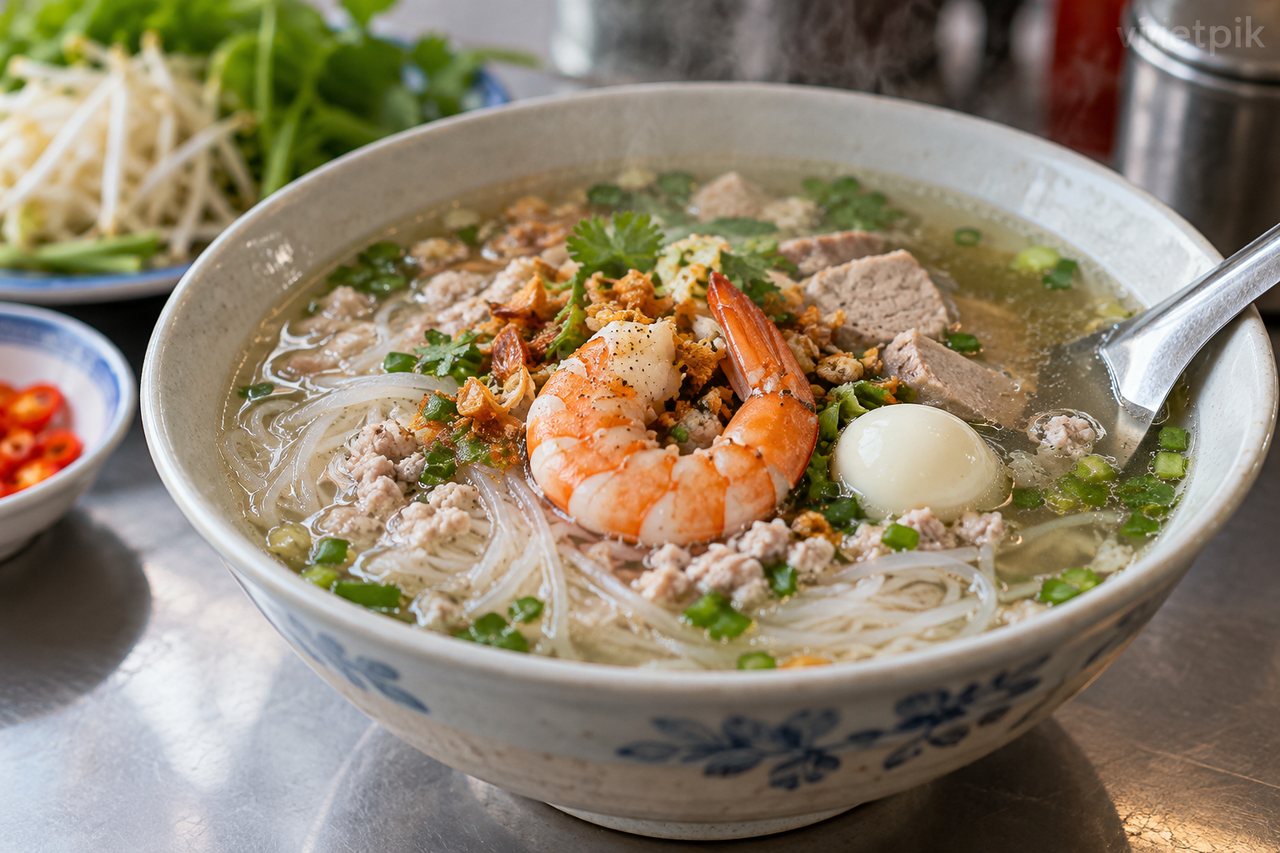
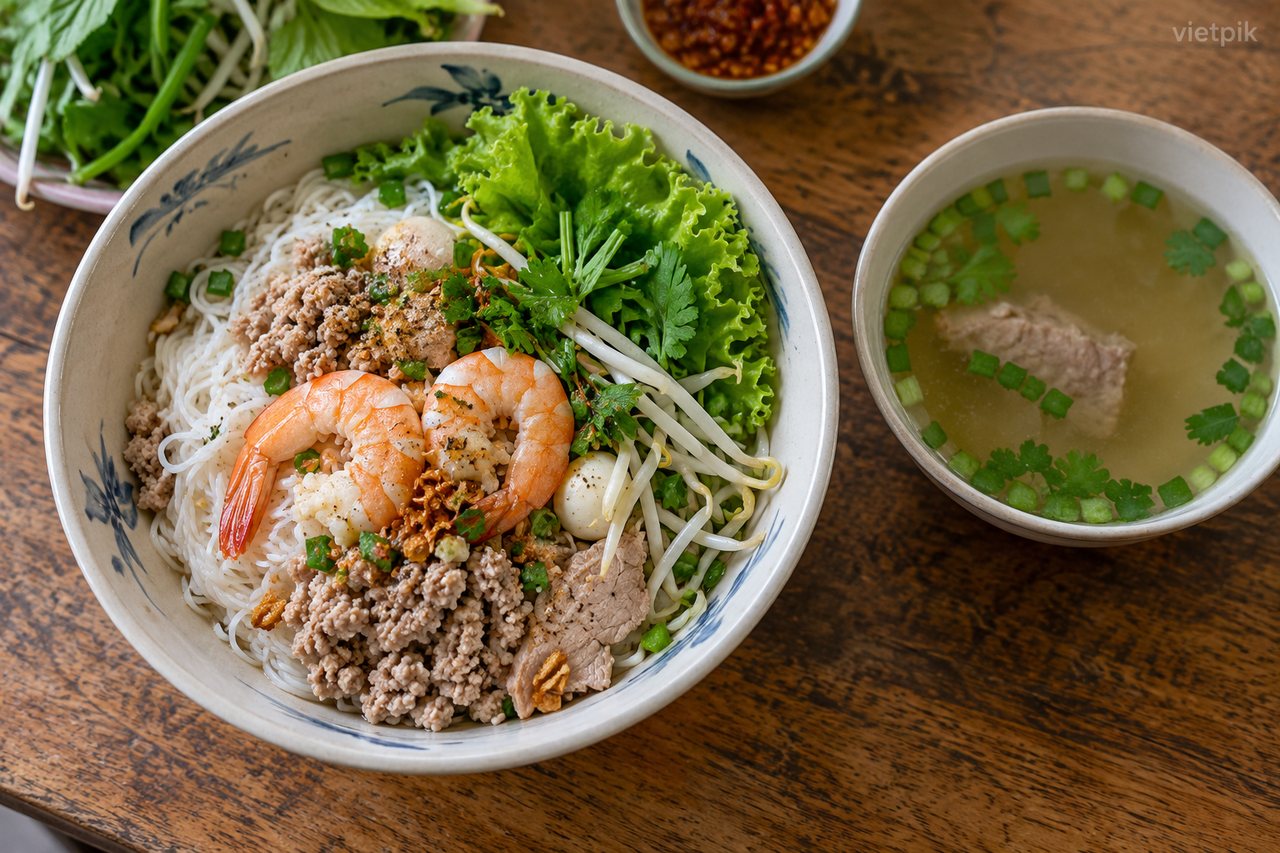
With a dry preparation, ask whether broth comes separately and what dressing has already been added. With soup, taste the broth before reaching for the condiment tray. Compare the texture of a few noodles early in the meal with those left longer in liquid. The point is to discover your preference, not to decide that one format is more authentic.
A short phrase that helps
“Một tô hủ tiếu Nam Vang khô, không lấy nội tạng” asks for a dry bowl without offal. Confirm the kitchen understood and can accommodate the request before preparation begins. Ask separately about the broth and sauce if ingredients matter to you; removing a topping does not change what was used to prepare the rest of the meal.
Keep a useful food note
Save the venue together with the exact style, portion and current price you paid. Note whether the broth was separate and which extras suited you. When adding the dish to a travel plan, also choose a real restaurant and its confirmed opening time. A food-wiki entry describes an idea for a meal; it does not reserve a table or promise availability.
Regional identity and kitchen variation
Nam Vang is a named style within a broader hủ tiếu family. Keep that name when comparing it with another city’s bowl; soup versus dry is a serving choice, not proof of a separate regional origin. In Saigon, record the noodle texture, toppings and accompanying broth rather than treating every hủ tiếu as interchangeable.
Rice noodles with recipe-dependent broth, dressing and toppings; examples include pork, shrimp, quail egg, greens and fried garlic.
Ask about shellfish, eggs, fish or soy seasonings and all ingredients in the broth and dressing.
Original Vietpik editorial. Food photographs illustrate dishes and do not represent a specific restaurant unless stated.
vietnam.travel vietnam.travel Last updated: 2026-09-27