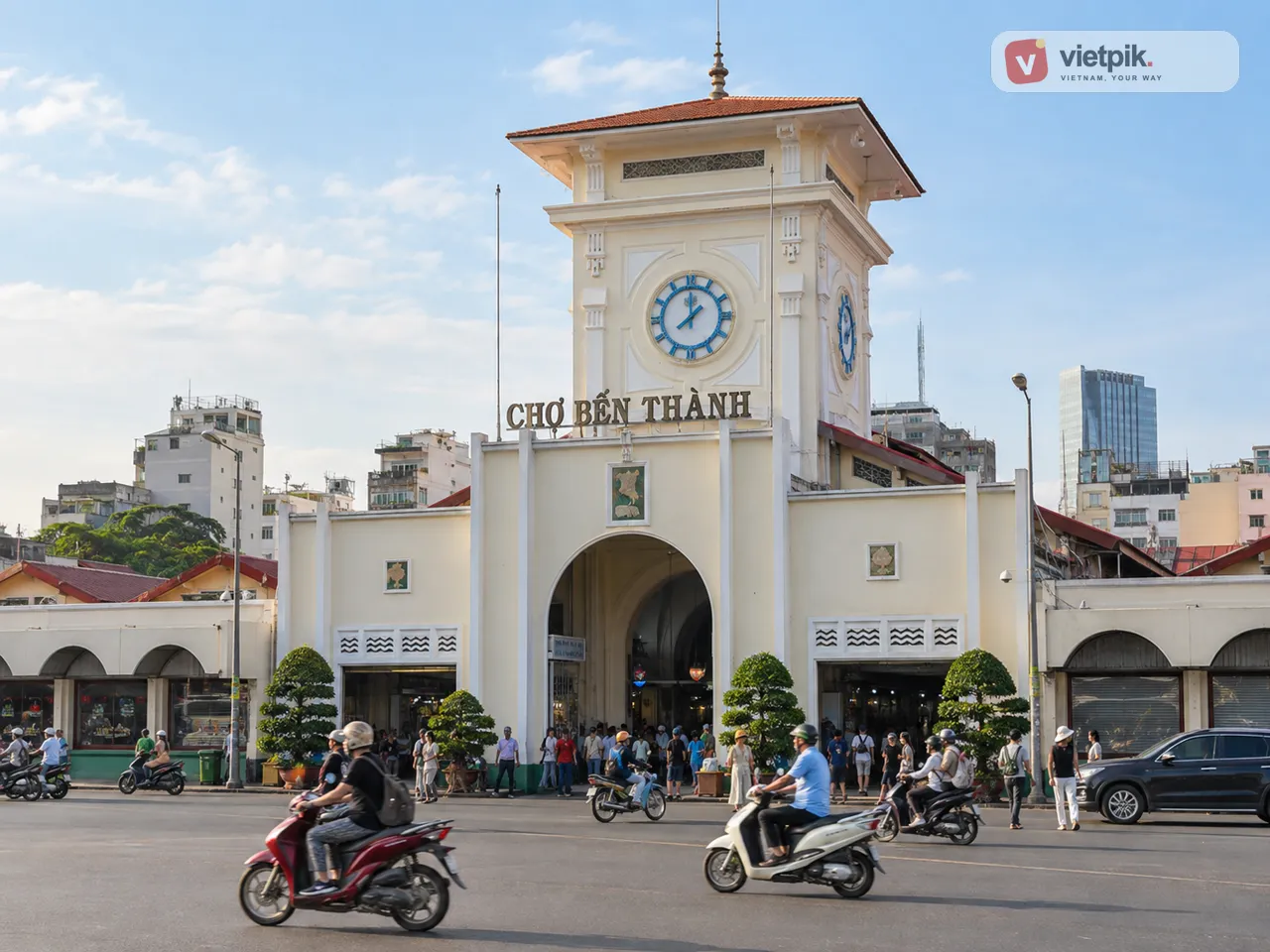
Phá lấu is easier to approach when the description is direct. If you are curious about the dish, begin by asking which cuts the kitchen uses and how the portion is served. There is no need to turn tasting unfamiliar food into a dare. Choose a small serving, give the aroma and texture your attention and decide whether you want another bite. Bread alongside the bowl can make the meal feel familiar while you get to know what is inside it. This is also a useful reminder that food discovery works best when it respects personal limits: one traveller may be delighted by the variety of textures, another may prefer to learn the story and order something else. Both are reasonable ways to explore Saigon's food culture.
History & story
A VnExpress report from 2018 documents a Saigon preparation using beef offal and coconut-rich cooking liquid, served with bread. That is one recorded version, not a current menu promise. It is useful precisely because it names what diners are eating. Describing the dish only as “beef stew” can hide the information a first-time visitor needs most.
Name the main ingredient honestly
A VnExpress report from 2018 documents a Saigon preparation using beef offal and coconut-rich cooking liquid, served with bread. That is one recorded version, not a current menu promise. It is useful precisely because it names what diners are eating. Describing the dish only as “beef stew” can hide the information a first-time visitor needs most.
One name can cover different preparations
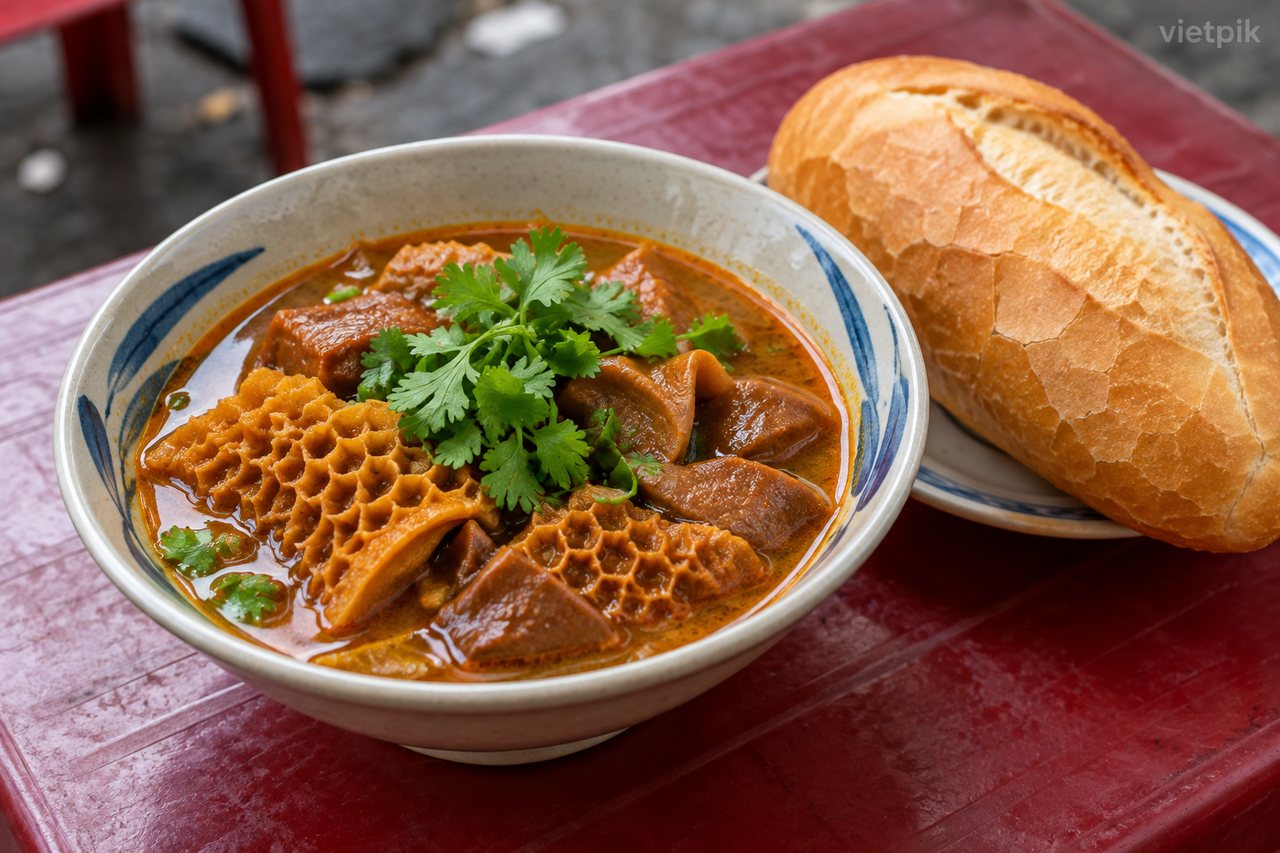
Vietnam Tourism’s Chợ Lớn feature also describes a Teochew-style braised preparation. Do not assume that every stall will serve the same orange-brown coconut broth shown in an illustration. Ask whether the portion is a stew, a drier braise or another preparation. That small distinction is more useful than arriving with a rigid idea of what the dish must look like.
Try the cooking liquid and a small piece
If bread is included, taste a little with the cooking liquid before adding a separate dipping sauce. Then try one piece on its own to understand its texture. Keep portions manageable and take your time. If you dislike a particular cut, tell the server politely; the aim is an enjoyable meal, not proof that you can eat everything offered.
Ask what comes with the portion
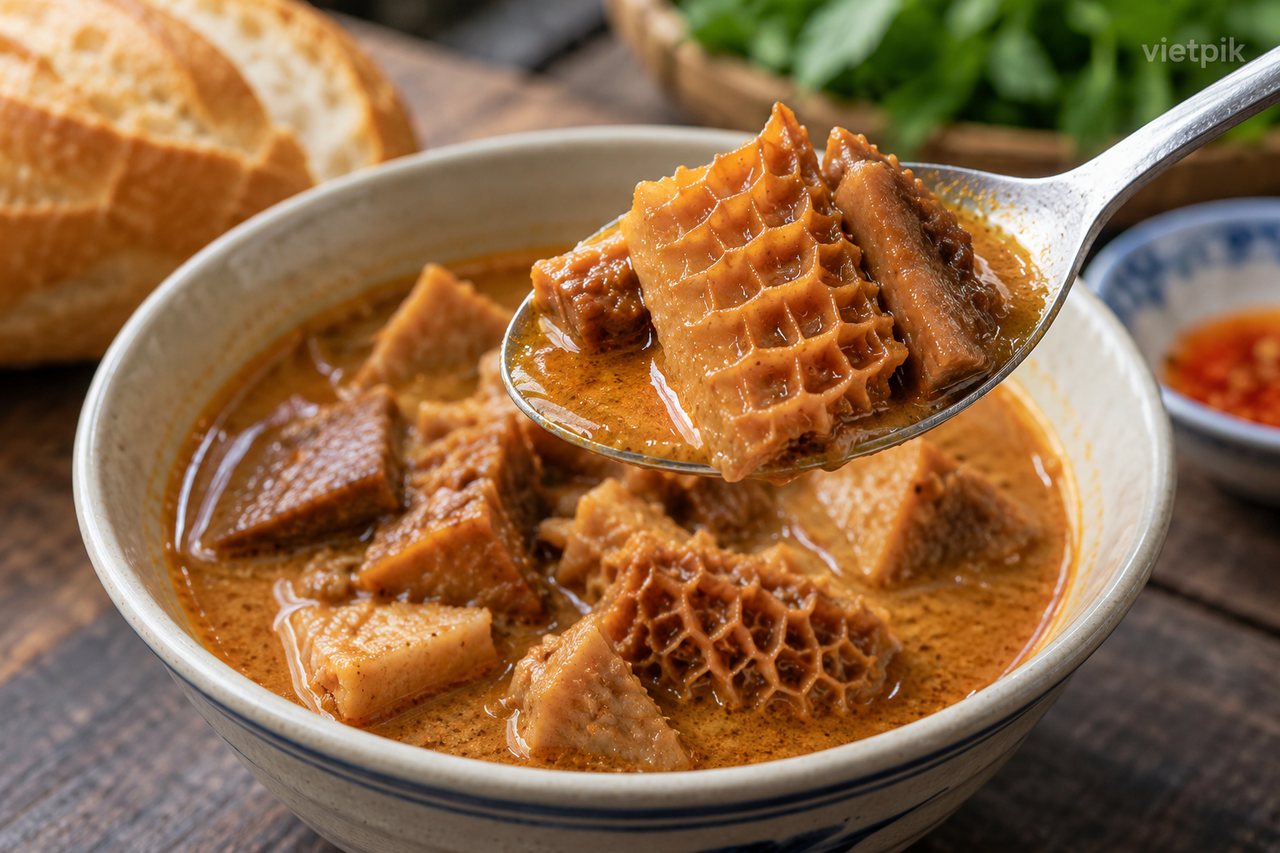
Check whether bread, noodles or extra cooking liquid are included or charged separately. Confirm which animal and cuts are used, as well as the ingredients in the sauce. If you have a dietary restriction, explain it before ordering. A substitution of bread for noodles changes the accompaniment, not necessarily the ingredients of the stew itself.
Remember the preparation, not just the name
When writing a review, describe the version you received and use your own photographs. Avoid applying an old article’s price or opening time to a current visit. Add the dish and a verified venue as separate choices in your plan, leaving enough room to sit down. A clear description helps the next traveller decide whether this particular food interests them.
Regional identity and kitchen variation
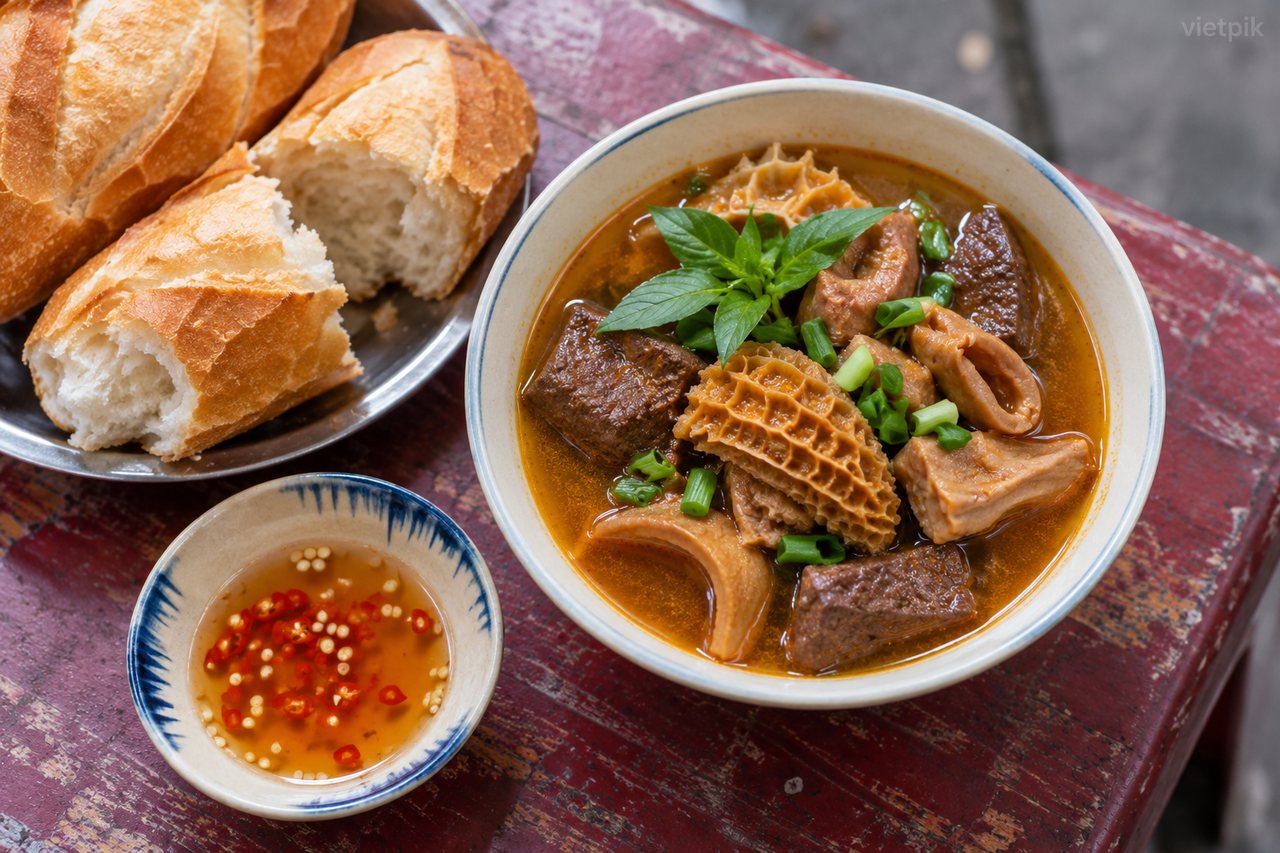
The Saigon street-food version discussed here follows a coconut-rich serving with offal and bread as one possible accompaniment. Phá lấu is not a promise of identical animal parts or seasoning at every shop. Keep the regional description connected to the actual preparation, and ask the vendor what is in the pot rather than using the name as a complete recipe.
Offal and seasoned cooking liquid; coconut-rich and other braised preparations exist. Bread or noodles may be offered separately. Verify the animal, cuts and recipe.
Ask about all seasonings, coconut ingredients, fish or soy sauces and wheat in bread or noodles.
Original Vietpik editorial. Food photographs illustrate dishes and do not represent a specific restaurant unless stated.
vnexpress.net vietnam.travel Last updated: 2026-09-27