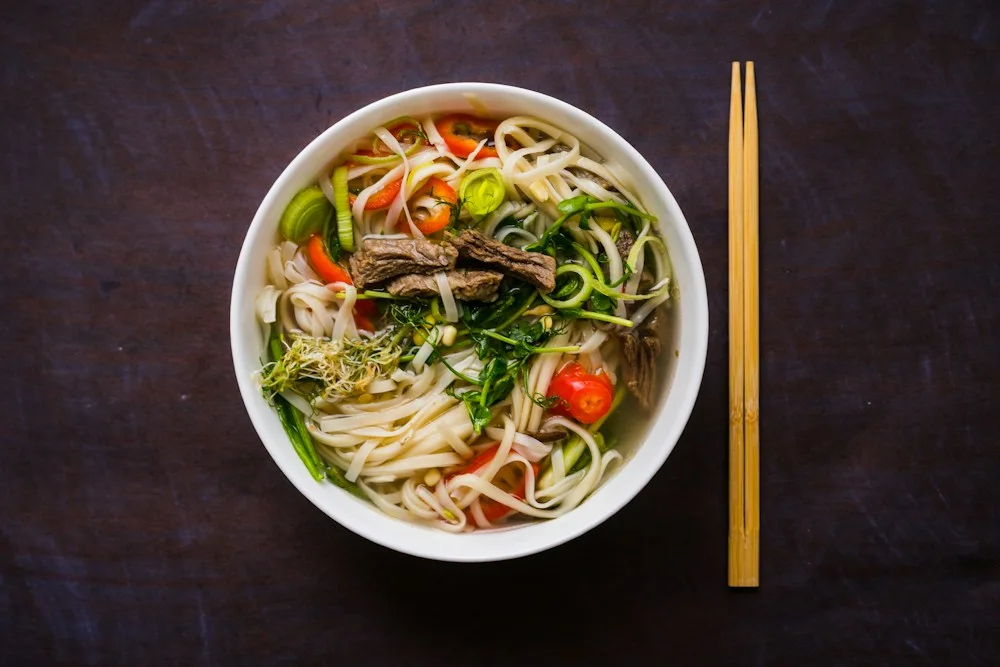
A bowl of phở can carry the same name from one end of Vietnam to the other and still invite a different meal. In Saigon, the plate beside the bowl often matters almost as much as the bowl itself: greens, sprouts, citrus and condiments give the diner several decisions to make. None is compulsory. Begin with the broth and learn what the kitchen has already balanced before adding your own preferences. This guide describes a southern serving style found in Ho Chi Minh City, not every phở restaurant within the city boundary. Northern-style shops also belong to the city's food landscape. Asking which style a kitchen follows is more useful than judging a bowl by the address alone, especially when you are building a trip around regional tastes.
History & story
Phở has a shared national identity and a history with several competing origin narratives. The practical distinction for this article is how a southern-style bowl is served today. MICHELIN describes differences in broth and accompaniments between northern and southern approaches. These are useful tendencies for a traveller, not a rule that assigns every cook or customer to one fixed camp.
A regional chapter, not a separate invention
Phở has a shared national identity and a history with several competing origin narratives. The practical distinction for this article is how a southern-style bowl is served today. MICHELIN describes differences in broth and accompaniments between northern and southern approaches. These are useful tendencies for a traveller, not a rule that assigns every cook or customer to one fixed camp.
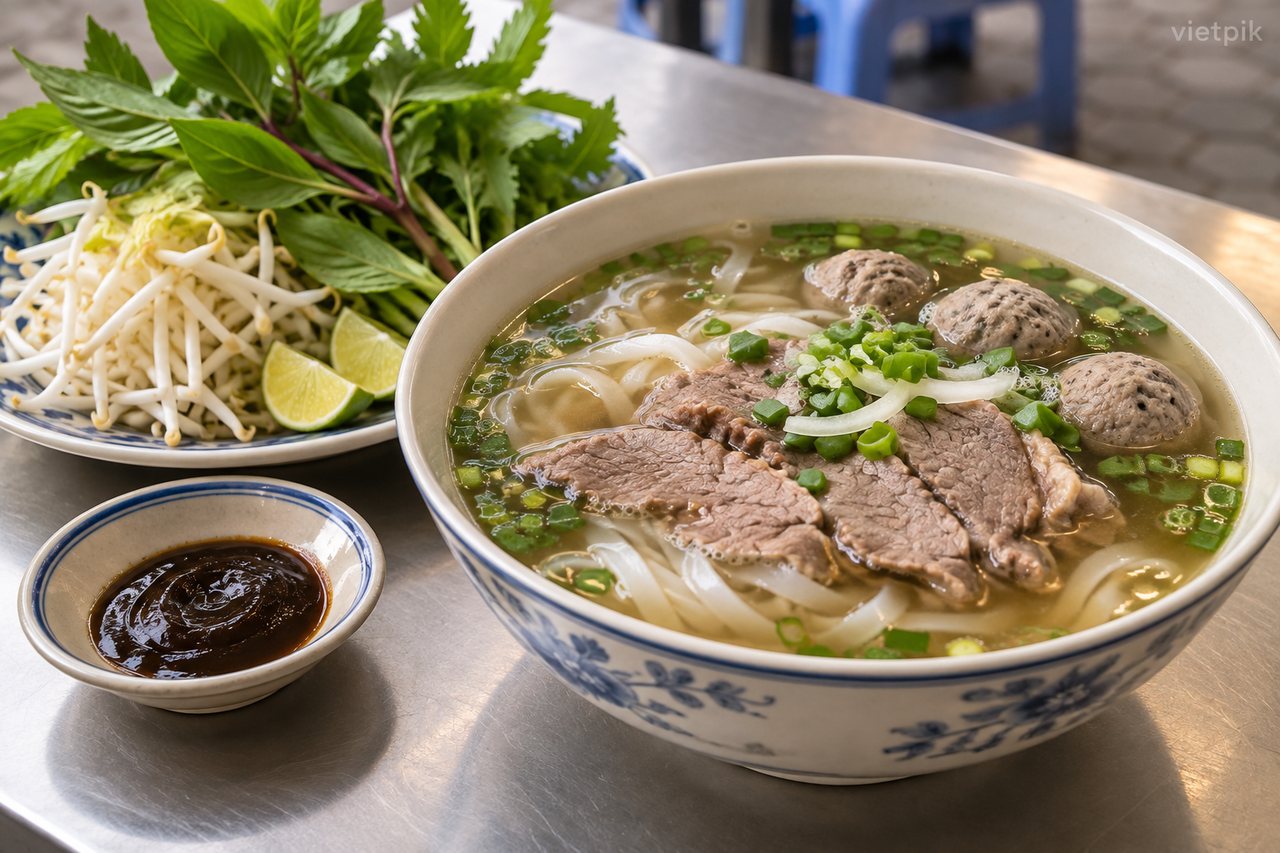
What changes between Hanoi and Saigon?
Southern broth is often perceived as sweeter, with a more generous herb-and-sprout accompaniment. Hanoi presentations commonly use fewer kinds of table-side greens; that does not mean Hanoi phở contains no herbs or that every northern diner refuses vegetables. Spring onion in the bowl and a separate herb plate are different things. Compare actual servings, and leave room for family recipes and personal preference.
Meet the bowl before the condiments
Choose a beef cut or combination you understand, then ask which accompaniments are included. Taste a spoon of broth, a strand of noodle and a piece of meat separately. Add a little of one condiment and try again. Keeping sauces in a small dish is another option if you want to explore their effect without changing all the broth at once.
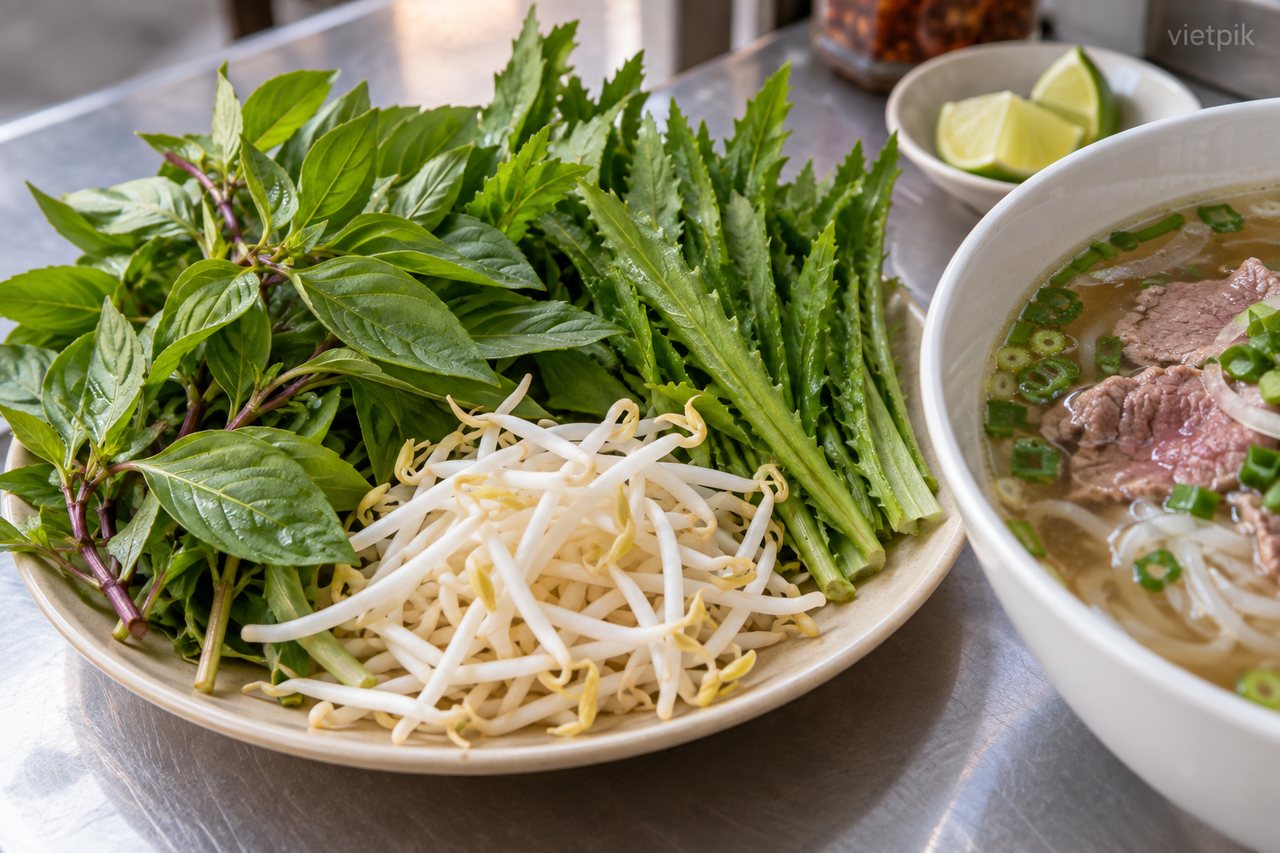
Herbs are choices, not an authenticity test
Look at the herb plate and ask the server to name unfamiliar leaves. Add a small amount first so that you can tell which fragrance you enjoy. There is no need to finish every garnish to prove that you eat like a local. If you prefer sprouts served differently, ask whether the kitchen can accommodate that request rather than assuming the photograph shows the only option.
Give regional tasting a place in your plan
Save this as a southern-style phở experience and link the actual restaurant separately. If your trip later includes Hanoi, keep both meals and note broth sweetness, noodle texture, greens and sauces after each. A useful review says what was served and what you changed. It should not turn one restaurant visit into a verdict on an entire region.
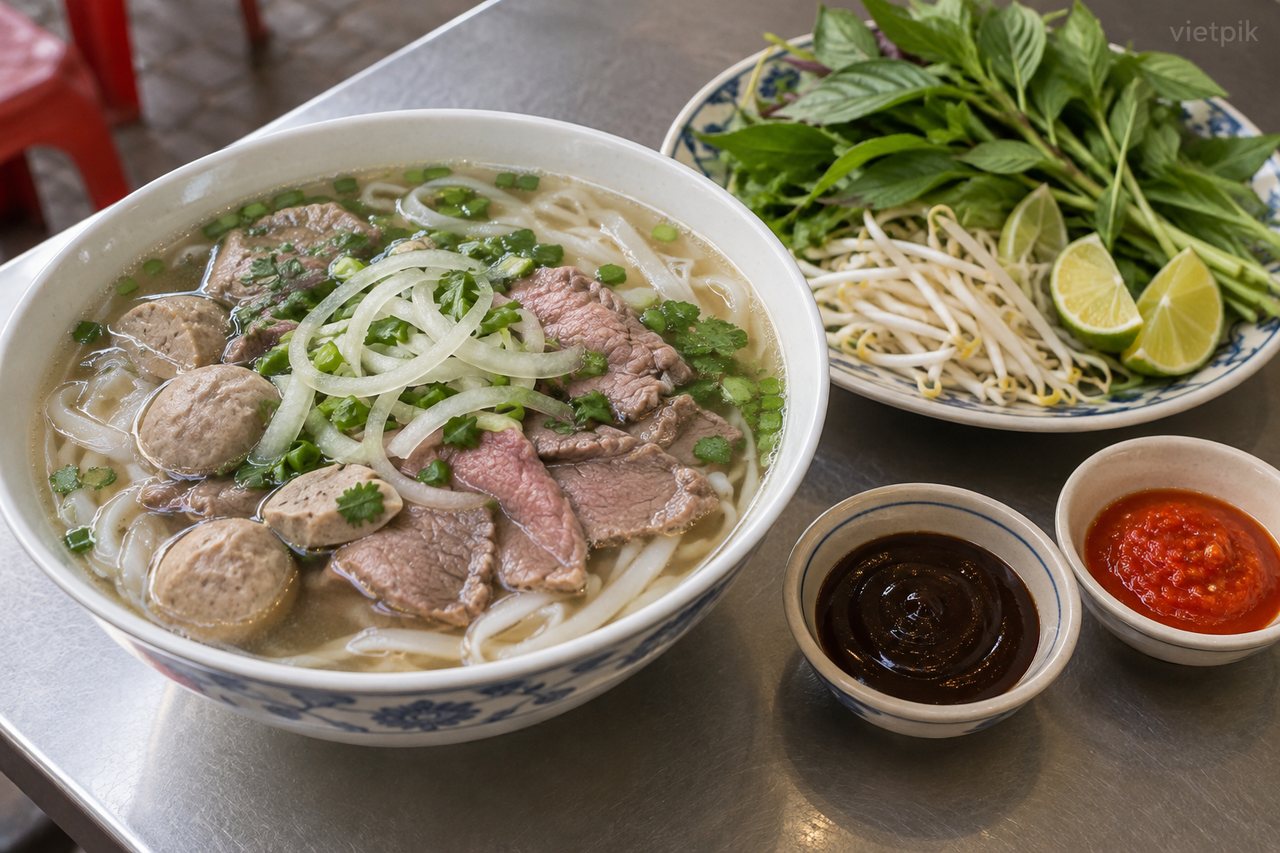
Rice noodles, beef broth and beef, with herbs, sprouts and condiments varying by kitchen. Ask about the broth and sauces rather than assuming a universal recipe.
Ask about fish sauce, soy or wheat in condiments and all broth ingredients.
Original Vietpik editorial. Food photographs illustrate dishes and do not represent a specific restaurant unless stated.
guide.michelin.com guide.michelin.com Last updated: 2026-09-27