Details
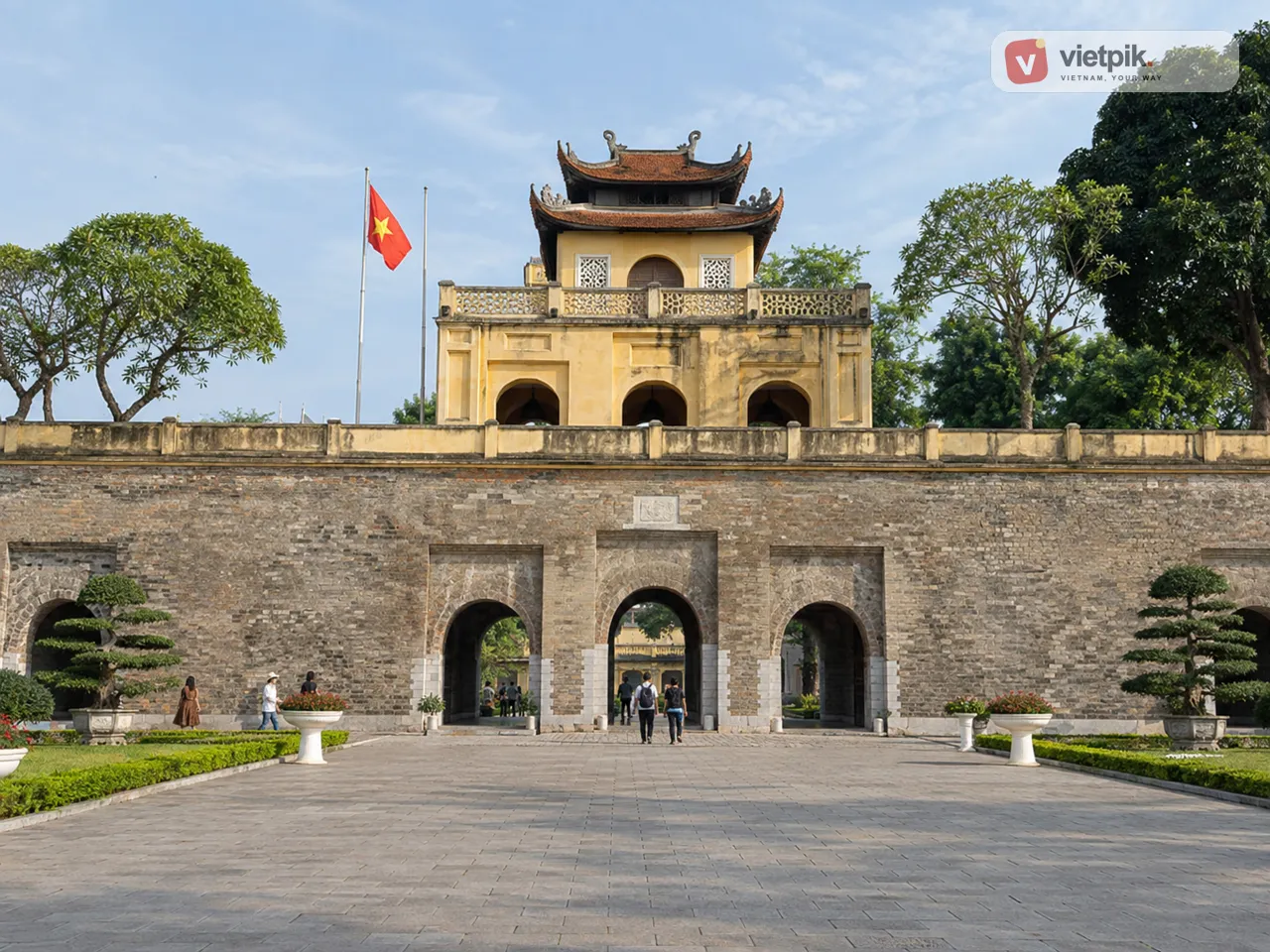
The Central Sector of the Imperial Citadel of Thăng Long is not a single surviving palace but a landscape of overlapping capitals. Archaeology links Đại La with the royal city established after Lý Công Uẩn moved the capital in 1010, while later gates, foundations and military buildings show how the centre continued to change. Give the site at least two hours: follow the central axis from Đoan Môn, read the layers around Kính Thiên Palace and spend time with the excavated remains rather than treating the complex as a quick photo stop.
History & story
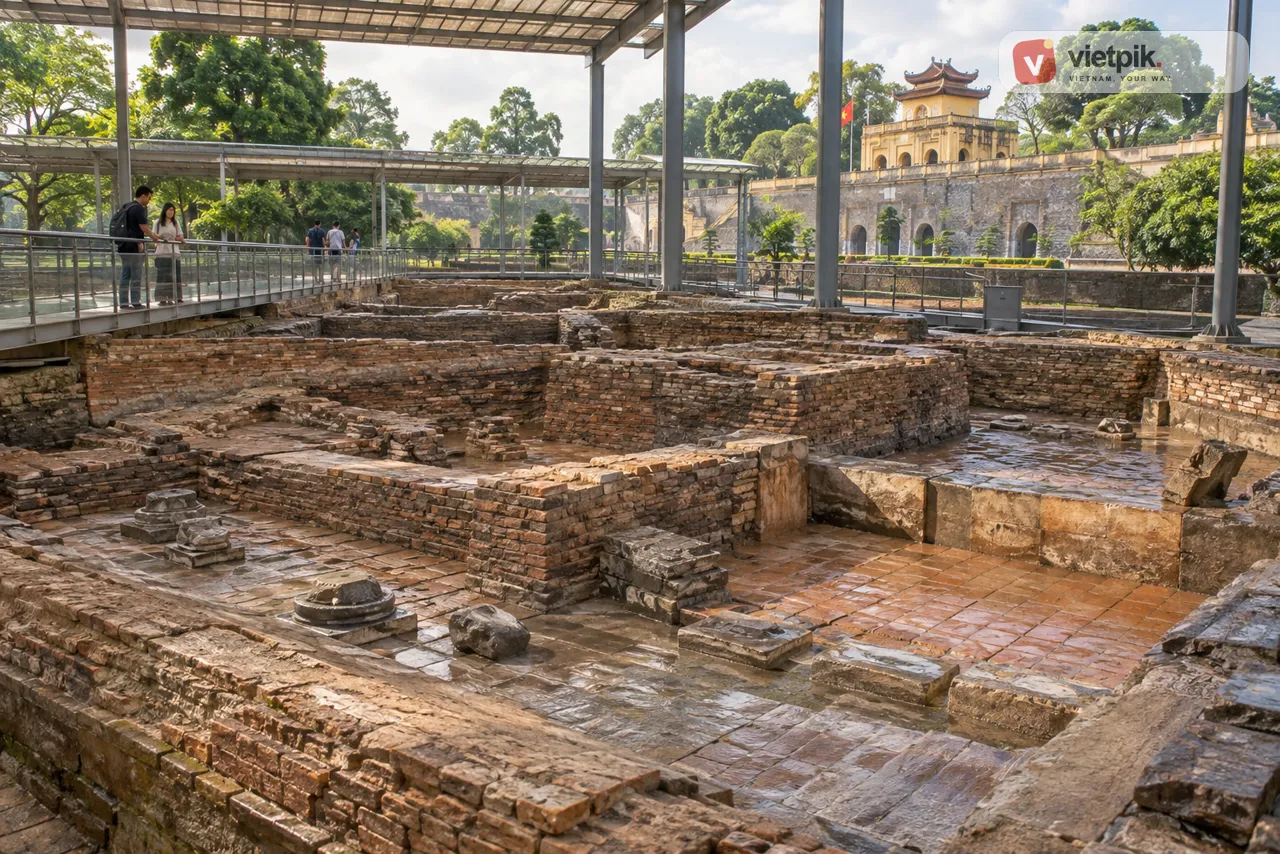
The heritage centre describes a continuous political centre extending across more than ten centuries. After Lý Công Uẩn moved the capital from Hoa Lư to Đại La in 1010, the new Thăng Long citadel developed over earlier foundations. Successive Lý, Trần, Lê, Mạc and Nguyễn periods left architectural and archaeological layers rather than one frozen moment. Đoan Môn remained the principal southern gateway into the Forbidden City, while excavations at 18 Hoàng Diệu revealed foundations, drains, tiled surfaces and objects that make the long continuity of the capital visible.
A capital written in layers
Begin at Đoan Môn, the ceremonial gateway on the main royal axis. The surviving structure is associated mainly with the Lê period and later Nguyễn repairs, but excavations below and around it revealed earlier routes and building traces. Looking through the gate toward the Kính Thiên platform helps explain why this axis remained central to court life for centuries.
Read the site, do not rush it
Continue from the central court toward the Kính Thiên Palace foundation, Hậu Lâu and the exhibition spaces, then cross to the archaeological zone if it is open on your visit. The experience becomes richer when you compare different bricks, foundations and ground levels instead of searching for one intact palace. Interpretation panels provide the context needed to connect the surviving monuments with what once stood here.
- Đoan Môn and the royal central axis
- Kính Thiên Palace foundation and dragon steps
- 18 Hoàng Diệu archaeological layers
- Exhibitions and later military history