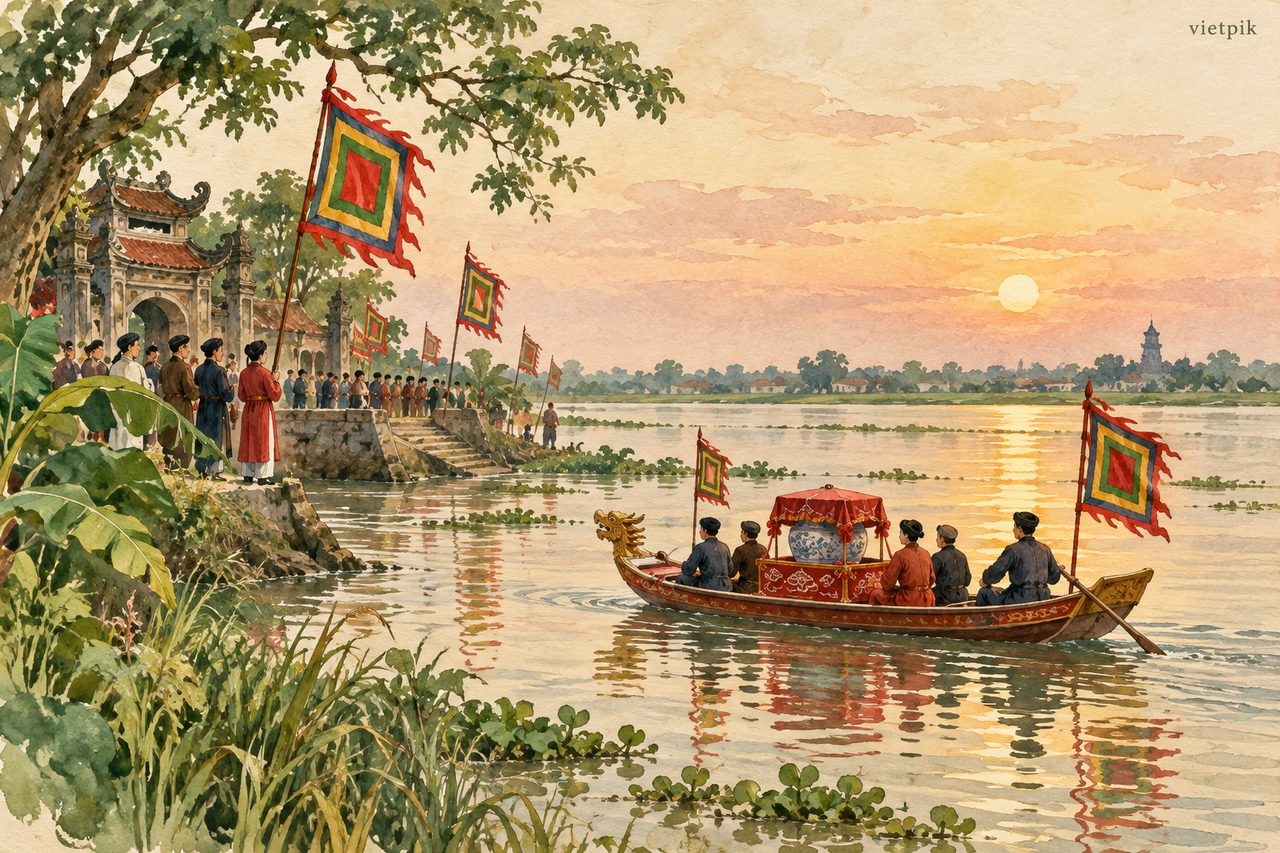
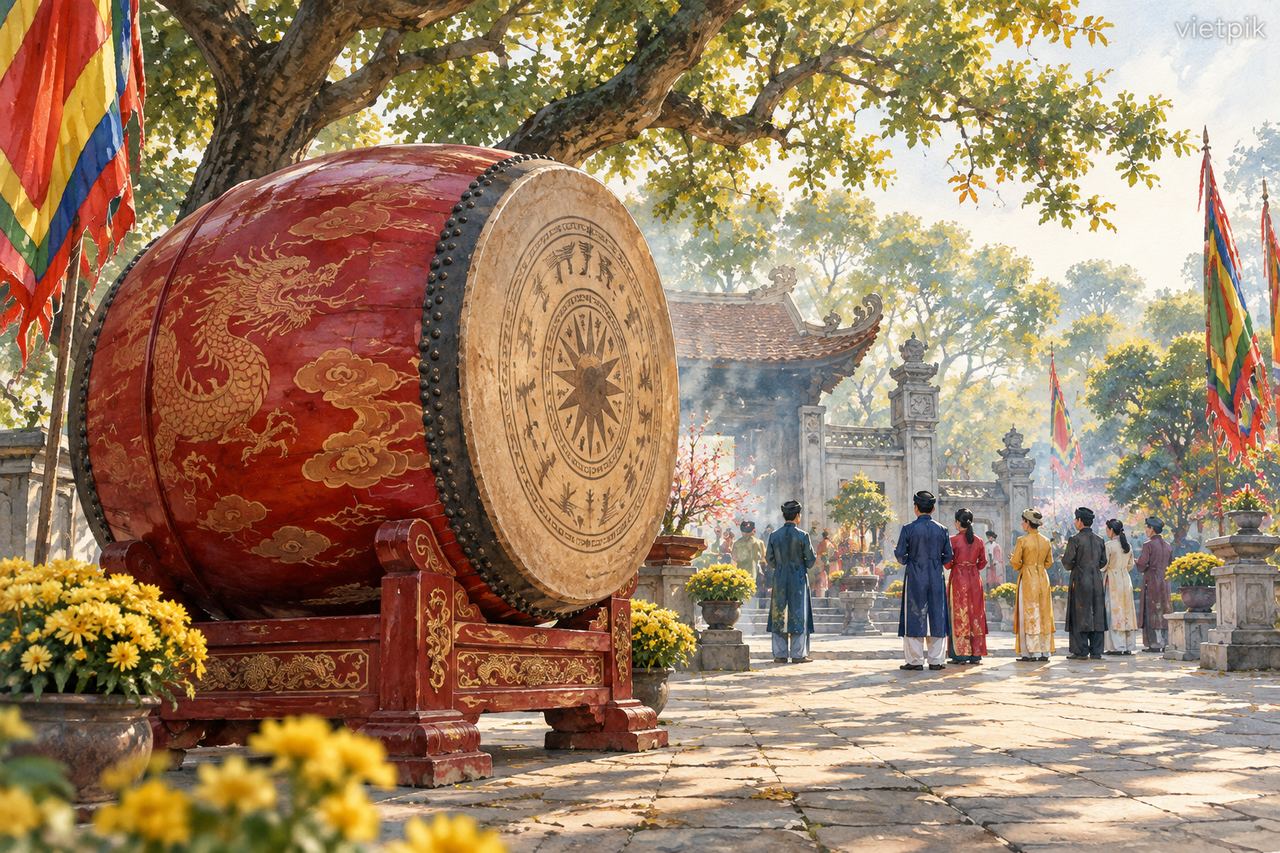
Trăm Gian is a reminder that a pagoda festival can be understood through the work of several communities, not only through the building at its centre. An offering, a visiting delegation or a remembered performance may reveal relationships that are invisible during an ordinary sightseeing stop. Here the useful approach is patient and selective: learn who is commemorated, understand the traditional seasonal reference and distinguish historical descriptions from a programme that has actually been announced. This guide concerns Trăm Gian, also known as Quảng Nghiêm, in the Chương Mỹ area of Hanoi. It does not promise that every practice described in older accounts will appear during a future visit.
History & story
The national tourism authority identifies the festival with Buddhist worship and the commemoration of Nguyễn Bình An. That pairing is important: reducing the occasion to a generic spring temple visit would miss its particular devotional focus. Older descriptions include miraculous stories associated with the saint; these belong to religious tradition and should be introduced as legends. A visitor does not need to retell every episode to appreciate the festival. Start by learning the name correctly and asking how it appears in the site's interpretation. Keep the saint's local remembrance separate from claims about the age of every structure visible today.
A Buddhist setting and the memory of Nguyễn Bình An
The national tourism authority identifies the festival with Buddhist worship and the commemoration of Nguyễn Bình An. That pairing is important: reducing the occasion to a generic spring temple visit would miss its particular devotional focus. Older descriptions include miraculous stories associated with the saint; these belong to religious tradition and should be introduced as legends. A visitor does not need to retell every episode to appreciate the festival. Start by learning the name correctly and asking how it appears in the site's interpretation. Keep the saint's local remembrance separate from claims about the age of every structure visible today.
What a shared offering can tell you
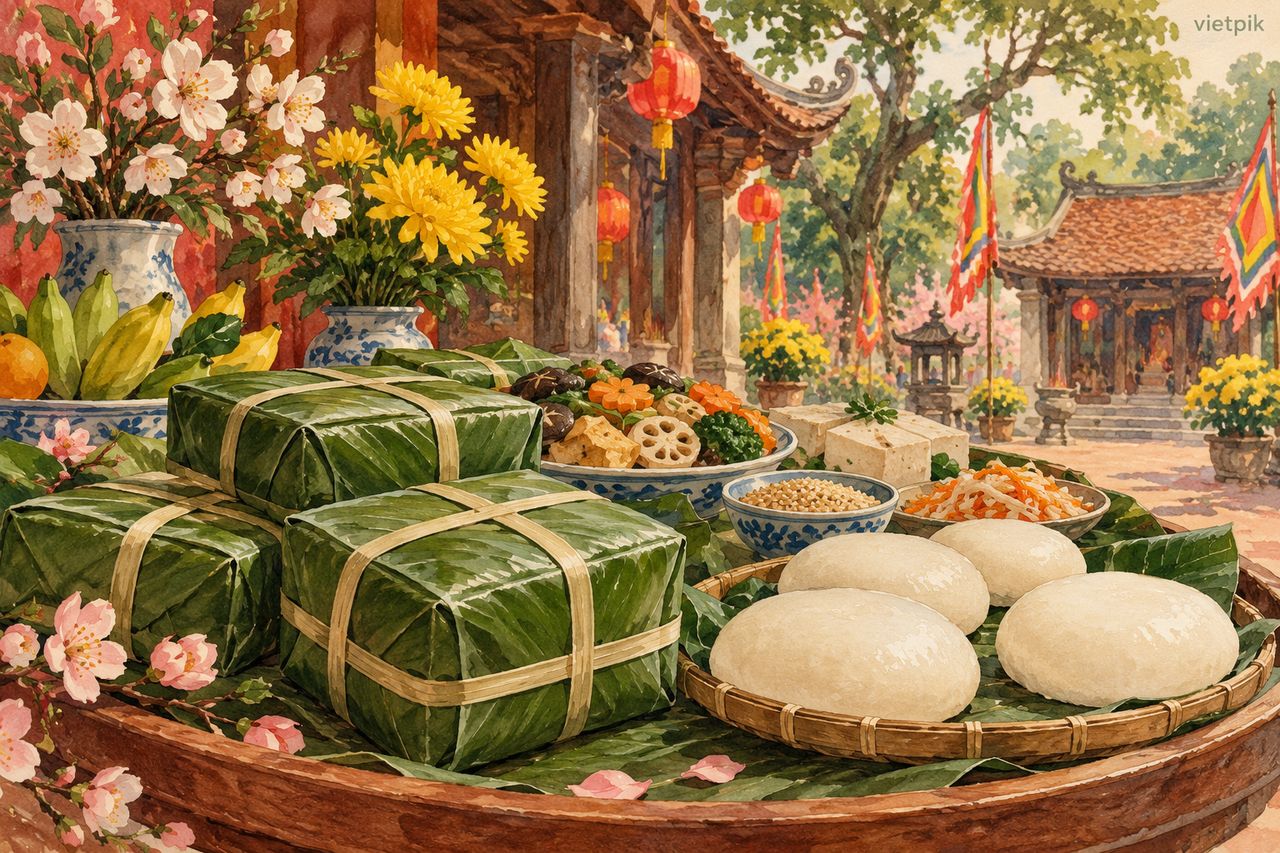
Traditional accounts mention vegetarian offerings and the association of the celebration with more than one village. These details invite attention to cooperation rather than a search for an exotic dish. Consider the steps that an offering requires: someone prepares it, someone keeps it ready and someone receives or presents it at the appropriate moment. Those are interpretive questions, not a reconstruction of the current organising rules. If you can ask a participant, focus on the meaning of their contribution. Avoid assuming that a ceremonial food display is a meal available to tourists, or that its ingredients follow a single recipe across every household.
An early first-month tradition
The tourism authority gives the traditional festival reference as lunar days four to six of the first month. A Hanoi library bibliography also points readers towards older studies of that early spring observance. These sources establish a tradition, not a newly verified annual schedule. In the material reviewed on 28 September 2026, this article has no confirmed 2027 programme and does not supply a converted Gregorian booking date. Before making a trip specifically for a procession, ask the site or responsible local authority for the current year's notice. If none is available, plan only a flexible visit whose value does not depend on witnessing an unconfirmed rite.
Distinguish two kinds of puppetry
Older festival descriptions mention trình rối cạn as well as other entertainment, including water puppetry. The names refer to different performance settings; they should not be swapped in a caption simply because both use puppets. If a performance is announced for your visit, find out what it is called and where the audience is expected to stand. Watch how the presentation begins and ends before trying to summarise its meaning. A puppet's appearance alone may not reveal its role. Do not request access to stored objects or behind a screen unless the people responsible explicitly invite you.
Follow the terrain without chasing every movement
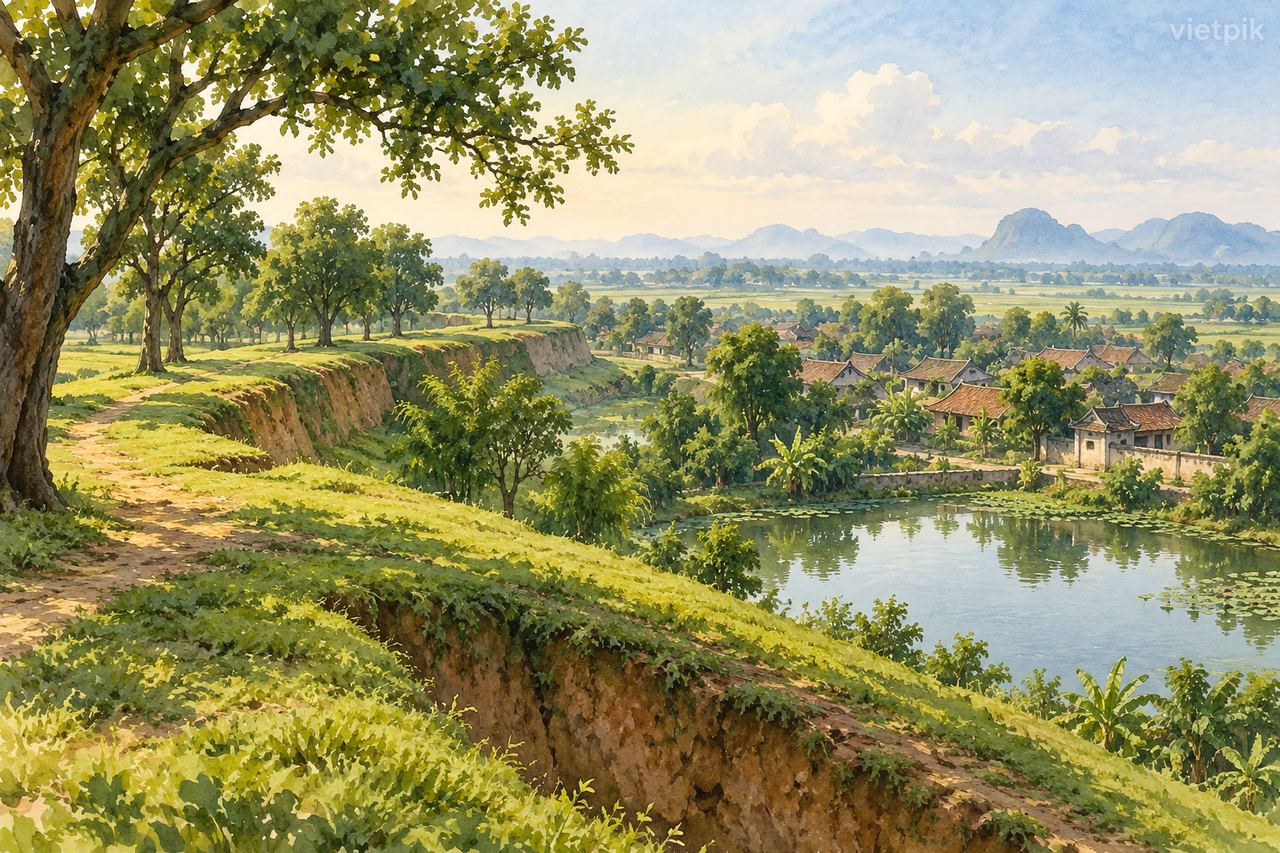
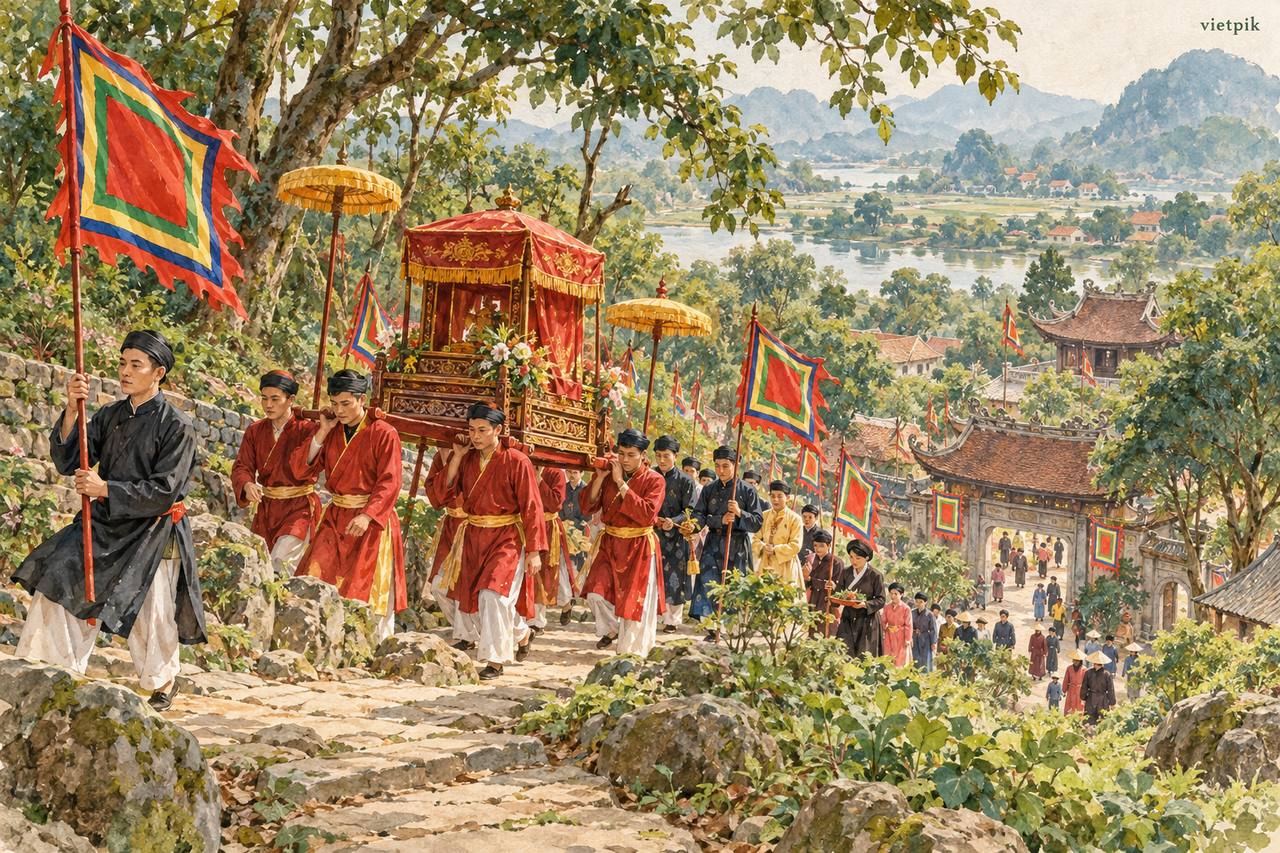
The pagoda setting involves changes of level, so choose a route that fits your group's ability to walk and stand. Ask about the present visitor approach rather than relying on an old description of a ceremonial descent. A ritual route and a convenient public path need not coincide. If a procession passes through a narrow section, let it go before moving yourself. Do not stop on steps to review photographs while others are climbing. For someone who cannot manage the full approach, a shorter visit from an accessible permitted area can still be worthwhile, but the site's actual facilities need direct confirmation.
Hospitality as a subject for conversation
Accounts of Trăm Gian emphasise relations with Bối Khê and the reception of visiting community representatives. Use that connection to ask about mutual remembrance, not to assume unrestricted entry to a communal meal. How do hosts recognise a visiting group? What does returning to one another's celebrations mean? A local explanation may illuminate the social life around a religious festival. Keep any historical hospitality arrangement in its own period; old rules about status, age or seating are not instructions for today's visitor. You can appreciate continuity while recognising that practical organisation may change and that only current hosts can explain current arrangements.
Visit with a distinction between record and expectation
Before leaving, mark your notes in two columns: traditions described in published sources, and activities confirmed for the year of travel. During the visit, add a third category for what you personally observed. This simple method prevents an attractive historical account from becoming an accidental promise. It is especially useful at Trăm Gian, where older descriptions are rich in detail. Leave room for the quieter experience of a pagoda visit if the festival programme is limited. The place can still reward attention through its setting, its devotional focus and the relationships people are willing to explain.