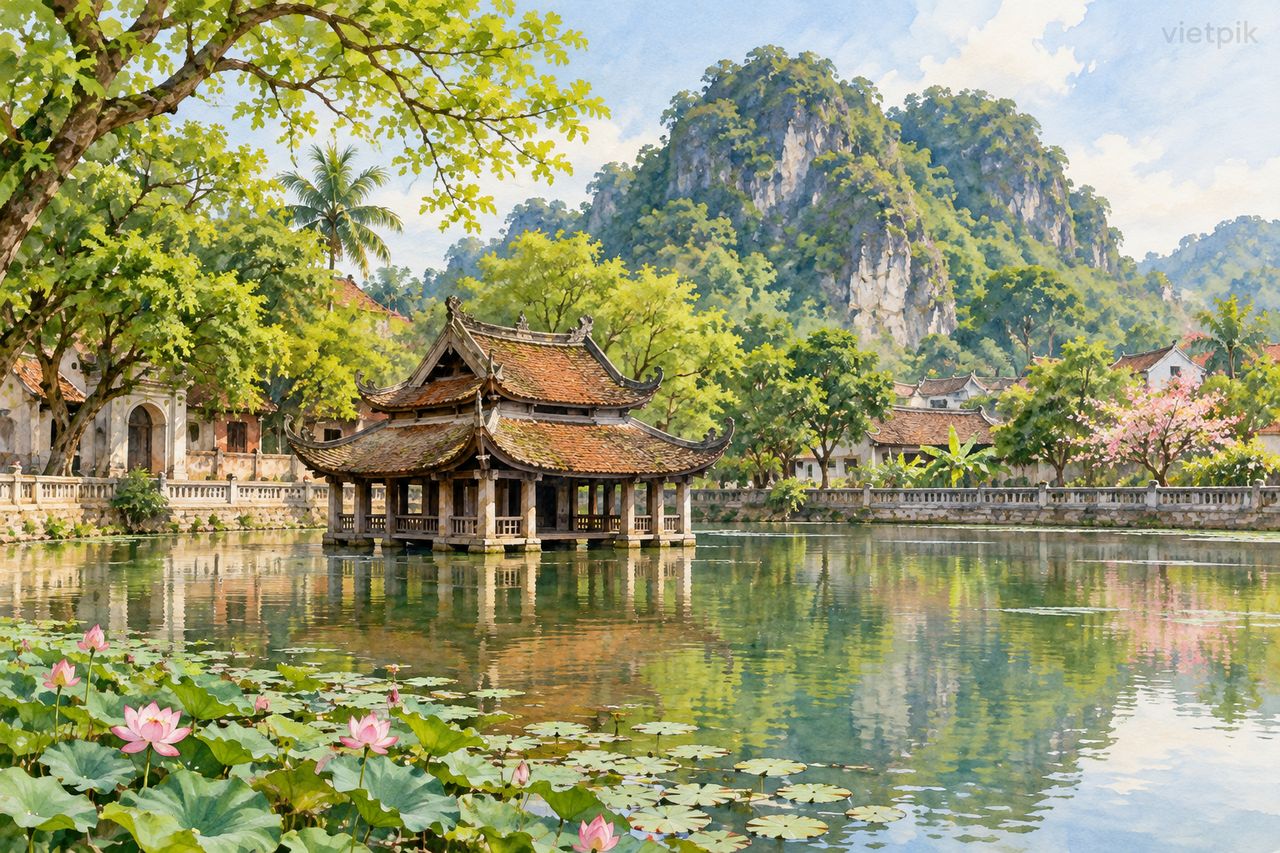
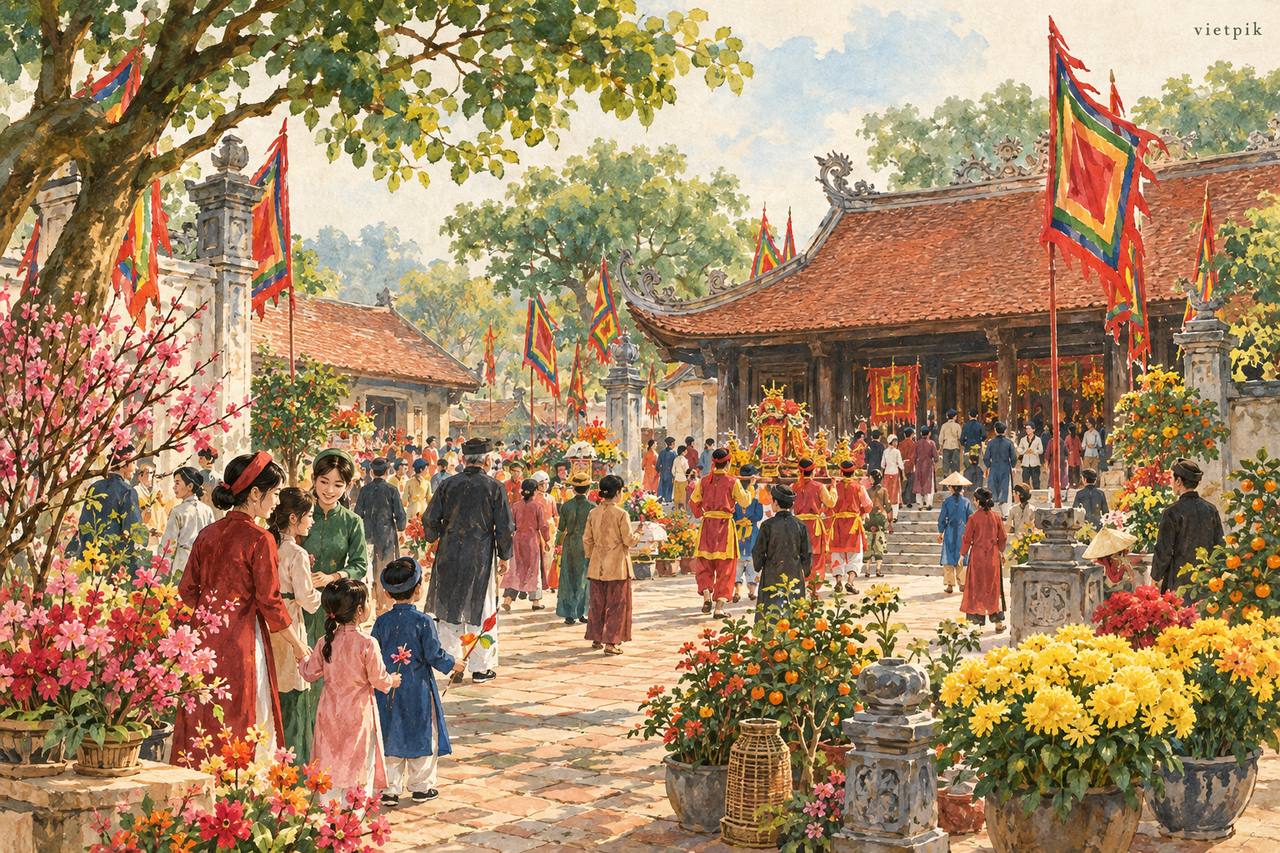
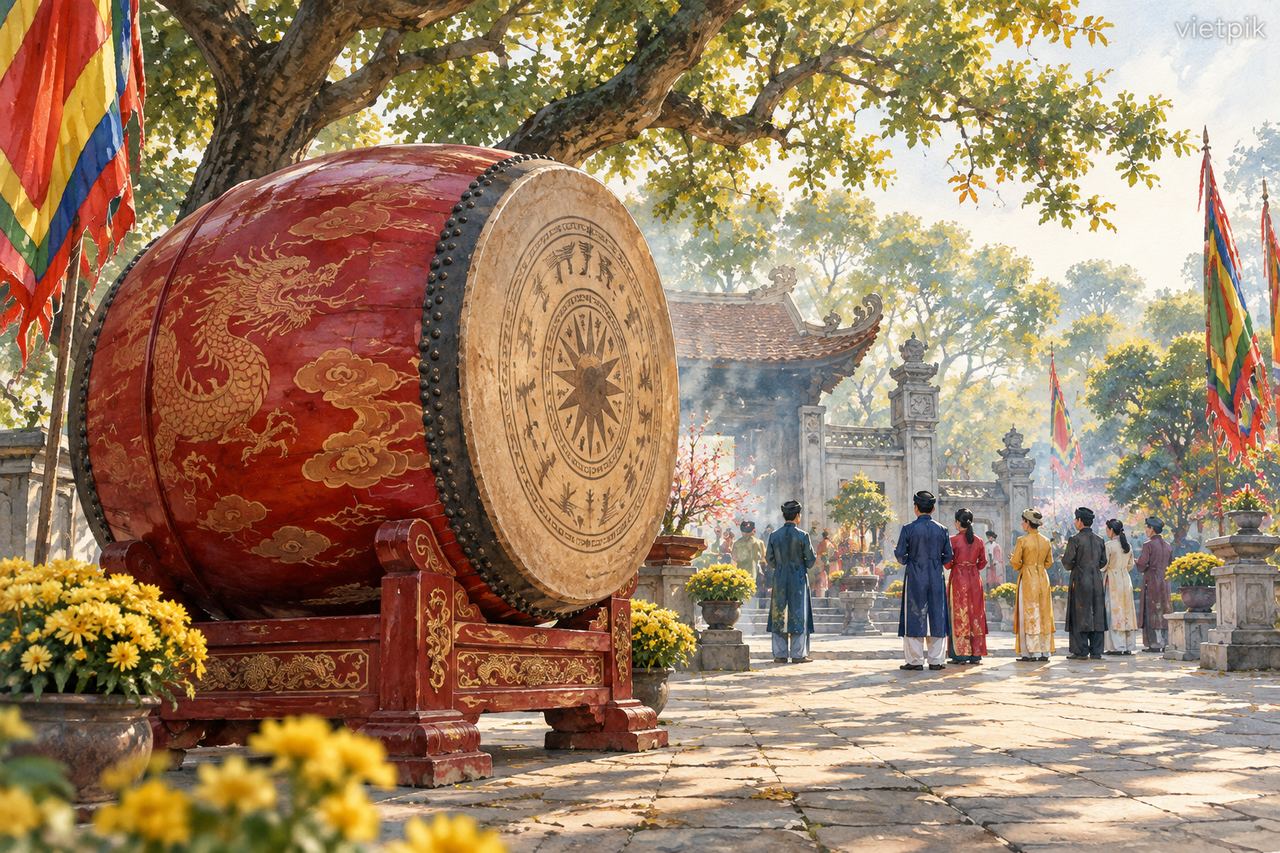
A river festival can be approached from dry ground with just as much attention as from a boat. At Đình Chèm, begin by noticing the relationship between a place of worship and the Red River: the water is part of the festival's cultural setting, not merely a scenic backdrop. The event honours the figure remembered locally as Đức Thánh Chèm, Lý Ông Trọng. This guide focuses on how visitors can understand the water procession, the gathering of communities and the quieter work of preparing offerings. It does not offer a passenger boat trip or promise access to ceremonies that may be restricted. The aim is a thoughtful visit grounded in the programme actually announced.
History & story
Official cultural reporting identifies the communal house with the worship of Lý Ông Trọng and records the festival's national intangible heritage recognition in 2016. Accounts of the revered figure combine historical memory and legend, so visitors should avoid turning every honorific into a literal, independently proven biographical claim. Learn the names used at the site, then ask which part of a story comes from local tradition. The value of the festival does not depend on resolving every ancient detail during one visit. It can also be understood through the present community's care for a place and its repeated acts of remembrance.
Know the honoured figure and the source of the story
Official cultural reporting identifies the communal house with the worship of Lý Ông Trọng and records the festival's national intangible heritage recognition in 2016. Accounts of the revered figure combine historical memory and legend, so visitors should avoid turning every honorific into a literal, independently proven biographical claim. Learn the names used at the site, then ask which part of a story comes from local tradition. The value of the festival does not depend on resolving every ancient detail during one visit. It can also be understood through the present community's care for a place and its repeated acts of remembrance.
Water is carried with intention
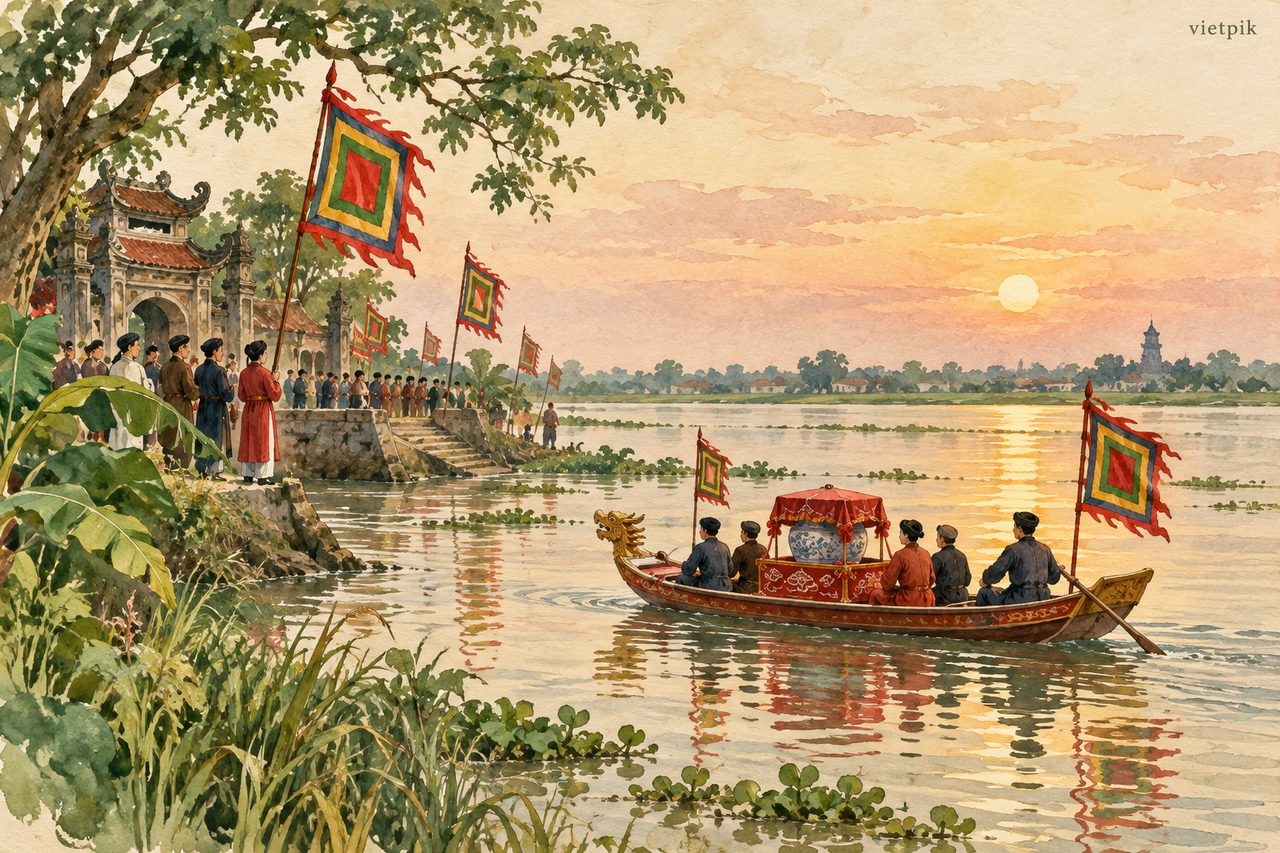
The 2026 cultural reporting names a Red River water procession among the festival's rites. For a visitor, the useful focus is the transition: water associated with the river is handled within a ceremonial sequence. This is not an invitation to collect your own sample, follow the boats or assume the water is intended for drinking. Watch from an authorised point and let organisers control access to the landing. Questions about meaning are best asked outside the active ceremony. A covered vessel may look simple, but its place in the sequence matters more than any decorative description you could invent from a distant photograph.
The fifth lunar month and the 2026 edition
The city reported the 2026 festival over 28–30 June, corresponding to lunar days fourteen to sixteen of the fifth month, with the opening on 28 June. The same reporting identifies Đông Ngạc and Thượng Cát as communities involved in organising that edition. Older articles may use Thụy Phương or Bắc Từ Liêm, so keep old addresses attached to their source dates. No official 2027 programme was confirmed in this review of 28 September 2026. A lunar reference helps identify the season; it does not establish the time of a boat departure, a performance or visitor access to the riverbank.
Food preparation is also cultural work
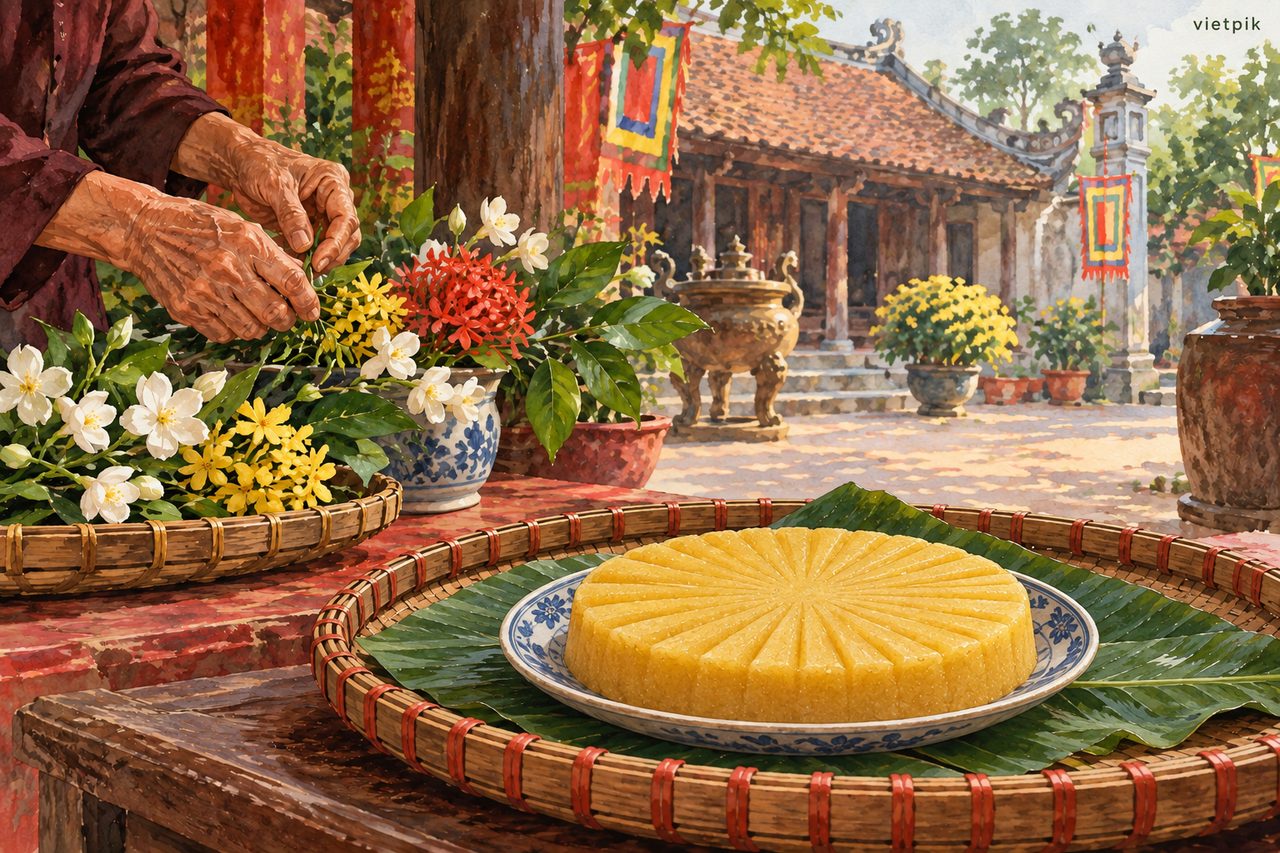
Reports of the 2026 programme include a chè kho cooking competition. Rather than treating it only as a chance to taste a sweet, notice the skill and coordination involved in preparing something for a shared occasion. If the activity is offered in a future programme, ask whether visitors may watch and whether any food is distributed publicly. Do not assume that a tray near a ceremonial area is available to sample. Photographs should identify the dish only when you have confirmation. Appearance alone can be misleading, and a general description of mung-bean food is not a verified recipe for this community's competition.
Choose the river view with care
A bank can look spacious in a photograph while offering little safe standing room during a gathering. Follow barriers and staff instructions, keep clear of working landings and never step closer to the water simply to remove another spectator from the frame. For children, decide in advance who is responsible for staying beside them. A distant view can still show the connection between the vessel, flags and people on shore. If river access is closed, remain at the permitted festival area. Missing a boat sequence is preferable to making an improvised plan that neither the organisers nor your companions can safely manage.
Read the communal house as a meeting place
Away from the busiest movement, observe how people enter, wait and make space for others. A communal house festival can reveal social relationships through these small arrangements. You might ask how neighbouring communities share responsibilities or what younger residents learn before taking part. Do not confuse an answer about the past with a statement about this year's organisation. Nor should an architectural feature be assigned a symbolic meaning simply because it appears in the background of a ceremony. A local explanation, clearly attributed, is more useful than a confident interpretation assembled from general ideas about Vietnamese temples.
A memory of the relationship between shore and water
When telling the story afterwards, keep the shore in the picture. The people preparing, waiting and receiving are as much part of the festival as the boat itself. Name Đình Chèm and the actual year, and distinguish water procession from recreational rowing or a commercial river tour. If you did not see a particular rite, say that your understanding comes from a source or an explanation. This modest precision makes a richer account: the festival becomes a relationship maintained by people, objects and place, rather than an isolated image of colourful flags floating past a camera.