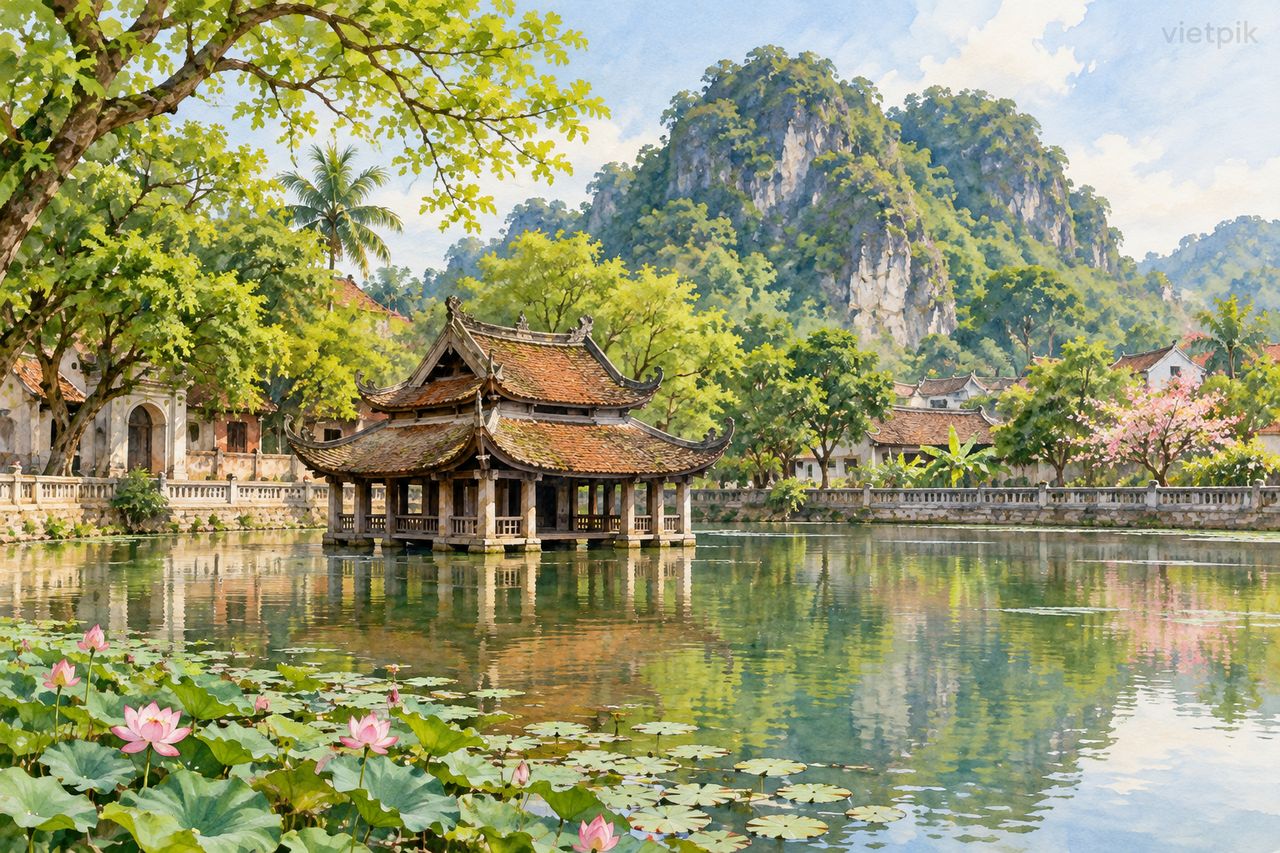
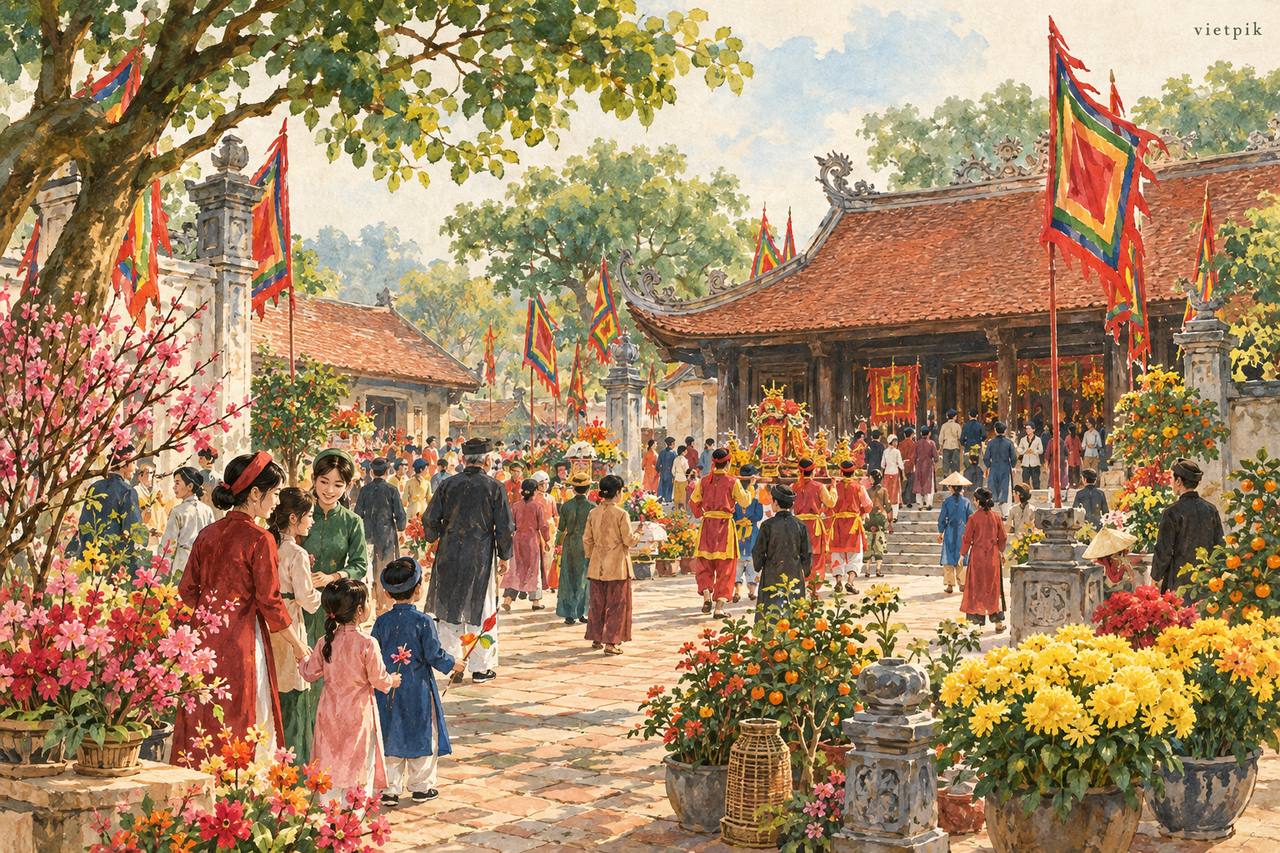
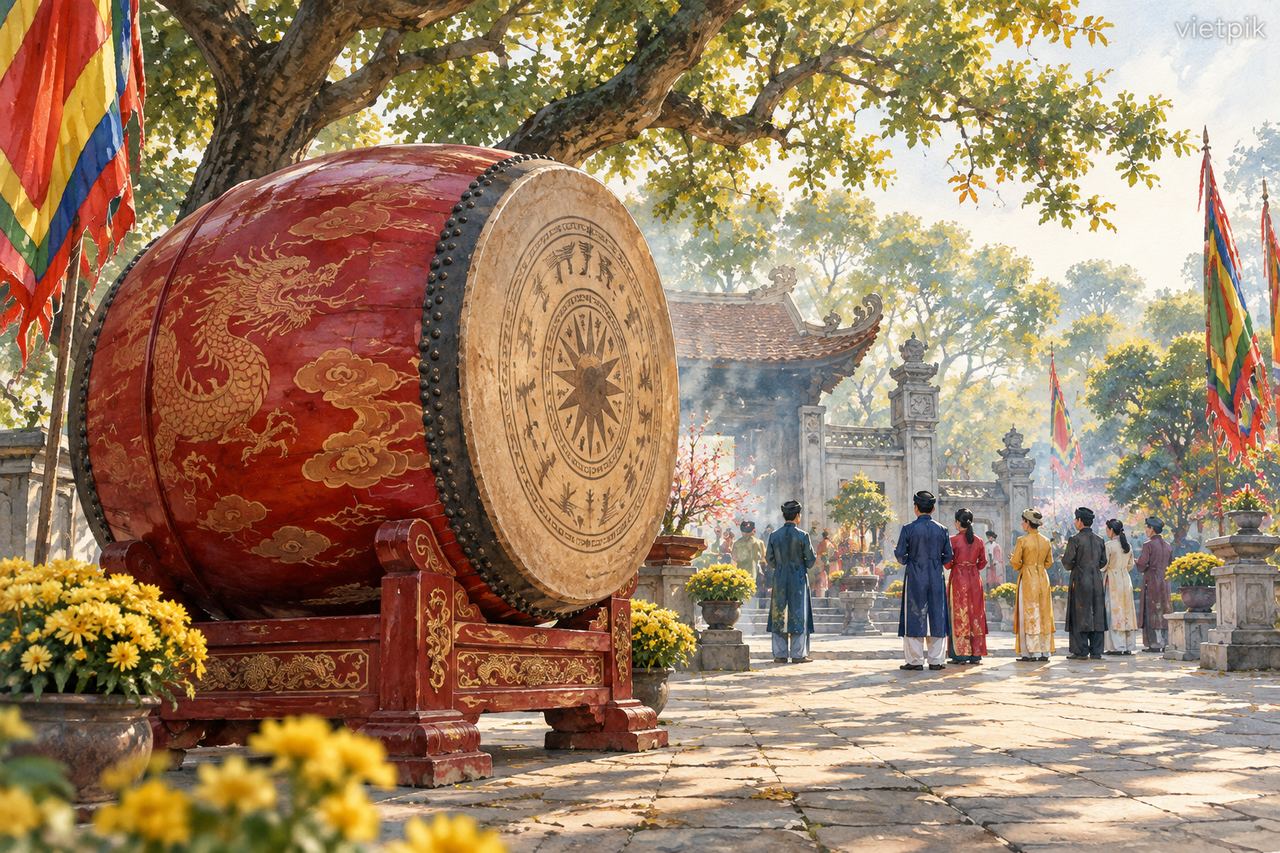
At Tây Phương, a festival visit can move between two different kinds of attention. One is lively and outward-looking, following processions or a public performance. The other is slower, allowing time to look at the pagoda's artistic setting without crowding people who have come to worship. Neither needs to cancel the other. The most satisfying plan gives each its own space and does not mistake a busy opening ceremony for the whole meaning of the place. This guide concerns the Tây Phương pagoda festival in Hanoi. It offers a way to connect a spring gathering with the work of looking, listening and understanding how cultural activities sit beside a functioning religious site.
History & story
The commune's 2026 opening report emphasises Tây Phương's architecture and wooden Buddhist sculpture as central values of the monument. That emphasis suggests a useful order for your visit: understand what kind of place you have entered before deciding which performance to watch. A pagoda is not merely a decorative backdrop for an event. Read available interpretation and identify areas where photography or entry is restricted. If sculpture interests you, choose a small number of works or details to study rather than trying to catalogue everything during peak movement. Notice form and expression without guessing an object's date, maker or religious identity.
Begin with the pagoda, then the programme
The commune's 2026 opening report emphasises Tây Phương's architecture and wooden Buddhist sculpture as central values of the monument. That emphasis suggests a useful order for your visit: understand what kind of place you have entered before deciding which performance to watch. A pagoda is not merely a decorative backdrop for an event. Read available interpretation and identify areas where photography or entry is restricted. If sculpture interests you, choose a small number of works or details to study rather than trying to catalogue everything during peak movement. Notice form and expression without guessing an object's date, maker or religious identity.
The festival includes work beyond the sanctuary
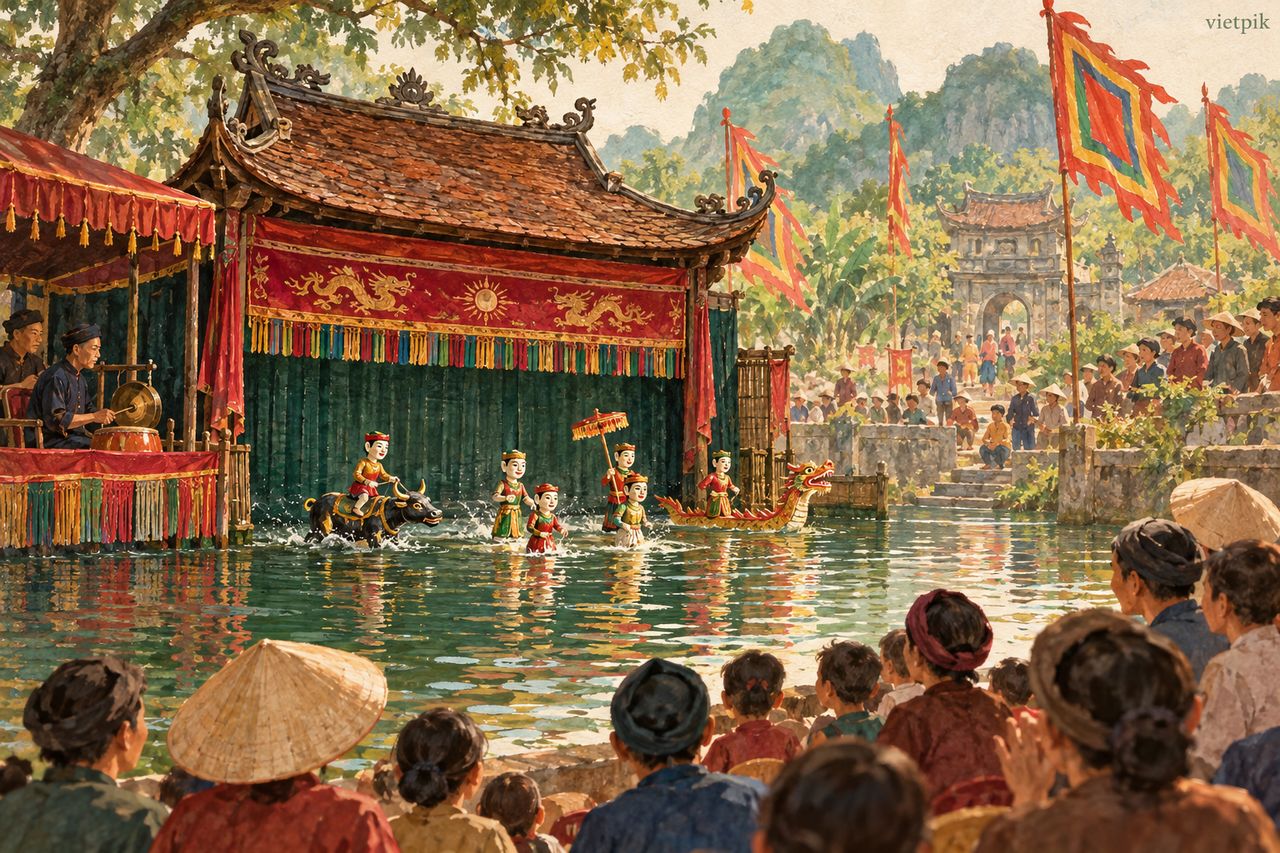
The 2026 planning notices included village arts, water puppetry and introductions to local products. These are programme elements for that edition, not permanent services available whenever someone arrives. They nevertheless show how a temple festival can provide a meeting point for different kinds of local skill. Ask who is performing and where the troupe comes from, if the information is available. An answer may help connect a brief stage scene with a longer practice of learning and making. Keep the fair, a performance and worship as related but different activities; purchasing a product is not a required part of visiting the pagoda.
Keep the five-day 2026 programme in its own year
Hanoi and local organisers announced the 2026 festival for 20–24 April, corresponding to lunar days four to eight of the third month. The opening was reported on 20 April. This five-day span is useful evidence about that edition, but it should not be converted automatically into an official 2027 timetable. As reviewed on 28 September 2026, the next programme remains unconfirmed here. If your priority is a procession or puppet performance, look for that item's date and venue rather than relying only on the festival's overall span. A fair's evening opening, for example, is not the same event as the pagoda's morning ceremony.
Let the climb set a manageable pace
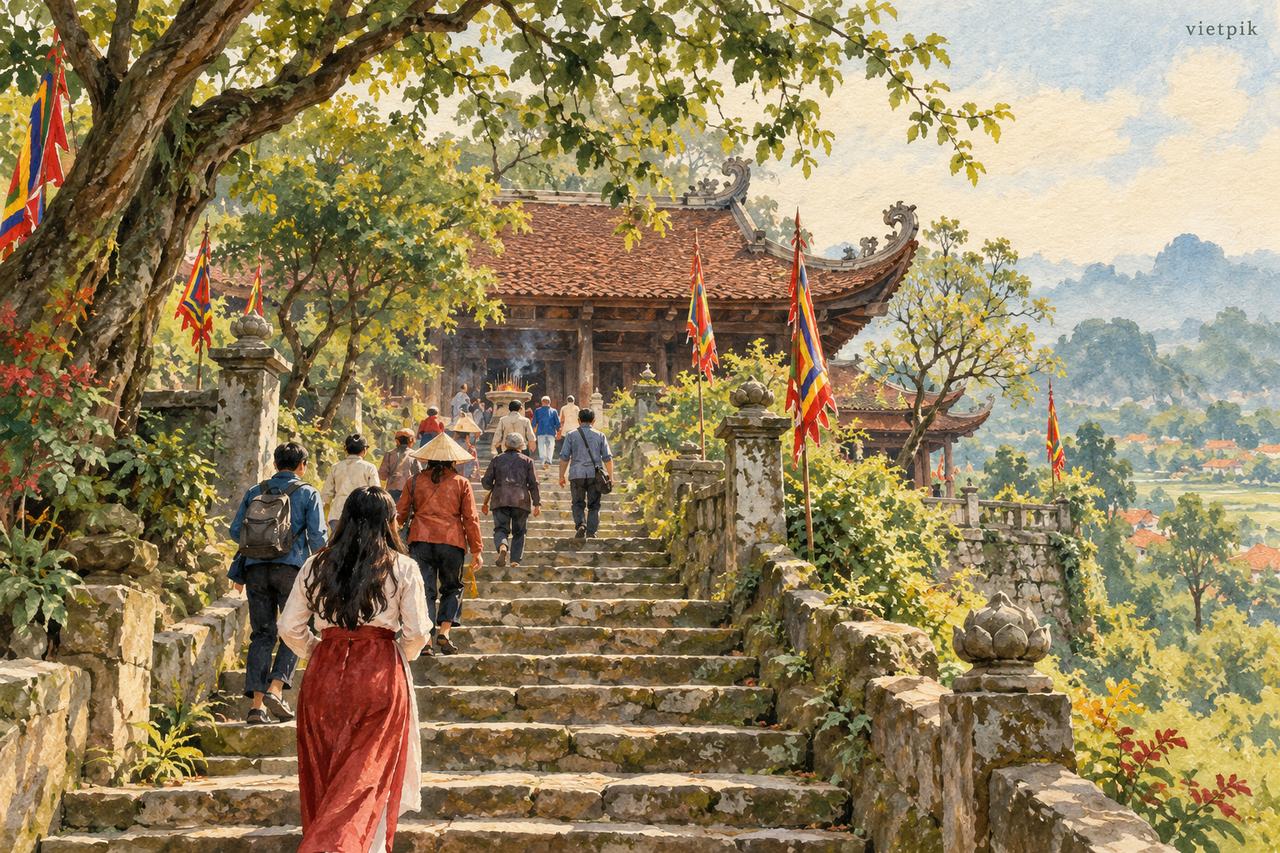
Plan around the physical effort of moving through a hilltop pagoda setting. Wear footwear that you can walk and stand in securely, carry a manageable bag and avoid stopping a group across a narrow passage. Anyone with limited mobility should confirm the actual route and available assistance with the site before committing to a crowded festival visit; this guide does not verify a step-free alternative. Choose a pace that permits pauses without blocking others. Reaching every area is less important than reaching an appropriate place comfortably enough to pay attention. Keep time for the descent rather than using all your energy during arrival.
A way to look at sculpture respectfully
Begin from the permitted distance and let your eyes adjust to the light. Compare posture, the relationship between body and clothing, or how a face directs attention. These observations are available without touching a surface or moving an offering. If a label or interpreter identifies a figure, write that identification separately from your own impression. Do not use flash unless the site explicitly permits it, and do not ask worshippers to move so that a composition looks empty. A photograph can remember an encounter, but a short sketch or a few descriptive words may help you notice more while taking up less space.
Enjoy puppetry as a craft of coordination
If water puppetry appears in the confirmed programme, watch the relationship between a puppet's movement, the music and the audience's response. You do not need to know the plot in advance to notice an entrance, a pause or a comic reversal. Ask for the scene's name afterwards rather than inventing a story from appearance alone. For children, identifying a recurring character or sound can make the performance easier to follow. Remain on the designated viewing side and keep pond edges clear. The point is to appreciate a local artistic contribution to the festival, not to assume every water scene represents a temple ritual.
Leave with two kinds of memory
A good Tây Phương visit may leave one memory of stillness and another of shared activity. Keep both when telling the story: a carefully observed artistic detail and a moment when the community gathered around a performance or procession. Label what you actually saw and when. If an advertised activity did not take place during your visit, omit it from your eyewitness account rather than filling the gap from an older photograph. The festival is worth approaching with that patience. It allows religious space, visual art and village creativity to remain connected without forcing them into a single hurried experience.