Lệ Mật is often introduced through a striking serpent-related story, but the festival becomes more interesting when the idea of return is allowed to share the foreground. People arrive with offerings and with connections to a place they regard as part of their origins. For a visitor, that changes the question from what spectacle will appear to what relationships the gathering renews. This guide concerns the Lệ Mật village festival in Việt Hưng, Hanoi. It approaches the ceremonial world through the village's founding tradition, the return of connected communities and the care needed when interpreting folk performance. It does not turn a festival visit into a promise of wildlife handling or a restaurant recommendation.
History & story
Cultural reporting connects the village's tutelary figure with a legendary rescue and the establishment of the Thập Tam Trại, or thirteen settlements. Accounts differ in how they tell the rescue, so the responsible approach is to retain the legend's broad role without presenting every episode as settled history. The story links courage with the creation of a place to live. That is a useful interpretive thread for a visitor: what does a community choose to remember about its beginning? Ask how the narrative is explained locally, and resist replacing that explanation with a more sensational version borrowed from an unrelated travel advertisement.
A founding narrative with several layers
Cultural reporting connects the village's tutelary figure with a legendary rescue and the establishment of the Thập Tam Trại, or thirteen settlements. Accounts differ in how they tell the rescue, so the responsible approach is to retain the legend's broad role without presenting every episode as settled history. The story links courage with the creation of a place to live. That is a useful interpretive thread for a visitor: what does a community choose to remember about its beginning? Ask how the narrative is explained locally, and resist replacing that explanation with a more sensational version borrowed from an unrelated travel advertisement.
Returning communities are part of the event
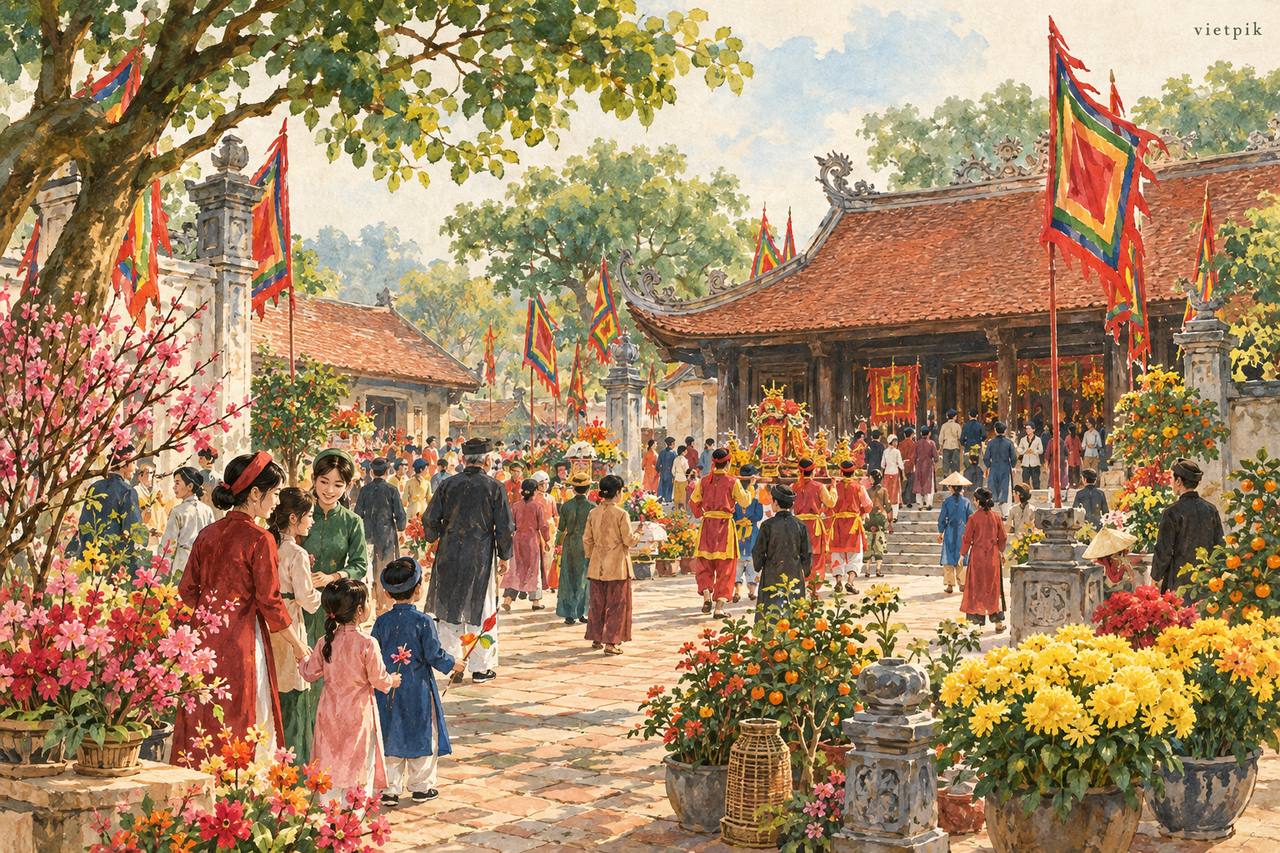
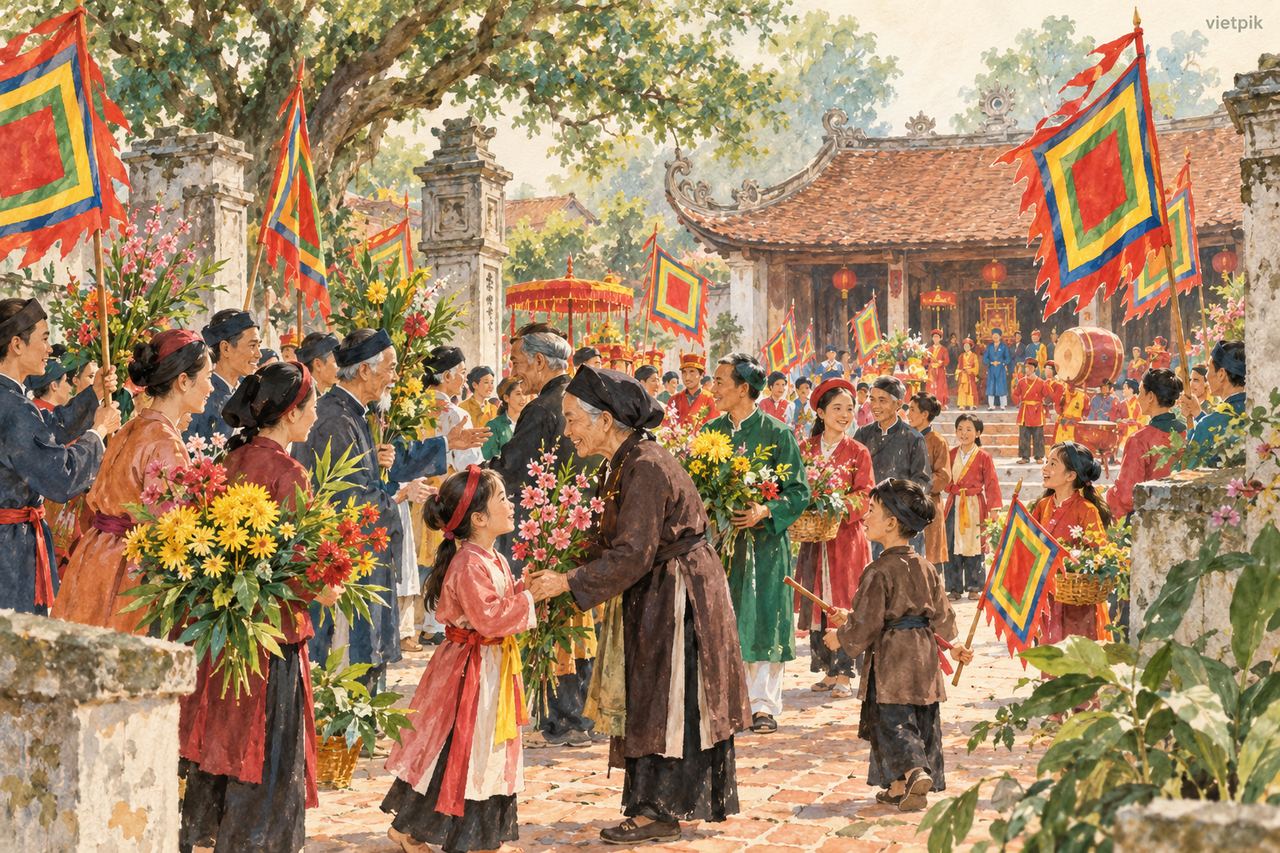
Nhân Dân's report on the 2026 opening notes delegations associated with the thirteen settlements returning to honour the village's revered figure. That is more than background crowd information. It suggests watching greetings, the arrival of groups and the way offerings are presented alongside the better-known performance moments. Do not infer where a person comes from solely from clothing; names and affiliations need an explanation or a visible announcement. If conversation is possible, ask what returning means to that visitor. A personal answer can reveal attachment to place without pretending to describe the feelings of everyone in the procession.
A previous opening is not the next programme
The city portal recorded the 2026 opening on 6 May, lunar day twenty of the third month. A separate 2025 programme ran over lunar days twenty to twenty-four and assigned different activities to different days. Keep those two years separate; the older sequence is evidence of how an edition was organised, not a timetable to copy forward. At the review on 28 September 2026, the official 2027 programme was not confirmed. If you hope to see the reception of returning communities or a particular dance, ask for its specific slot. Arriving on the opening day does not guarantee that every characteristic activity occurs then.
Watch the Giảo Long story as performance
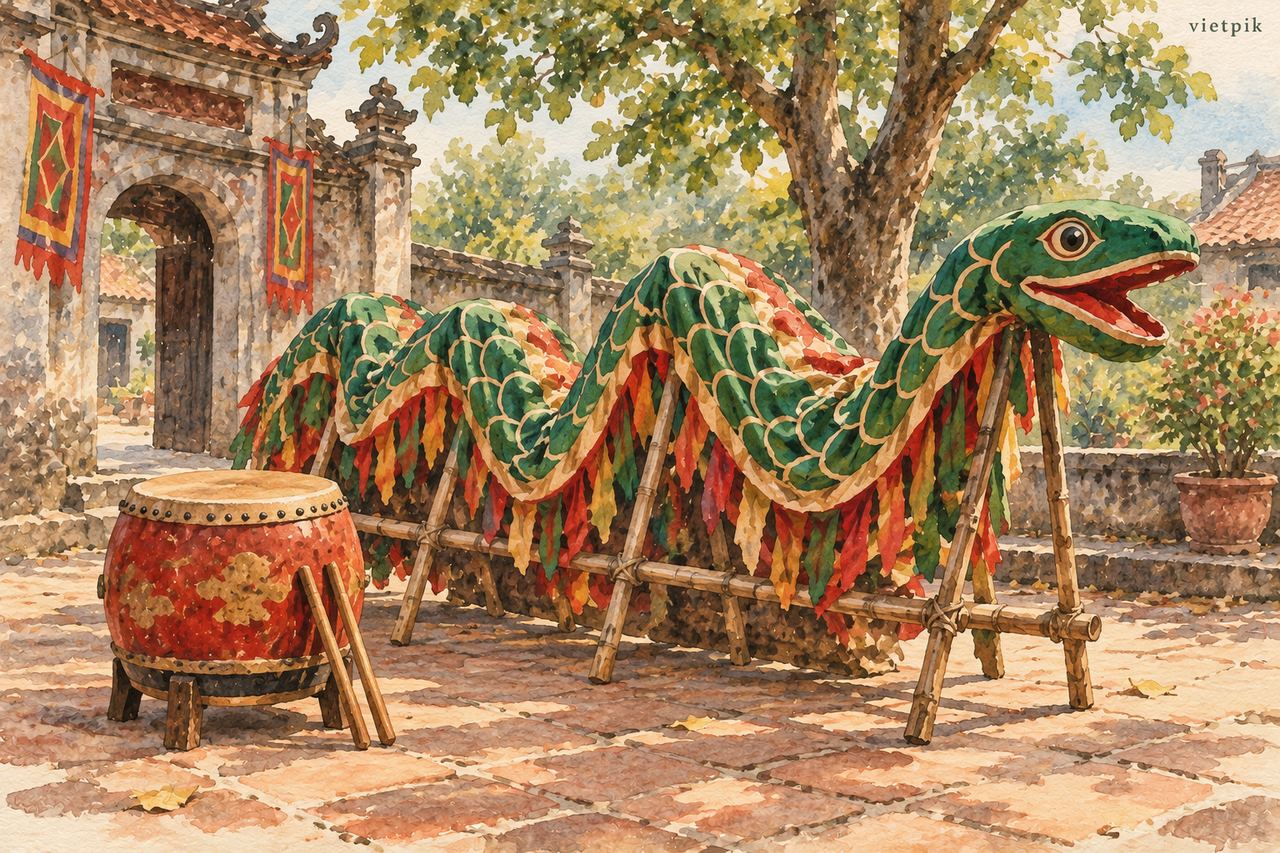
Múa Giảo Long is a named element of the festival's cultural reporting. To follow a performance, pay attention to its dramatic organisation: who enters first, how the creature is represented and how the audience recognises a turning point. These are observation prompts, not instructions for reproducing the rite. Do not label every dragon or serpent performance in Hanoi as Lệ Mật's dance; nearby traditions may use different names and stories. If you photograph an object while performers prepare, ask permission and avoid moving it. A carefully captioned prop or gesture can convey the art without claiming that your image documents the entire ceremonial sequence.
Separate cultural curiosity from wildlife contact
A serpent-related legend does not oblige a visitor to touch, purchase or consume an animal. You can understand the festival through storytelling, procession and performance while choosing no wildlife interaction at all. If an activity involves live animals, remain within the public viewing arrangements and do not request a personal handling demonstration. This guide does not verify any operator, species, permit or food service. The important editorial distinction is that village identity cannot be reduced to a single commercial experience. Keep your questions centred on the festival's people and meanings rather than assuming every household offers a particular activity to tourists.
Follow one delegation or one place
For a first visit, a manageable plan is to understand one gathering place well rather than follow every movement between sites. Locate the public entrance, choose a position that does not obstruct arriving delegations and leave room for people carrying offerings. If you are with children, ask them to notice how groups recognise and greet one another. Save detailed questions for a pause. Carrying a large camera does not give you priority over a person making a ceremonial return. If the crowd thickens, step back and widen your view; the relationships between groups may become easier to see from the edge.
Keep the names and the source of each story
Afterwards, identify the festival as Lệ Mật in Việt Hưng and record the year you attended. Distinguish a story read beforehand from an explanation offered at the site and from a movement you actually witnessed. If the details conflict, say so rather than selecting the most dramatic version. The lasting attraction of this festival is not exhausted by a creature in a dance. It also lies in people maintaining a relationship to shared origins. A travel account that notices that return gives readers a reason to approach Lệ Mật with curiosity and patience, even before any performance begins.