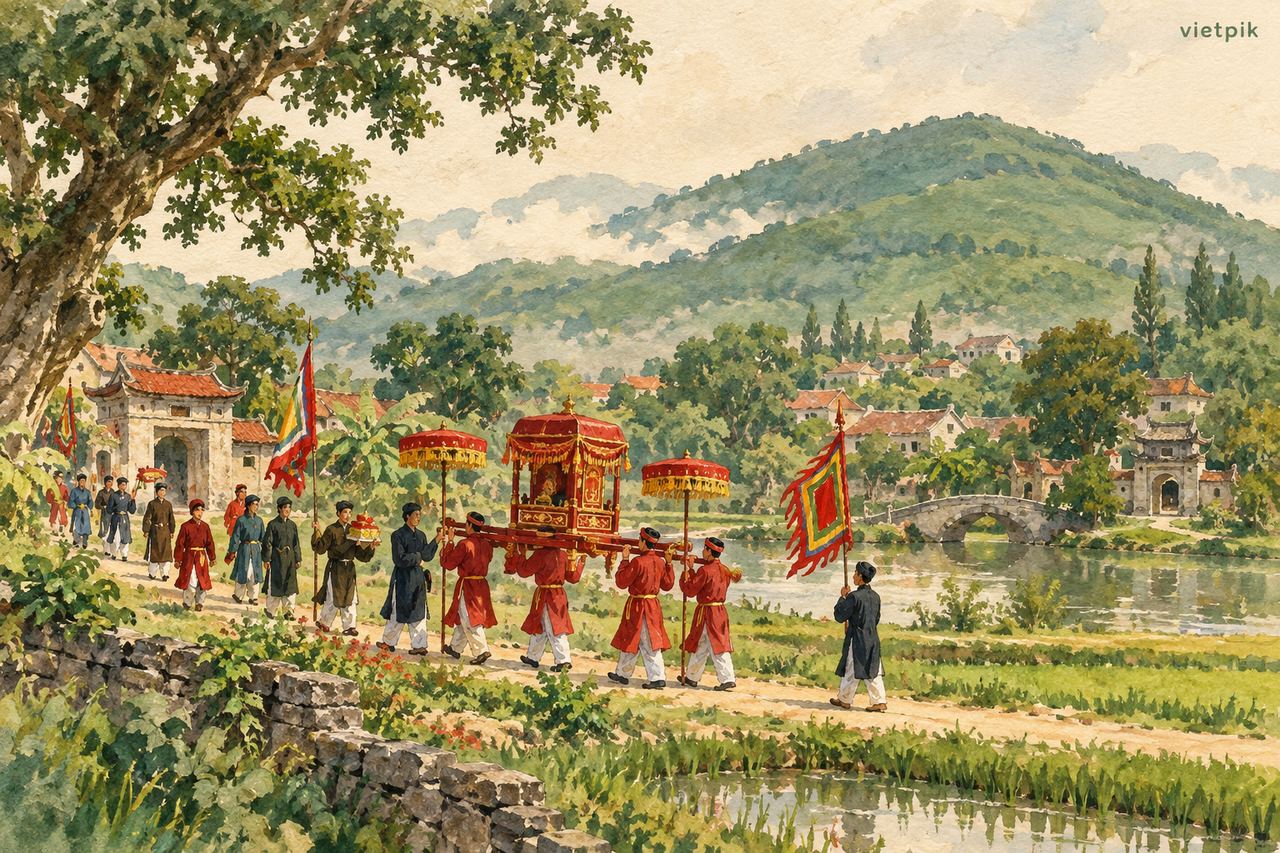
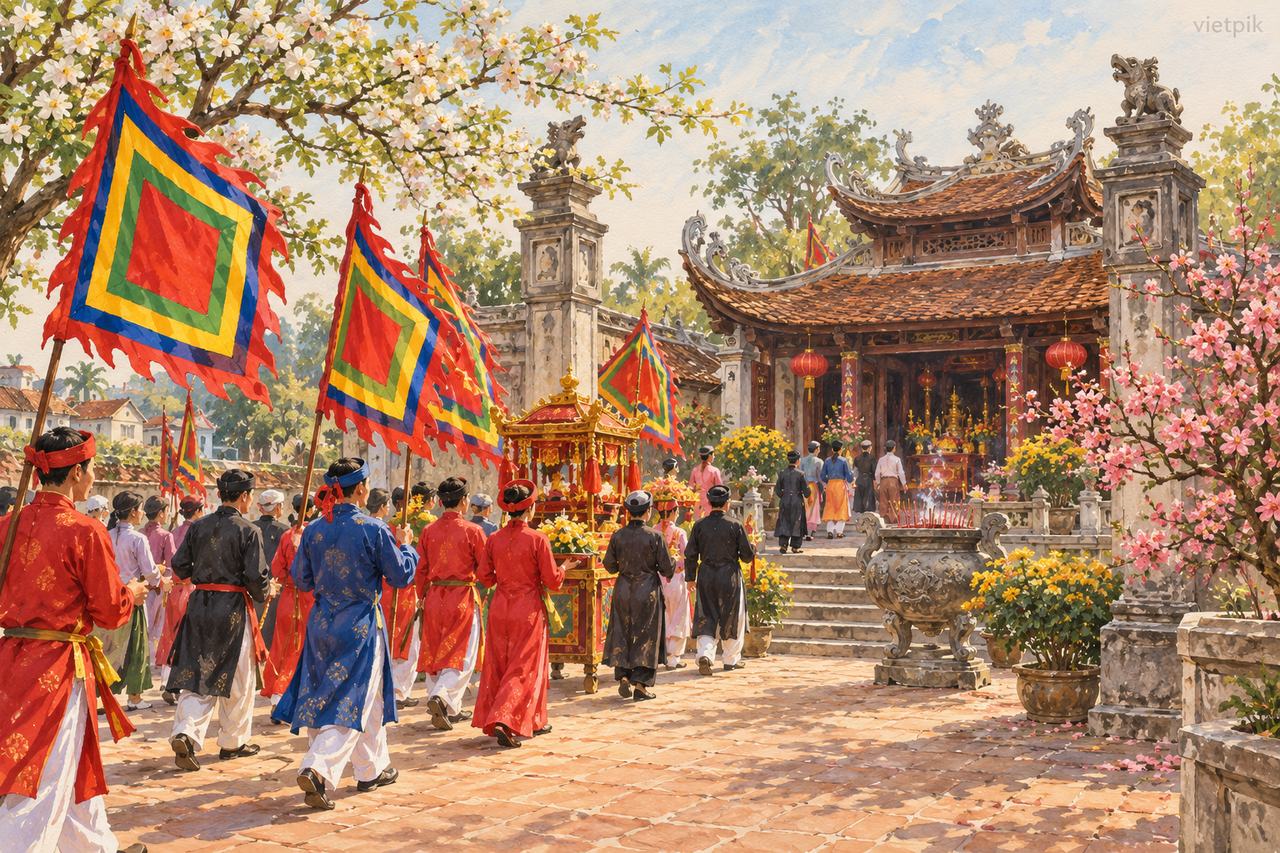
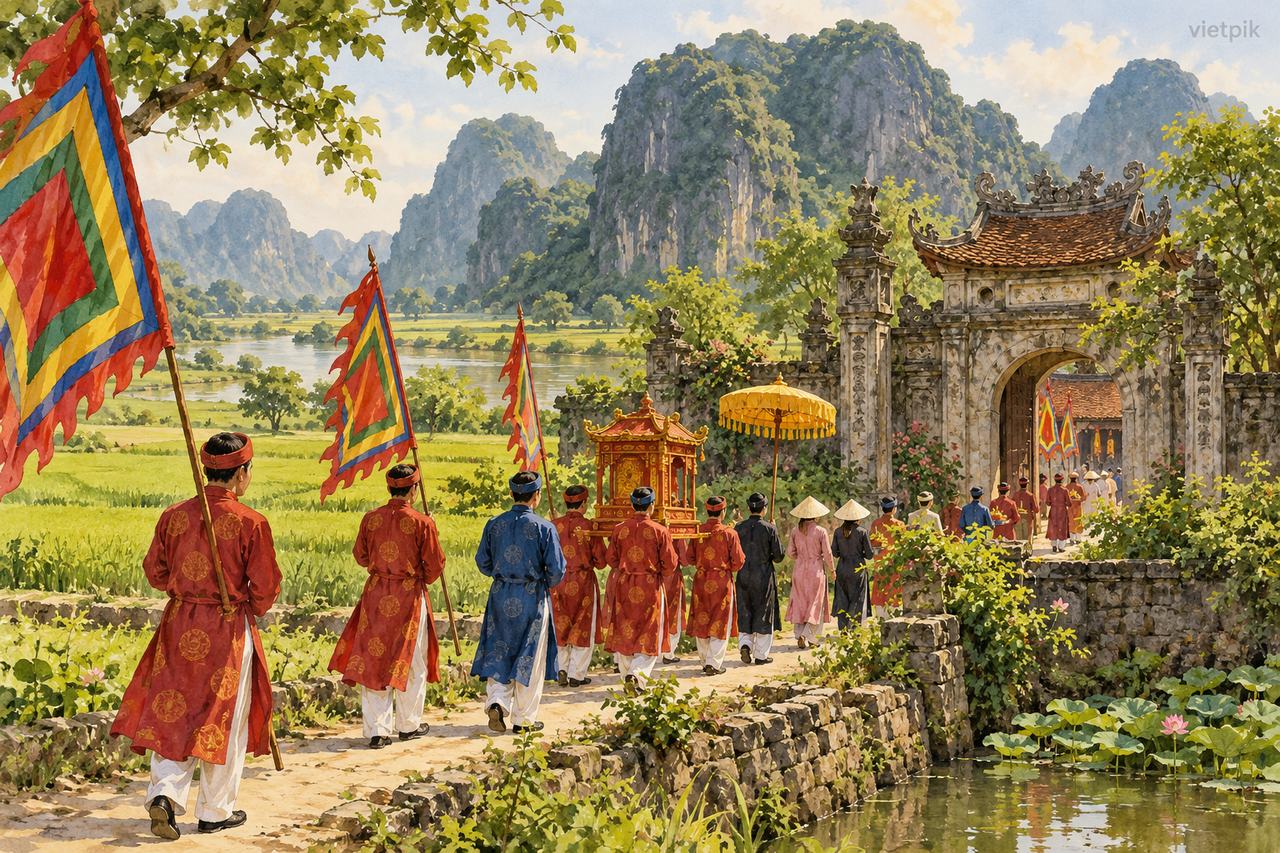
A familiar saying can become an obstacle to seeing a place. Ba Danh is often introduced through its reputation for quietness, but a festival asks a different question: what brings a community together here? In the former Ha Nam area, now Ninh Binh, the pagoda's relationship with the Day River provides a more useful starting point than a slogan about emptiness. This guide approaches the celebration as a shared occasion of worship and gratitude. It does not promise a deserted courtyard, a constant crowd or a particular atmosphere. Those impressions belong to an actual visit, not to a phrase inherited before arriving.
History & story
The provincial tourism introduction places Ba Danh beside the Day River and links its festival with agricultural hopes. Those broad connections are more reliable foundations for a visit than unverified stories explaining exactly why the pagoda became a proverb. Look for the relationship between the public approach, the worship space and the surrounding water landscape. A river does not have to be a dramatic photographic backdrop to matter. It can organise movement and orient a visitor's sense of place. This way of looking keeps local life within the scene, rather than treating the temple as an isolated object waiting to be discovered.
1. A river landscape with a community inside it
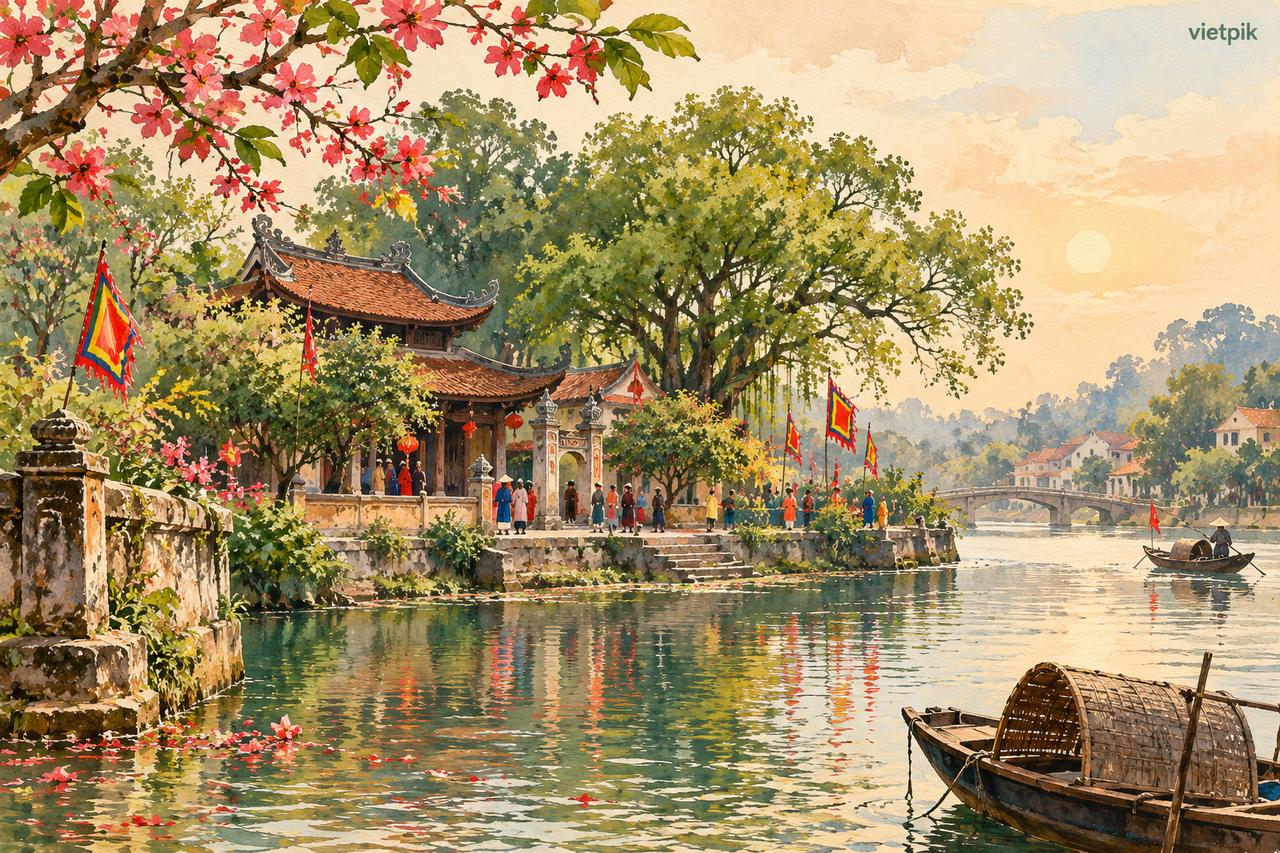
The provincial tourism introduction places Ba Danh beside the Day River and links its festival with agricultural hopes. Those broad connections are more reliable foundations for a visit than unverified stories explaining exactly why the pagoda became a proverb. Look for the relationship between the public approach, the worship space and the surrounding water landscape. A river does not have to be a dramatic photographic backdrop to matter. It can organise movement and orient a visitor's sense of place. This way of looking keeps local life within the scene, rather than treating the temple as an isolated object waiting to be discovered.
2. Read agricultural devotion without simplifying it
Sources describe a celebration honouring Thanh Ba and earlier generations associated with the site. Accounts differ in some names and explanations of the weather-related deity, so this guide avoids presenting a disputed identification as settled. The broader agricultural connection remains a useful point of interpretation: hopes for rain, crops and livelihood can gather around a religious place. That does not turn belief into a measurable promise about weather or harvests. A visitor can respect the devotional meaning while distinguishing it from scientific causation. The distinction allows an honest account without either dismissing worship or exaggerating its effects.
3. Use the dates with their level of certainty
The provincial tourism article updated on 12 March 2026 gives the fifteenth through seventeenth days of the second lunar month as the festival's traditional period. That is retained here as a reference rather than converted into a confirmed Gregorian programme for 2027. The review on 28 September 2026 did not establish the next edition's opening time or activity-by-activity schedule. Before travelling for a procession or a boat event, find a notice that names the relevant year and activity. General descriptions of customary celebrations cannot guarantee that each listed element will be staged during the hours of your visit.
4. A procession reveals relationships
The tourism account describes a procession, offerings and communal activities. For a visitor, a useful focus is how people arrange themselves around a shared object or route. Who waits, who makes room, and how does the crowd recognise a change from movement to worship? These questions do not require knowing every title within a ceremonial team. They encourage observation of cooperation. If the route narrows, leave the passage clear rather than attempting to keep a perfect camera angle. The festival's meaning does not disappear when you step back; sometimes a wider view makes its collective structure easier to recognise.
5. Keep river activities conditional
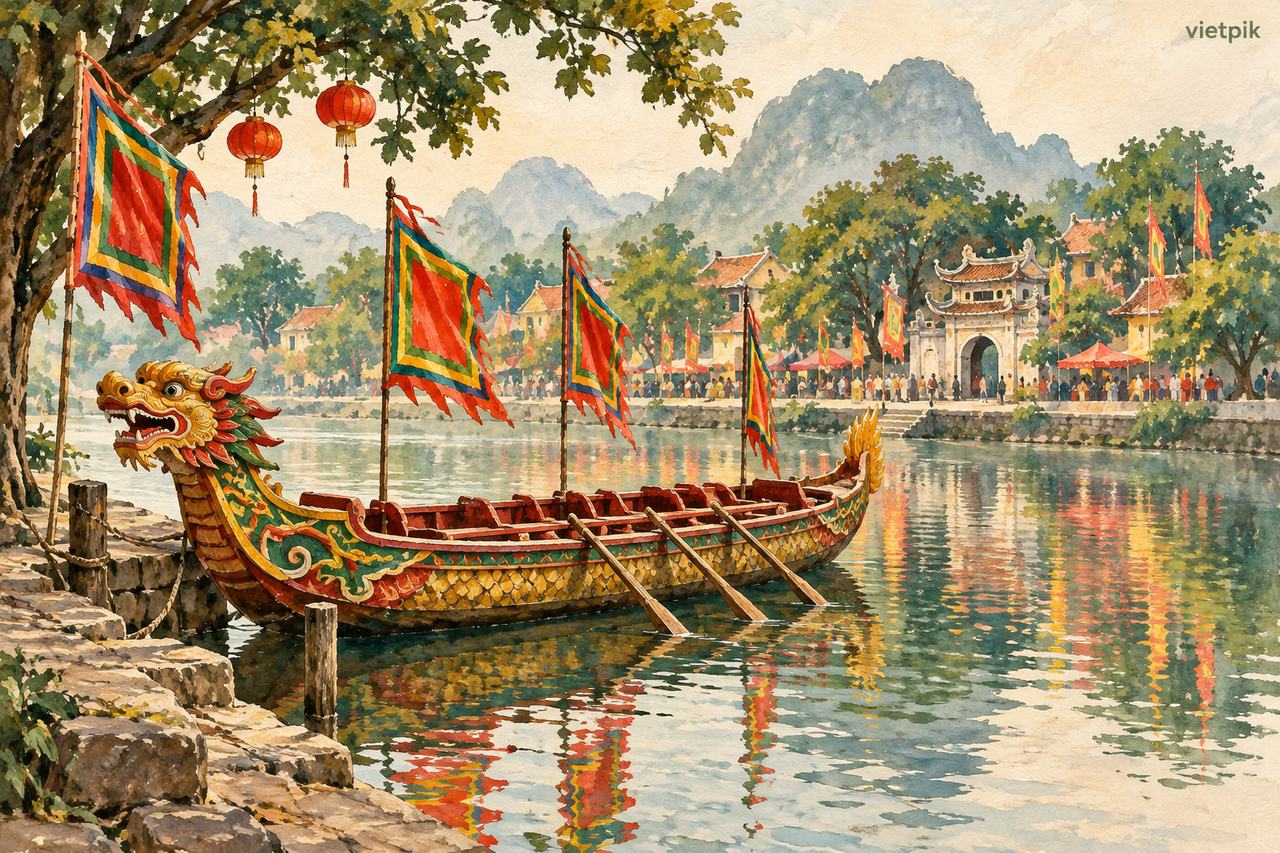
Traditional descriptions can include boat-related activities among the festival's attractions. They should not be transformed into a promise that a visitor can hire a boat, join a crew or see a race on demand. Confirm the programme first, then watch only from authorised positions. Reflections, oars at rest and the space between a boat and the bank can all make engaging subjects without placing a spectator near an unstable edge. If no water activity is scheduled, the river remains part of the setting. Its significance does not depend on a performance being supplied for the camera.
6. Plan a visit that leaves room to notice
Give the riverside setting a little unassigned time rather than attaching every minute to a checklist. After one confirmed festival activity, pause in a permitted public area and compare the scene with your expectations. Did you arrive looking for silence and find conversation, or arrive expecting spectacle and become interested in a small gesture? These are useful travel notes because they acknowledge that a place can revise an inherited image. For a family group, agree where to regroup and when to leave before spreading out. No restaurant, parking arrangement or transport fare is guaranteed in this draft.
7. Replace the slogan with a particular memory
When describing Ba Danh afterwards, choose an observed detail instead of repeating the familiar label about quietness. Name the edition, the activity and the place from which you watched. If you discuss a legend, introduce it as a legend and identify the source of the version you heard. A precise modest account can help another traveller arrive with curiosity, leaving the pagoda and its community room to be more than a ready-made saying.