Co Le Pagoda Festival brings autumn commemoration into a setting whose architecture already invites questions. The pagoda, also called Than Quang Tu, belongs to the former Nam Dinh area and now stands in Co Le commune, Ninh Binh province. During the festival, the building is not simply an unusual object to photograph: it becomes the setting for worship, processions and community activity. This guide follows those relationships while keeping architectural curiosity connected to the reason people gather. It also distinguishes the annual lunar reference from the detailed programme of any one year, particularly when planning a future trip.
History & story
Local tourism and festival reports associate Co Le's celebration with Nguyen Minh Khong, honoured as Duc Thanh To. That identity should remain attached to this particular site rather than being casually substituted with the figure named in an account of another pagoda. Northern religious traditions contain overlapping names and stories, making precision especially valuable. Read the interpretation at Co Le and ask how the local community describes the saint's relationship with the pagoda. Extraordinary healing stories, where mentioned, belong to devotional narrative; they do not support present-day health claims or establish a medical benefit from attending the festival.
1. Start with the figure being honoured
Local tourism and festival reports associate Co Le's celebration with Nguyen Minh Khong, honoured as Duc Thanh To. That identity should remain attached to this particular site rather than being casually substituted with the figure named in an account of another pagoda. Northern religious traditions contain overlapping names and stories, making precision especially valuable. Read the interpretation at Co Le and ask how the local community describes the saint's relationship with the pagoda. Extraordinary healing stories, where mentioned, belong to devotional narrative; they do not support present-day health claims or establish a medical benefit from attending the festival.
2. Architecture is a frame for activity
Co Le is described locally as combining Vietnamese Buddhist and Western architectural influences. Instead of stopping at the surprise of that mixture, observe how people use the spaces during the festival: where a group gathers, which passage remains open and how worship continues alongside visitors' interest in the building. A tower or arch can be visually striking without telling you the full history of a construction phase. If dates or technical terms are unclear, use the site's interpretation rather than guessing from appearance. Looking carefully at use as well as form gives the architecture a human context that an isolated façade photograph cannot provide.
3. Autumn dates need a current programme
The customary festival period is described as the thirteenth to sixteenth days of the ninth lunar month. The 2025 edition also included a ceremony receiving recognition of the pagoda as a special national monument. Such an edition-specific occasion must not become an annual promise in a travel listing. At the review date of 28 September 2026, this article does not claim to have established the official 2027 programme. Keep the traditional lunar period for orientation, then verify the next opening, procession and public activities individually. Do not infer a boat-racing time merely from a general description of the festival's heritage.
4. Follow a procession without taking it over
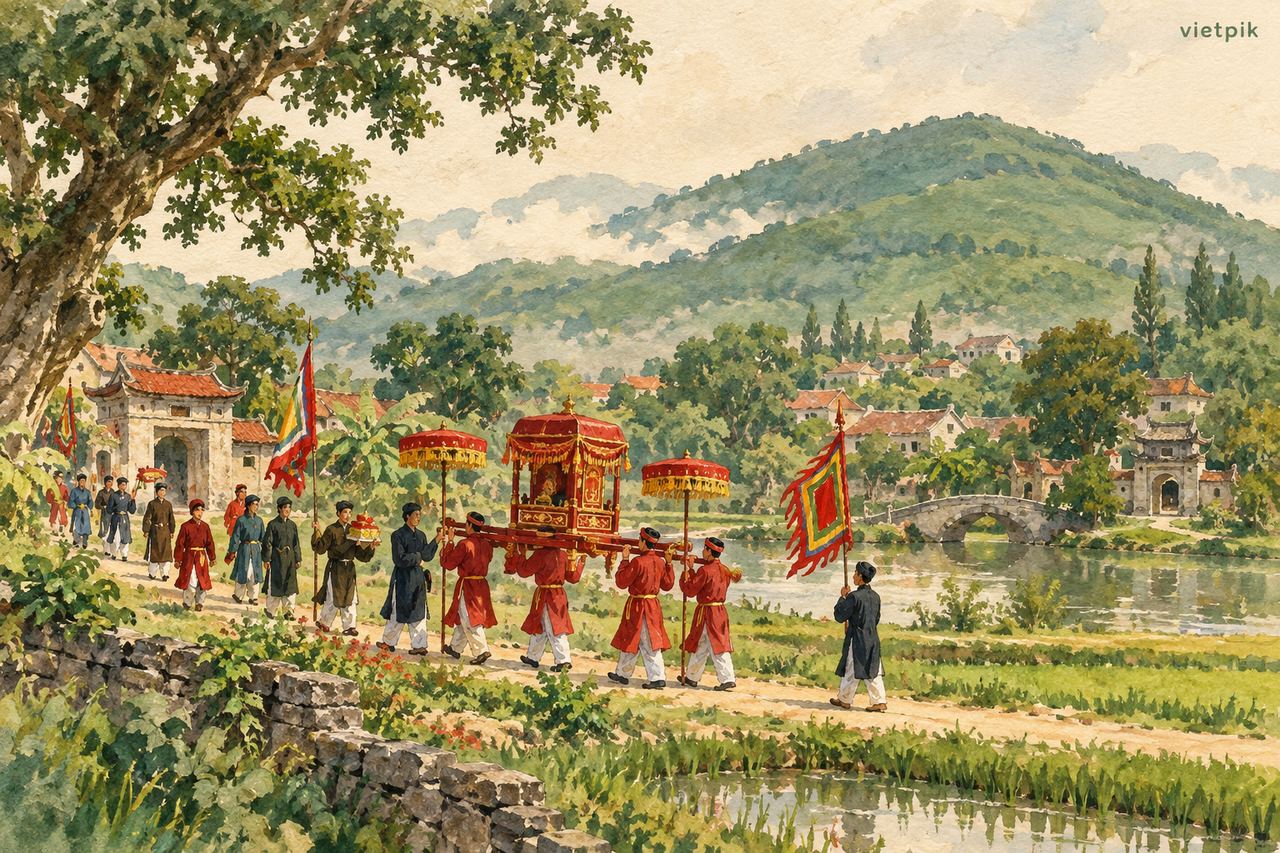
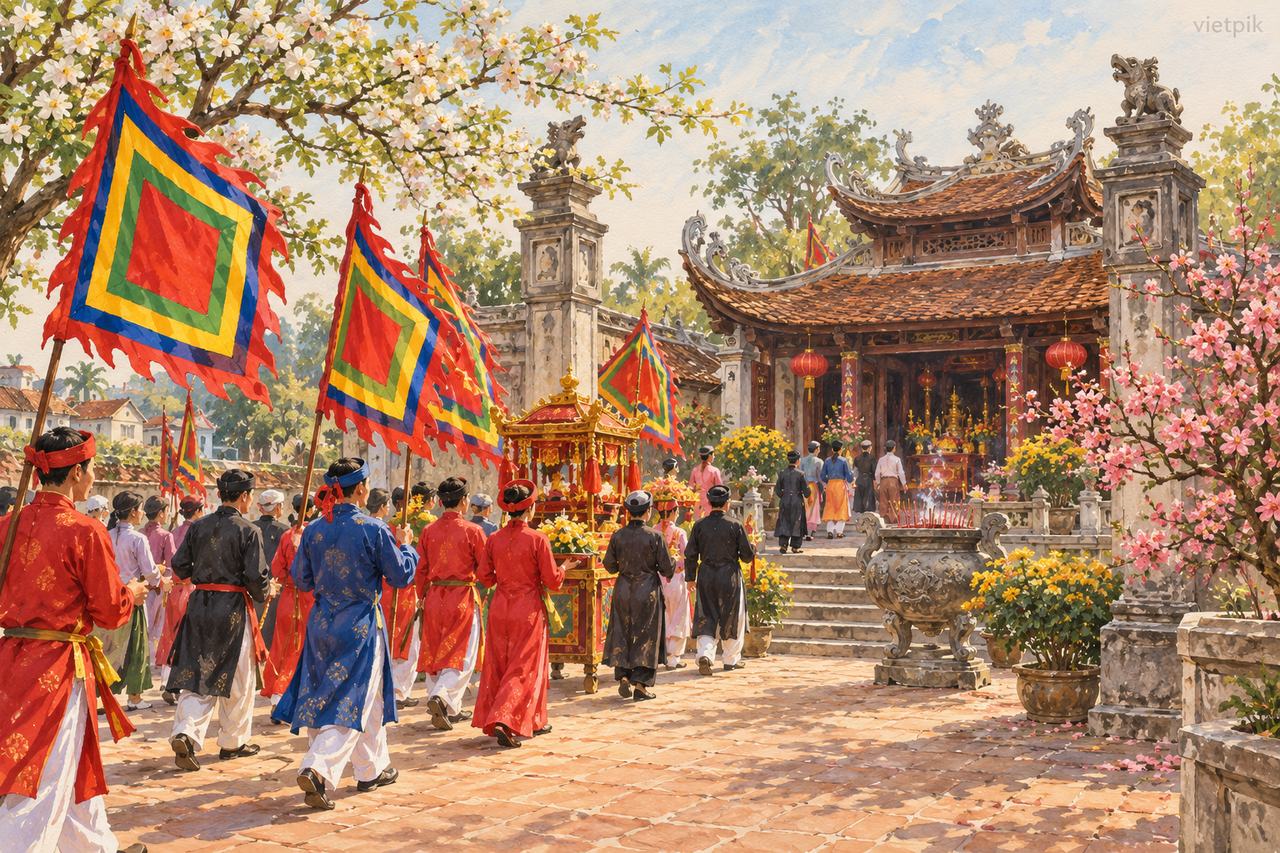
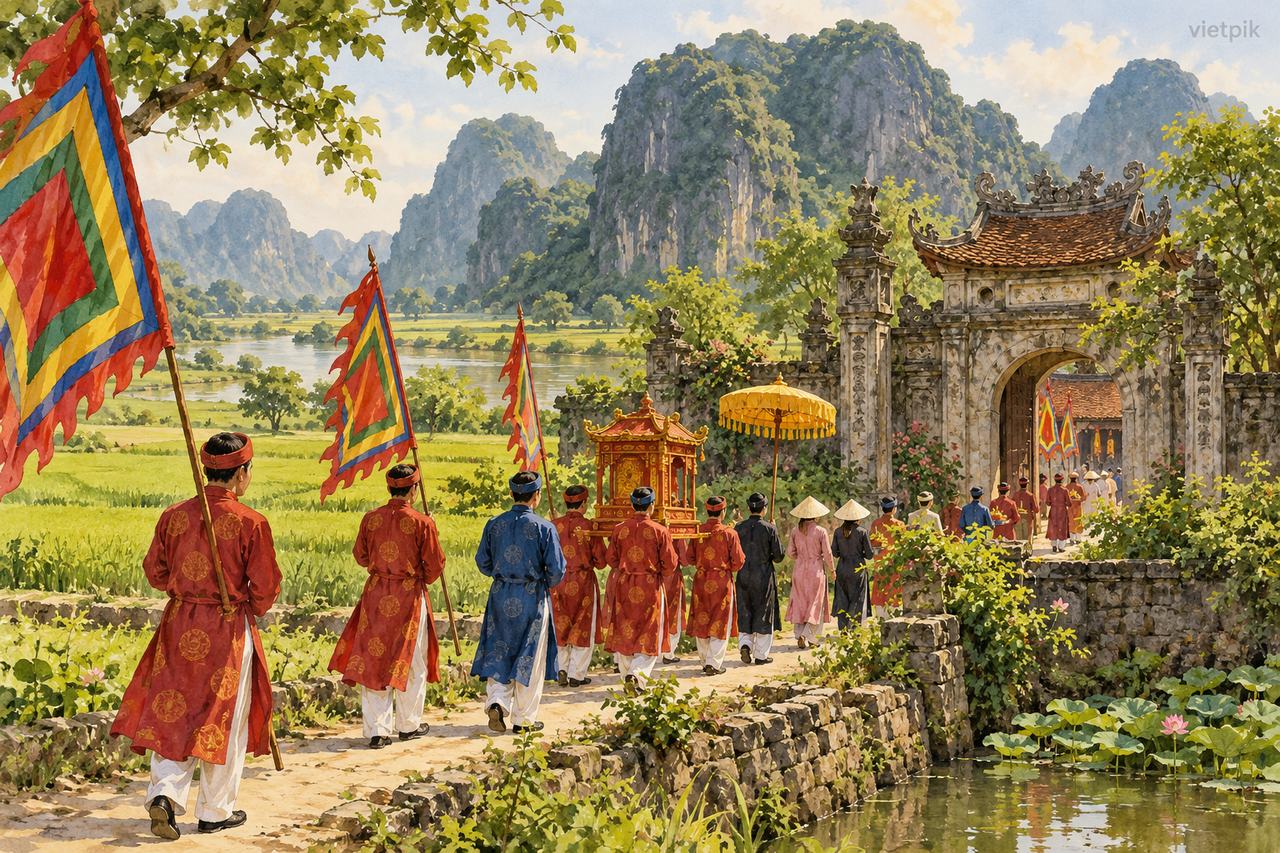
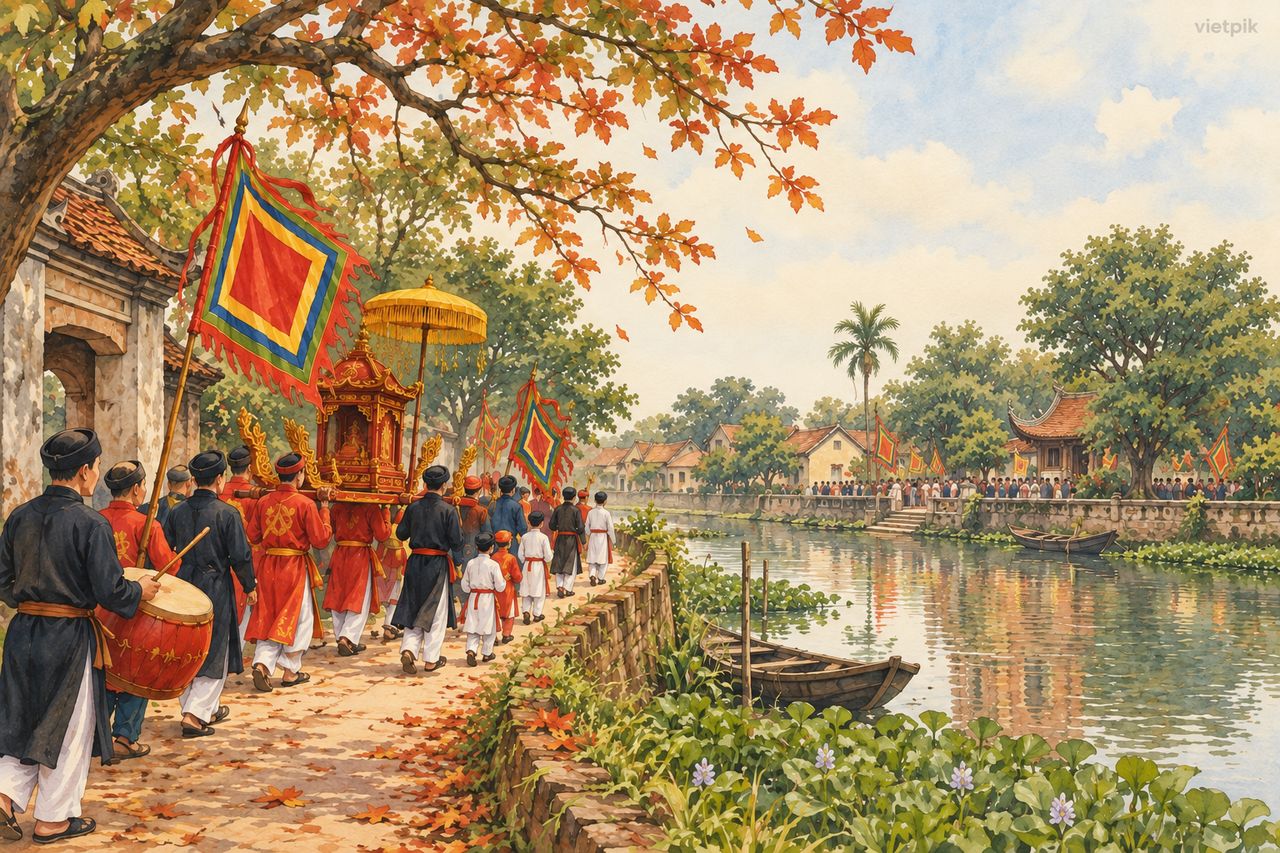
Descriptions of the festival include processions and commemorative offerings. A useful way to watch is to focus on the transition between spaces: how the group forms, waits and enters its destination. This is often where the relationship between worship and community organisation becomes visible. Choose a position that leaves the route intact instead of walking backwards immediately in front of the group with a phone. If you cannot see an inner rite, do not assume you are entitled to enter the restricted space. A complete understanding may require an explanation afterwards rather than a close view of every moment.
5. Bells connect objects with memory
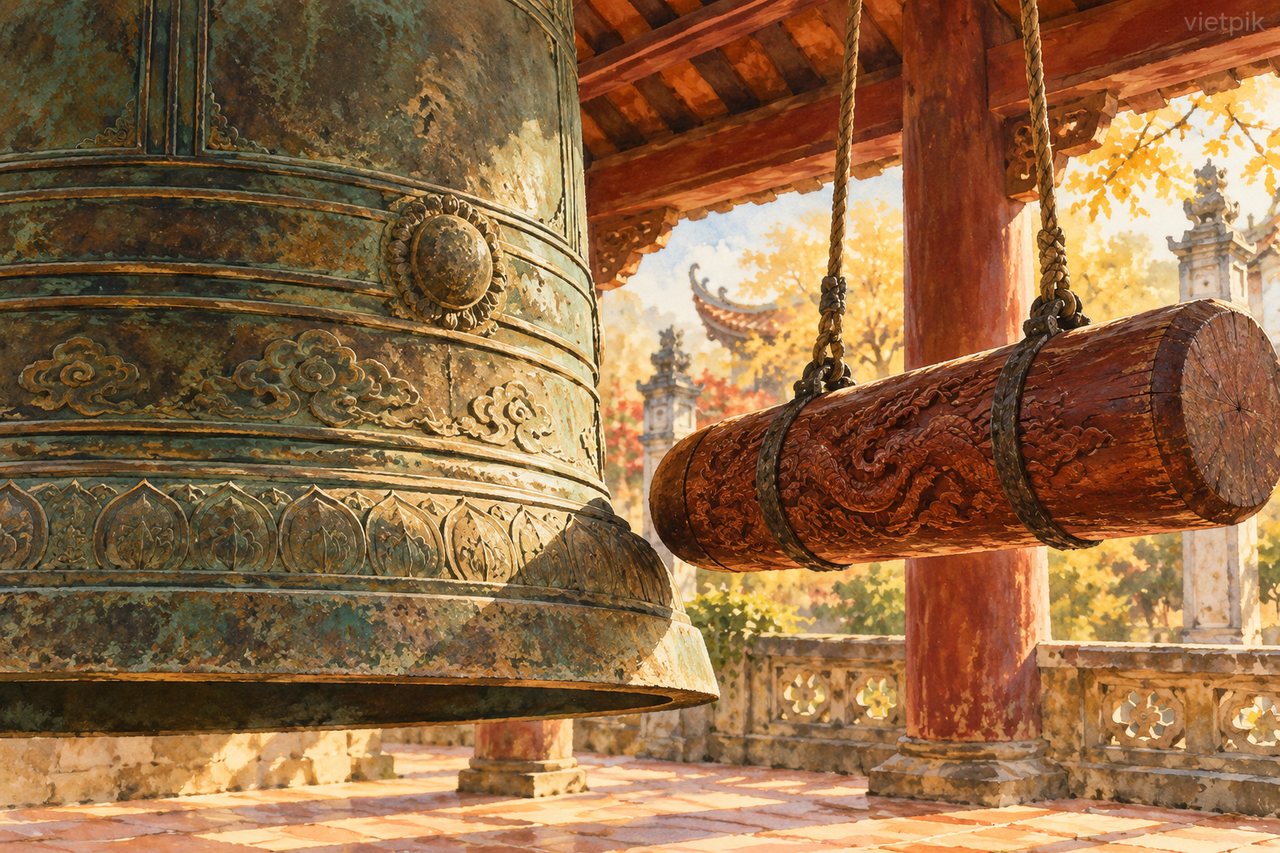
Festival reporting also draws attention to the pagoda's bell heritage. A bell is not only a large object with an impressive surface; it belongs to practices of sound, dedication and preservation. Read any displayed information before attaching a name or date to the bell you photograph, since one site may preserve more than one object. Never strike a bell without permission simply to hear how it sounds. For a child or a curious first-time visitor, comparing visible patina, suspension and the space around the bell can open a discussion about use and care without requiring physical contact with the object.
6. Folk activity is not an unlimited visitor service
Local accounts mention folk arts, games and boat-related competition among Co Le's festival activities. Check which are actually scheduled for the edition you attend and where spectators are directed. If a riverbank event is offered, observe from the designated area and avoid moving onto an unstable edge to obtain a better view. No current race route, admission fee, food stall or transport timetable is verified here. A sensible plan chooses one confirmed activity, leaves time for the pagoda and makes extra stops optional. This protects the festival focus from being lost in a hurried attempt to sample every item named in promotional material.
7. Keep the festival's layers distinct
A good account of Co Le can hold several layers together: devotion to a remembered saint, the use of an unusual architectural setting, the care of religious objects and the collective energy of village activities. None needs to replace the others. When sharing your visit, identify which layer a photograph shows and label the year. Avoid using a ceremony from a special recognition event as if it happened every autumn.