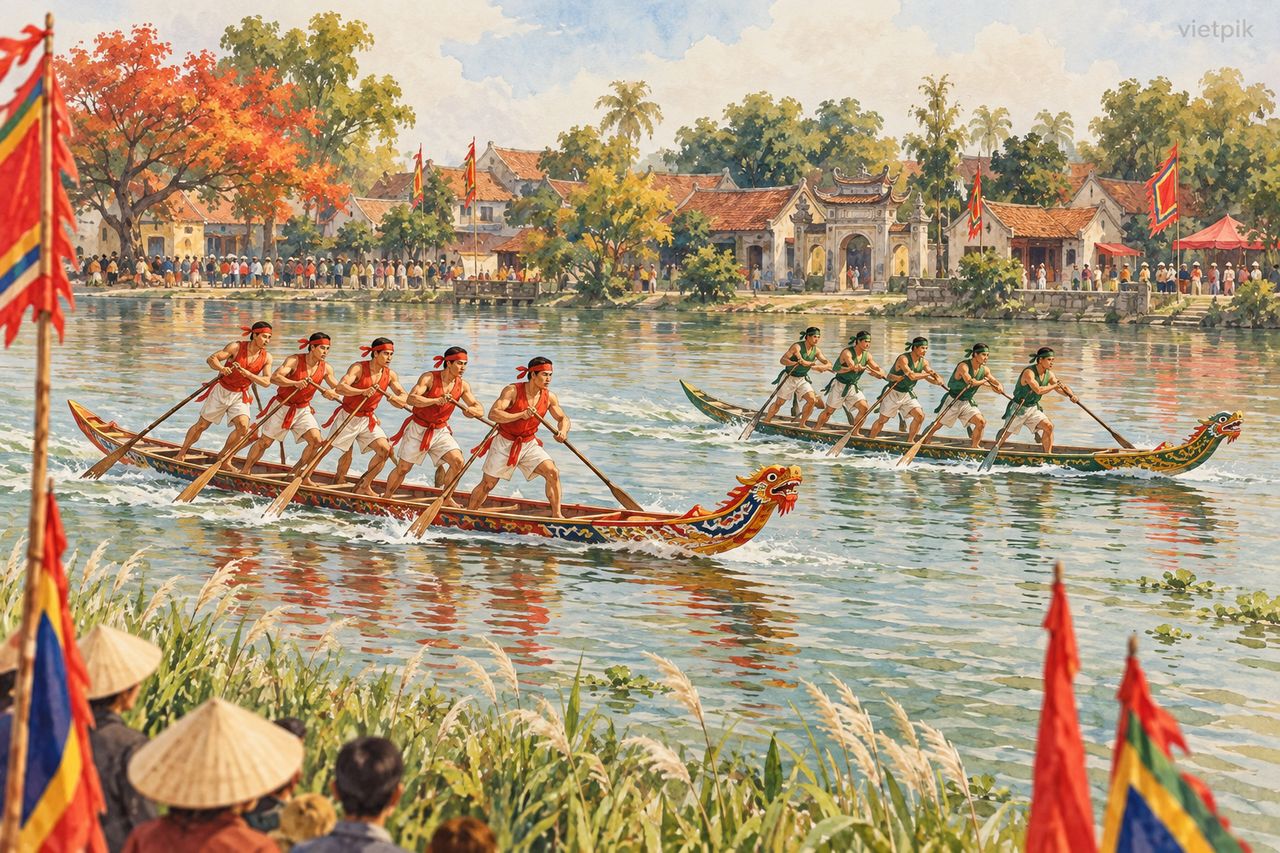
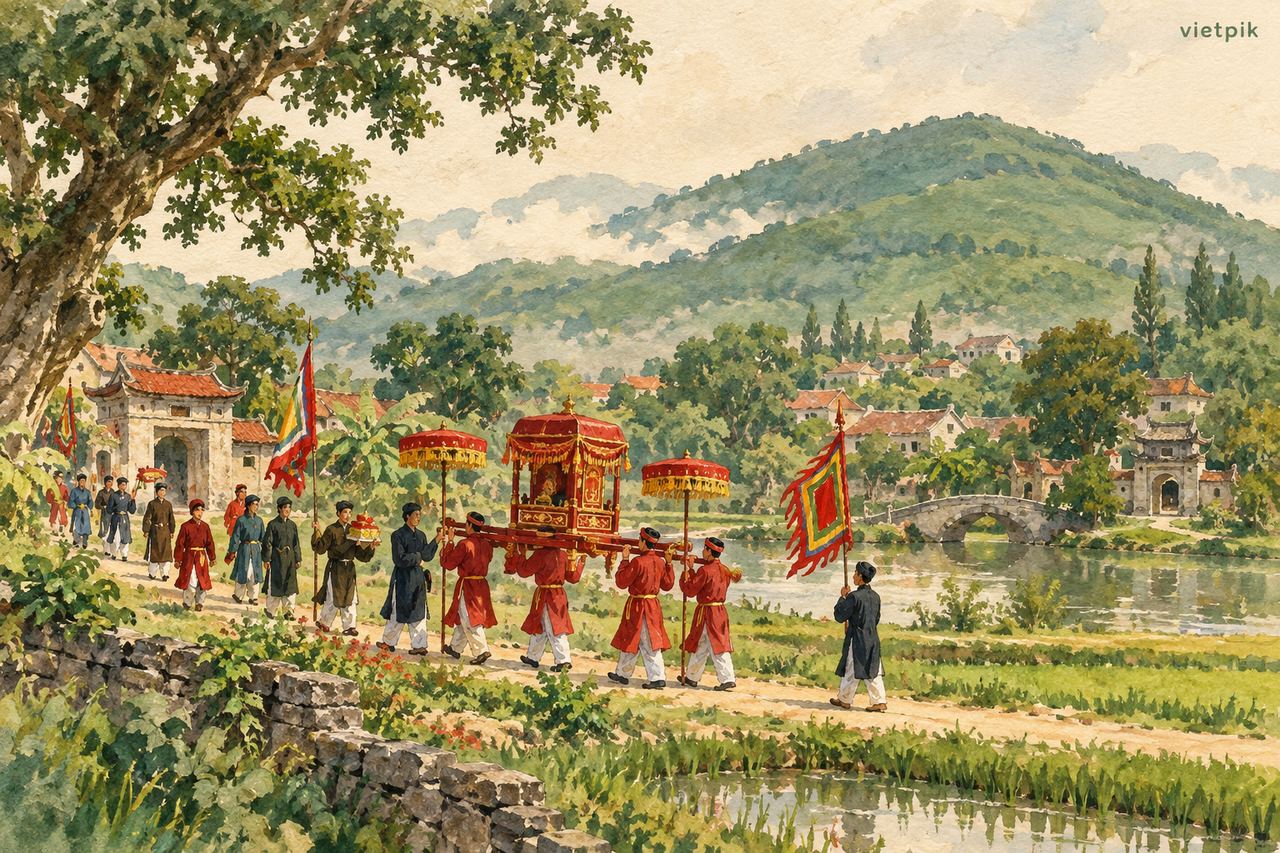
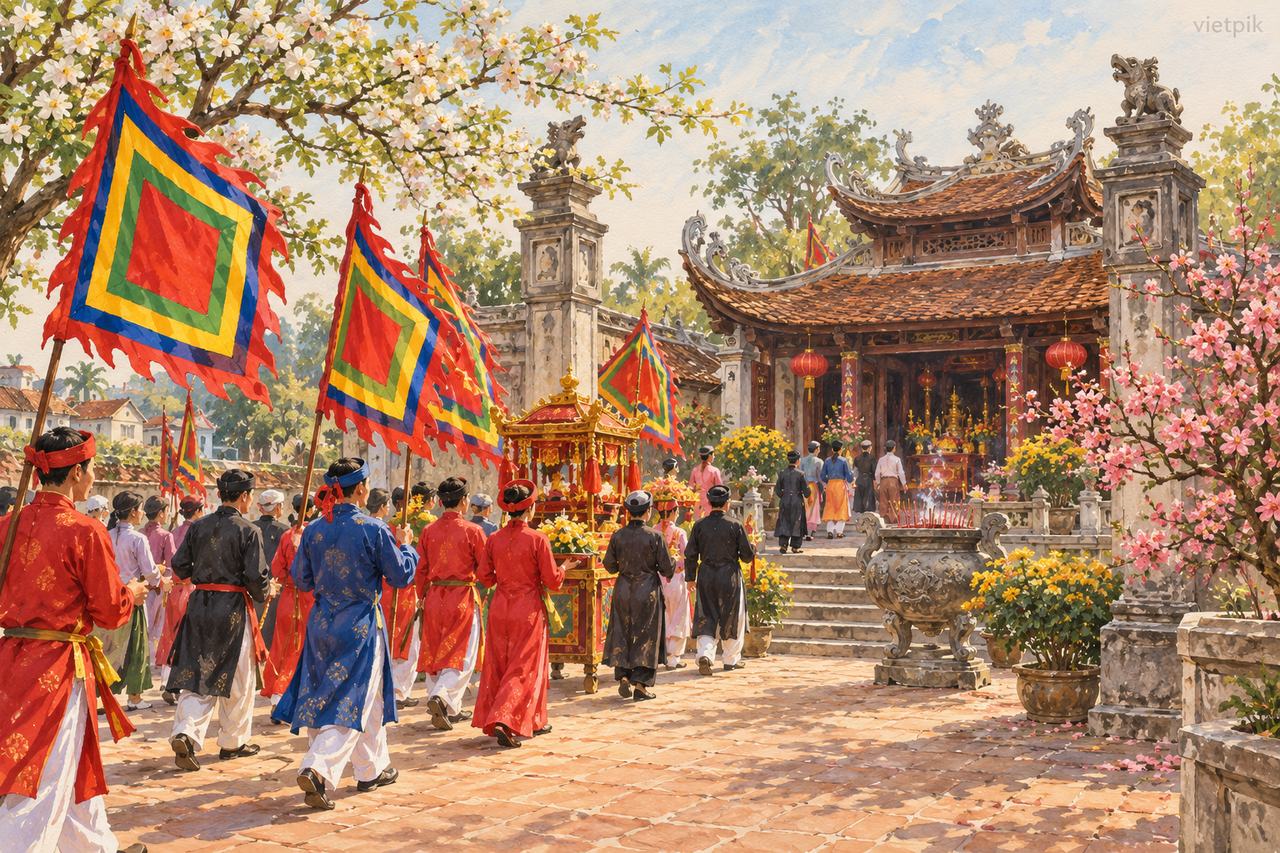
Thai Vi Temple Festival rewards attention to the way people arrive. Processions from surrounding communities give the celebration a sense of convergence, while the landscape near Tam Coc places royal remembrance within a village setting. This is not simply a smaller version of Hoa Lu Festival: its historical emphasis is the Tran dynasty and the traditions associated with Thai Vi. For travellers, the strongest approach is to understand one procession and its destination before adding other sightseeing. The following guide keeps the festival at the centre and treats the surrounding landscape as context, not as an excuse to turn the article into an unrelated attraction list.
History & story
Thai Vi stands in the Van Lam area near Tam Coc and is associated with the Tran rulers and the Vu Lam royal retreat. The temple's commemorative setting makes the procession more than a decorative march through a scenic valley. Read the names on the interpretation panels and keep the dynasty distinct from the Dinh and Early Le story of the ancient capital. A first-time visitor does not need to memorise an entire royal genealogy. Understanding which historical community is being remembered provides enough orientation to notice why a particular temple, village gathering point and route belong together.
1. Locate the Tran connection
Thai Vi stands in the Van Lam area near Tam Coc and is associated with the Tran rulers and the Vu Lam royal retreat. The temple's commemorative setting makes the procession more than a decorative march through a scenic valley. Read the names on the interpretation panels and keep the dynasty distinct from the Dinh and Early Le story of the ancient capital. A first-time visitor does not need to memorise an entire royal genealogy. Understanding which historical community is being remembered provides enough orientation to notice why a particular temple, village gathering point and route belong together.
2. Watch a meeting of villages
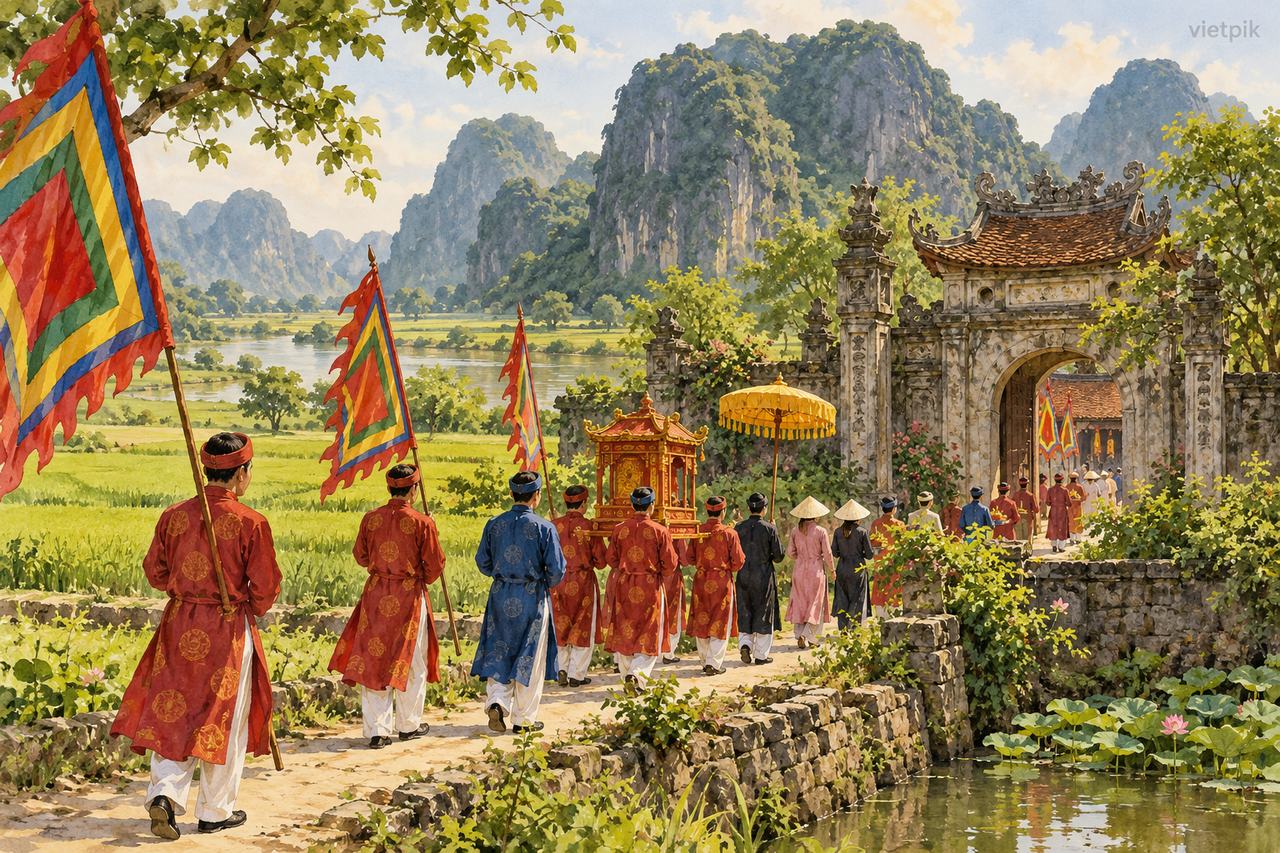
Local descriptions place the processions through village gathering points, including Dinh Cac, before they reach Thai Vi. The different groups are therefore part of the festival's social structure, not interchangeable extras. Watch how each group keeps its formation, carries its objects and makes space for another to move. You may not be able to identify every ceremonial role without local explanation, and it is better to leave a question open than invent a title from someone's clothing. If you seek a conversation, approach when the group is resting and ask about its village connection rather than interrupting an active sequence.
3. A main day, several descriptions
The full moon of the third lunar month is a central reference for Thai Vi. Older tourism accounts variously describe surrounding days, and some distinguish a larger celebration on a three-year cycle. For the actual 2026 edition, the provincial tourism notice specified 30 April to 1 May, corresponding to the fourteenth and fifteenth lunar days. These descriptions should not be flattened into a single permanent start and end date. For 2027, this guide leaves the official programme unconfirmed. In particular, an account of a larger festival year cannot justify promising the same scale of processions, games or performances in every subsequent year.
4. Drums help organise attention
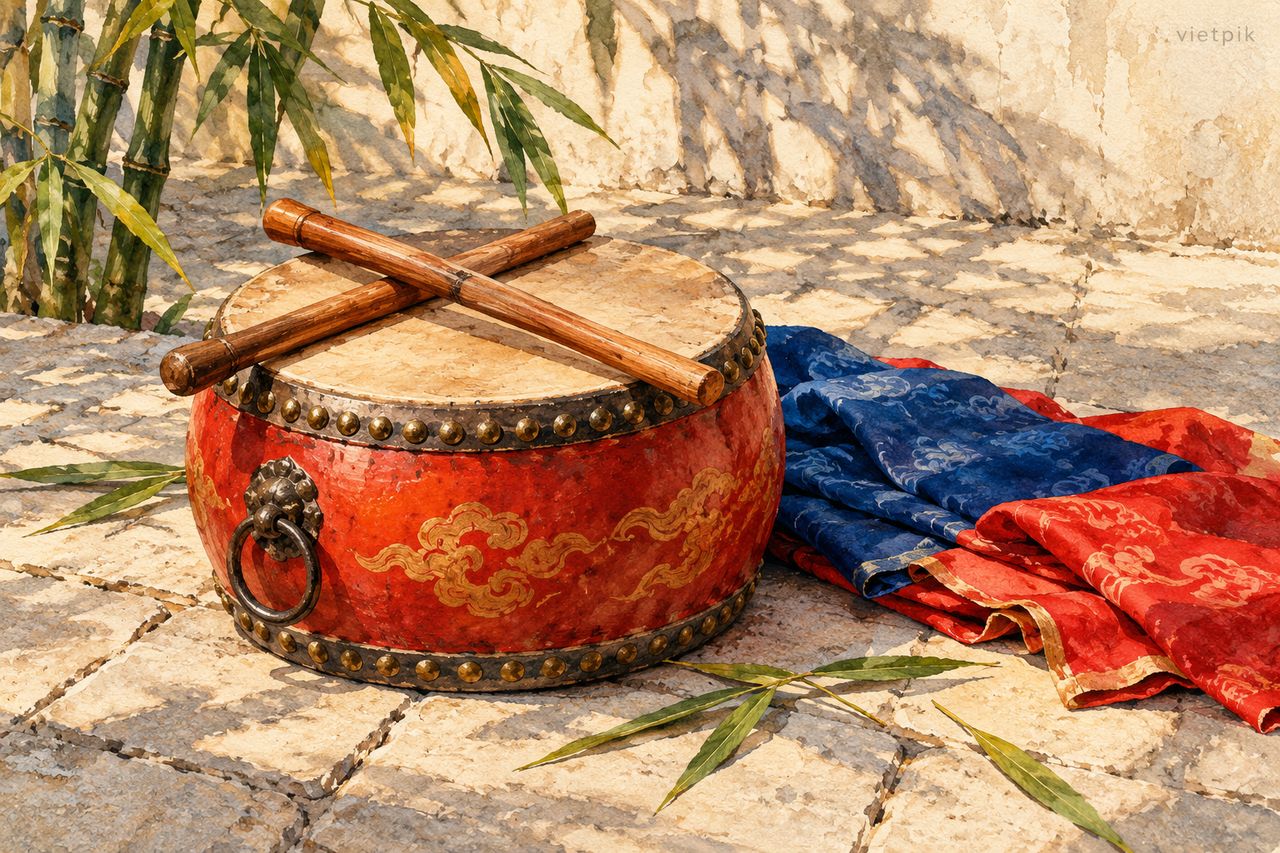
The procession is a good place to notice the connection between sound and movement. A drumbeat, a pause and the next group entering view can tell you more about the order of an event than a series of close photographs taken without context. Folk games and performances have also appeared in descriptions of the festival, but their availability needs the edition's programme. If a game is scheduled, first learn its basic objective and where spectators should stand. This turns viewing into an encounter with a local practice rather than a search for a spectacular image detached from what participants are doing.
5. Plan around the procession's destination
Choose whether you want to observe movement along the approach or the arrival at the temple; trying to do both can leave you spending the key interval moving through a crowd. For a modest half-day plan, begin by checking the current route, settle at one permitted viewpoint, and reserve time afterwards to read the temple's historical information. If you also intend to take a Tam Coc boat trip, confirm that service separately and allow it to move to another day. Festival access and ordinary sightseeing should not be assumed to operate on identical arrangements, even when they share a familiar place name.
6. Keep the village setting usable
The attraction of a village festival depends partly on spaces that continue to serve everyday life. Do not block house entrances while waiting for the procession, step into cultivated plots for a clearer photograph or leave a vehicle wherever a lane briefly appears empty. Ask a local steward where public parking and viewing are arranged. Carry drinking water and a compact bag, with enough flexibility to step back when a group approaches. For photographs of people carrying ceremonial objects, ask permission when practical and accept a refusal. Their role in the day does not make their image an unlimited visitor resource.
7. Remember the local scale
Thai Vi is especially rewarding when remembered through a particular connection: a village group approaching its destination, a name encountered in the temple, or the way limestone surrounds cultivated land. Those observations are more precise than a general claim that every northern festival looks alike. Note the edition and the activity in captions, and distinguish what you saw from historical explanation.