Royal history becomes more varied when followed beyond the best-known capital sites. Lang Temple Festival offers a local route into the memory of the Dinh and Early Le rulers, through the Bao Thai area of former Ha Nam, now Ninh Binh. Its interest lies not in repeating the Hoa Lu Festival under another title, but in asking how a particular community remembers its relationship with those rulers. A procession, an ancestral association and the revival of a celebration can each express a different kind of connection. This guide treats the festival as its own event, with its own location, sources and unresolved future programme.
History & story
The provincial tourism article updated in September 2025 identifies Lang Temple in Liem Ha commune and connects it with the older Liem Can area. It names Dinh Tien Hoang, Le Dai Hanh and other figures worshipped there. Use those details to locate the subject accurately, then resist the urge to borrow every story associated with the same rulers elsewhere. A shared historical name is a connection, not permission to transfer a ritual, legend or architectural description between sites. For a visitor, the useful question is what the local sources say about this temple and its surrounding community in particular.
1. Locate the temple before following the dynasty
The provincial tourism article updated in September 2025 identifies Lang Temple in Liem Ha commune and connects it with the older Liem Can area. It names Dinh Tien Hoang, Le Dai Hanh and other figures worshipped there. Use those details to locate the subject accurately, then resist the urge to borrow every story associated with the same rulers elsewhere. A shared historical name is a connection, not permission to transfer a ritual, legend or architectural description between sites. For a visitor, the useful question is what the local sources say about this temple and its surrounding community in particular.
2. Revival is part of the festival's history
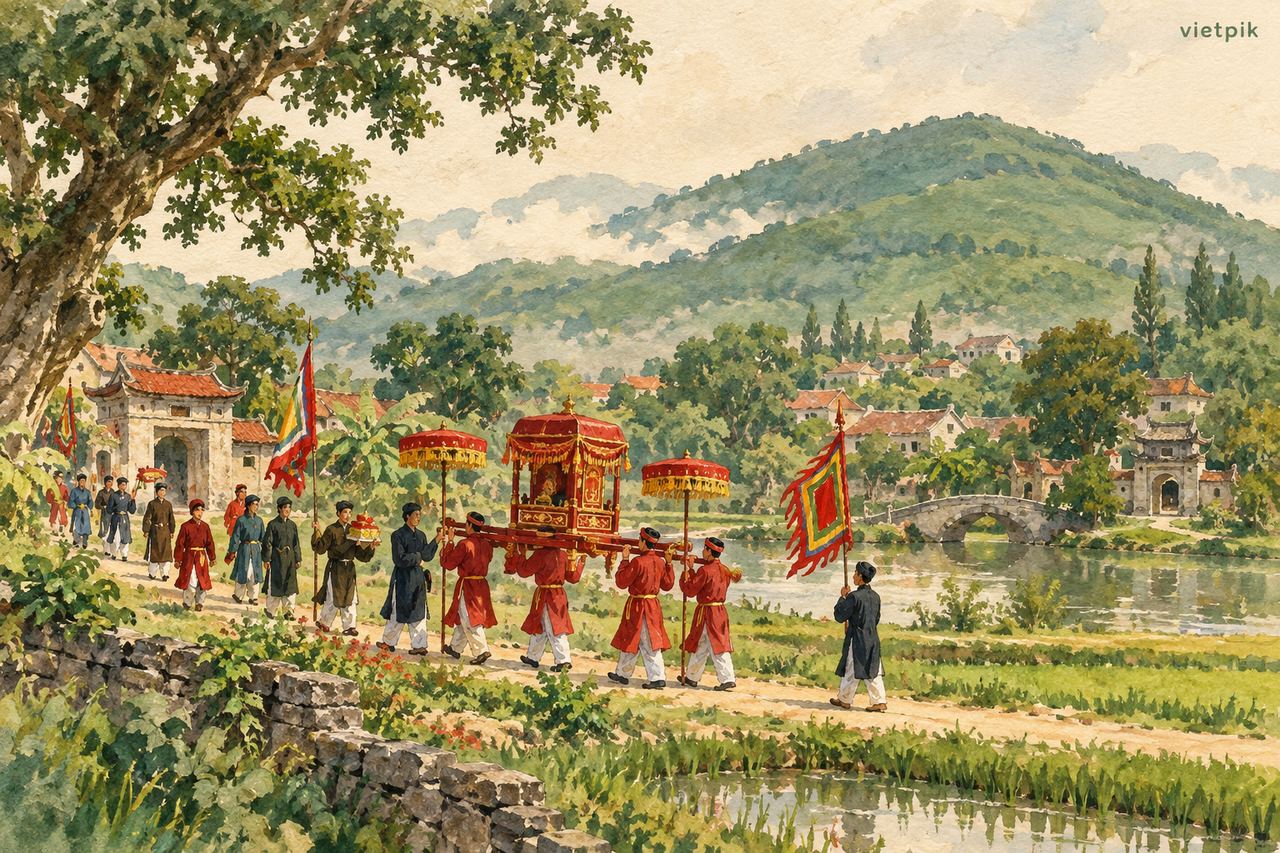
The tourism introduction states that the festival was restored in 2023 after earlier practices had declined. That makes revival an important part of the story rather than a detail to hide beneath a claim of uninterrupted continuity. Reestablishing a celebration raises practical questions about participants, routes and the transmission of knowledge. A visitor can appreciate the effort without assuming every present element reproduces a remote past exactly. Ask how the community explains what it has chosen to renew. This approach treats residents as active custodians who make decisions, rather than as anonymous figures preserving a scene frozen outside time.
3. An ancestral route widens royal remembrance
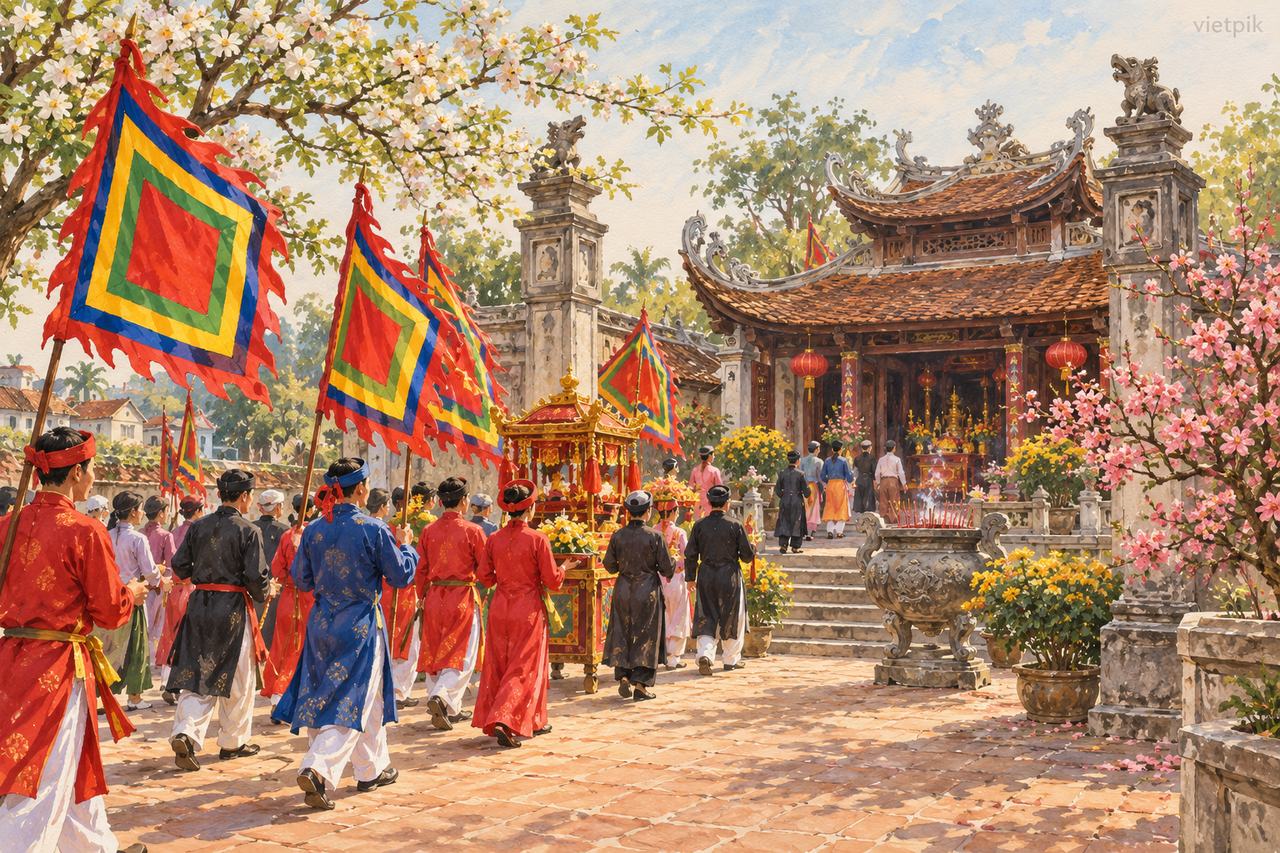
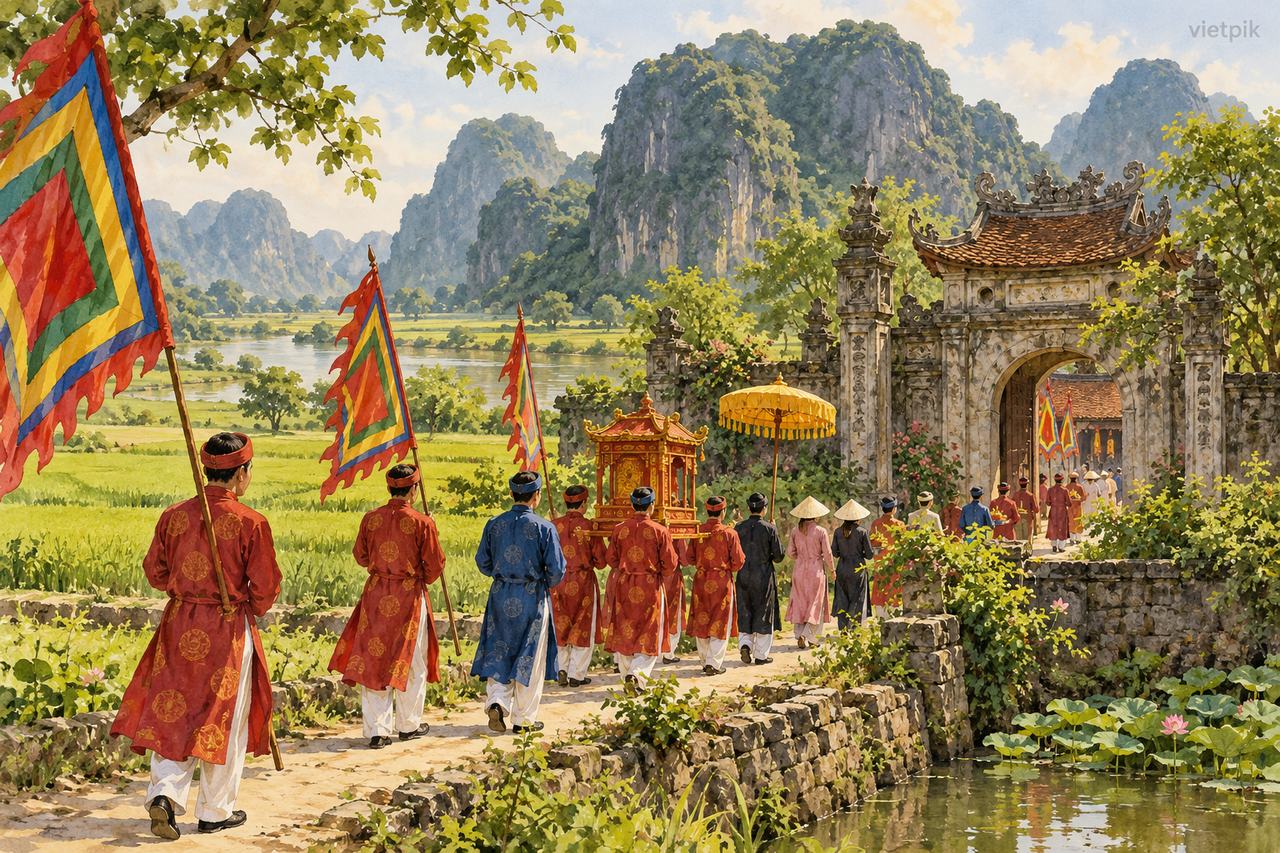
The local report of the 2024 festival describes a procession associated with Le Loc and Ma Dau. It supplies a specific local thread through which royal remembrance connects with ancestry and place. This guide does not turn the account into an independently verified genealogical finding. Instead, it suggests watching how a route links locations and how participants recognise their relationship. If the next programme includes this procession, confirm the public viewing points. Do not assume an old report fixes the route permanently or gives visitors unrestricted access to every destination named in the ceremonial account.
4. Correct a source conflict without hiding it
The 2024 local article contains an inconsistent lunar-month statement near its opening, while its main description gives the sixth through eighth days of the third lunar month. The provincial tourism article independently gives that same third-month period. This guide therefore retains the third-month tradition and flags the inconsistency, rather than copying the conflicting line. It does not publish a converted 2027 date. As of the review on 28 September 2026, no official programme for that year had been verified. When booking a visit, seek a new organiser notice that specifies both the year and the activity.
5. Read the site as a layered place
Accounts of Lang Temple and associated shrines describe a history of damage, restoration and rebuilding. They should not be flattened into the claim that every visible structure survives unchanged from the rulers' lifetimes. At the site, compare the dates on interpretation panels with the elements they actually describe. An older object can sit within a newer building, and a renewed ceremonial route can connect places with different histories. You need not decide the age of masonry by appearance. Careful questions and accurate labels give a more satisfying understanding than a confident visual guess about what is original.
6. Give a village occasion its own scale
A visit can centre on one verified ceremony and a short period reading the site's information. There is no need to judge the experience by comparison with a large provincial stage programme. Smaller movements can reveal how people know their roles and recognise one another. Remain outside ceremonial lines, ask before close portraits and avoid treating a courtyard as a private set for posed photographs. If travelling from another royal-history site, allow the new place to change your questions. Otherwise, a themed itinerary can become a sequence of similar-looking images that records very little about the differences between communities.
7. Keep Lang distinct in your travel record
Use the full place name and the local festival title when sharing a recommendation. Explain that Bao Thai's remembrance offers another perspective on Dinh and Early Le history, without calling it a substitute for Hoa Lu. If a guide or custodian supplied a story, identify it as their explanation rather than something you independently established. A precise record can connect related places while preserving the differences that make travelling between them worthwhile in the first place.