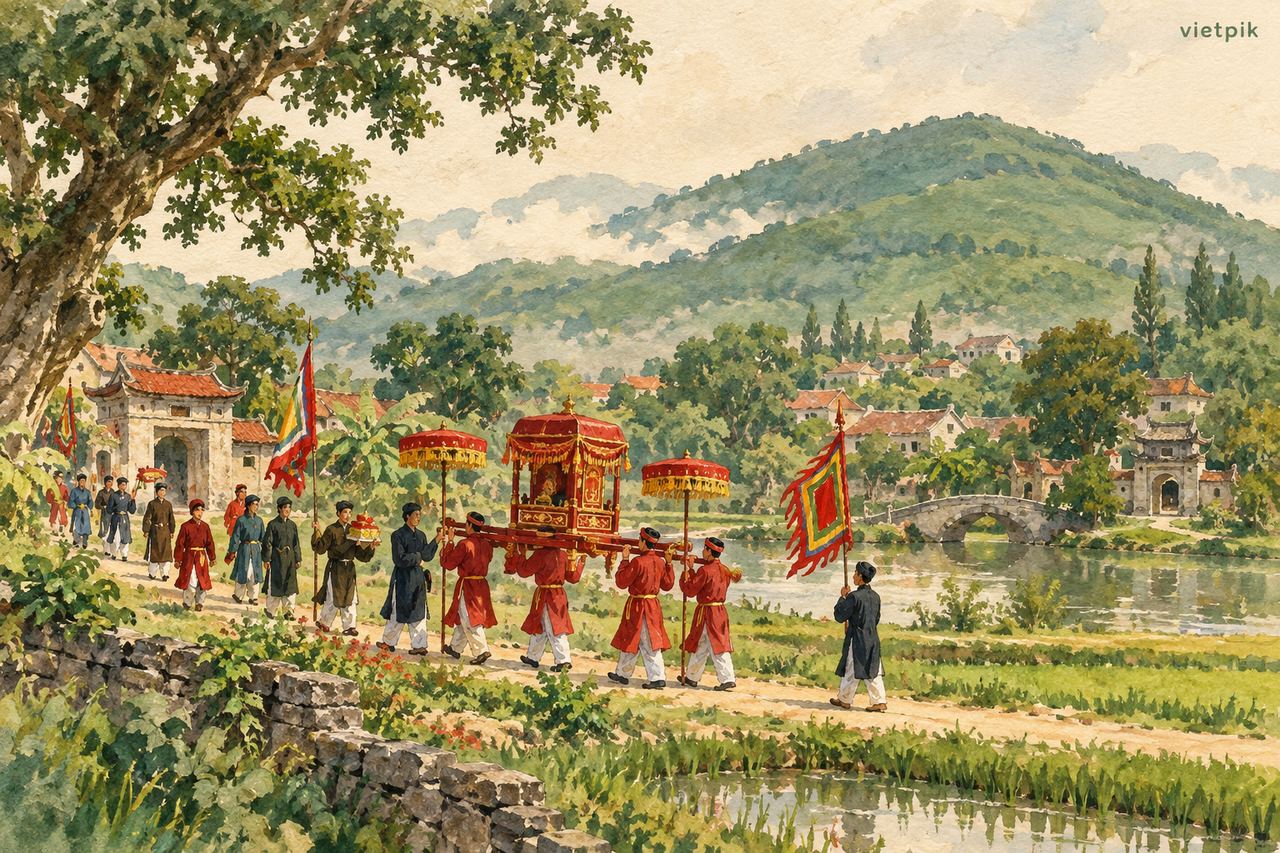
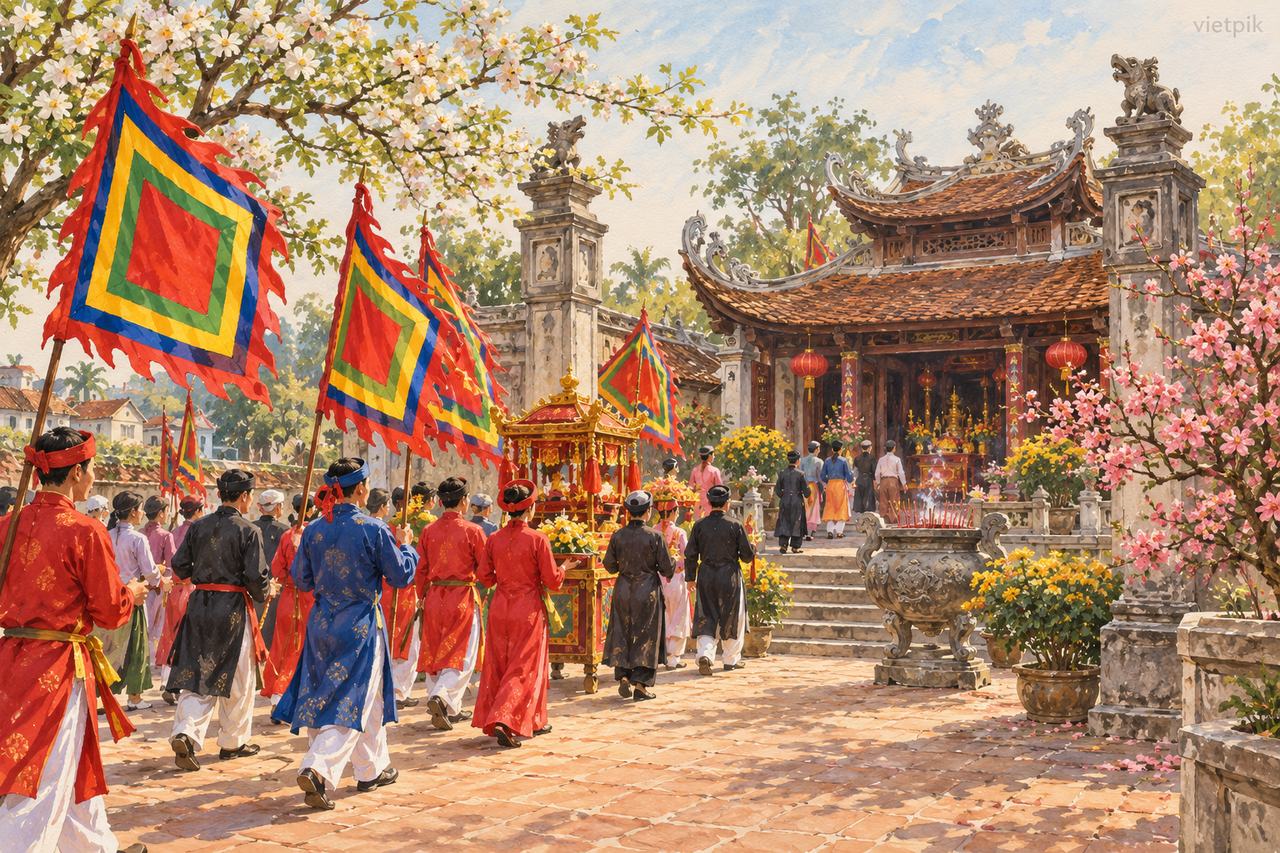
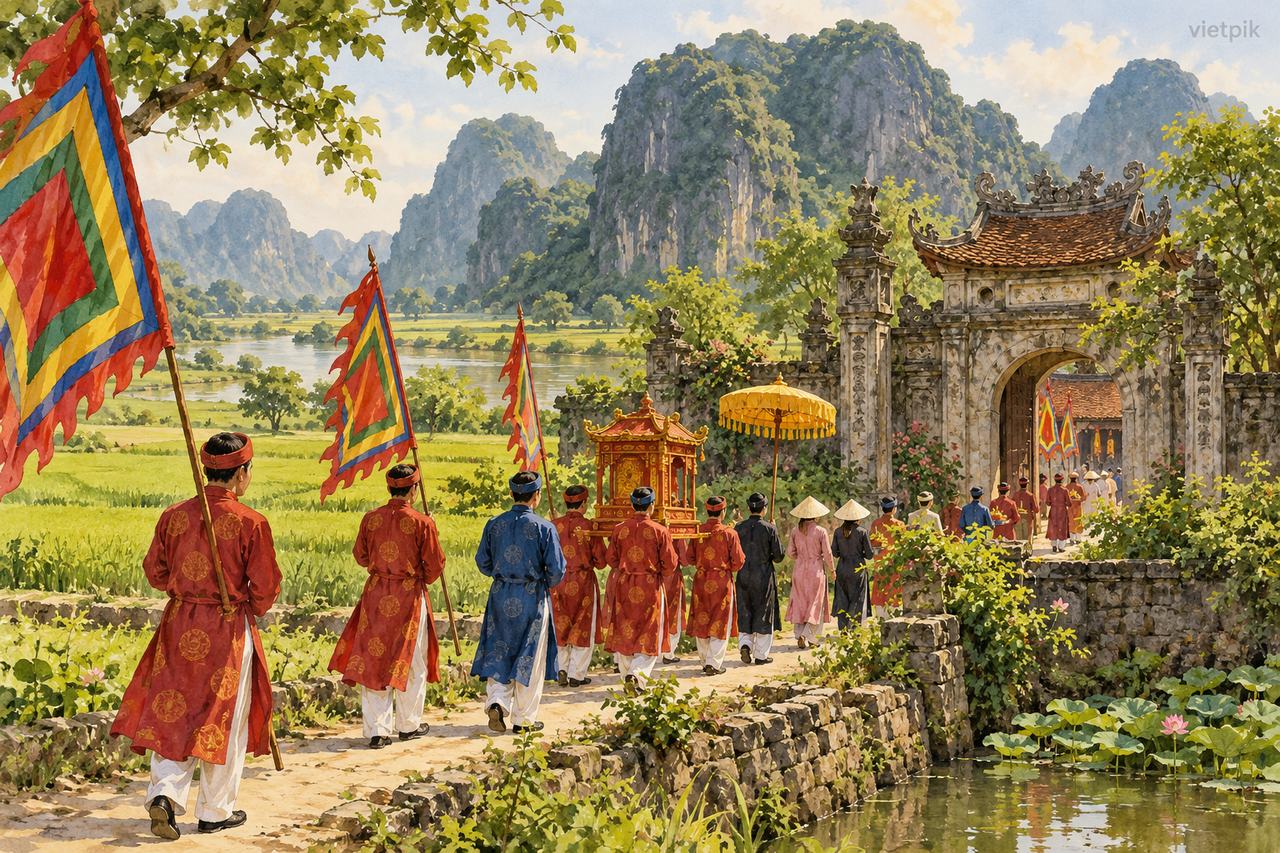
The autumn festival at Keo Hanh Thien is closely tied to the village that gives the pagoda its name. Its river traditions, wooden architectural setting and remembrance of the honoured saint create a character that cannot be captured by the label Keo Festival alone. The best-known visual theme is standing rowing, but the event also asks visitors to notice how a community coordinates worship and collective participation. This guide keeps Hanh Thien distinct from Keo Pagoda in the former Thai Binh area. It also keeps the autumn observance separate from spring activities, so that neither an itinerary nor a caption accidentally combines different events.
History & story
Keo Hanh Thien is in Xuan Hong, in the former Nam Dinh area now belonging to Ninh Binh province. The full name is important when checking maps, arranging transport or searching for the festival programme. A result labelled only Chua Keo may refer to another site with a different tradition and calendar. Use Hanh Thien in your travel notes and verify the destination with the person providing directions. This small habit prevents a surprisingly large error: arriving at the right-sounding pagoda in the wrong region. It also respects the village identity that gives the festival much of its meaning.
1. Keep the full place name
Keo Hanh Thien is in Xuan Hong, in the former Nam Dinh area now belonging to Ninh Binh province. The full name is important when checking maps, arranging transport or searching for the festival programme. A result labelled only Chua Keo may refer to another site with a different tradition and calendar. Use Hanh Thien in your travel notes and verify the destination with the person providing directions. This small habit prevents a surprisingly large error: arriving at the right-sounding pagoda in the wrong region. It also respects the village identity that gives the festival much of its meaning.
2. Name the honoured saint with source care
The tourism centre's account of the 2025 festival identifies the honoured figure as Duong Khong Lo, also called Quoc su Khong Lo. Some broader regional writing uses names differently when discussing several pagodas together. This guide follows the event-specific account and avoids merging biographies to produce a smoother story. Visitors interested in that history can compare the pagoda's interpretation with specialist research after the trip. At the festival itself, the immediate point is the community's act of remembrance. Acknowledging uncertainty in historical naming is more useful than confidently assigning every legend attached to Khong Lo or Minh Khong to the same person.
3. Separate the customary core from a longer edition
The provincial tourism department describes the autumn festival's customary core as the thirteenth to fifteenth days of the ninth lunar month. The 2025 programme was longer, running from 30 October to 4 November, corresponding to the tenth through fifteenth lunar days. That edition marked a named anniversary and included its own sequence of activities. Neither range automatically settles 2027. This review leaves the future official programme unconfirmed and records both scopes rather than choosing whichever looks more convenient. The spring observance mentioned in heritage descriptions is also separate; it should not be used to create a second autumn date or duplicate this festival record.
4. See standing rowing as coordination
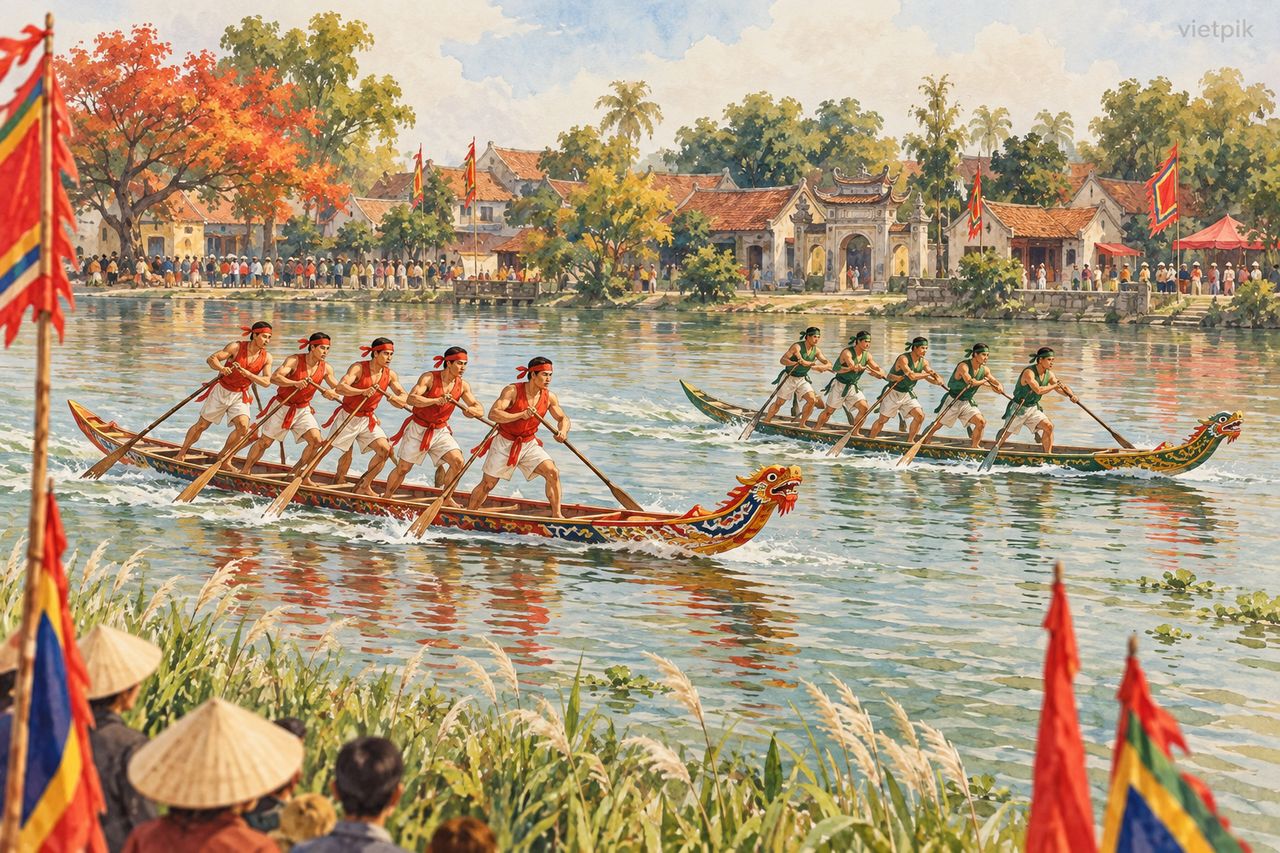
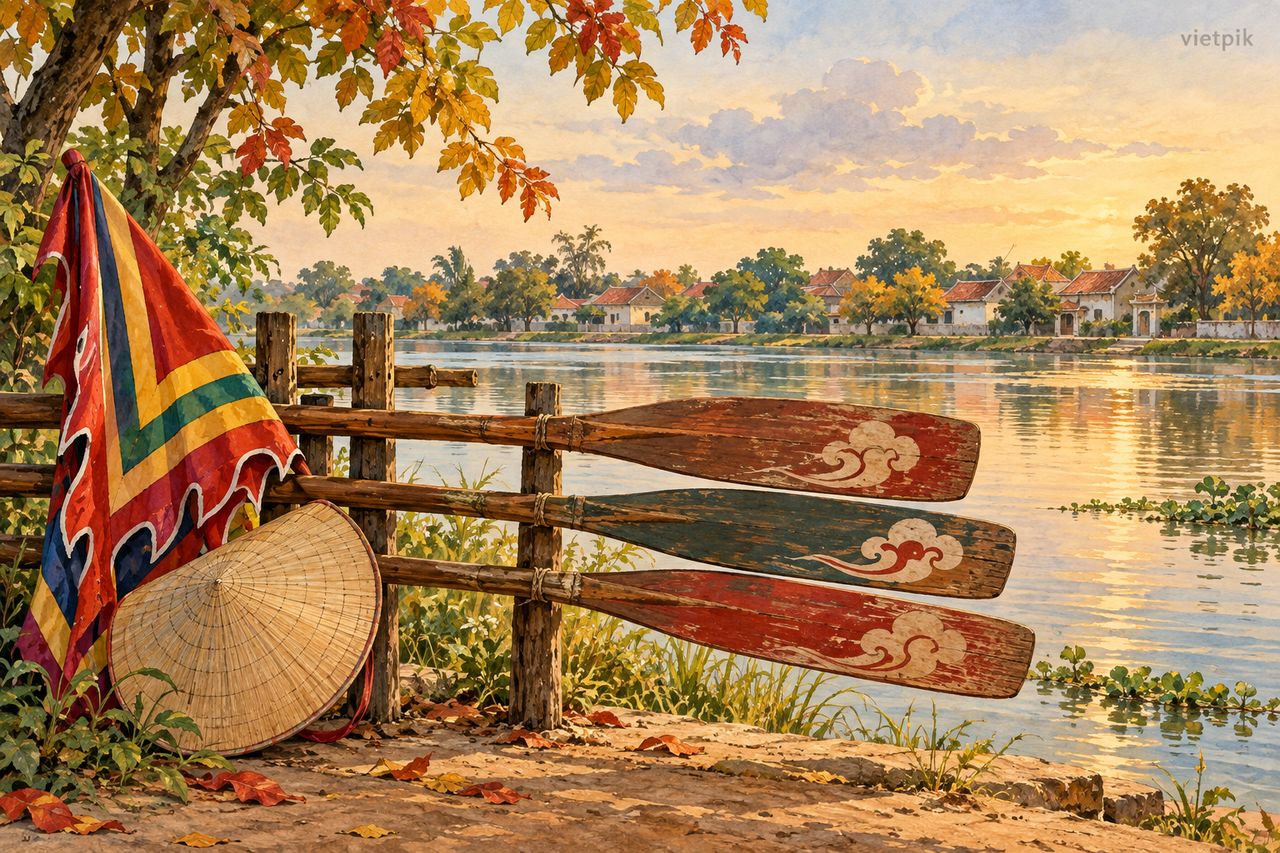
Standing rowing is a distinctive feature described in accounts of Hanh Thien's festival. The striking posture is only the beginning of what there is to notice. Watch the relation between the rowers' timing, the line of oars and the movement of the boat as a whole. The skill is collective: a photograph isolating one person may miss the coordination that makes the scene meaningful. Competition details, crews and viewing arrangements depend on the actual programme. Do not infer race rules from a promotional photograph, and do not attempt to imitate a specialist rowing posture on an ordinary visitor boat.
5. Give the pagoda its own attention
The river event should not erase the pagoda from the visit. Heritage accounts emphasise the traditional wooden architectural setting and the religious ceremonies of the autumn observance. If the programme allows, reserve a quieter interval to look at the arrangement of courtyards and roofed spaces, using the site's interpretation to identify them. Avoid treating every old-looking element as equally ancient or untouched. Living monuments are cared for, repaired and used across generations. The more useful question is how the community maintains the place while continuing its practices, rather than whether a visitor can photograph a supposedly frozen moment of the past.
6. Choose a bank-side plan with room to leave
Before a river competition, ask where spectators should stand and how to reach the viewing area without crossing a working space. Keep children away from the edge and leave room for officials and participants to move. A long lens or a wider composition is preferable to stepping down an unstable bank. Agree on a meeting point away from the loudest section, since shouted directions may be hard to hear. This article does not verify the future race course, temporary stands, transport services or fees. Plan around an officially confirmed event and make the remainder of the day flexible enough to accommodate changes.
7. Record what makes Hanh Thien different
The strongest memory of this festival may be the contrast between a quiet roofed space and a boat crew moving in one rhythm. That relationship gives a travel account more substance than a general claim about excitement. Name Hanh Thien, specify the autumn edition and identify whether an image shows worship, a procession or rowing. If a historical name remains disputed in your reading, preserve that question rather than inventing a reconciliation.