Phu Day Festival is most rewarding when approached as a living religious gathering rather than a sequence of colourful scenes. The complex in Vu Ban, in the former Nam Dinh area now within Ninh Binh province, is closely associated with Thanh Mau Lieu Hanh and Mother Goddess worship. Its festival connects places, music, movement and the people who sustain those practices. Visitors can learn a great deal by listening carefully and recognising when observation requires permission. This guide introduces the major themes without claiming to decode every ritual or promising that a particular ceremony will be available on demand during a future visit.
History & story
UNESCO inscribed practices related to the Viet beliefs in the Mother Goddesses of Three Realms in 2016. That recognition concerns living practices and their communities; it should not be rephrased as if one building, every performance or a commercial service were individually certified by UNESCO. The realms are associated with heaven, water, and mountains and forests. Phu Day is an important setting for this tradition, but the tradition extends beyond one festival. Keeping these distinctions clear helps a visitor appreciate both the local place and the wider cultural practice without converting a heritage label into a blanket claim of authenticity.
1. Understand what the UNESCO inscription covers
UNESCO inscribed practices related to the Viet beliefs in the Mother Goddesses of Three Realms in 2016. That recognition concerns living practices and their communities; it should not be rephrased as if one building, every performance or a commercial service were individually certified by UNESCO. The realms are associated with heaven, water, and mountains and forests. Phu Day is an important setting for this tradition, but the tradition extends beyond one festival. Keeping these distinctions clear helps a visitor appreciate both the local place and the wider cultural practice without converting a heritage label into a blanket claim of authenticity.
2. A complex rather than one doorway
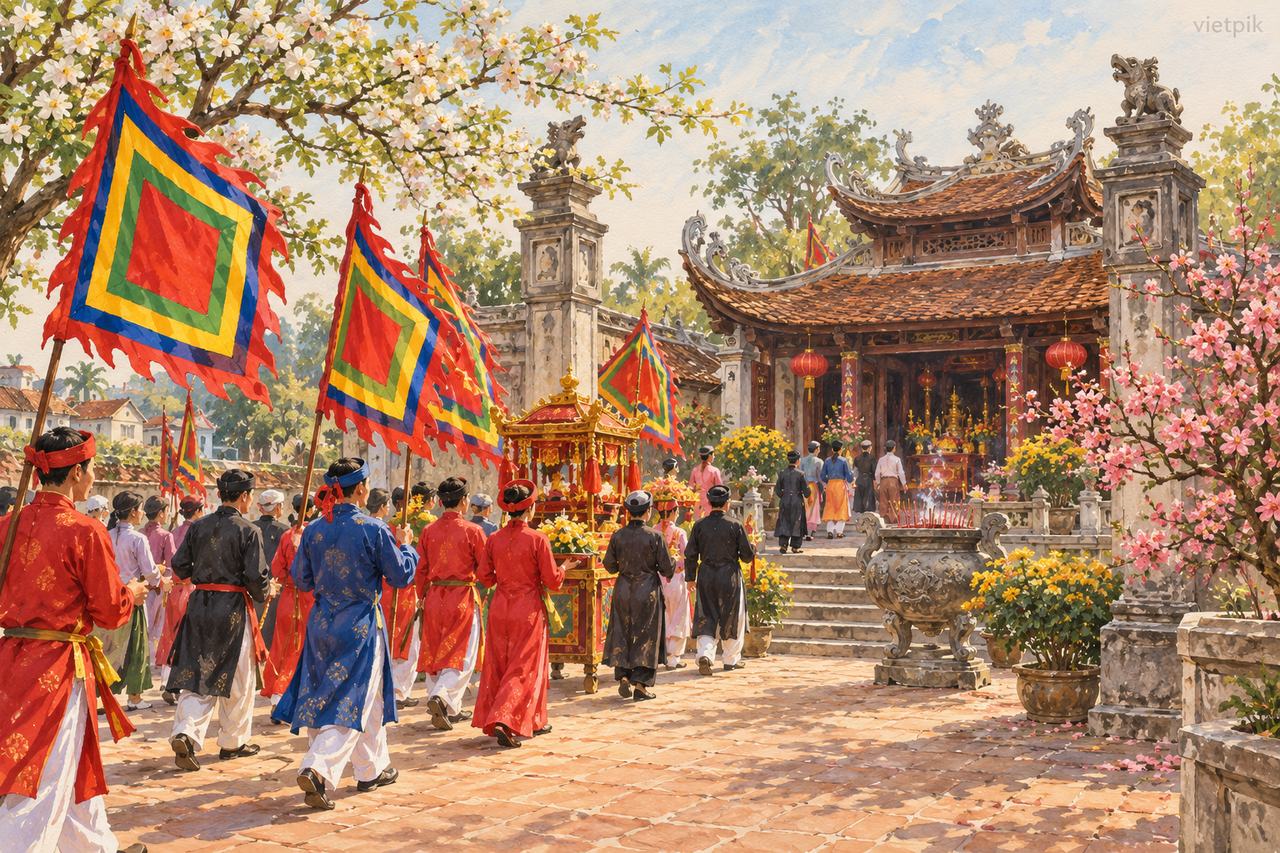
Tien Huong, Van Cat and the tomb of Lieu Hanh are among the key places named in local festival reporting. They give the visitor a more useful orientation than the assumption that Phu Day is a single shrine with one entrance. Select a starting point and learn its name before moving between sites. Notice how the programme assigns activities to different spaces; the destination of a procession matters as much as its departure. A short, well-understood route can reveal the relationship between sites more clearly than trying to visit every named structure while missing what is happening at each.
3. Dates belong to a particular edition
The local authority's report gives 19–24 April for the 2026 festival, corresponding to the third through eighth days of the third lunar month. The programme included several activities spread across those days rather than one interchangeable daily show. Older general accounts may describe a broader customary period. For planning, the edition-specific notice is the right place to establish which activity occurs where and when. This article has not confirmed an official 2027 programme. It therefore retains the lunar season as context and leaves future start and end dates unresolved, rather than advertising the previous year's sequence as a guaranteed repeat.
4. Listen before trying to explain
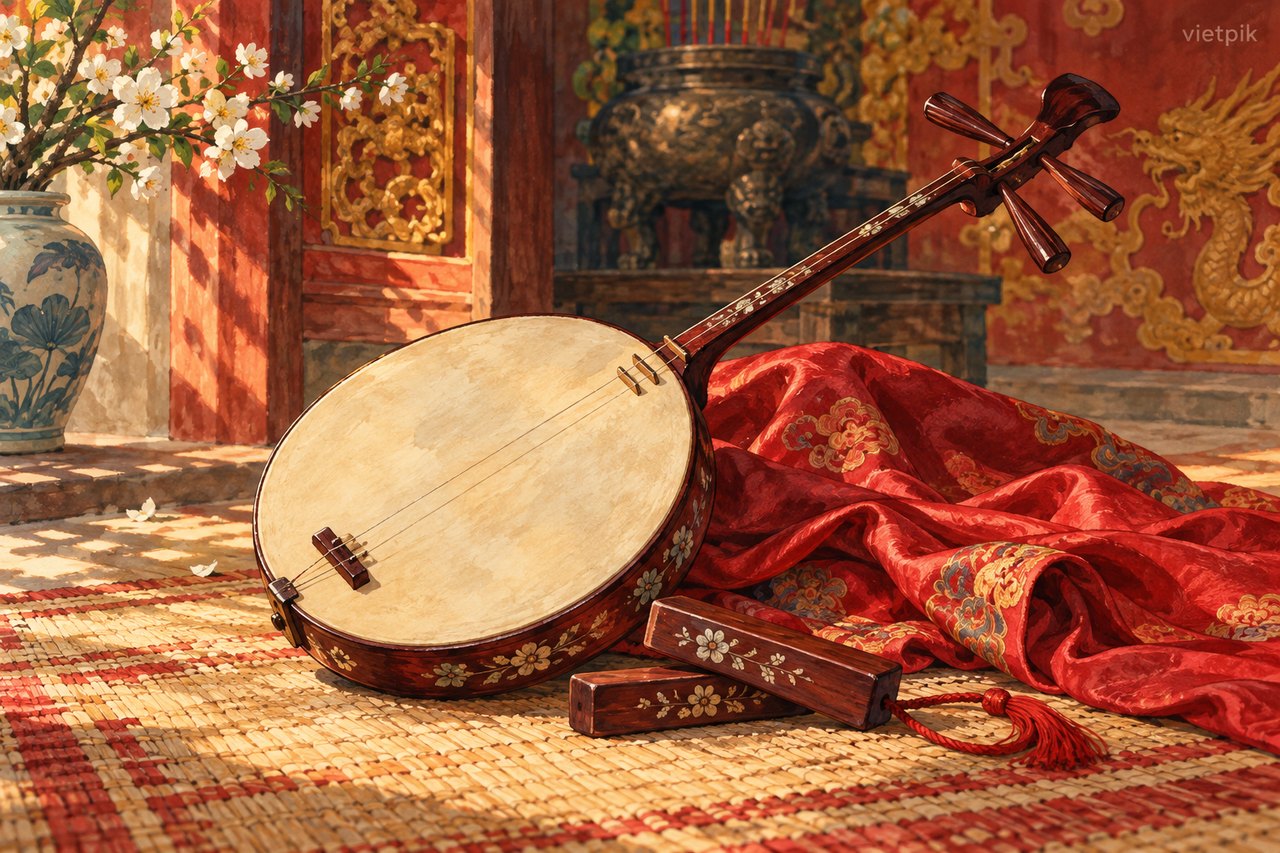
Chau van music is a major point of interest at Phu Day, and the 2026 programme included a singing competition. A competition, a public performance and music within a religious rite have different purposes, even when they share familiar sounds. Ask which setting you are observing before describing it. Listen for the relationship between voice and accompaniment instead of treating the music as background noise. If recording is allowed, keep the device unobtrusive and do not request a repeat merely for a cleaner clip. The musicians' attention may be directed towards a ritual sequence or an audience whose expectations differ from your own.
5. Watch a collective shape emerge
Hoa truong hoi, commonly described as word arranging or keo chu, is another distinctive festival practice. Local reports of 2026 document it at Van Cat and Tien Huong on different days. The interest is in coordinated movement: individual participants contribute to a form that becomes legible at the scale of the group. A visitor does not need to read every character to appreciate that relationship, but should ask for the intended meaning rather than guessing from a partial view. Keep the working space clear and avoid climbing onto structures for an overhead photograph. The collective form depends on room to move.
6. Be a guest around devotion
A public festival does not remove personal boundaries. Ask before close filming of worshippers or ritual participants, respect restrictions around an altar and avoid touching garments or instruments. Do not assume that receiving, giving or purchasing something is compulsory simply because you observe another person doing so. If a situation is unclear, step back and ask an identified organiser. For a first visit, one music activity and one carefully chosen site may offer enough material to absorb. Leave time afterwards to discuss what you did not understand instead of filling the day with more ceremonies than you can meaningfully follow.
7. Describe belief without making promises
Devotees may express wishes for health, prosperity or family well-being. Reporting those wishes accurately does not require promising supernatural results or judging another person's faith. A thoughtful account can describe the community, the setting and the form of participation while marking belief as belief. Preserve the names of sites and activities in your notes so that Phu Day does not become a generic label for every Mother Goddess image.