A schoolbook character can feel unexpectedly close when her name belongs to a place where people still gather. Ba Vu Temple Festival creates that encounter through the figure of Vu Thi Thiet, associated with the story of the woman of Nam Xuong. In the former Ha Nam area of present-day Ninh Binh, the celebration joins literary memory, local devotion and a riverside setting. This guide does not use a festival to prove that every episode in a tale happened exactly as written. Instead, it asks how a community remembers a woman whose story raises enduring questions about trust, judgment and being heard.
History & story
The provincial tourism account connects the temple's devotion to Vu Thi Thiet with Nguyễn Dữ's Truyền kỳ mạn lục. This is a cultural connection, not a licence to treat fiction, sacred biography and local history as identical records. Before visiting, a short rereading of the story can prepare useful questions. Which elements do you remember from the text, and which were supplied by later retellings? At the temple, allow local explanations to be heard in their own terms. You can recognise relationships between versions without forcing all of them into one supposedly definitive chronology.
1. Separate the person worshipped from the literary text
The provincial tourism account connects the temple's devotion to Vu Thi Thiet with Nguyễn Dữ's Truyền kỳ mạn lục. This is a cultural connection, not a licence to treat fiction, sacred biography and local history as identical records. Before visiting, a short rereading of the story can prepare useful questions. Which elements do you remember from the text, and which were supplied by later retellings? At the temple, allow local explanations to be heard in their own terms. You can recognise relationships between versions without forcing all of them into one supposedly definitive chronology.
2. The shadow is a question about interpretation
The familiar tale turns on a child's words about a shadow and an adult's destructive interpretation. A visitor need not retell every tragic detail to take that theme seriously. Ask what happens when certainty arrives before listening, or when a person has no fair chance to explain herself. This is a reading offered by this guide, not a prescribed meaning of the ritual. It can make the literary connection relevant without romanticising suffering. When discussing the story with younger visitors, focus on fairness and communication rather than presenting a woman's death as an ideal response to accusation or a measure of virtue.

3. Read the eighth-month festival carefully
The provincial tourism introduction gives the eighteenth through twentieth days of the eighth lunar month as the customary festival period. Local coverage confirms that the 2024 edition ran from 20 to 22 September. These dates are retained as tradition and a documented past edition, respectively. Neither establishes the Gregorian dates or full programme for 2027. At the review on 28 September 2026, the next programme remained unverified. If a particular procession or evening observance matters to your visit, check its own announcement rather than assuming all activities occur throughout every day of the broader festival period.
4. Look for community action around the story
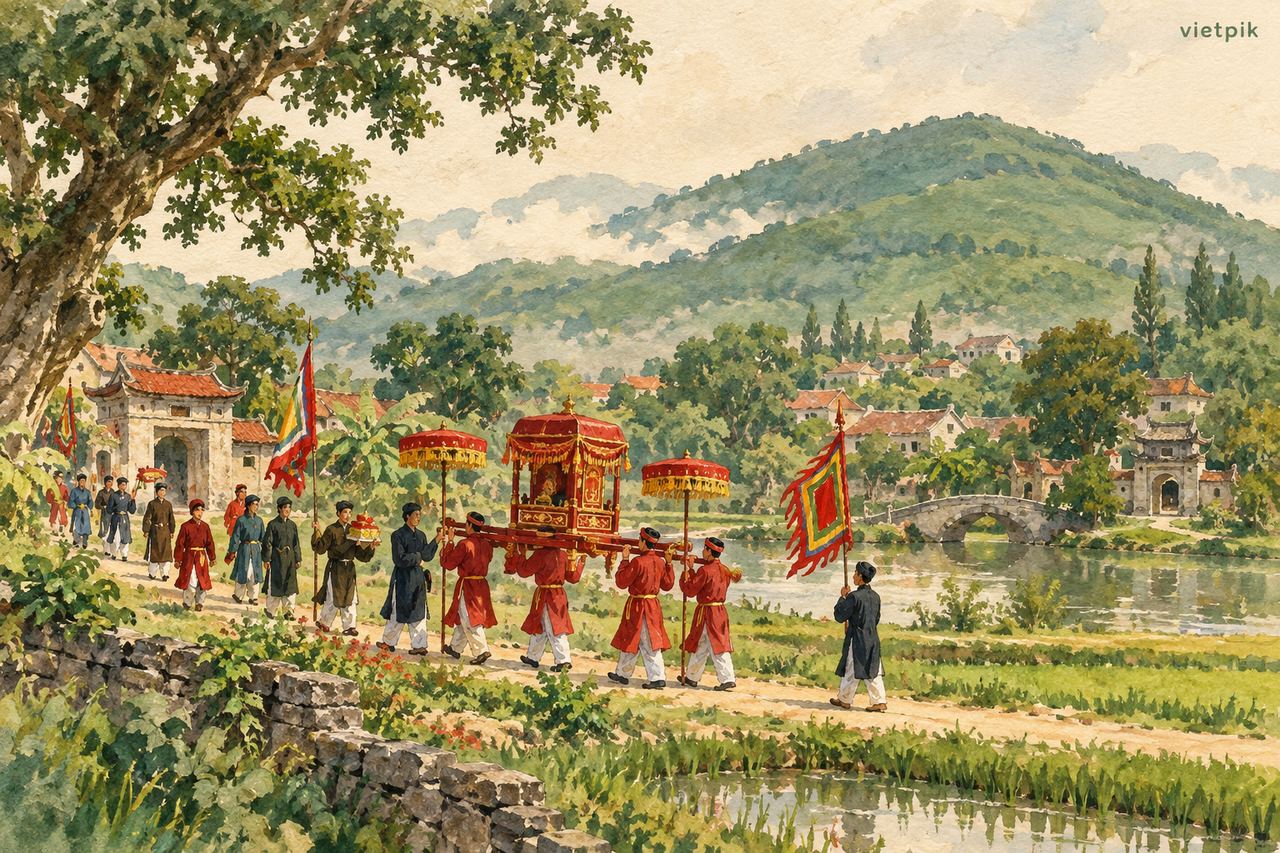
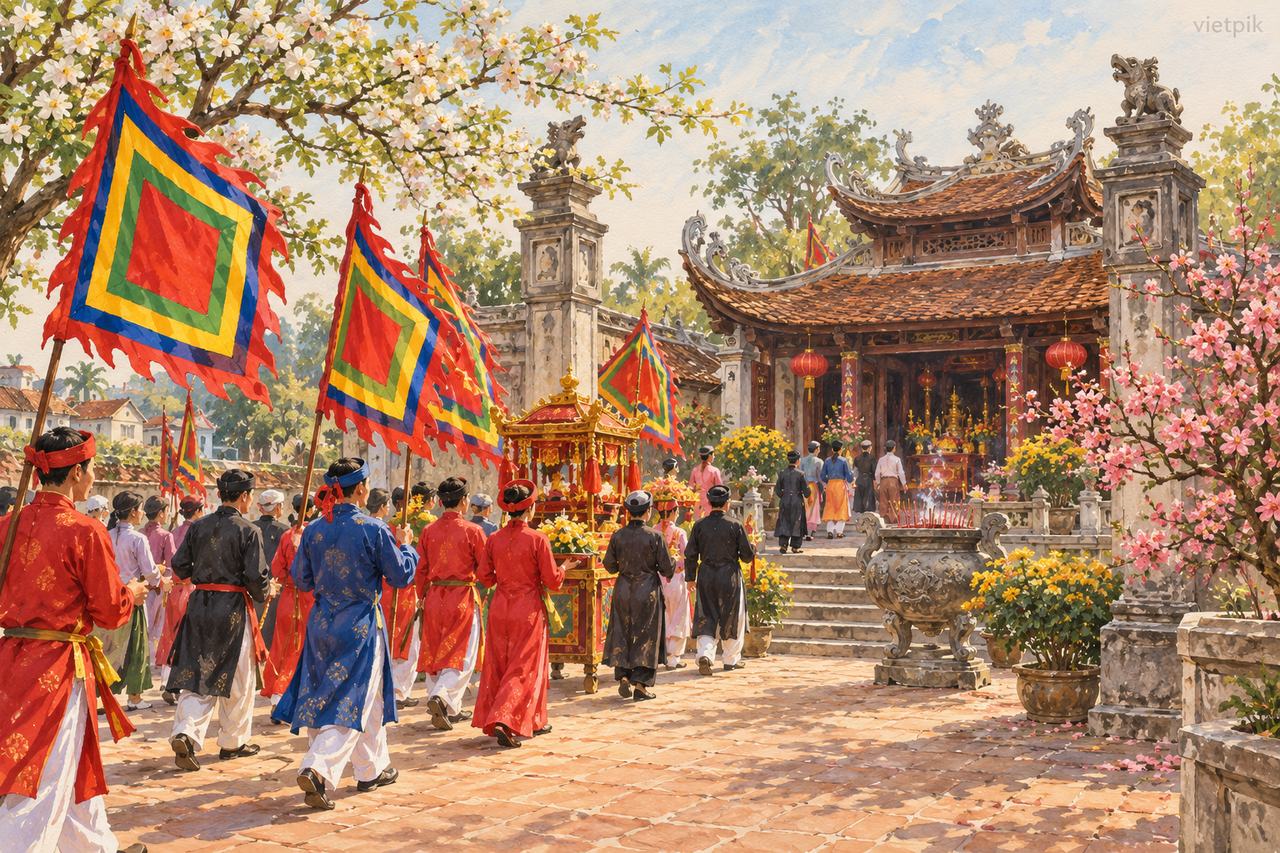
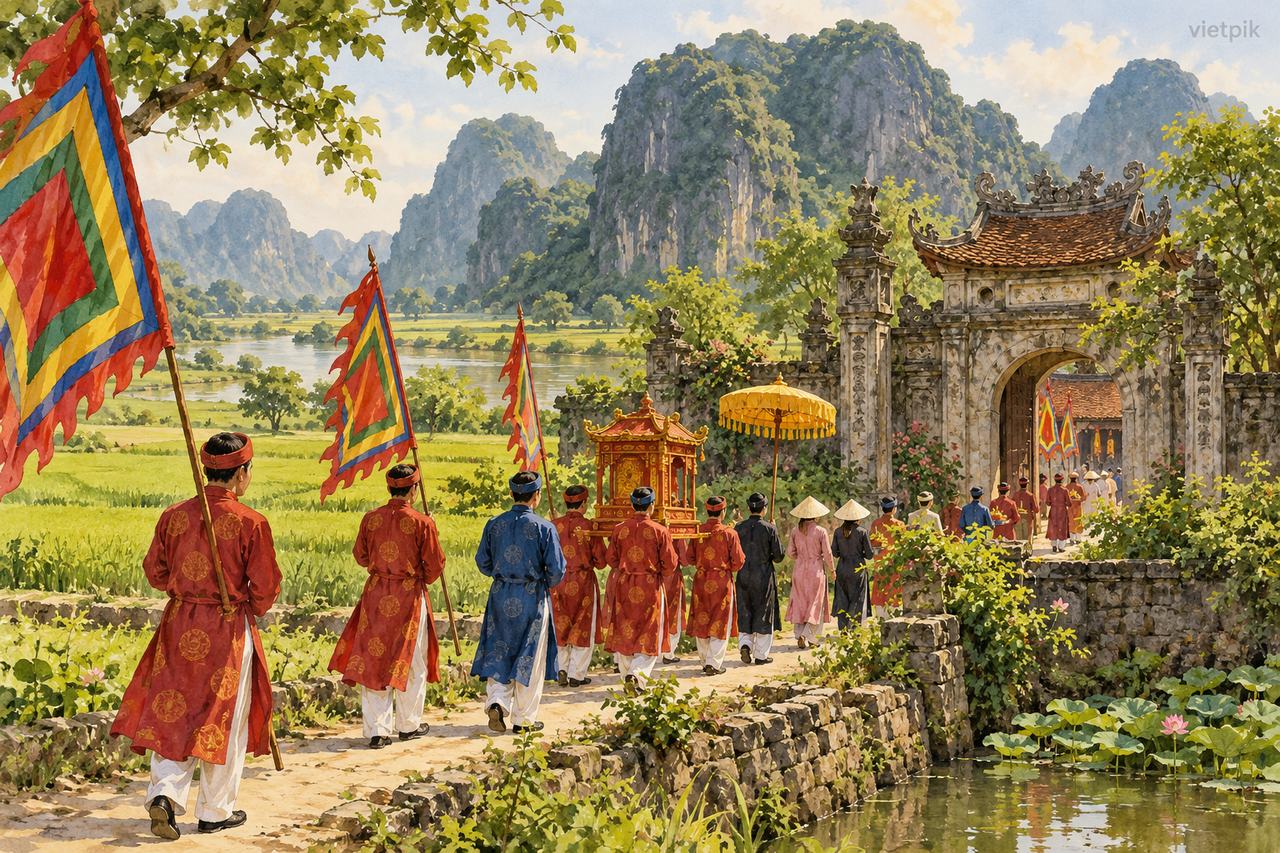
Reports of earlier editions describe processions, worship and traditional performance. These are occasions to see a story become shared action, rather than merely a text repeated to visitors. Notice how participants coordinate, how spectators make room and how a place changes when a group arrives together. You do not need to assign an exact symbolism to each colour to recognise the collective work involved. Avoid interrupting a participant for a literary explanation while they are carrying out a role. A question asked afterwards, when welcome, is more likely to produce a thoughtful answer than one demanded in the middle of a ceremony.
5. Keep the river from becoming a dramatic prop
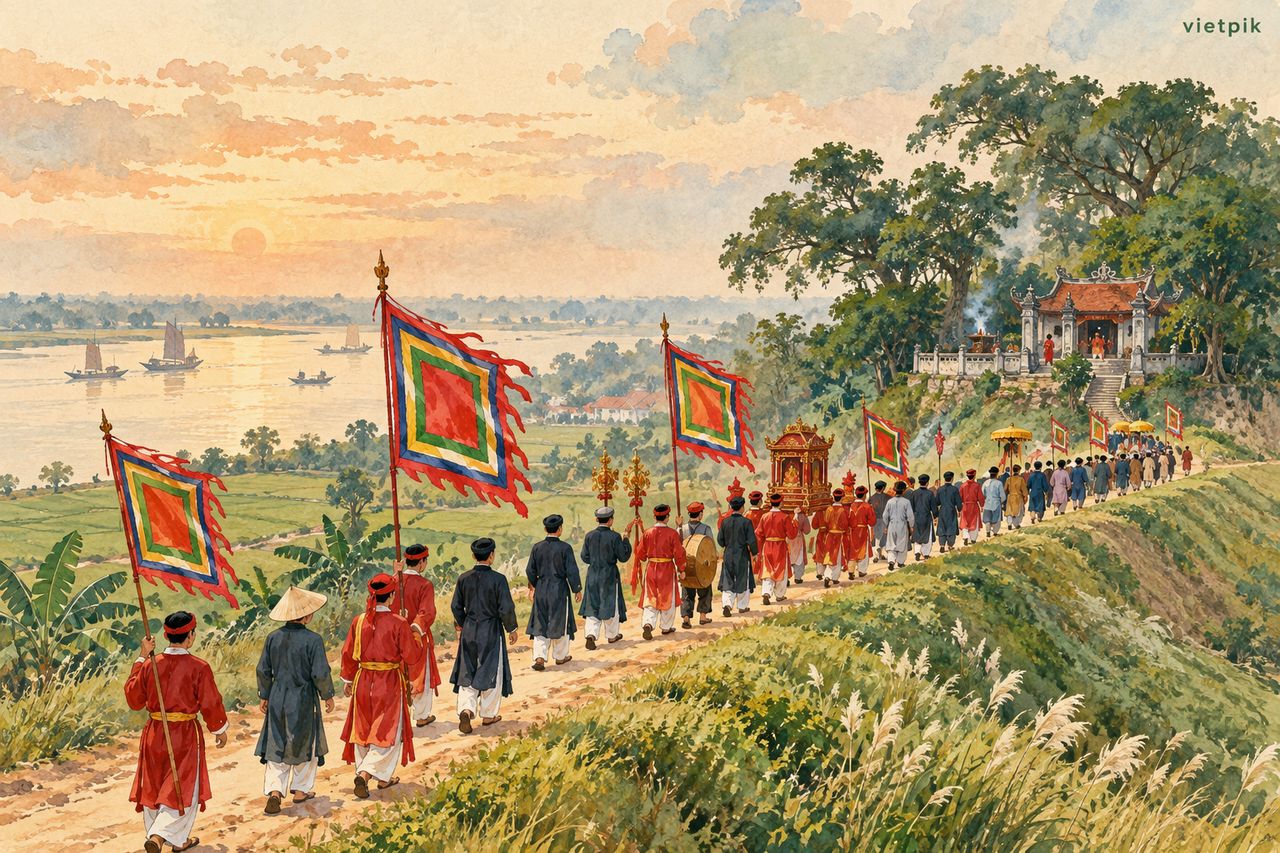
Because water is prominent in the remembered story and the site's setting, it is tempting to frame every riverside image as a reenactment. Resist that impulse. A contemporary bank, boat or reflection does not establish the exact location of a literary episode. Photograph the landscape as the landscape you encountered, using permitted public positions. There is no need to stage a distressed figure or approach the water's edge for dramatic effect. A book, a lamp or an ordinary shadow can support a discussion of storytelling more responsibly than an invented scene presented as a historical reconstruction.
6. Make room for different reasons to visit
A literature reader, a worshipper and a resident attending a village occasion may share the same courtyard with different expectations. A good visit does not require one purpose to displace the others. Keep reading and discussion away from concentrated worship, and ask permission before recording a close conversation. If travelling with a class or family, choose a place outside the main flow for your own discussion of the tale. This guide does not verify a formal educational session or a bookable storyteller. Those would be separate services requiring direct confirmation, not benefits automatically included in festival attendance.
7. Leave with a more generous reading
The lasting value of a visit may be a change in how you listen to a familiar story. Record the difference between what the text says, what a local speaker told you and what you concluded yourself. A caption or recommendation can then be both personal and fair. Use Ba Vu Temple's full name and do not confuse it with Ba Danh Pagoda simply because both are in the former Ha Nam area.