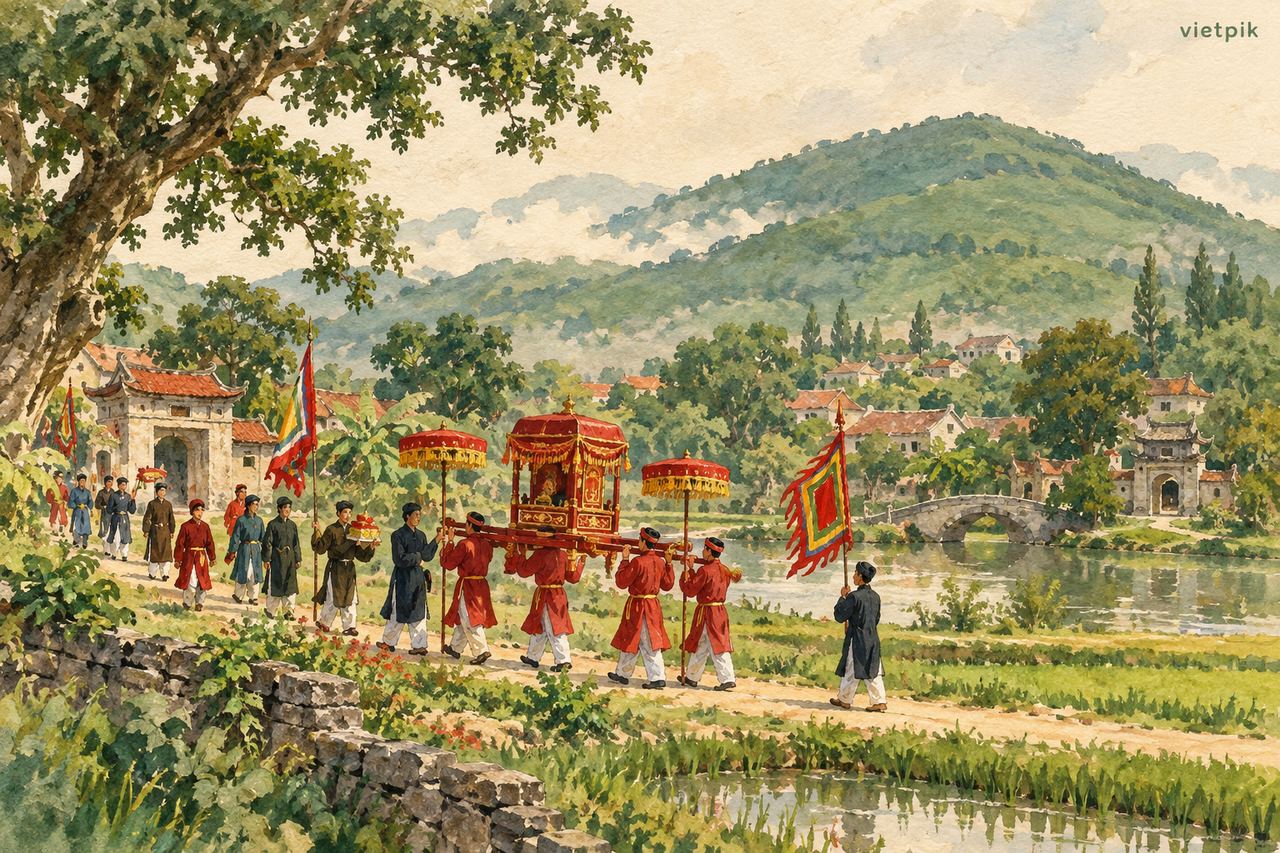
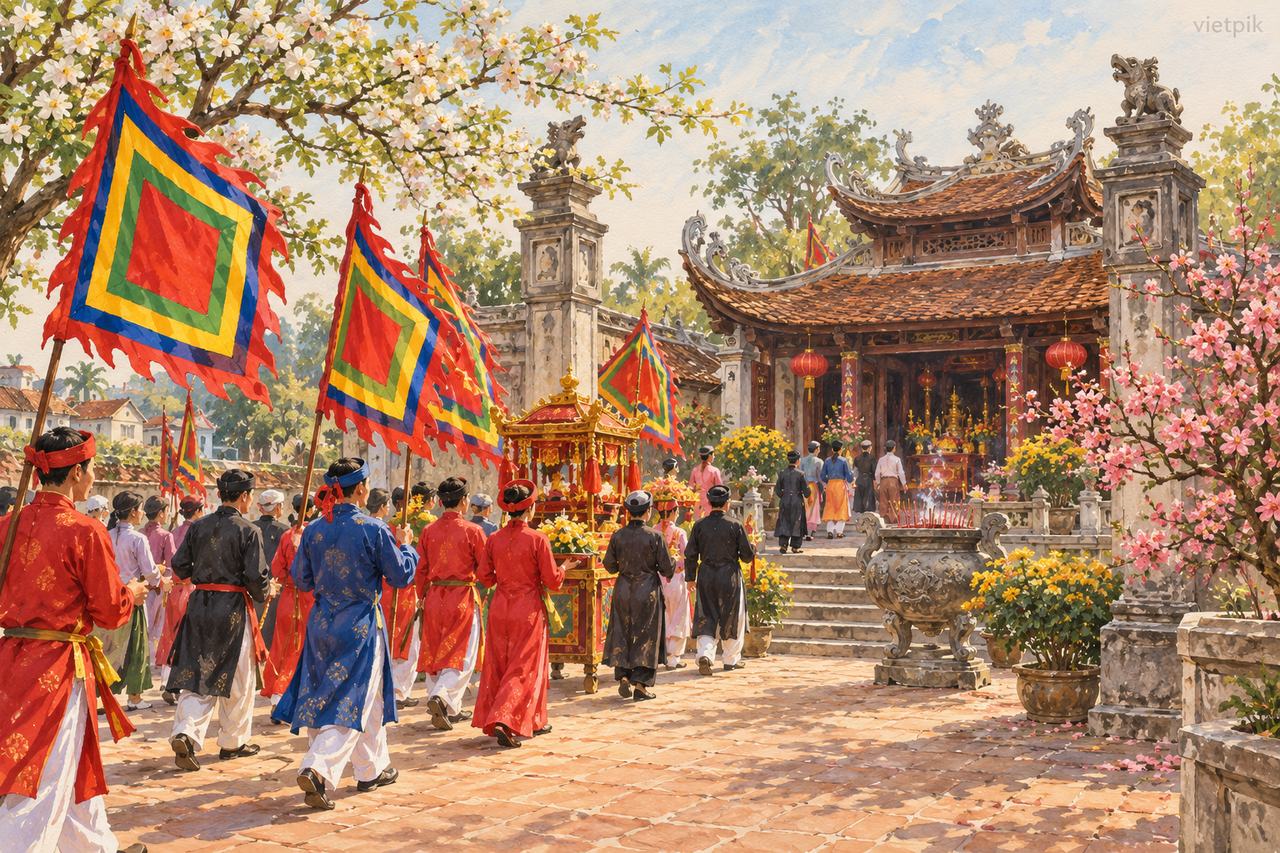
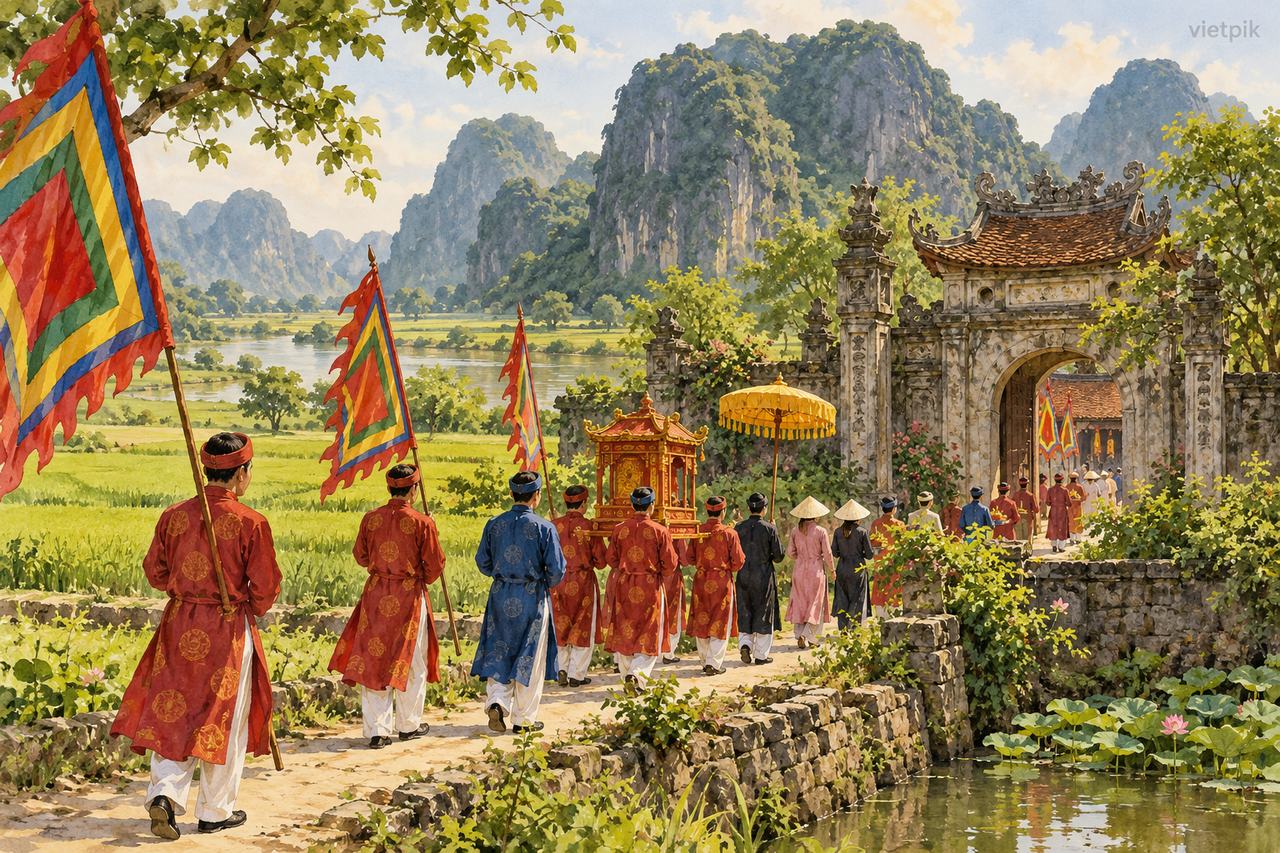
Bao Ninh Temple Festival offers a useful shift of attention within the festival landscape of Ninh Binh. Alongside remembrance of Tran Hung Dao, the site's history brings the people who opened land and established communities into view. The temple belongs to the former Nam Dinh area, with the 2026 local report identifying Hai Hau commune. For a visitor, this is an opportunity to ask how a community remembers both nationally known figures and the people whose labour made a particular home possible. The article focuses on that local relationship, without treating every temple devoted to the same hero as the same destination.
History & story
Local heritage features associate Bao Ninh with the founders and lineages of the old Quan Anh area, as well as Do Tong Phat and land reclamation. This broadens the subject from a single heroic biography to the making of a settlement. A visitor can ask what kinds of work a community chooses to remember publicly: defending, organising, teaching, cultivating or creating a place to live. These are interpretive questions, not a claim that each role has a separate festival ceremony. They help explain why a temple's list of honoured figures can matter as much as its most recognisable name.
1. Land-making belongs within remembrance
Local heritage features associate Bao Ninh with the founders and lineages of the old Quan Anh area, as well as Do Tong Phat and land reclamation. This broadens the subject from a single heroic biography to the making of a settlement. A visitor can ask what kinds of work a community chooses to remember publicly: defending, organising, teaching, cultivating or creating a place to live. These are interpretive questions, not a claim that each role has a separate festival ceremony. They help explain why a temple's list of honoured figures can matter as much as its most recognisable name.
2. Distinguish Bao Ninh from other Tran sites
The 2026 report identifies Tran Hung Dao among the temple's principal objects of worship. That connection places Bao Ninh within a wider landscape of remembrance, but does not make its programme identical to Tran Thuong or the Tran temple complex in former Nam Dinh city. Use Bao Ninh's complete name when researching transport and notices. Check the commune and the date on each source rather than trusting a search result headed only Tran festival. A precise destination is particularly important when several celebrations occur in the same lunar season and travel articles reuse similar photographs or short descriptions.
3. The verified 2026 edition is not a 2027 forecast
The local newspaper reports an opening on 26 September 2026 and a two-day programme on 26–27 September. Its programme summary includes worship, cultural activities and a procession on the second day. Those are concrete facts about that edition, reviewed here on 28 September 2026. They are not presented as an annual Gregorian recurrence. This draft leaves both traditional lunar start and official 2027 dates unresolved where the reviewed material does not establish them securely. Before planning a return, seek a new announcement from the local organisers. A recently completed festival is evidence of activity, not a promise about next year's timetable.
4. A procession can carry more than one scale of memory
If the edition you attend includes a public procession, watch how the group connects the temple to the surrounding community. The movement can be considered at two scales: a local route people recognise and a broader act of honouring figures whose names extend beyond the village. This is a proposed way to observe, not an official decoding of every ceremonial object. Let the hosts identify the activity before attaching your own interpretation. You may find a small act of coordination more revealing than a wide crowd photograph, especially when it shows how residents maintain a shared occasion together.
5. Listen to the community around the ceremony
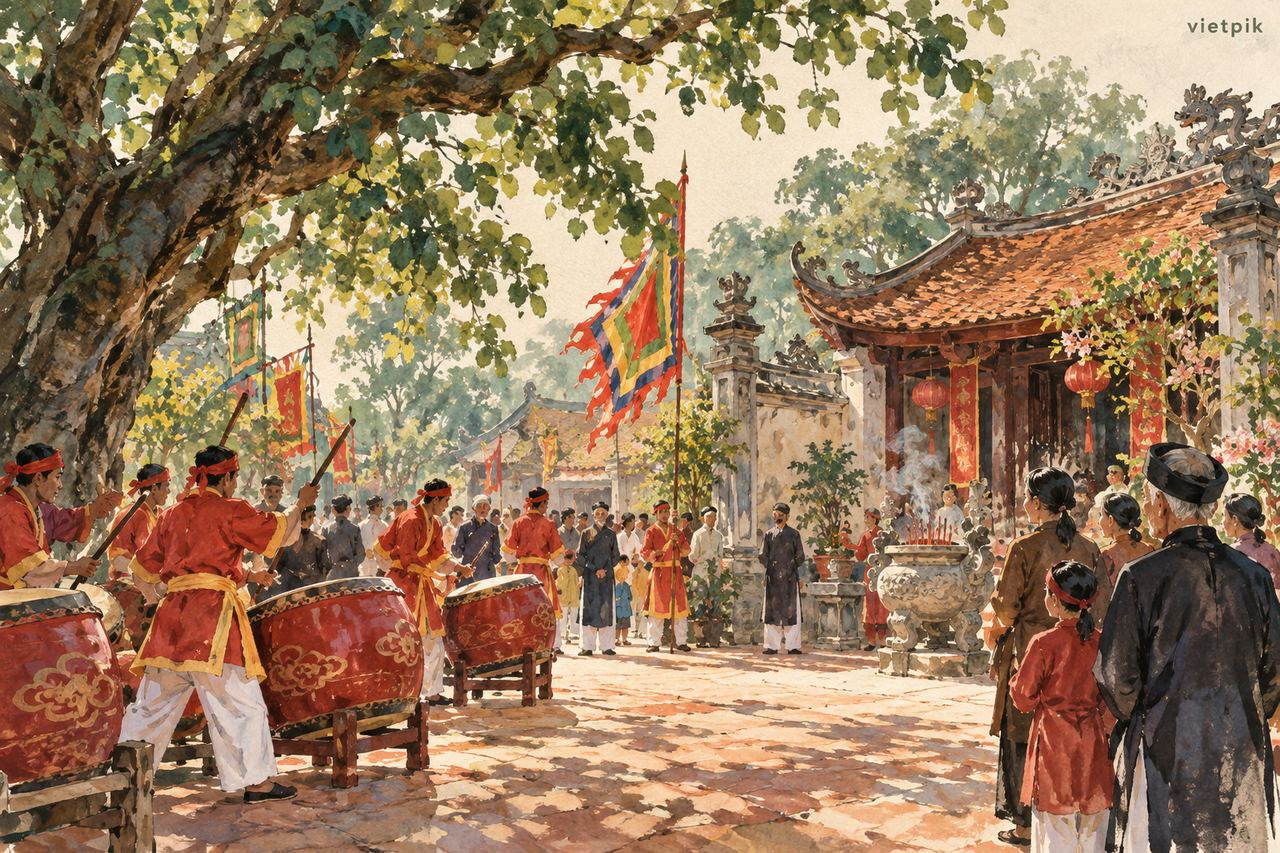
A local feature on the former Hai Phuong area describes a tradition of community arts and drumming. That context can make festival sound worth hearing as organised practice rather than generic noise. If a performance appears in the current programme, listen for how players coordinate and how the audience responds. Do not assume the groups described in an older article are still identical in membership or available for private bookings. The enduring editorial point is simpler: a public celebration depends on skills cultivated between festivals. Attention to those skills gives residents a role beyond being scenery around the temple.
6. Treat evening remembrance with restraint
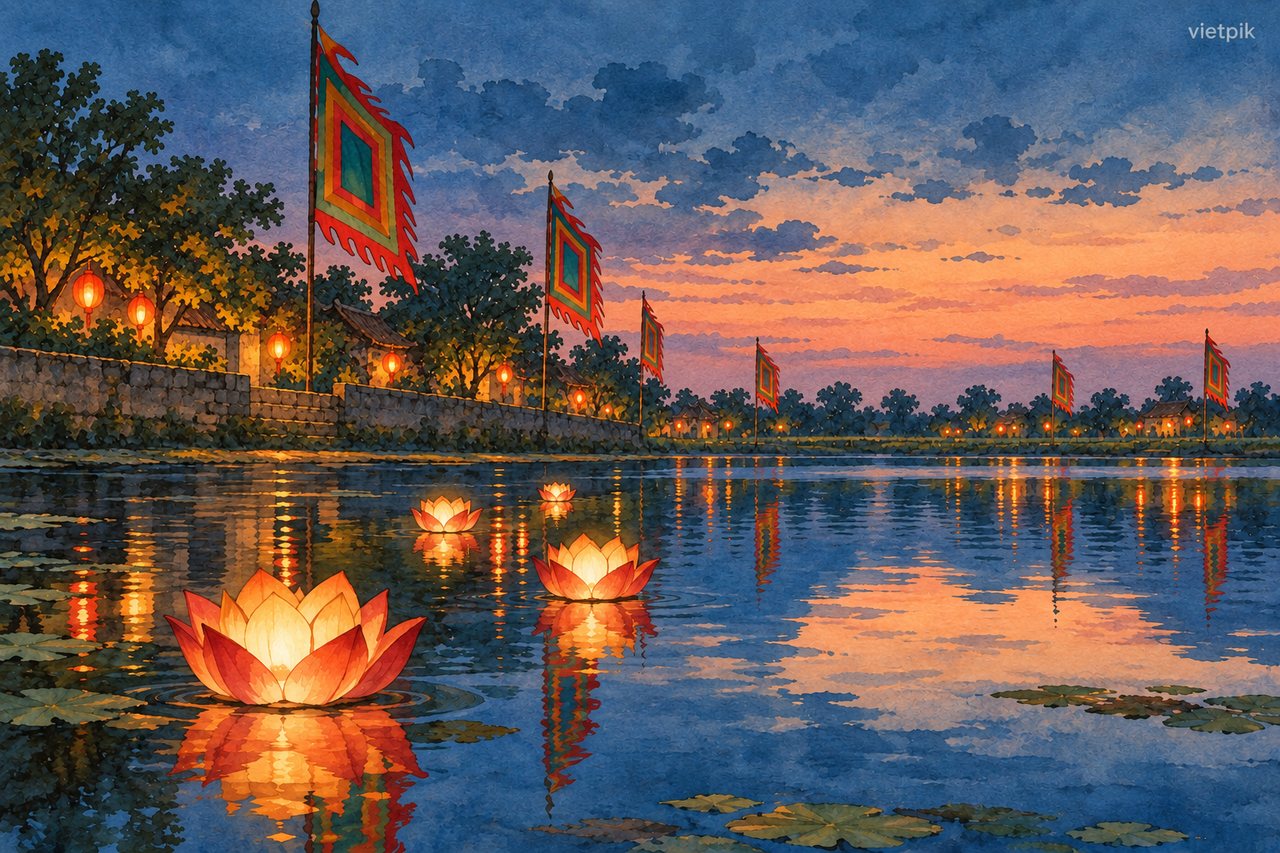
The 2026 programme summary includes memorial observances and floating lanterns. If a future edition provides similar activities, let organisers determine participation and placement rather than buying objects and assuming permission to release them. Low light can tempt visitors to move too close to water or worshippers for a photograph; remaining in a permitted stable position is the better choice. An evening rite is also not a fireworks show simply because lights are involved. Ask what activity is taking place, keep conversation considerate and avoid assigning a festive interpretation to a moment that participants understand as remembrance.
7. Preserve the local names in the story you tell
Afterwards, retain Bao Ninh and Hai Hau in your notes rather than reducing the visit to another Tran temple festival. If discussing land-making, identify the historical source and distinguish its account from what you observed on the day. A current photograph cannot by itself prove an older reclamation story. The most useful account connects memory, place and present participation carefully, allowing the people who made and maintain a home to remain visible within the larger historical narrative.