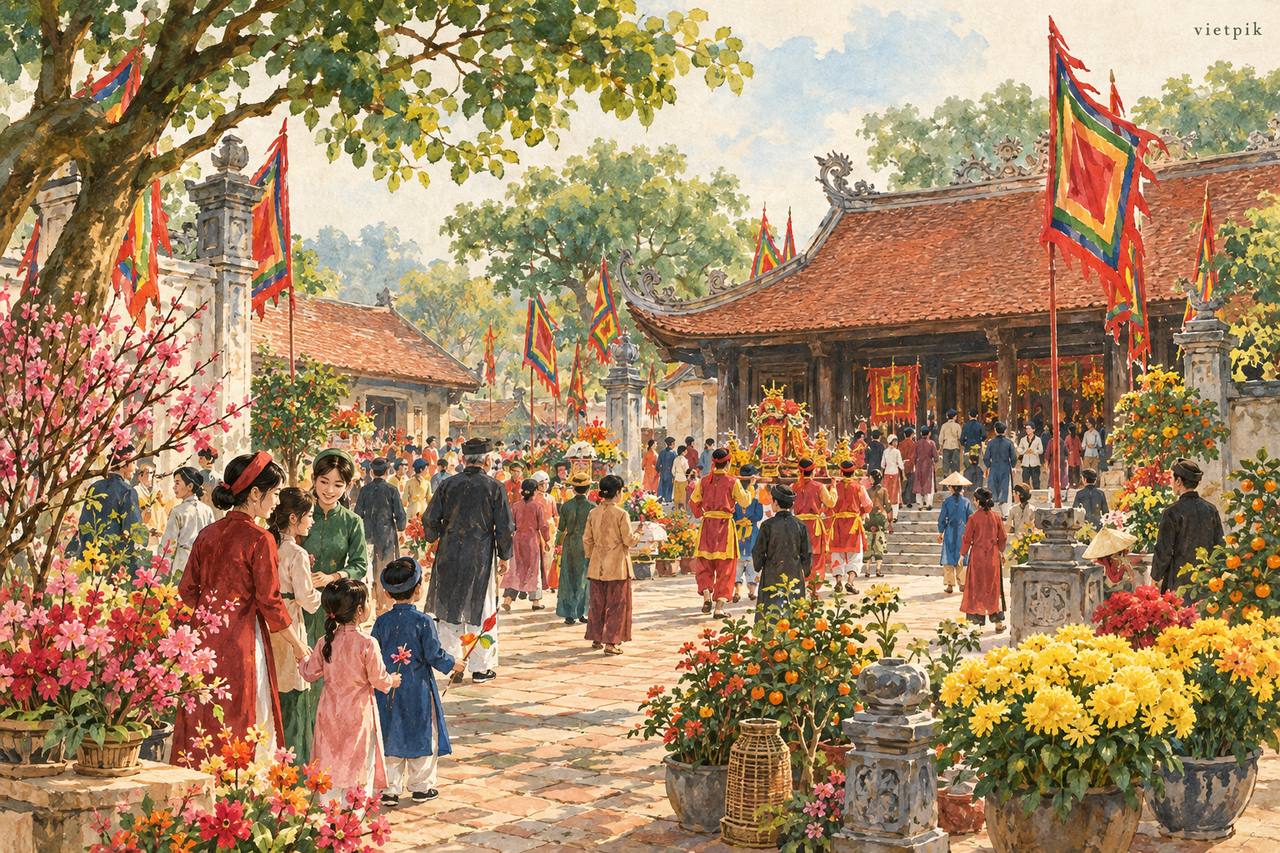
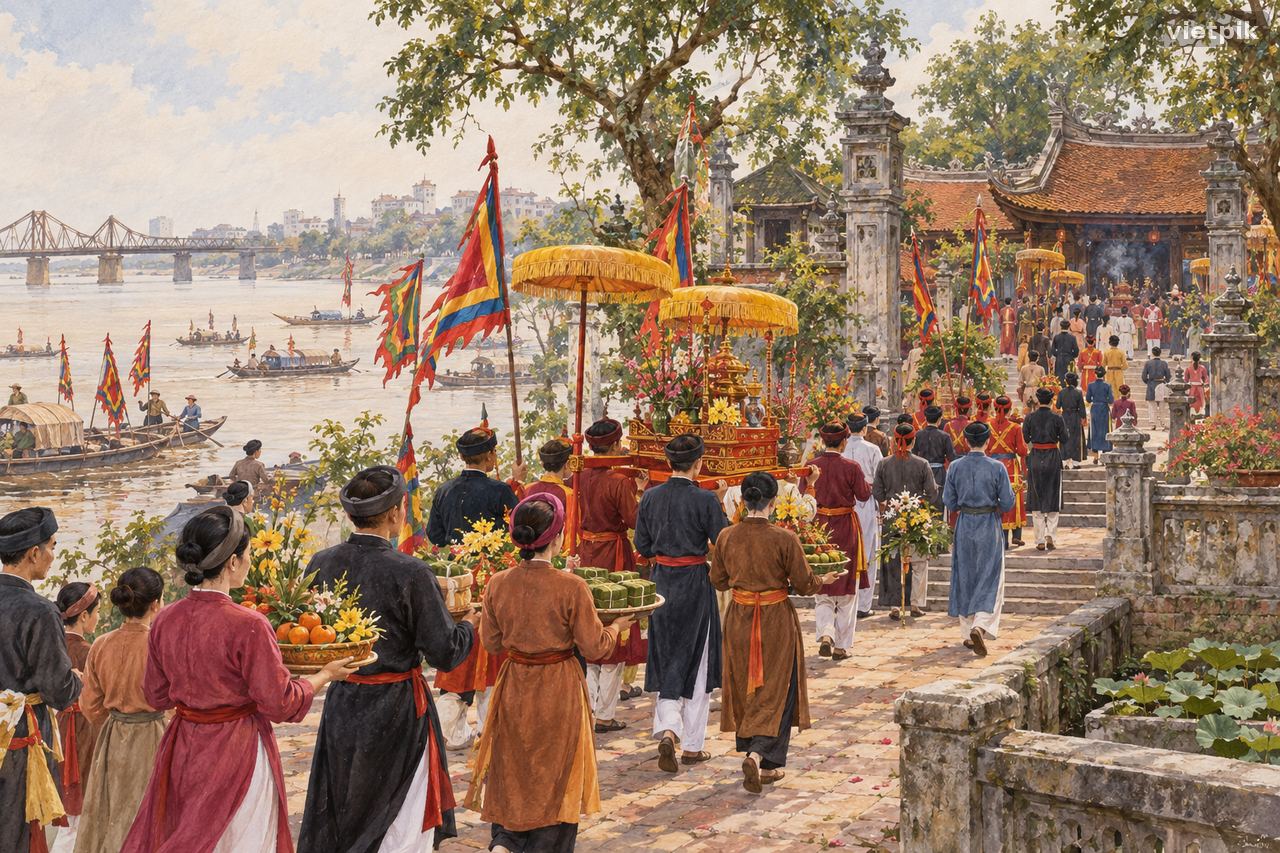
Bạch Mã Temple stands inside the Old Quarter rather than apart from it. On a festival day, the narrow streets, shopfronts and everyday traffic remain part of the setting around a place remembered as the eastern guardian of old Thăng Long. The useful question is therefore not simply what ceremony happens, but how a historic sacred point continues to operate inside a working neighbourhood. This article separates the Bạch Mã temple at 76 Hàng Buồm in Hanoi from temples of the same name elsewhere. It uses the 2026 local announcement as a dated reference and leaves the 2027 programme unconfirmed.
History & story
The temple is associated with Long Đỗ and the eastern direction in the Thăng Long Four Guardians tradition. That urban cosmology gives meaning to its location without turning legend into measured geography. The name Bạch Mã, meaning white horse, can draw attention away from the deity Long Đỗ if introduced without context. Let the local account explain the relationship between the name, sacred narrative and guardian role. The Four Guardians framework is a way of understanding the old capital symbolically; it is not an instruction to visit four identical shrines. Here, the valuable starting point is a compact sanctuary embedded in a trading neighbourhood, with its own congregation and festival responsibilities.
Long Đỗ and the eastern guardian
The temple is associated with Long Đỗ and the eastern direction in the Thăng Long Four Guardians tradition. That urban cosmology gives meaning to its location without turning legend into measured geography. The name Bạch Mã, meaning white horse, can draw attention away from the deity Long Đỗ if introduced without context. Let the local account explain the relationship between the name, sacred narrative and guardian role. The Four Guardians framework is a way of understanding the old capital symbolically; it is not an instruction to visit four identical shrines. Here, the valuable starting point is a compact sanctuary embedded in a trading neighbourhood, with its own congregation and festival responsibilities.
Drum, address and ritual team
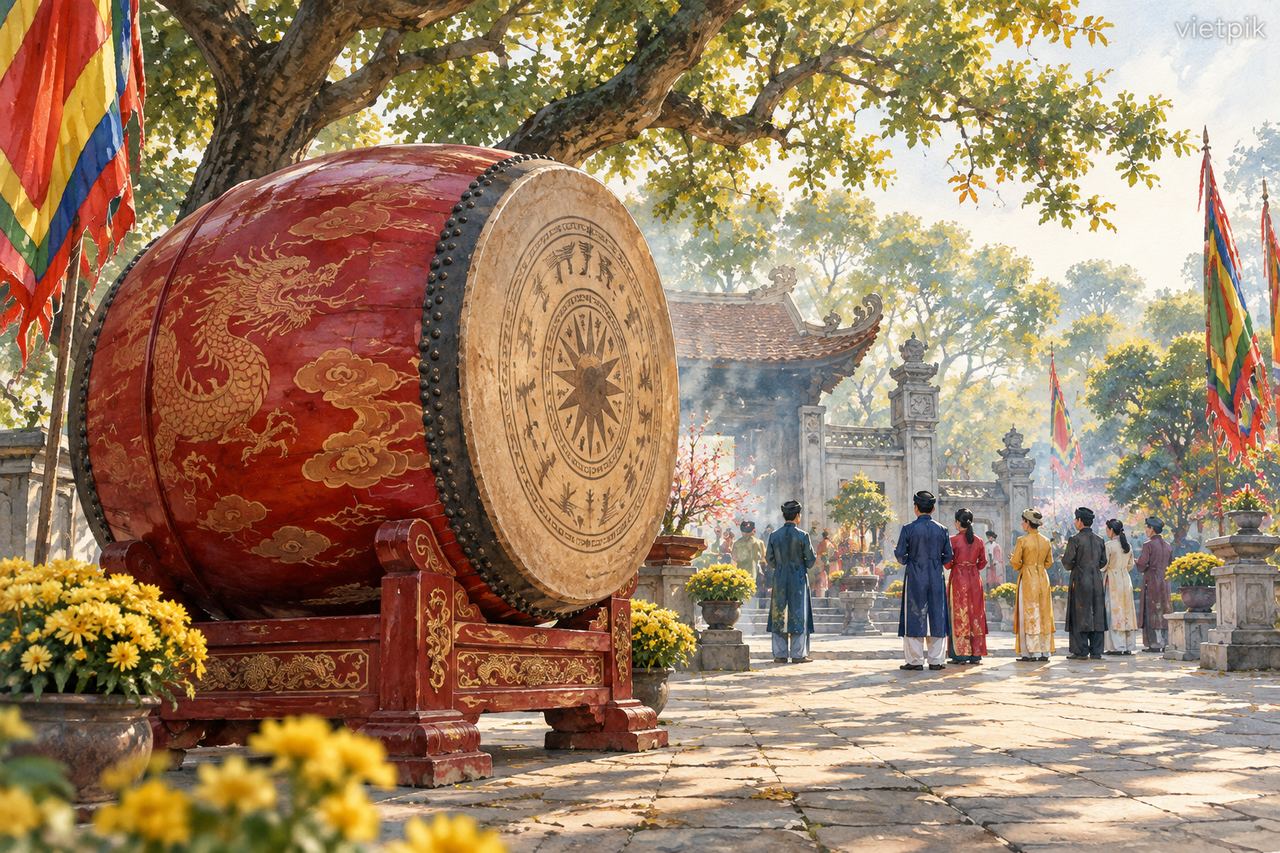
A festival here unfolds in a compressed street environment. Processional movement, offerings and public observation must share space with residents and businesses, making stewardship visible in small practical decisions. The city's account of the 2026 opening names the opening drum, ceremonial address and male ritual team. These offer three different ways to observe: sound marks a beginning, spoken words articulate the occasion, and the team's movements give it bodily form. A short visit need not capture everything. Choose one transition and watch it through. Waiting for a ceremony to finish can explain more than repeatedly entering and leaving the sanctuary in search of a dramatic image.
Two festival days, one opening
Local authorities reported the 2026 opening on 30 March. The twelfth day of the second lunar month is the recurring reference in cultural descriptions, but a 2027 timetable had not been published when reviewed. The announced 2026 festival occupied 30 and 31 March, while the opening occurred on the first of those days. Keep that distinction when comparing a preview with a report written afterward. An article mentioning two dates is describing the festival span, not necessarily two opening ceremonies. For a later year, seek a notice tied to the Hàng Buồm temple and inspect its activity list. A result containing only the words Bạch Mã may refer to a different locality or even a business.
Hàng Buồm as a working street
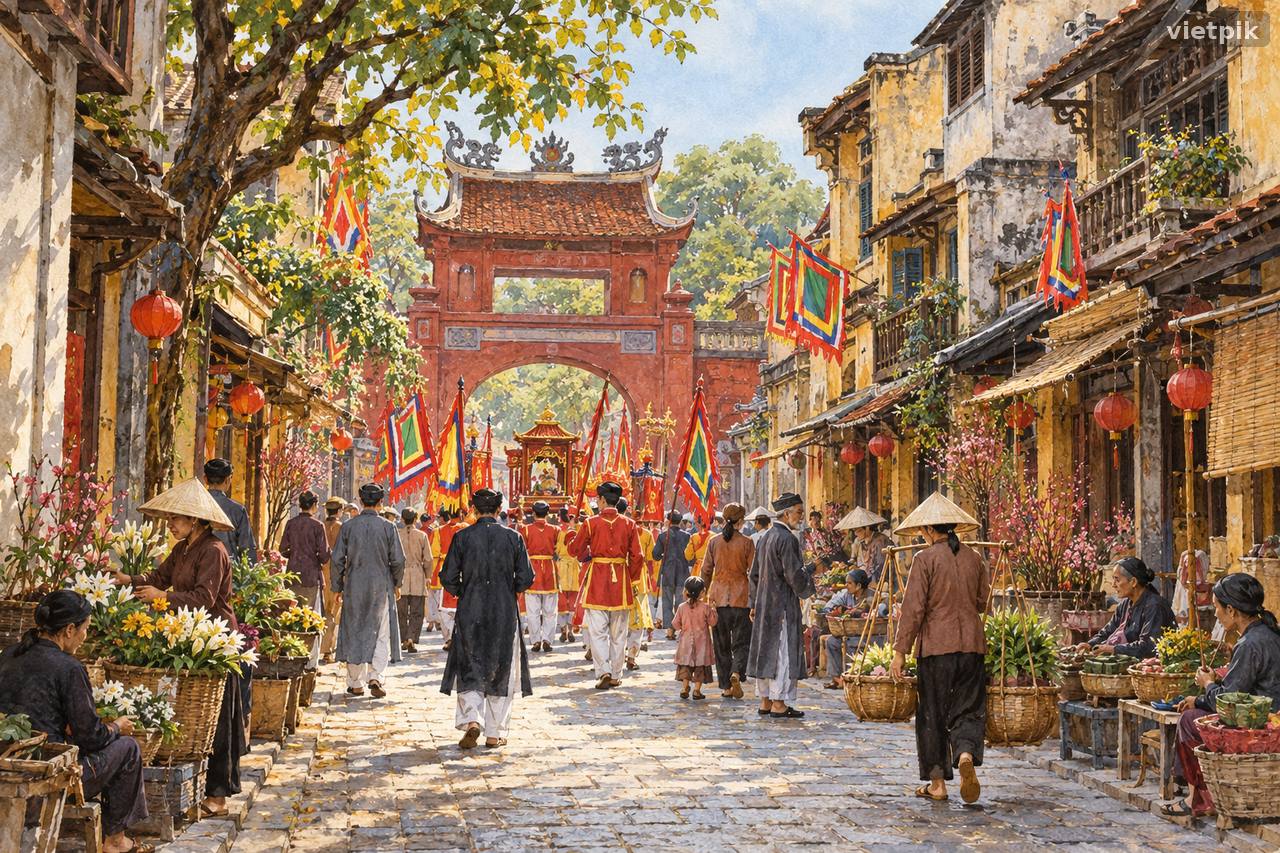
Hàng Buồm changes character block by block. Watching how people make a ceremonial corridor through an ordinary commercial street can reveal the festival better than searching only for a frontal temple photograph. The street is part of the viewing experience, but it remains someone's working address. A doorway beside the temple may belong to a household or shop rather than provide a public viewing platform. Avoid resting bags against merchandise or turning a narrow gap into a filming station. A wider frame that includes people making room for one another can communicate the relationship between festival and neighbourhood without suggesting that commerce stops everywhere when the temple opens its observance.
A festival stop within an Old Quarter walk
Plan one focused visit and keep the route flexible. Temporary barriers, one-way crowd movement or a short pause in access can change the best approach during the ceremony. If combining Bạch Mã with an Old Quarter walk, place the confirmed ceremony first and leave the surrounding stroll flexible. A fixed meal reservation immediately afterward can force an unnecessary rush through the most interesting part. Conversely, a temple visit on an ordinary day may offer quieter architectural attention but cannot substitute for witnessing the festival. Decide which experience you want before arranging the day, and keep both the temple entrance and nearby residential access clear while waiting.
Photographing in a compact sanctuary
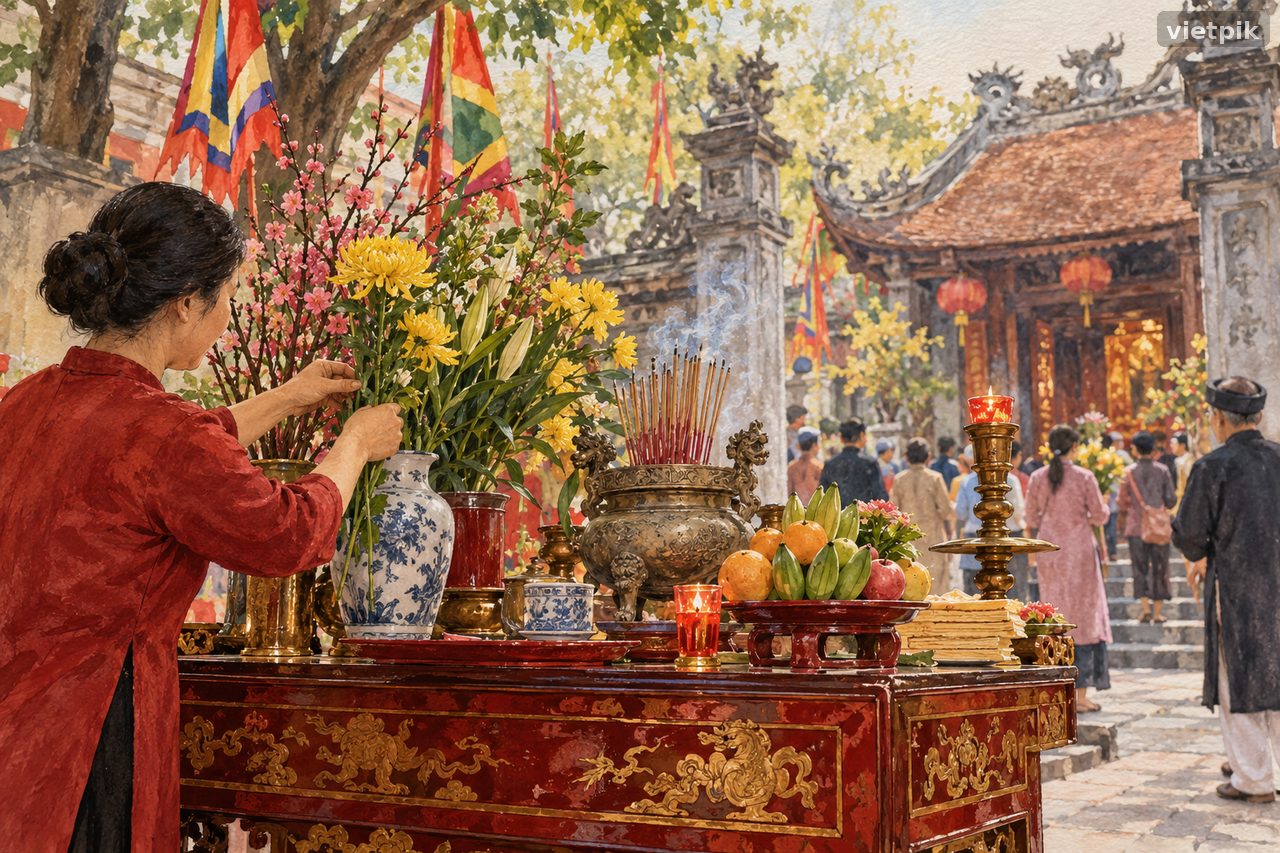
Inside a compact sanctuary, quiet conduct matters. Step aside before reading labels, avoid blocking doors and ask before photographing anyone at close range or recording worship. Offerings can be visually rich without becoming freely available photographic subjects. Hands arranging flowers belong to people doing something meaningful, not to an anonymous still life. Ask before moving close; if permission is unclear, photograph the broader public setting instead. Inside, a phone screen held high can obstruct a small room as effectively as a large camera. Turning down the screen and reviewing images outside are simple ways to keep attention on the observance rather than the act of recording it.
A sacred landmark in everyday commerce
When sharing the story, retain the full address context and the name Long Đỗ only as supported by the sources. Do not attach customs from a Bạch Mã festival in another province. A useful account of Bạch Mã can follow one question: how does a sacred landmark remain part of an active commercial street? The answer need not claim an unchanged scene across a thousand years. Contemporary barriers, stewards and ordinary shopfronts belong to the present festival setting. Describe that coexistence honestly. A photograph made in 2026 shows how heritage was practised in that edition, not a transparent view of the medieval capital or evidence for every custom associated with its name.