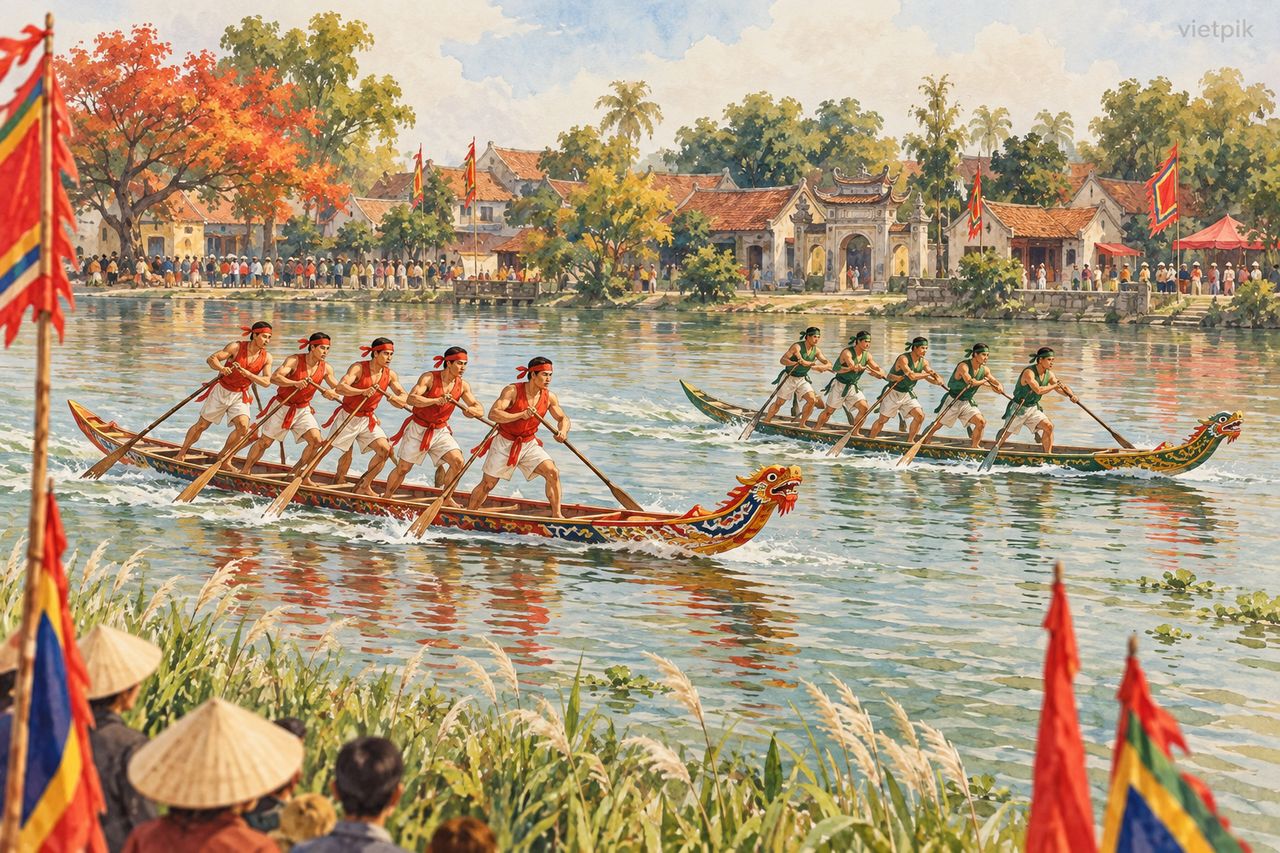
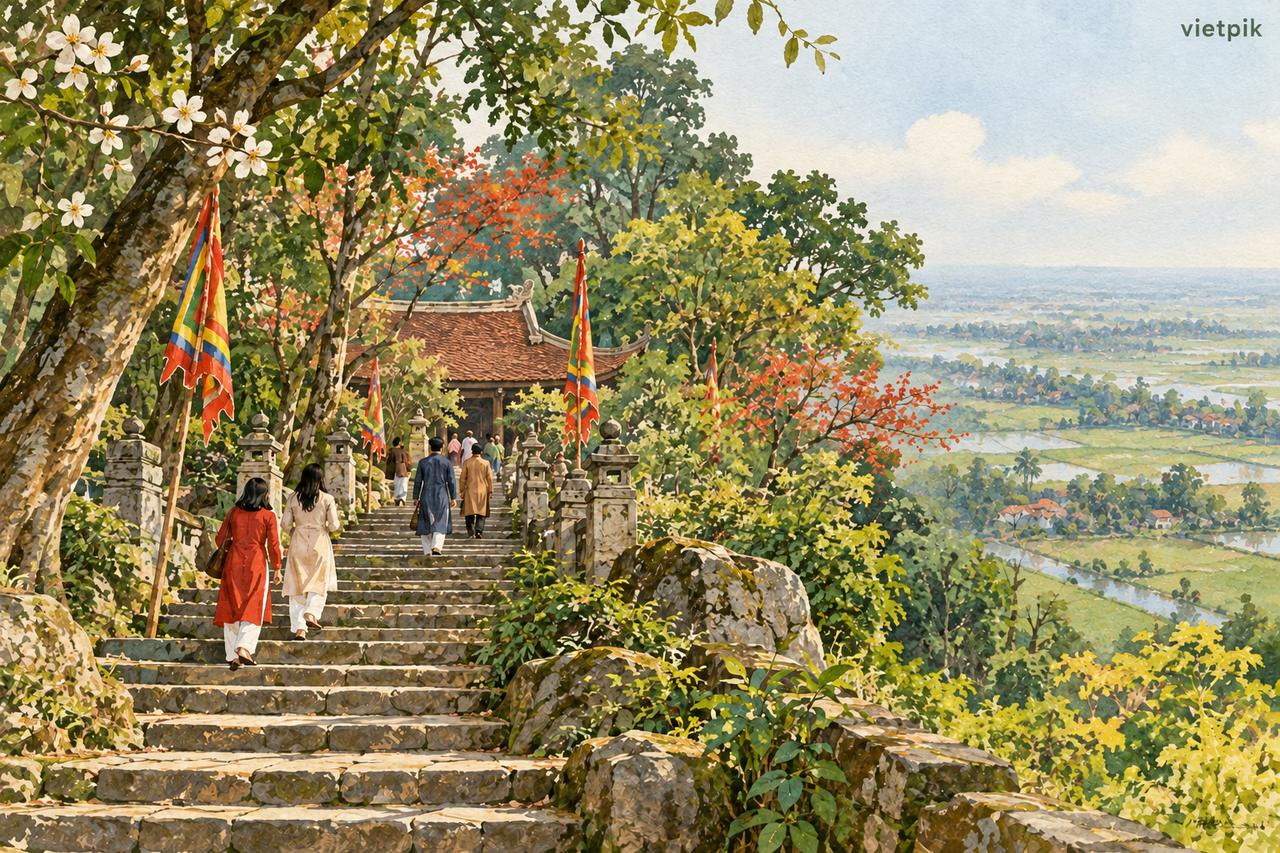
At Bai Dinh, scale can easily dominate a visitor's first impression. Yet the spring festival is easier to understand when attention shifts from the size of the complex to the reasons people gather, the direction of a procession and the pauses around worship. A meaningful visit does not require seeing every building in one attempt. It requires deciding whether the priority is an opening ceremony, pilgrimage or architectural observation. This guide follows the festival as a cultural and religious occasion in Ninh Binh, while keeping services, future schedules and access arrangements outside the realm of assumptions.
History & story
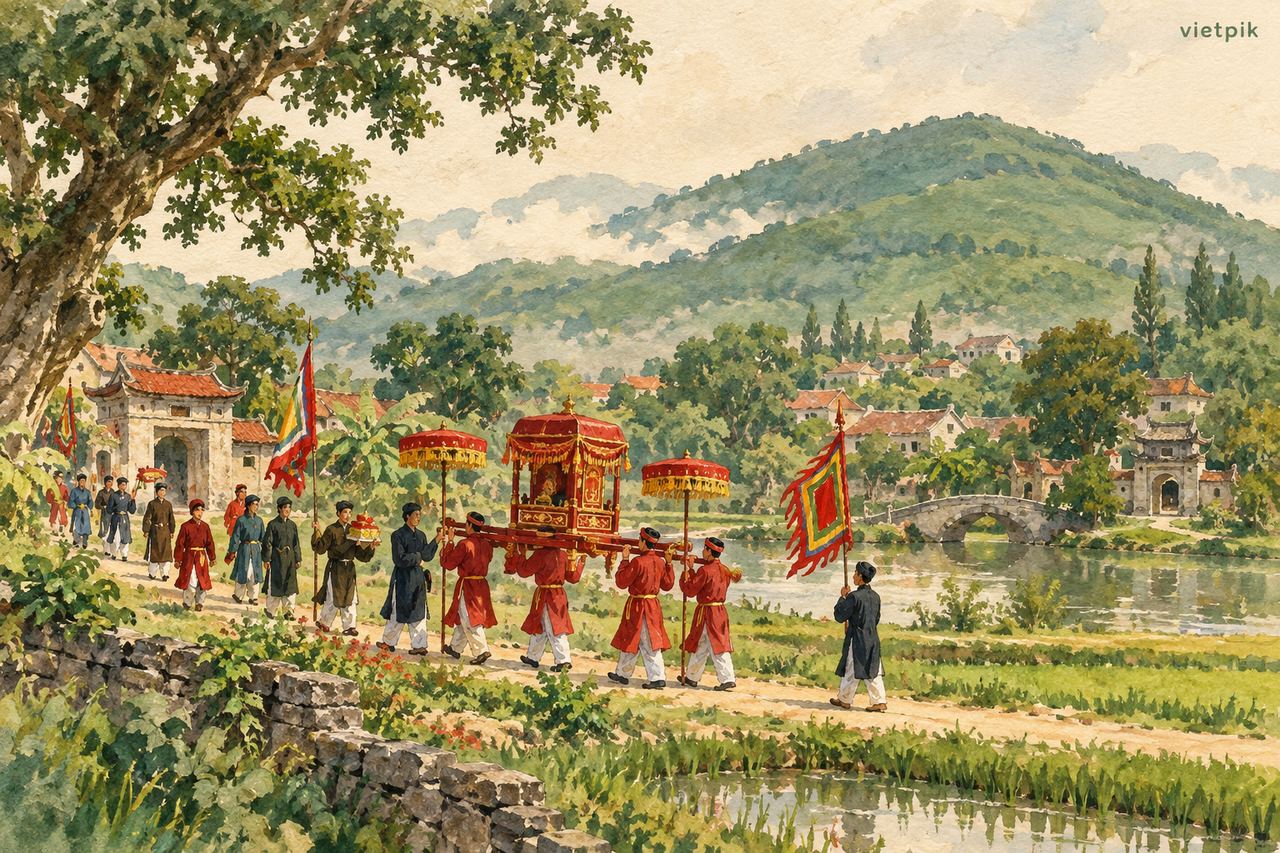
The Bai Dinh complex includes an older pagoda and a much larger newer ensemble. Their coexistence matters during the festival: a visitor who looks only for monumental halls may miss the older sacred setting to which ceremonial movement is directed. Contemporary reporting on the 2026 opening describes the procession going towards the old pagoda. Read the site map with that relationship in mind instead of assuming that the largest building is the only meaningful centre. If walking capacity is limited, choose the area that best matches your purpose and ask on arrival which public route is available that day.
1. Two scales of sacred space
The Bai Dinh complex includes an older pagoda and a much larger newer ensemble. Their coexistence matters during the festival: a visitor who looks only for monumental halls may miss the older sacred setting to which ceremonial movement is directed. Contemporary reporting on the 2026 opening describes the procession going towards the old pagoda. Read the site map with that relationship in mind instead of assuming that the largest building is the only meaningful centre. If walking capacity is limited, choose the area that best matches your purpose and ask on arrival which public route is available that day.
2. Listen to the opening
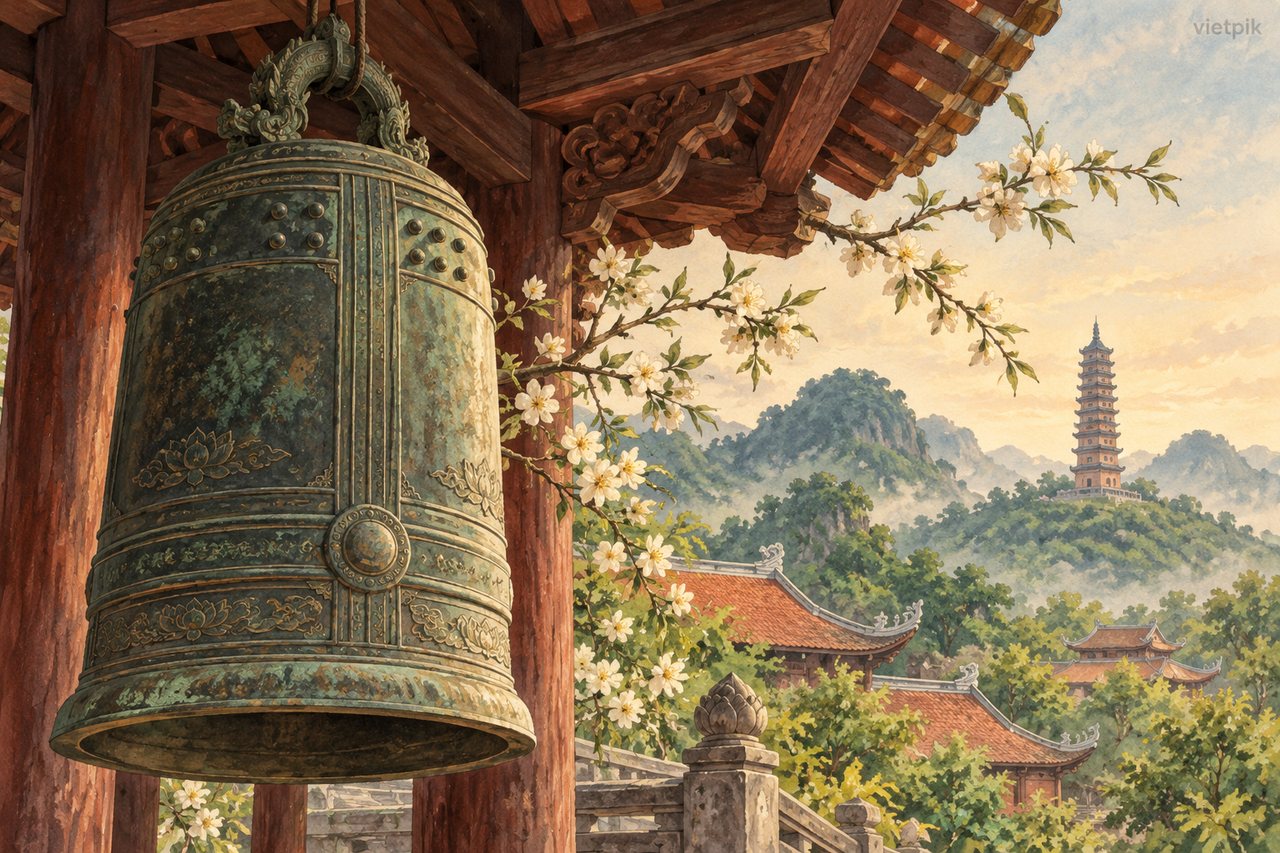
The 2026 opening included ceremonial drum beating and bell ringing. Those sounds marked an organised beginning rather than simply adding atmosphere to a tourist visit. The reporting also described offerings and prayers for peace and well-being. You do not need to share every belief to recognise that people are participating in worship, not performing continuously for cameras. During a formal sequence, listen before moving closer. A view from the side may reveal how participants respond to the same cue, while leaving the central passage free. The bell illustration in this guide is symbolic and does not claim to reproduce a specific inscribed bell.
3. Opening day is not the whole season
Bai Dinh is commonly introduced as opening its spring festival on the sixth day of the first lunar month, with the pilgrimage season extending into the third lunar month. The 2026 opening took place on 22 February. A long seasonal description does not mean that the opening rites repeat every day or that all performances remain available throughout that period. No official 2027 programme has been confirmed for this article as of 28 September 2026. Before planning around a particular ceremony, seek the next edition's notice. Use the traditional date to guide monitoring, not as a guarantee of a specific timetable.
4. Several traditions meet here
Accounts of the opening refer to Buddhist worship alongside remembrance of Nguyen Minh Khong and devotion associated with Cao Son and Mau Thuong Ngan. This helps explain why a festival at a pagoda cannot be reduced to a single uniform activity. Names, processional objects and destinations can point to different strands of local religious life. An interested visitor can note those names and ask for clarification later, away from the active rite. Avoid turning a brief observation into a sweeping claim about what all Vietnamese Buddhists believe. The useful discovery is the particular combination sustained at this place, not a universal formula for religion.
5. Choose a route by energy, not ambition
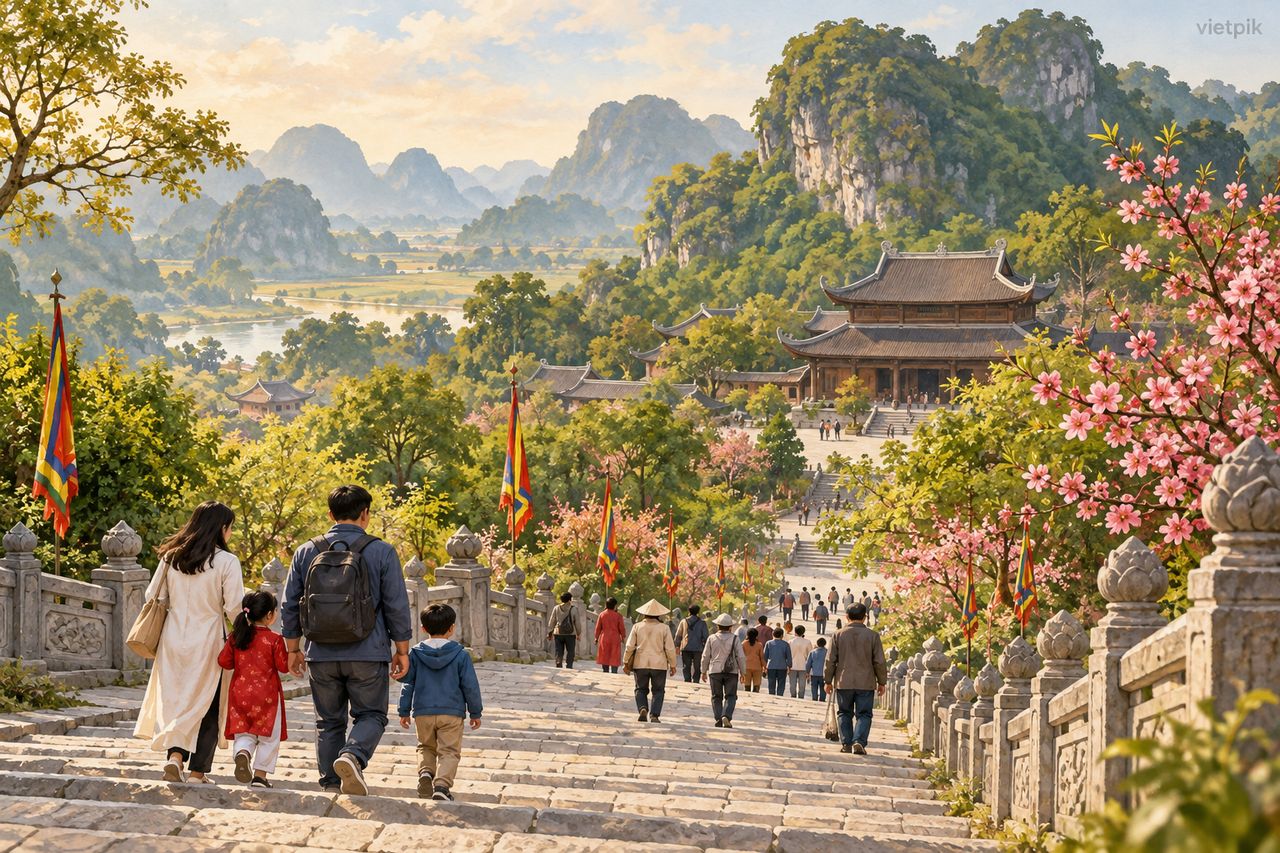
For a group with different walking abilities, agree on one shared objective and an optional second stop. Decide where everyone can regroup before separating, and photograph the meeting-point sign rather than relying on descriptions such as the large gate. Steps, long approaches and repeated movement between zones can be more tiring than the number of sites suggests. Check available assistance and transport locally; this article does not verify current electric-cart fares, operating hours or accessible routes. A shorter visit with enough time to observe a service may be more satisfying than rushing from hall to hall simply to complete a list.
6. Leave room around devotion
Inside a worship area, follow posted instructions on footwear, photography and offerings. Do not place a phone in front of someone praying to obtain a symmetrical photograph of the altar. If incense is in use, notice where it is permitted and avoid adding smoke merely because another visitor does so. Carry only what you can manage on stairs and through a crowd. For children, a simple observation task can focus attention: compare the sound of a bell fading with the sudden beat of a drum. Such listening makes the visit participatory without turning religious objects into things to touch or demonstrate.
7. Bring back a question as well as a photograph
A useful memory of Bai Dinh might be a question about the old pagoda, the role of a named figure or the route taken by a procession. Record what you actually observed, then compare it with a reliable explanation after the visit. Separate a photograph of architecture from evidence that a particular festival event occurred there on a specific date. For an advance itinerary, leave the 2027 programme unresolved until an organiser publishes it.