The rice-cooking contest at Đồng Vân belongs to the same broad agricultural world as other northern competitions, but it should not be collapsed into Thị Cấm. Its setting, sequence and local memory form a separate festival identity in the Đan Phượng area. Public descriptions emphasise speed, dexterity and coordinated work around fire, water, grain and the finished pot. This article approaches the contest as a performance of collective competence rather than a quaint recipe. The full 2027 programme remains unconfirmed, so the fifteenth day of the first lunar month is retained only as the traditional planning reference.
History & story
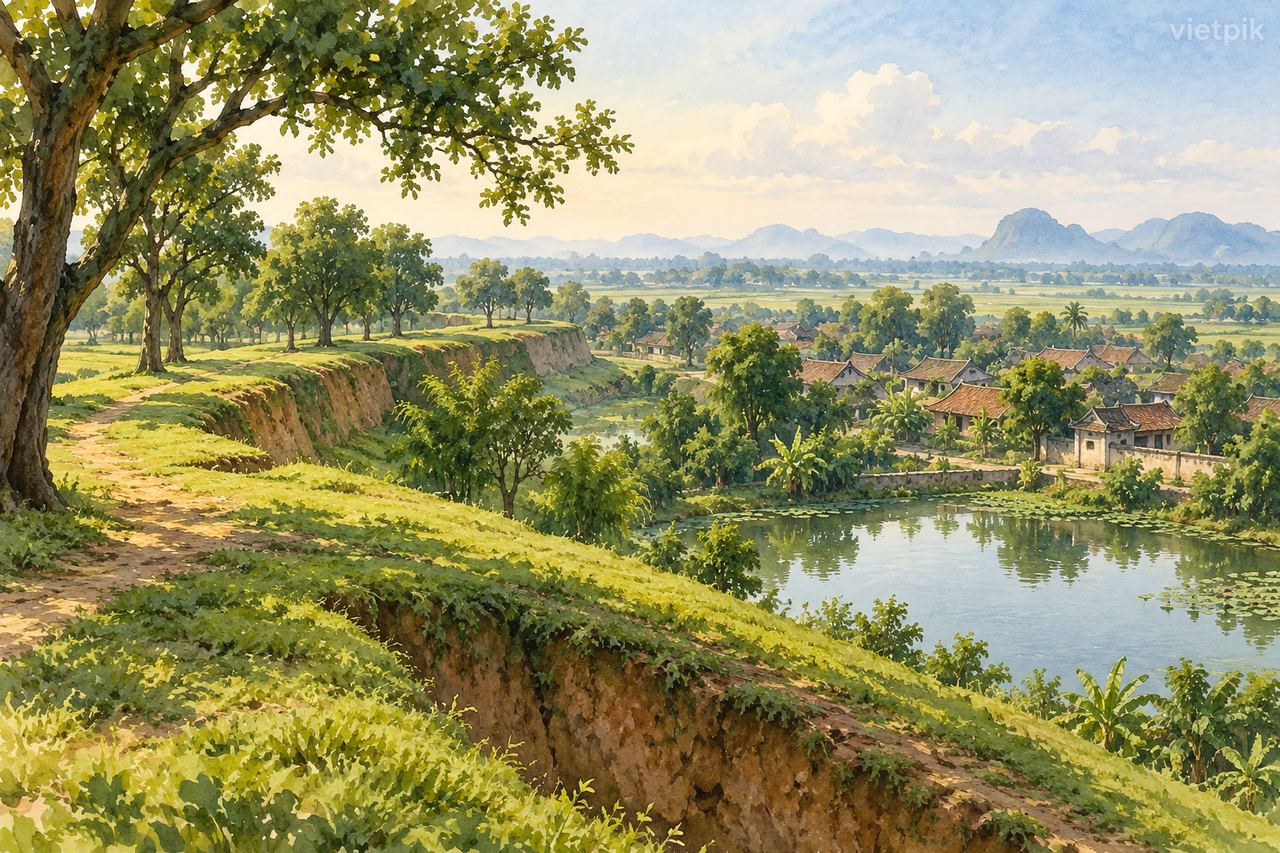
Local explanations connect the contest with journeys and military provisioning in transmitted memory. The safest editorial approach is to present that connection as tradition, then focus on observable community practice. Đồng Vân belongs in the lowland cultural setting of the Đan Phượng area, not in the northern highlands suggested by some similar place names. That simple distinction changes how the festival should be pictured and understood. Rice-growing village life, an inherited story of provisioning and the courtyard contest provide the relevant frame. A travel account can acknowledge the old military narrative without assigning a documented age to every present rule or describing competitors as if they were reenacting a verified historical campaign.
Đồng Vân in its lowland setting
Local explanations connect the contest with journeys and military provisioning in transmitted memory. The safest editorial approach is to present that connection as tradition, then focus on observable community practice. Đồng Vân belongs in the lowland cultural setting of the Đan Phượng area, not in the northern highlands suggested by some similar place names. That simple distinction changes how the festival should be pictured and understood. Rice-growing village life, an inherited story of provisioning and the courtyard contest provide the relevant frame. A travel account can acknowledge the old military narrative without assigning a documented age to every present rule or describing competitors as if they were reenacting a verified historical campaign.
Beyond the opening challenge
The contest distributes tasks while maintaining one shared deadline. Public accounts mention difficult physical challenges alongside rice preparation, making teamwork visible in both speed and precision. The VTV account describes obtaining an incense stick from a difficult climb before fire can be established, alongside the grain and water work. The climbing episode attracts attention, but it is only one part of the team's problem. Someone watching should look for what continues elsewhere while the crowd follows the climber. This turns a spectacular opening into an intelligible sequence: success in one task creates an opportunity that other team members must be ready to use.
A lunar date with an unresolved cycle
The fifteenth day of the first lunar month is repeatedly cited for Đồng Vân. That recurrence does not supply a confirmed Gregorian date, start time or team list for 2027. Published descriptions do not agree fully on frequency: some speak of an annual observance, while an older local tourism account describes a five-year cycle. Do not resolve this by choosing whichever wording makes booking easier. A major festival and a smaller enactment may differ, but that explanation remains a possibility until organisers clarify it. The next visit should be based on a named forthcoming event, with the location and contest explicitly included, rather than an assumption that every full-moon day brings the same performance.
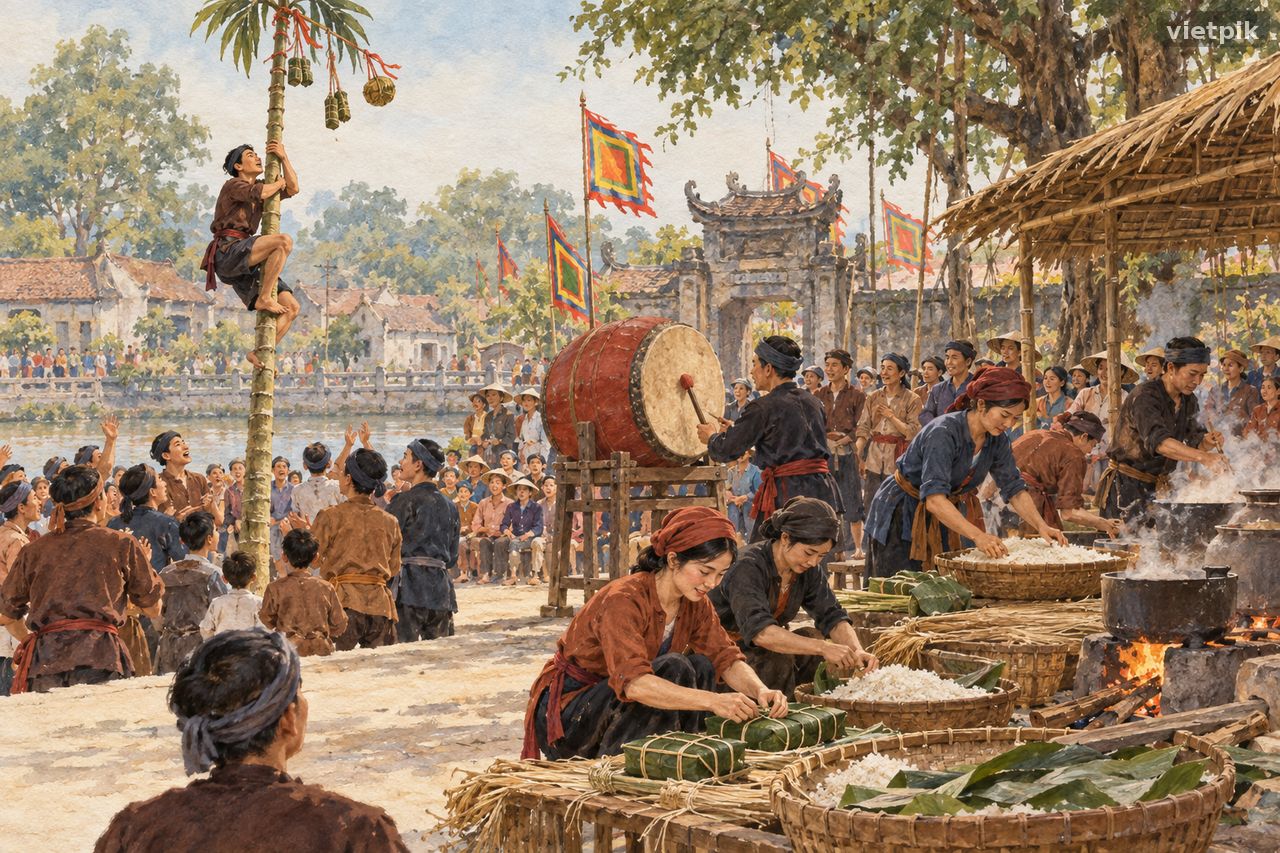
Showing the team around the pot
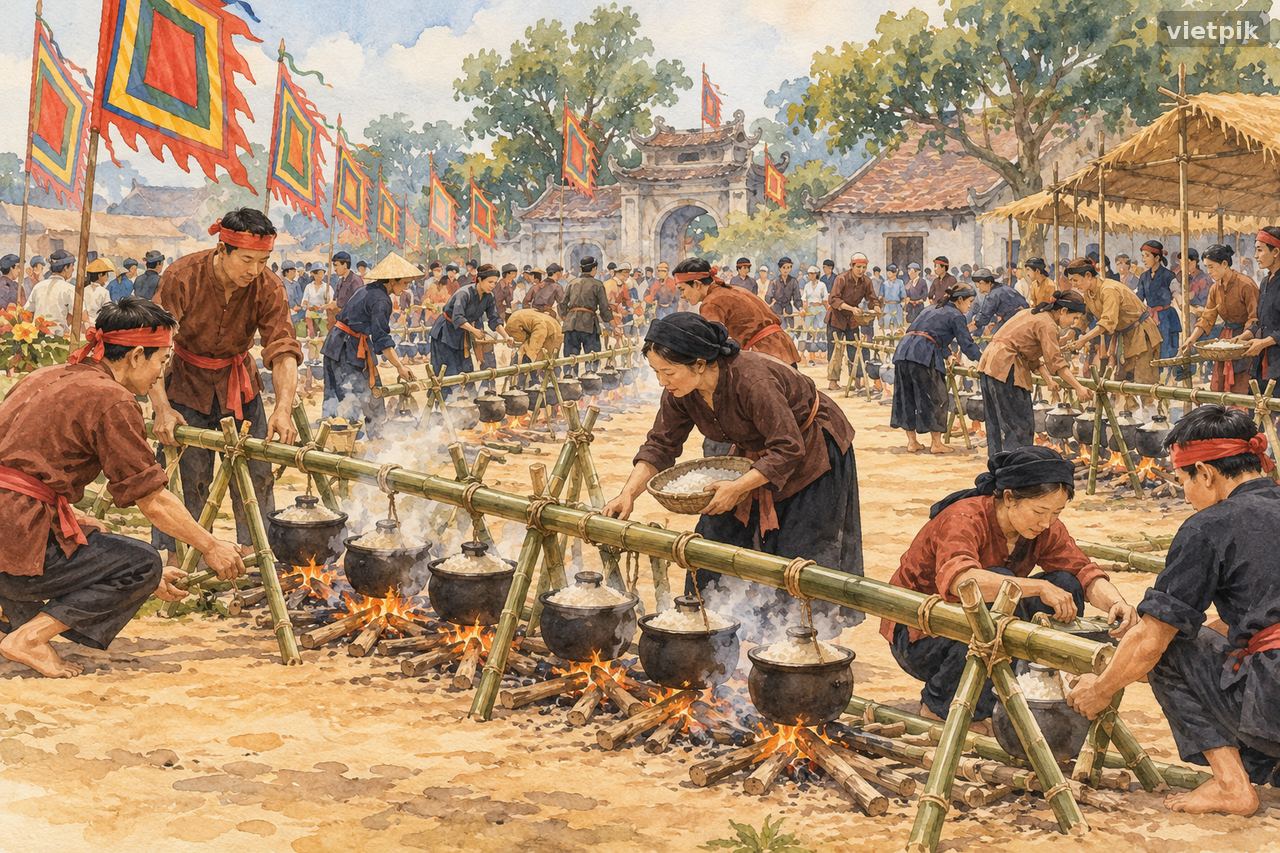
A wide view can show parallel labour: someone manages fuel while others prepare grain or water. Close-ups are useful only when they do not interfere with the working circle. A useful image sequence should reveal how a team keeps cooking while coordinating other actions. Show the relation of the pot, fuel and people instead of isolating one face against an uninformative crowd. The illustration supplied here concentrates on preparation and should not be used to prove a particular suspension mechanism or competition rule. Where the actual cooking arrangement matters, refer to verified reporting or the organisers' explanation. Visual excitement is most informative when viewers can understand the practical task beneath it.
Smoke, movement and viewing space
Weather affects smoke, footing and visibility. Choose an upwind viewing position when permitted and follow the organisers’ boundaries. The courtyard may offer several apparent gaps, but some are working routes between tasks. Before changing position, see whether competitors repeatedly pass through the space. A spot that is empty for a minute can still belong to the competition. If wind shifts smoke, step back rather than moving into the centre. Visitors who are uncomfortable near smoke can still follow preparation from farther away; there is no need to treat closeness to the fire as a measure of having experienced the festival properly.
Recognising less visible work
Avoid declaring a pot successful before judges do. Texture, colour and absence of burning are often mentioned, but the actual criteria and procedure belong to the organisers of that edition. The finished rice is a shared outcome, so a team member who receives little camera attention may still have been essential. Listen for explanations of allocation and timing after the result, rather than assuming the most visible participant did the most important work. Avoid assigning success to luck, gender or physique from appearance. A respectful account describes the task, the coordination and the announced result, while leaving technical judgments to those responsible for applying that edition's rules.
Comparing without merging traditions
Compare Đồng Vân with other rice contests only after describing its own place and sequence. Similar ingredients do not make two community traditions the same festival. Comparison is most useful at the level of method. Thị Cấm and Đồng Vân both make rice preparation public, yet the way tasks are staged and the objects that carry the drama differ. Do not import a familiar sequence from one when explaining the other. In a personal note, record the village name first, then the particular task observed, and only afterward make the comparison. This gives the reader two distinct traditions to discover instead of a generic category called Vietnamese cooking festivals.