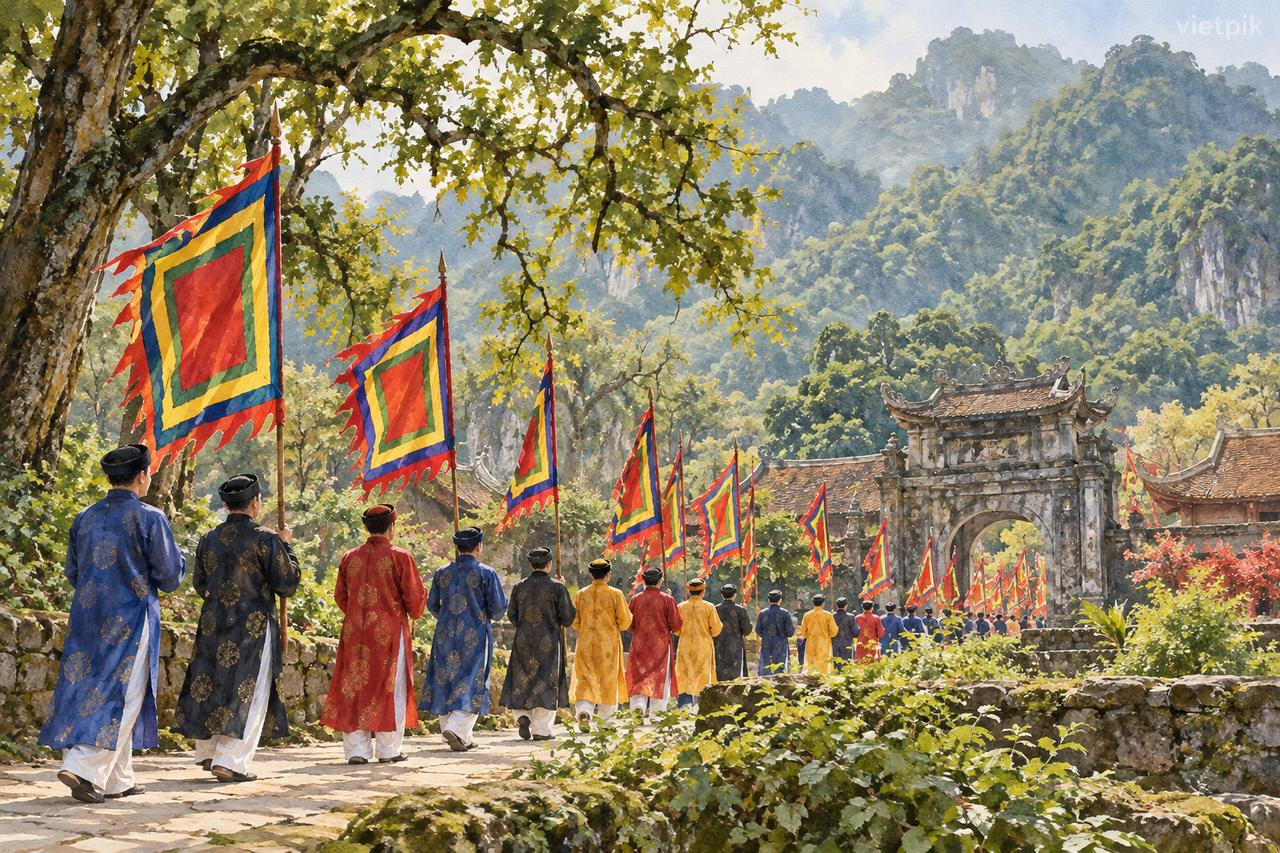
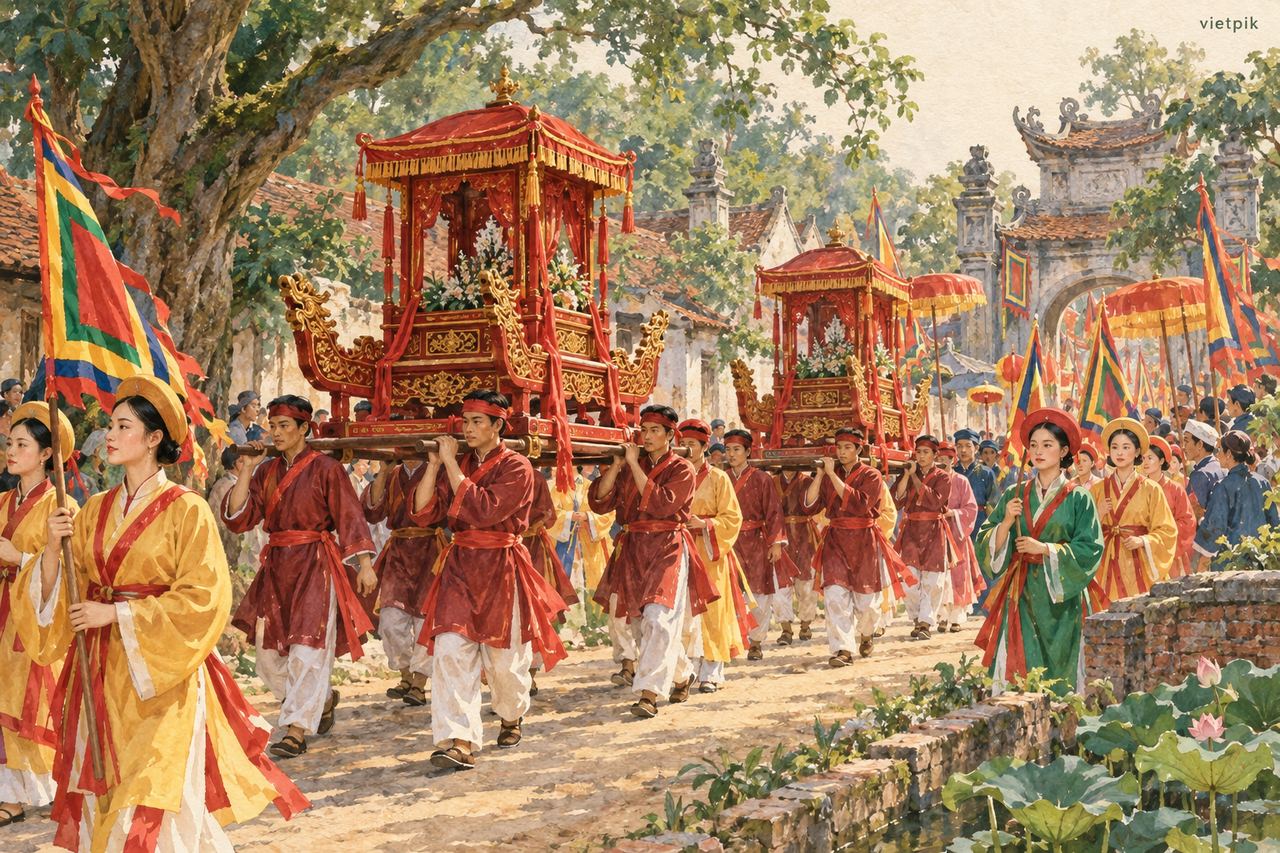
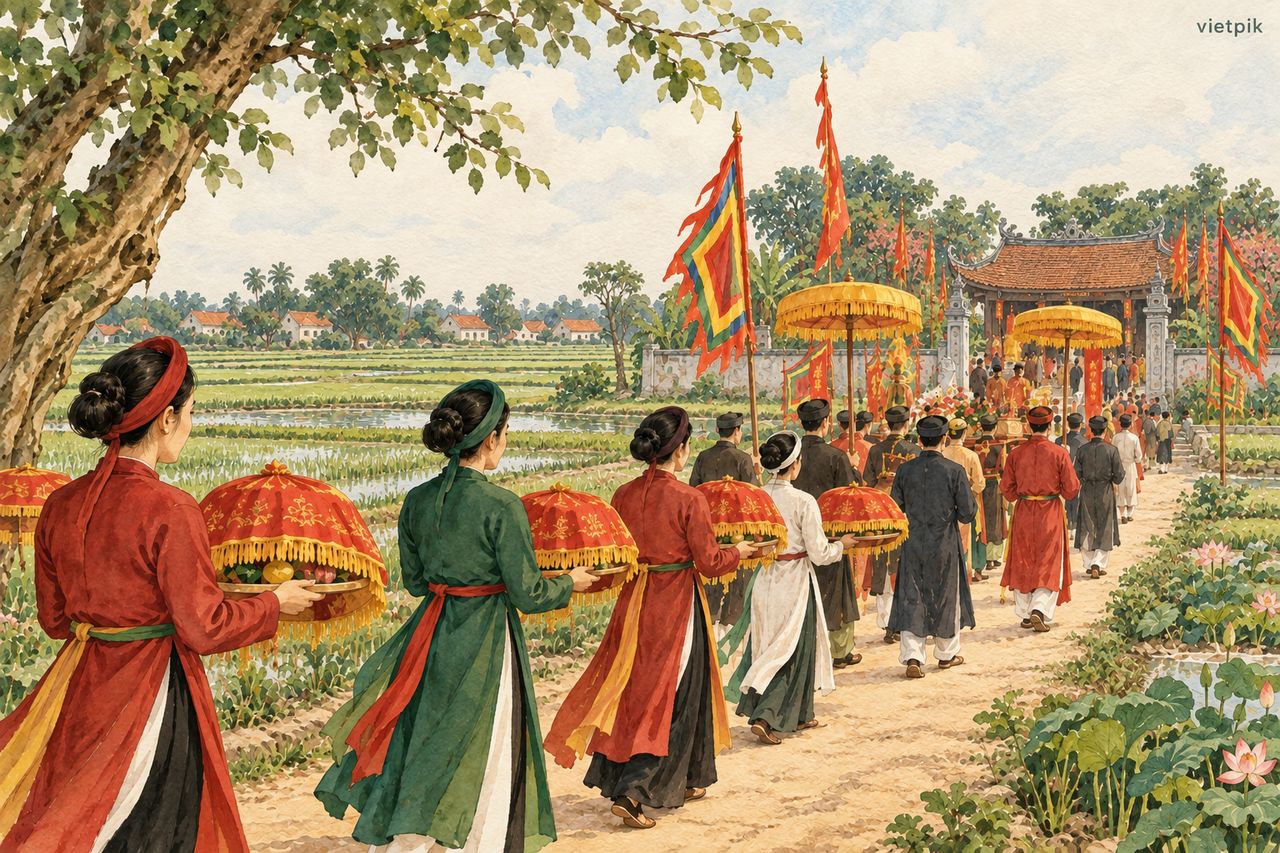
A festival becomes easier to understand when you stop trying to see everything at once. At Phù Đổng, begin with a flag, the people responsible for carrying it, and the space that opens around their movements. The celebration belongs to the cultural world of Saint Gióng, but its interest extends beyond a familiar heroic story. It invites visitors to notice how a community prepares, distributes responsibilities and brings a shared narrative into public space. This guide concerns the festival at Phù Đổng in Hanoi, not the separate Gióng celebration at Sóc Temple. Choose the right destination before choosing a date, and allow the day to be shaped by the programme actually announced for your visit.
History & story
UNESCO's heritage entry brings the Gióng festivals of Phù Đổng and Sóc temples together under one inscription. That shared recognition does not make their locations or seasonal programmes interchangeable. Phù Đổng should be understood through its own community and ceremonial setting. For a visitor, the practical consequence is simple: an article about Sóc cannot supply directions or event times for this trip. When reading a tour description, look for the actual temple name rather than the shorter phrase Gióng Festival. Keep the common legend as background, then ask what the host community at this particular site chooses to commemorate and perform.
One hero, distinct local celebrations
UNESCO's heritage entry brings the Gióng festivals of Phù Đổng and Sóc temples together under one inscription. That shared recognition does not make their locations or seasonal programmes interchangeable. Phù Đổng should be understood through its own community and ceremonial setting. For a visitor, the practical consequence is simple: an article about Sóc cannot supply directions or event times for this trip. When reading a tour description, look for the actual temple name rather than the shorter phrase Gióng Festival. Keep the common legend as background, then ask what the host community at this particular site chooses to commemorate and perform.
The people behind the visible symbols
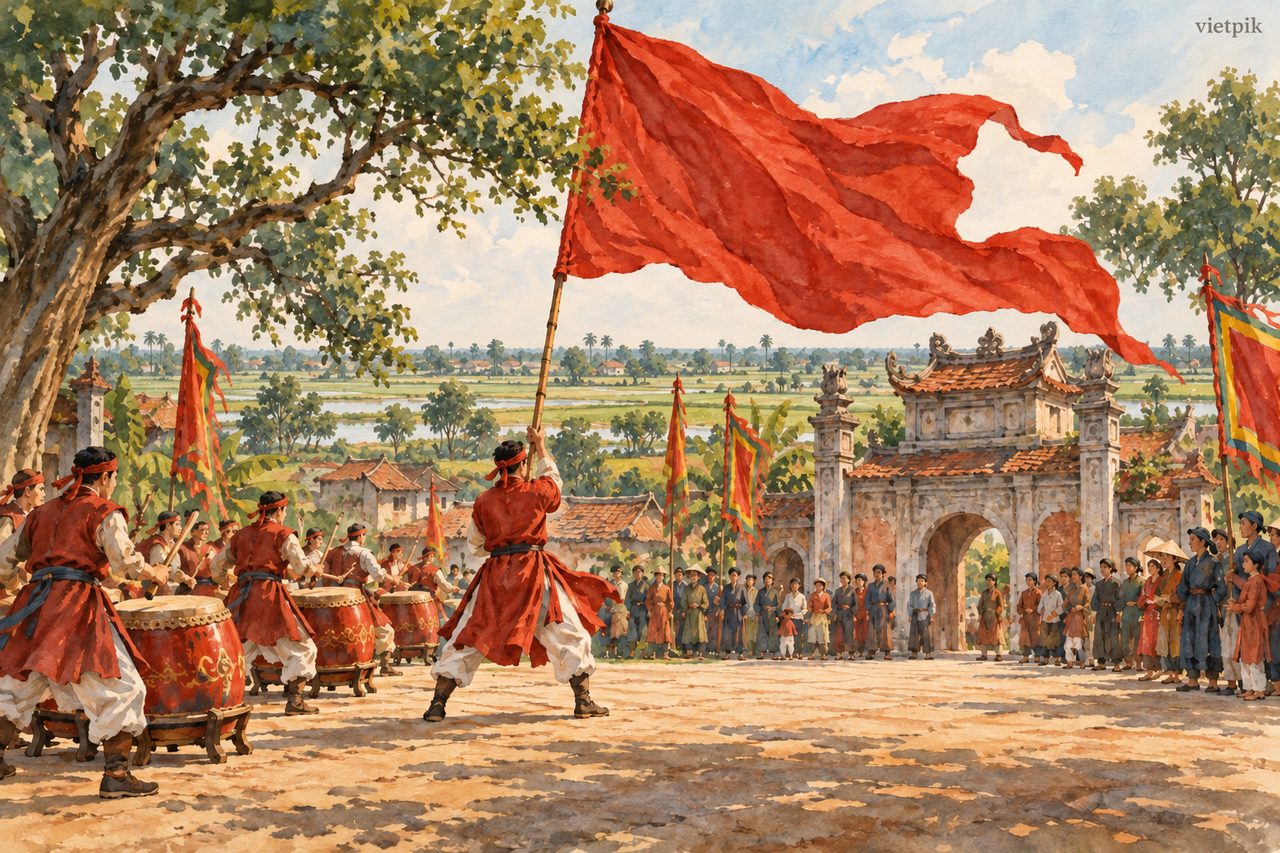
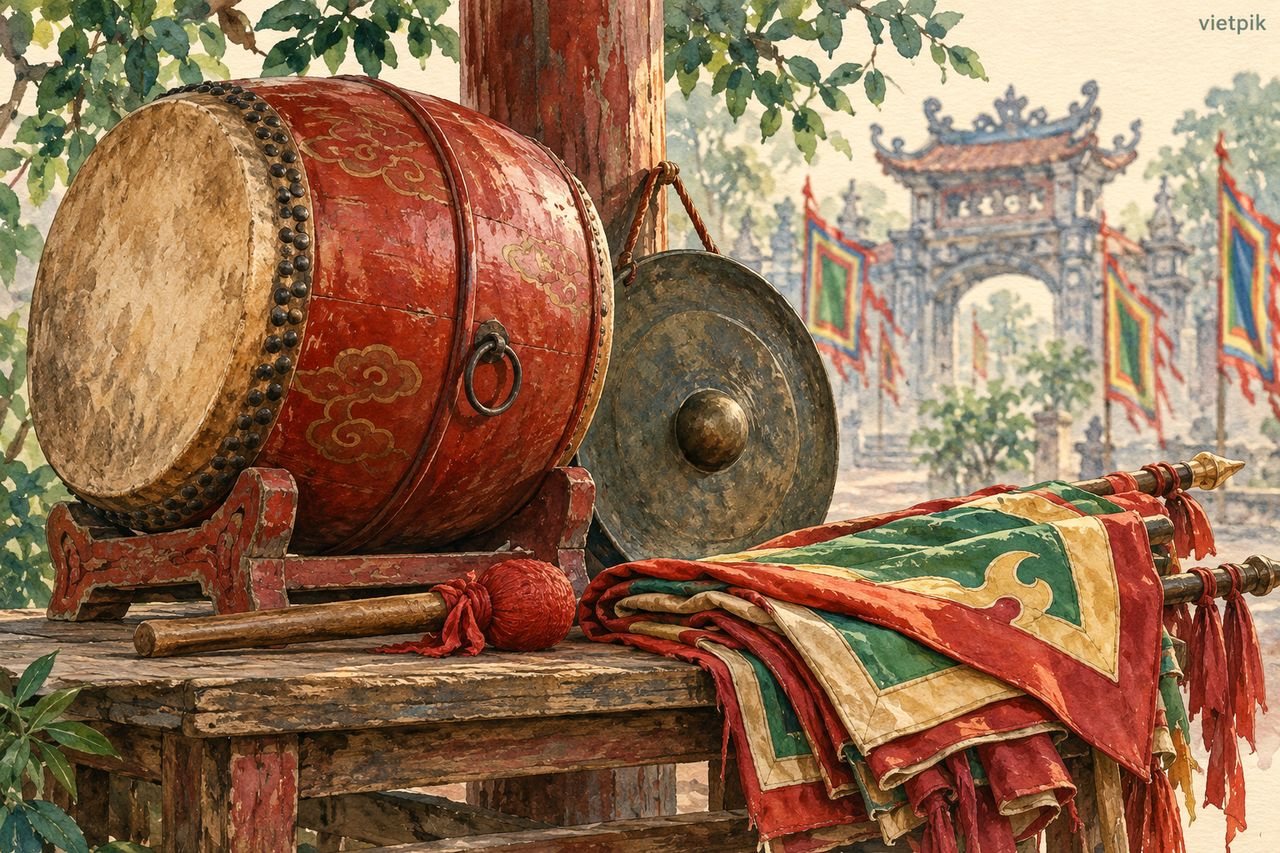
VOV's reporting from May 2026 describes the Ông Hiệu roles associated with flags, drums and gongs, and the demanding preparation involved in taking them on. These are community responsibilities, not costumes that any visitor can borrow. A useful way to watch is to follow the relationship between a principal participant and the people assisting him. Who makes room, carries equipment or waits for a signal? Those quieter actions can explain more than a close photograph of ceremonial clothing. Do not infer personal rank from a garment alone; if you need a role identified, ask a knowledgeable local interpreter after the movement has finished.
A lunar reference, not a 2027 booking date
The principal Phù Đổng observances are associated with the fourth lunar month. VOV reported the 2026 festival over 23–25 May, corresponding to lunar days seven to nine. Wider cultural and tourism activities can have a different opening date, so a festival week and its principal ritual days should not be collapsed into one number. As reviewed on 28 September 2026, this guide has no confirmed official programme for 2027. Before paying for date-dependent transport, obtain an announcement naming Phù Đổng, the year and the specific ceremony. An old news article confirms what happened in its own year, not what will happen next spring.
Watch the movement before reaching for the camera
Give yourself a short interval without recording. Watch where participants enter, where they turn and which edges remain open for movement. A flag needs clearance, while its bearer needs a stable surface and an uninterrupted line of sight. Stand outside that working space, even when a gap looks like an excellent camera position. If a steward moves spectators back, follow the instruction before finishing a photograph. A wider image that includes helpers and viewers often communicates the social scale better than a tightly cropped heroic pose. Never ask a participant to repeat a sacred action simply because your first recording missed it.
Build a visit around one sequence
Instead of scheduling several distant monuments, select one confirmed sequence and leave time on both sides of it. First locate the public viewing area; then identify a meeting place away from the route in case your group separates. Carry only what you can manage while standing, and plan a seated break outside the ceremonial flow. Families can give children a small observational task, such as noticing how a drum signal changes the group's attention. This keeps the visit focused without turning worshippers into entertainment. Treat any advertised extra performance as a separate item whose timing still needs checking.
Questions that reveal preparation
If someone has time to speak, ask about learning and cooperation rather than requesting a dramatic secret. How are younger residents introduced to the festival? Which preparation takes the longest? What does a helper need to understand before joining a procession? These are invitations to explain, not assumptions about local rules. Accept that some knowledge may remain within the community. Record names only with permission and distinguish the speaker's personal recollection from a published historical claim. A few carefully attributed notes will be more useful afterwards than an elaborate story assembled from fragments overheard in a crowd.
Carry home context, not just spectacle
After the visit, organise your notes around place, role and sequence. Name Phù Đổng in your captions so images are not mistaken for Sóc Temple, and state the actual year photographed. If you saw only one part, describe that part rather than claiming to have witnessed the whole festival. The most rewarding memory may be the cooperation surrounding the flag rather than the flag itself. That perspective makes a return visit worthwhile: another position, another conversation or a quieter moment can reveal a different layer without requiring a bigger spectacle.