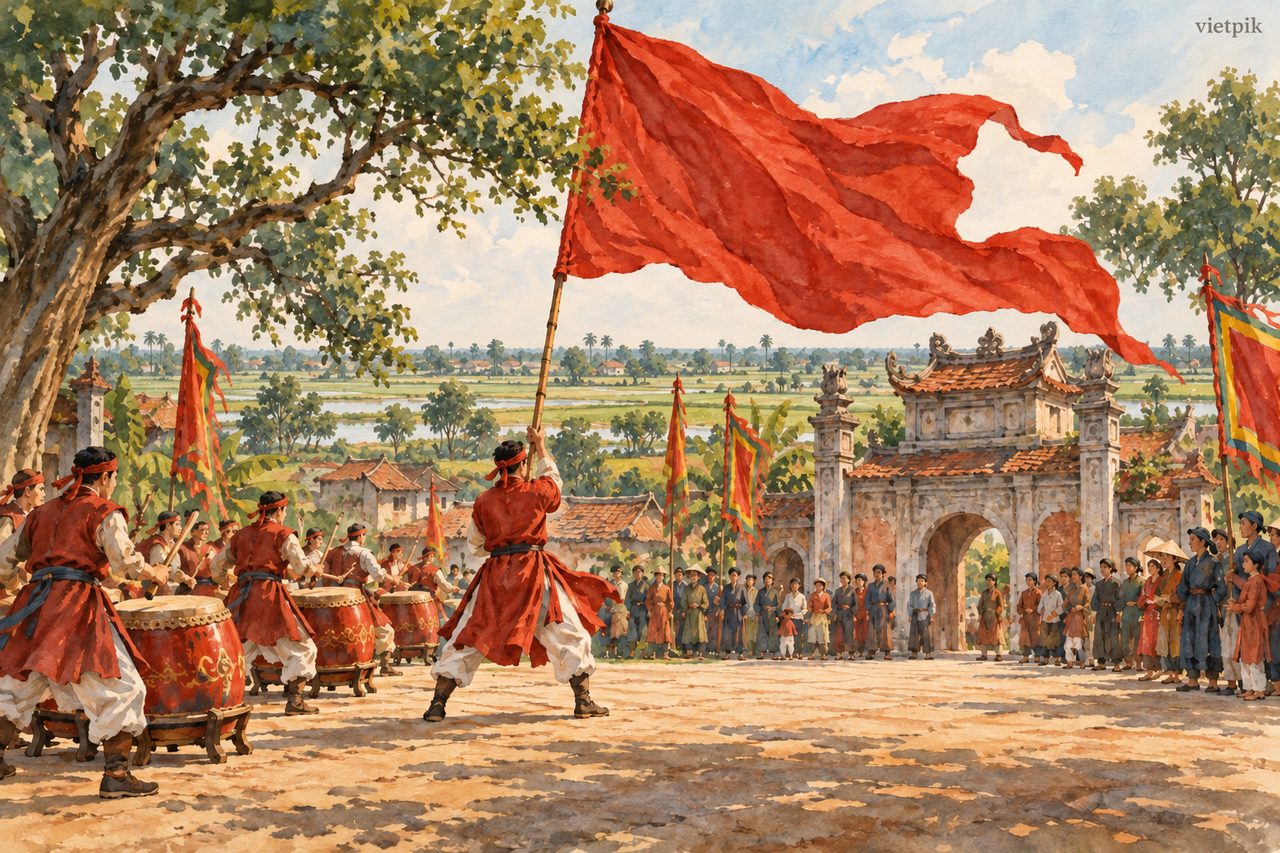
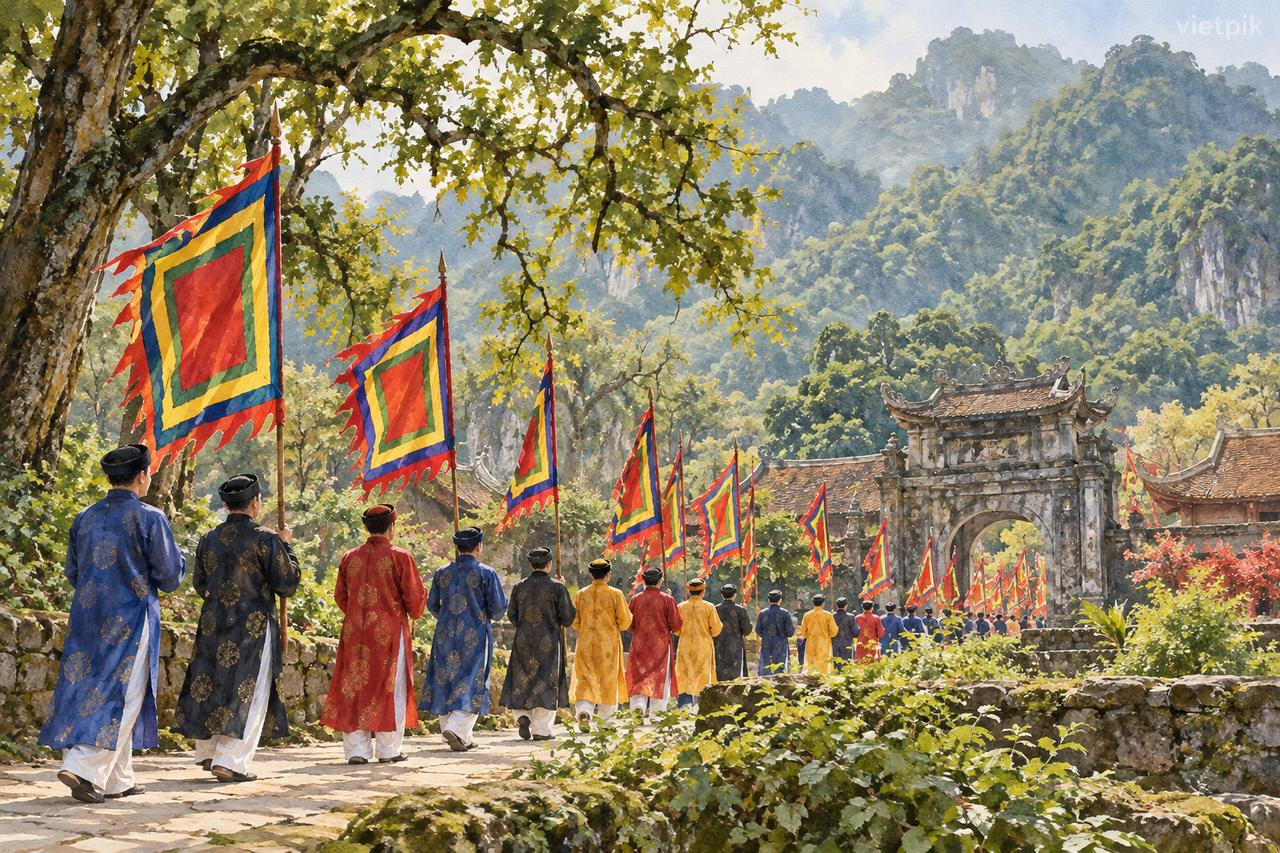
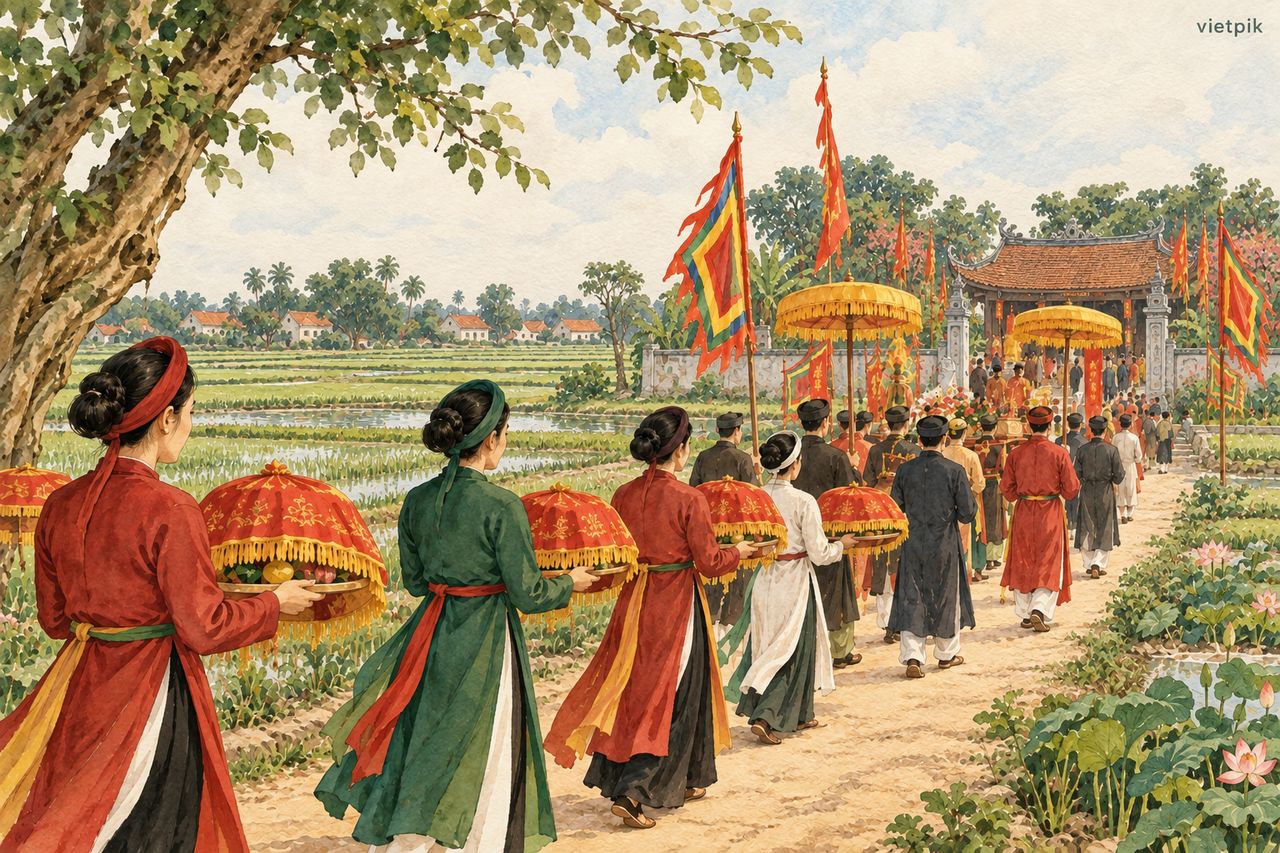
Mê Linh offers a way to approach the Trung Sisters through a community's acts of remembrance. The historical names Trưng Trắc and Trưng Nhị are familiar across Vietnam; a festival visit asks a more local question: how does a place continue to honour them together? Flowers, processional order and the relationship between a temple and a village can make that question visible. Come prepared to recognise both sisters, to listen to explanations of the ceremony and to separate an annual commemoration from a reconstruction of ancient events. This is the Mê Linh festival in Hanoi. Other temples honouring the same figures have their own traditions and should remain distinct destinations.
History & story
The 2026 opening ceremony commemorated the uprising of the Trung Sisters in the year 40. Local and city cultural reports connect the Mê Linh temple with that historical memory. For visitors, this offers a useful starting point without requiring every later story to be treated as verified biography. Read the introductory information at the site, then distinguish historical dates from accounts of miracles or symbolic appearances. When travelling with children, ask what leadership means when it is remembered through two women together. That question keeps their political agency in view instead of reducing the visit to beautiful costumes or a familiar schoolbook illustration.
Remembering leadership, not only a legend
The 2026 opening ceremony commemorated the uprising of the Trung Sisters in the year 40. Local and city cultural reports connect the Mê Linh temple with that historical memory. For visitors, this offers a useful starting point without requiring every later story to be treated as verified biography. Read the introductory information at the site, then distinguish historical dates from accounts of miracles or symbolic appearances. When travelling with children, ask what leadership means when it is remembered through two women together. That question keeps their political agency in view instead of reducing the visit to beautiful costumes or a familiar schoolbook illustration.
A procession connecting temple and village
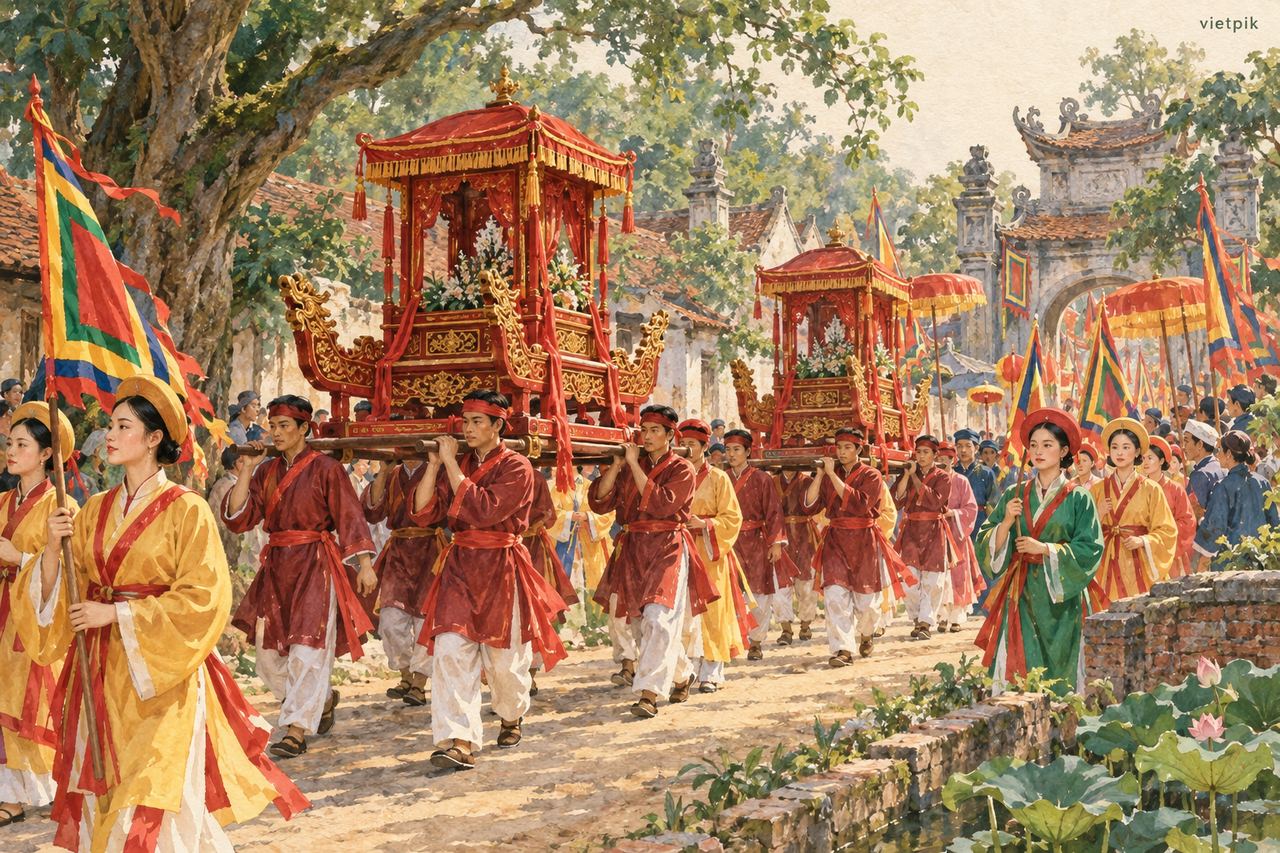
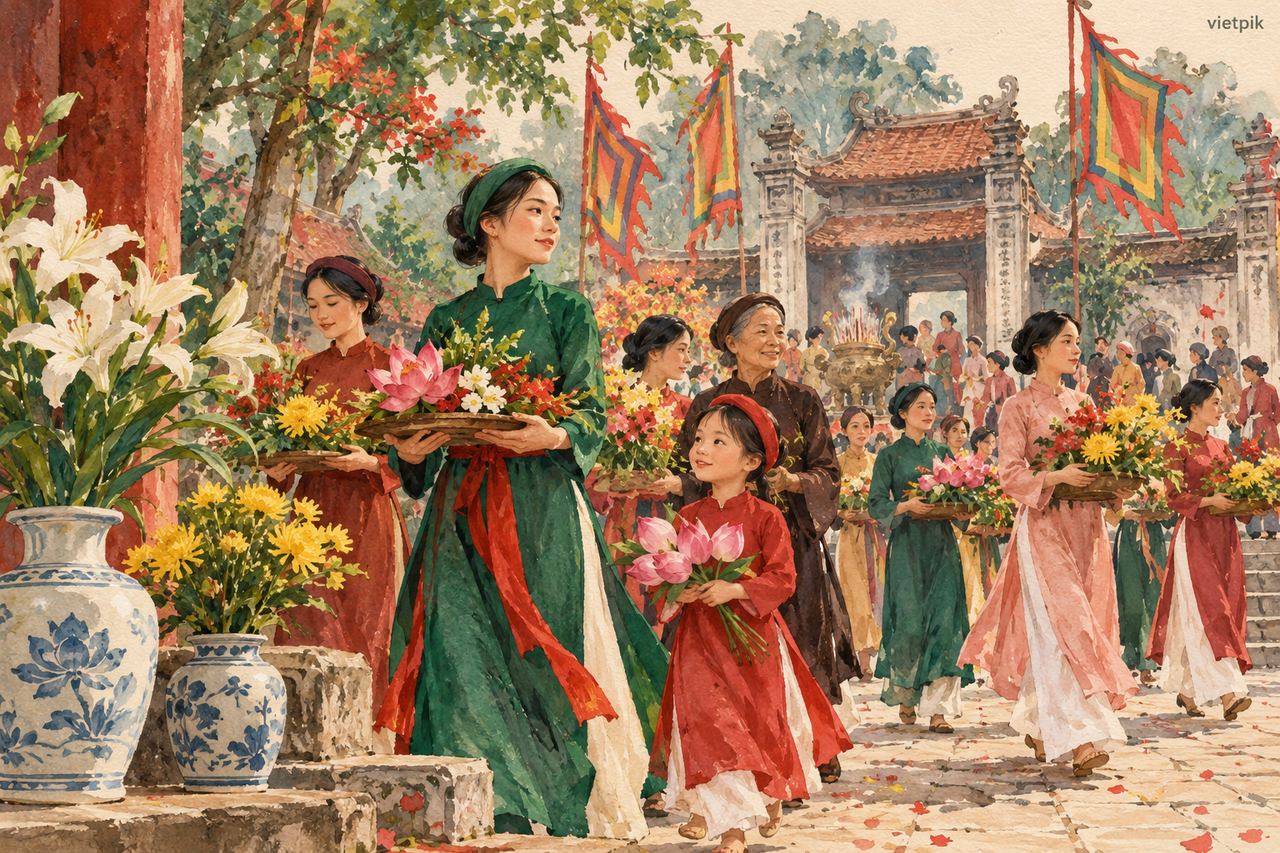
Reporting on the 2026 observances records a procession from the temple to Hạ Lôi communal house before the formal opening. The local account also explains giao kiệu, the changing positions of the sisters' palanquins along the journey. Rather than treating every change of order as a photographic flourish, consider what a route can communicate about kinship, place and honour. Ask an interpreter where a particular movement belongs in the sequence. Do not invent a universal explanation for every turn. The route is a lived relationship between places, and knowing the names of those places helps you follow more than the crowd.
Opening day and earlier rites
For 2026, the publicised festival ran from 22 to 24 February, lunar days six to eight of the first month. The preliminary procession was reported on 20 February, lunar day four. These dates are compatible because they describe different parts of the occasion. They should not be compressed into an incorrect claim that everything began on the opening morning. No official 2027 programme was confirmed in this review of 28 September 2026. Decide whether your interest is the procession, the formal commemoration or another public activity, then verify the matching announcement. The traditional seasonal reference alone cannot supply departure times.
Find a place that lets the procession breathe
Palanquins need more turning room than a line of pedestrians. Select a viewing position that leaves corners and gateways clear, especially where the route narrows. Avoid stepping between groups when one has paused; that interval may be needed for the next movement. A photograph taken from the side can show the relationship between bearers, flags and onlookers without forcing you into their path. If you are watching with an older relative, agree beforehand that a comfortable stationary view is enough. Following every stage is not a measure of respect, and fatigue can make it harder to listen or remain attentive.
Notice women as participants and interpreters
A festival honouring two women is also an opportunity to pay attention to women in the present. Look beyond ornamental details: who organises, explains, carries offerings or accompanies younger family members? These are questions for observation, not a claim that every role is assigned by gender. If someone agrees to speak, ask what the commemoration means to her own family. Avoid assuming that a single answer represents all Mê Linh residents. When sharing photographs, name the activity rather than commenting primarily on appearance. This small editorial choice helps retain the seriousness of participation while allowing the celebration's visual richness to remain visible.
Make a focused family visit
Before leaving, introduce the two names and the location to everyone in your group. On arrival, make one pass through the permitted visitor area to understand the layout, then settle near the activity you have chosen. Keep an exit and a meeting point in mind; a large ceremonial gathering is easier to enjoy when nobody feels obliged to stay in the densest section. Food, transport and rest stops should be arranged around the confirmed programme rather than promised by this guide. If the public ceremony is shorter than expected, use the remaining time to read and discuss instead of searching for an invented extra attraction.
Keep Mê Linh distinct in your memories
Label the destination carefully afterwards: Trung Sisters Temple, Mê Linh, Hanoi. Hát Môn and Đồng Nhân also belong to the wider landscape of remembrance but are not alternative names for this festival. If comparing them later, compare the communities, ritual emphasis and timing rather than ranking which is more authentic. A useful travel note might contain one historical fact, one explained gesture and one question still unanswered. That leaves space for learning while preserving what you actually encountered, and it gives a future visit a clearer purpose than simply repeating the same photographs.