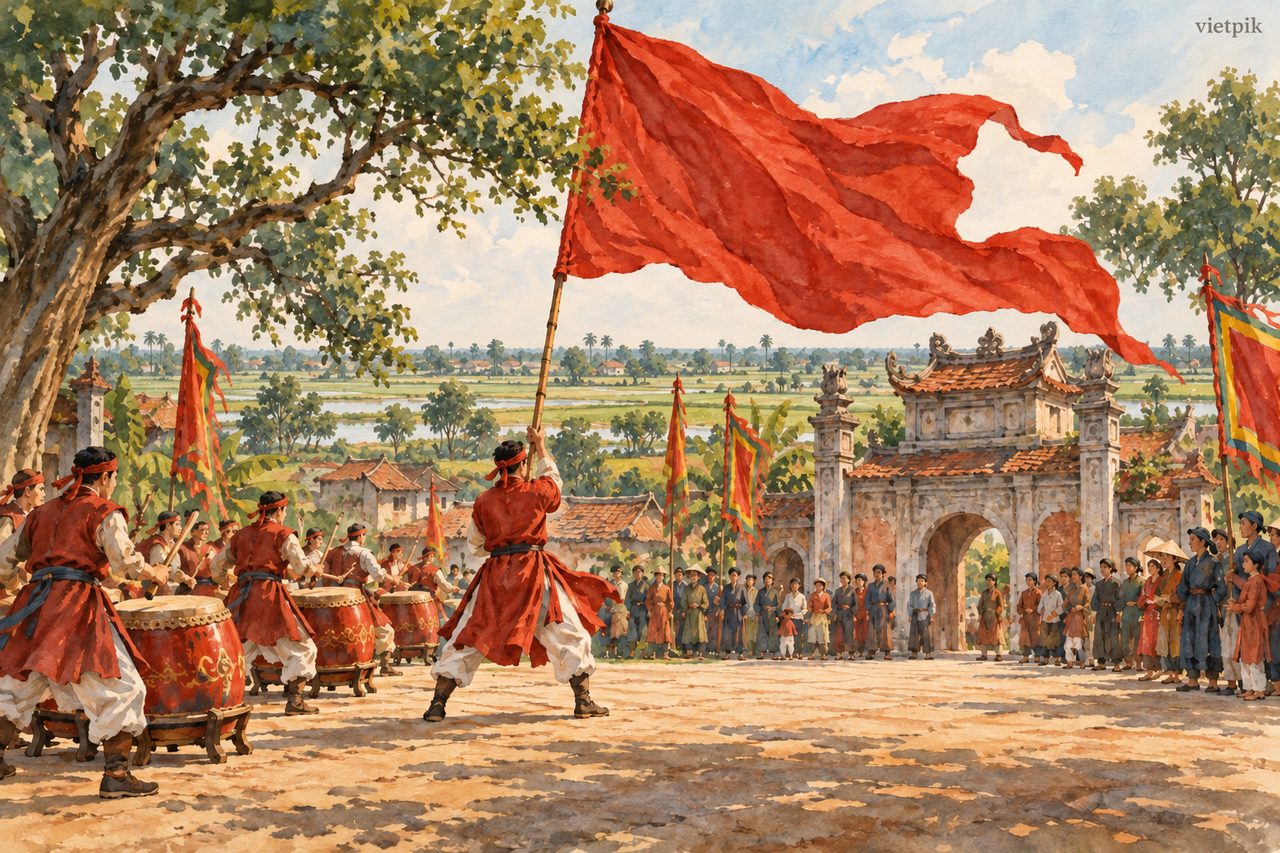
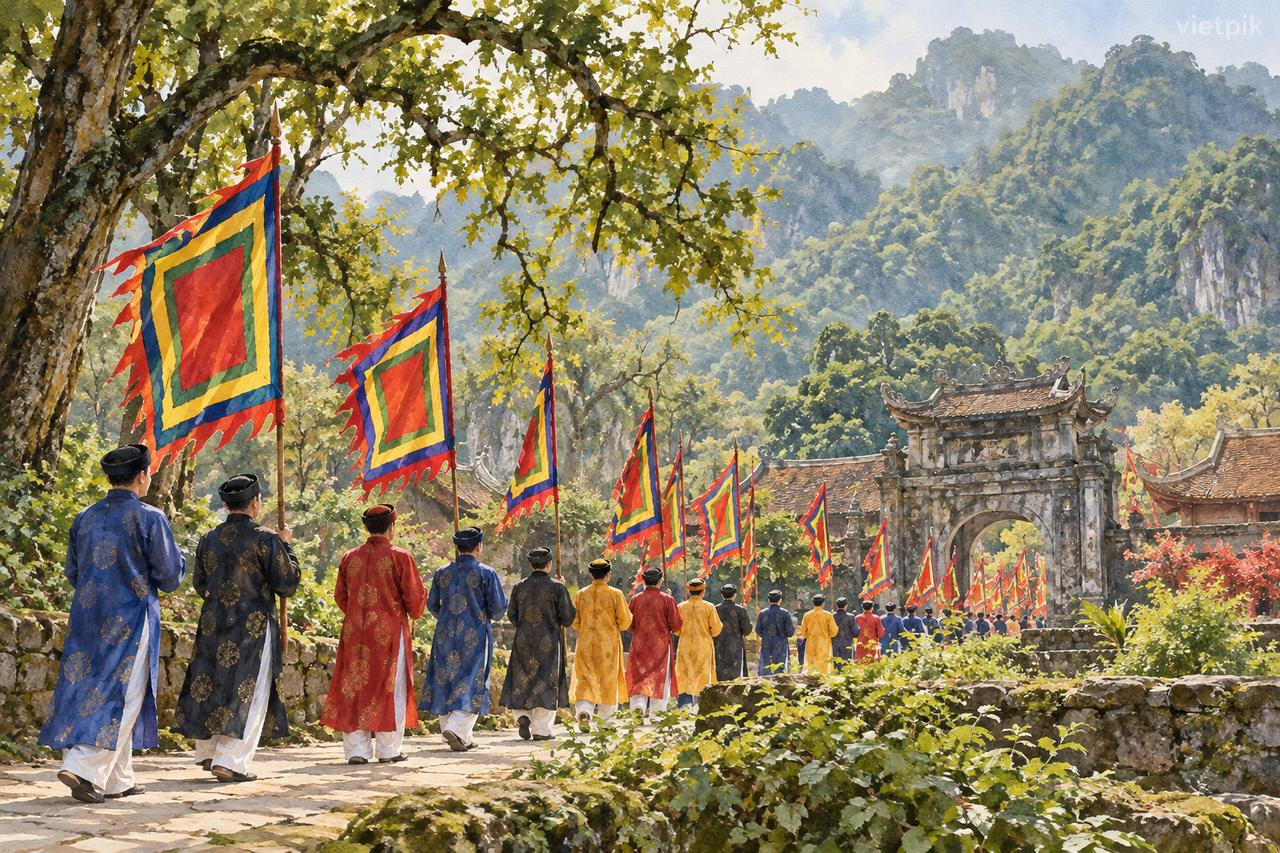
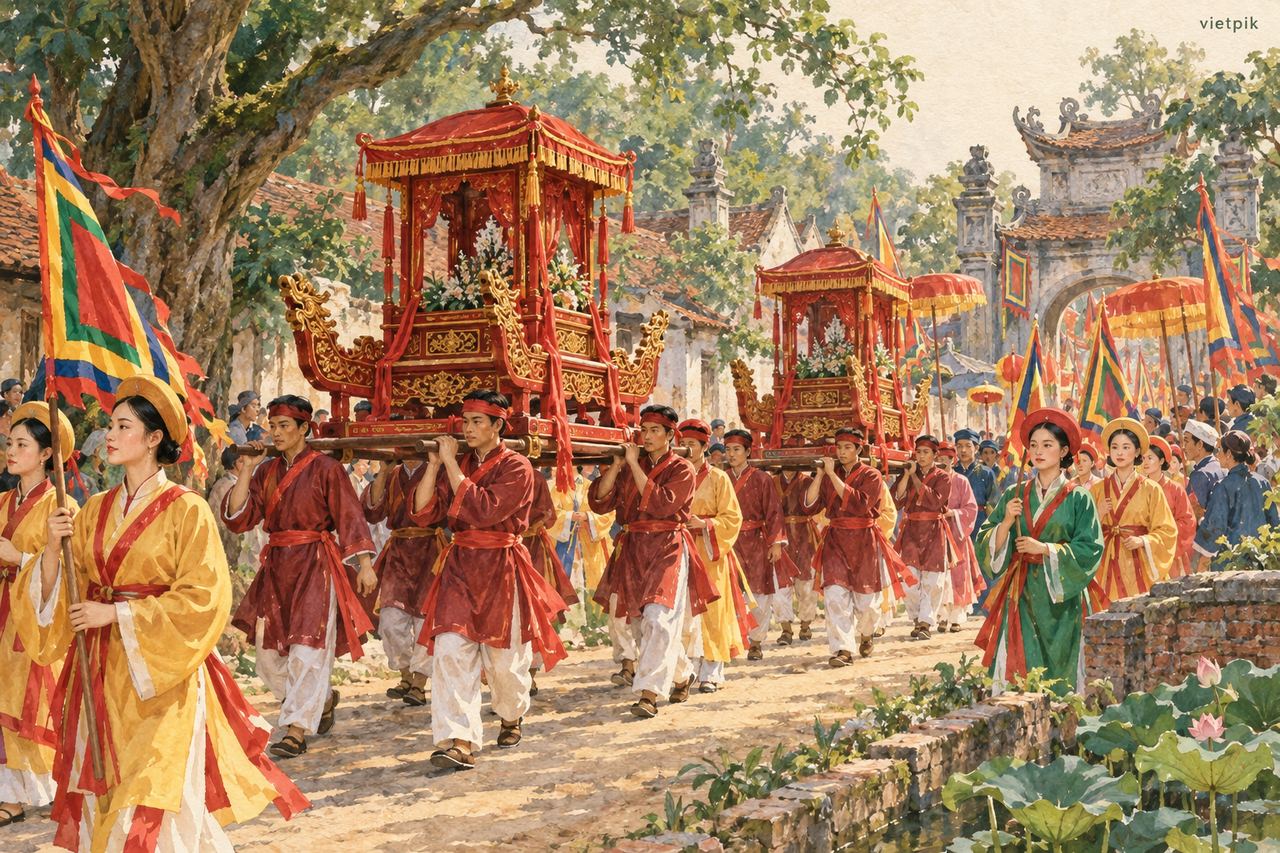
A small offering can hold a large story. At Hát Môn, the festival associated with the Trung Sisters gives bánh trôi a ceremonial meaning that is easy to overlook if you arrive thinking only about local food. The important subject is not a recipe or a tasting stop, but the preparation, presentation and shared remembrance surrounding the cakes. This guide approaches the temple festival through that relationship between everyday materials and collective memory. It also keeps Hát Môn separate from Mê Linh: both honour the sisters, yet each community has its own place, calendar and emphasis. A thoughtful visit leaves room to understand those differences rather than treating the two celebrations as duplicates.
History & story
Hát Môn Temple belongs to the network of places commemorating Trưng Trắc and Trưng Nhị. The local festival's principal remembrance is associated with the sixth day of the third lunar month. Those two facts establish the subject without requiring a visitor to accept every oral account as a documentary record. At the site, listen for how a story is introduced: historical account, temple tradition or family memory. Each category deserves attention, but they should not be merged. Asking who tells a story and how it is passed on often produces a more useful conversation than asking whether a miraculous detail literally happened.
A local chapter in a wider historical memory
Hát Môn Temple belongs to the network of places commemorating Trưng Trắc and Trưng Nhị. The local festival's principal remembrance is associated with the sixth day of the third lunar month. Those two facts establish the subject without requiring a visitor to accept every oral account as a documentary record. At the site, listen for how a story is introduced: historical account, temple tradition or family memory. Each category deserves attention, but they should not be merged. Asking who tells a story and how it is passed on often produces a more useful conversation than asking whether a miraculous detail literally happened.
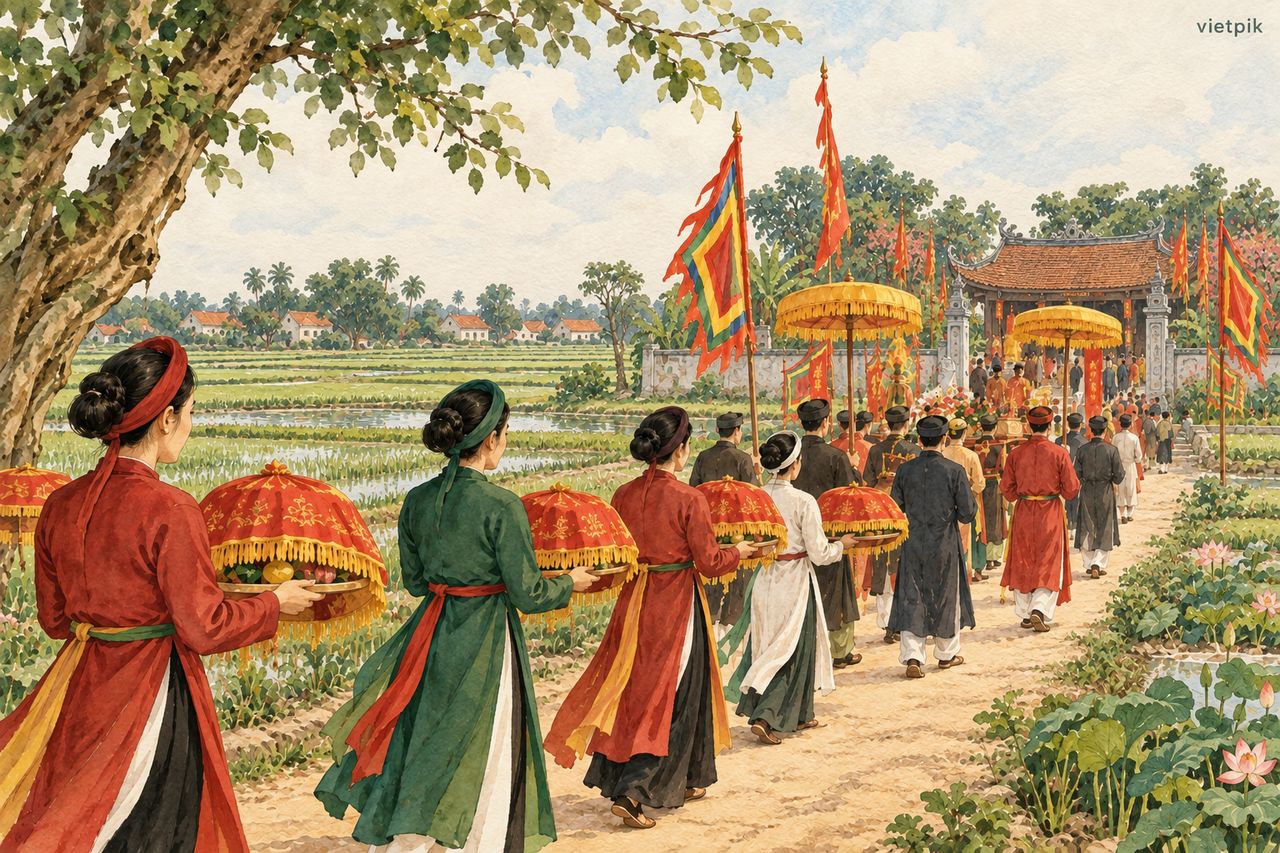
Bánh trôi as an act of offering
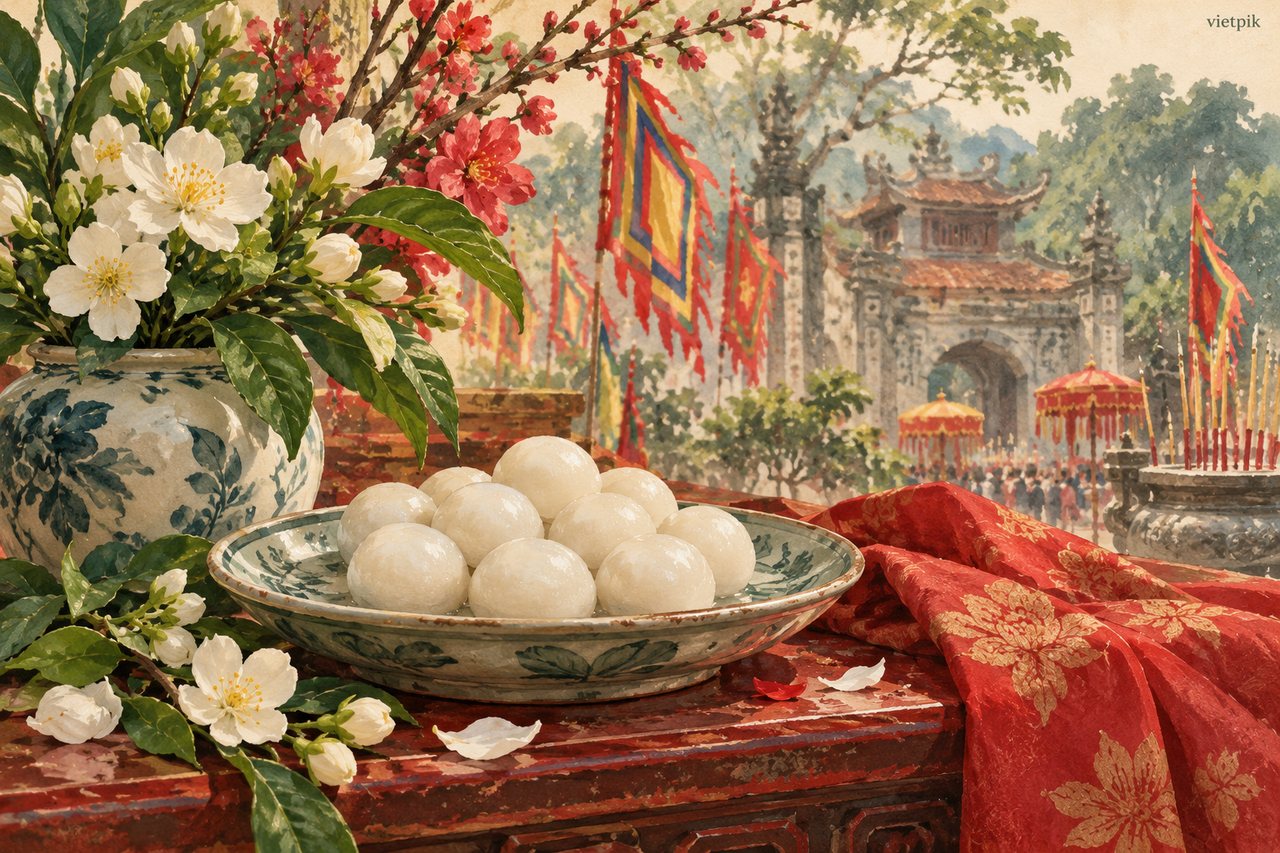
The Hanoi cultural department's account of the 2026 commemoration records offering processions from ten local villages. Earlier cultural reporting explains a local custom of waiting until the offering to the sisters before eating bánh trôi. Read this as a specific community practice, not a rule for every Vietnamese household or for all rice cakes. For a visitor, the distinction changes the approach: watch how the offering is handled before asking about taste. Do not reach for a tray or assume food on display is being sold. If distribution takes place, wait for an invitation and follow the organisers' instructions.
Several occasions, one carefully scoped guide
A February 2026 local notice announced a spring opening on 24 February, lunar day eight of the first month. The cultural department also reported the third-month remembrance and reviewed the season afterwards. These references concern different observances, not competing conversions of one date. This article centres on the traditional third-month commemoration while noting the wider annual activity. As of the review on 28 September 2026, no official 2027 dates are supplied. When contacting the organiser, name the rice-offering commemoration you hope to see. A request for the Hát Môn festival date alone may be too broad to produce the right answer.
Look for care rather than quantity
A tray photograph says little about the work behind it. If observation is permitted, notice how people carry, cover and arrange offerings, and how the group waits before moving. You need not know every ritual term to recognise concentration and coordination. Avoid judging devotion by the apparent size or expense of a contribution. Nor should a visually modest offering be described as an inferior version. A useful question for a willing participant is what needs the most care during preparation. Let the answer determine what you write; do not turn an ordinary ingredient into a claim about miraculous power or guaranteed good fortune.
Give the approach to the temple enough time
Plan to reach the public visitor area before the activity you have verified, leaving a margin for redirected pedestrian access. An offering procession should not have to weave around spectators unpacking bags. Choose one side from which to watch and remain there through the movement instead of repeatedly crossing for a better angle. If travelling as a group, appoint a meeting point outside the ceremonial approach. A person who needs to rest can leave without interrupting everyone else's visit. Arrange meals independently: an offering ceremony is not evidence of a public tasting service, a market schedule or a guaranteed restaurant nearby.
Discuss remembrance through ordinary objects
For families or students, bánh trôi offers an accessible starting point for discussion. Ask how an object changes meaning when it is prepared for a ceremony rather than an everyday meal. What can be learned from the decision to wait, to carry something together or to present it in a particular order? These questions do not require children to adopt a belief or imitate a sacred act. They encourage attention to other people's intentions. Afterwards, compare notes on what you actually saw and what someone explained. Keep unanswered questions open; a festival visit need not end with a complete theory of local religion.
Write about the festival without turning it into a menu
When sharing the experience, keep the temple, the commemorated figures and the act of offering in the frame of your story. A close image of cakes needs a caption explaining why they matter here. If you have not tasted them, do not invent a texture or flavour; if you have, describe only your own serving without claiming a universal recipe. The strongest account may follow the journey of an offering from preparation to presentation. That gives readers something distinctive to understand while leaving both the community's practice and your own limits of observation intact.