Hoa Lu Festival offers a different way to understand the limestone landscape of Ninh Binh. Instead of treating the old capital as a collection of temple courtyards, follow the relationship between a place, the rulers remembered there and the communities that continue to gather. The festival honours Dinh Tien Hoang, Le Dai Hanh and earlier generations associated with the country's foundations. This guide treats the celebration as a living occasion of remembrance. It also separates the established lunar season from the programme of a particular year, so that the desire to see a procession does not turn an old announcement into a booking promise.
History & story
In 968, Dinh Bo Linh became emperor and established Dai Co Viet, with Hoa Lu as the capital. That historical anchor gives the festival a clearer meaning than the vague description of a colourful spring fair. The temples associated with the Dinh and Early Le rulers provide places around which remembrance is organised. For a first visit, read a short chronology before arriving, then look for how names recur across signs, ceremonies and local explanations. This is an invitation to connect visible activity with history, not to assume that every modern performance reproduces a tenth-century court ceremony without change.
1. Start with the capital, not the crowd
In 968, Dinh Bo Linh became emperor and established Dai Co Viet, with Hoa Lu as the capital. That historical anchor gives the festival a clearer meaning than the vague description of a colourful spring fair. The temples associated with the Dinh and Early Le rulers provide places around which remembrance is organised. For a first visit, read a short chronology before arriving, then look for how names recur across signs, ceremonies and local explanations. This is an invitation to connect visible activity with history, not to assume that every modern performance reproduces a tenth-century court ceremony without change.
2. Water gives the procession a direction
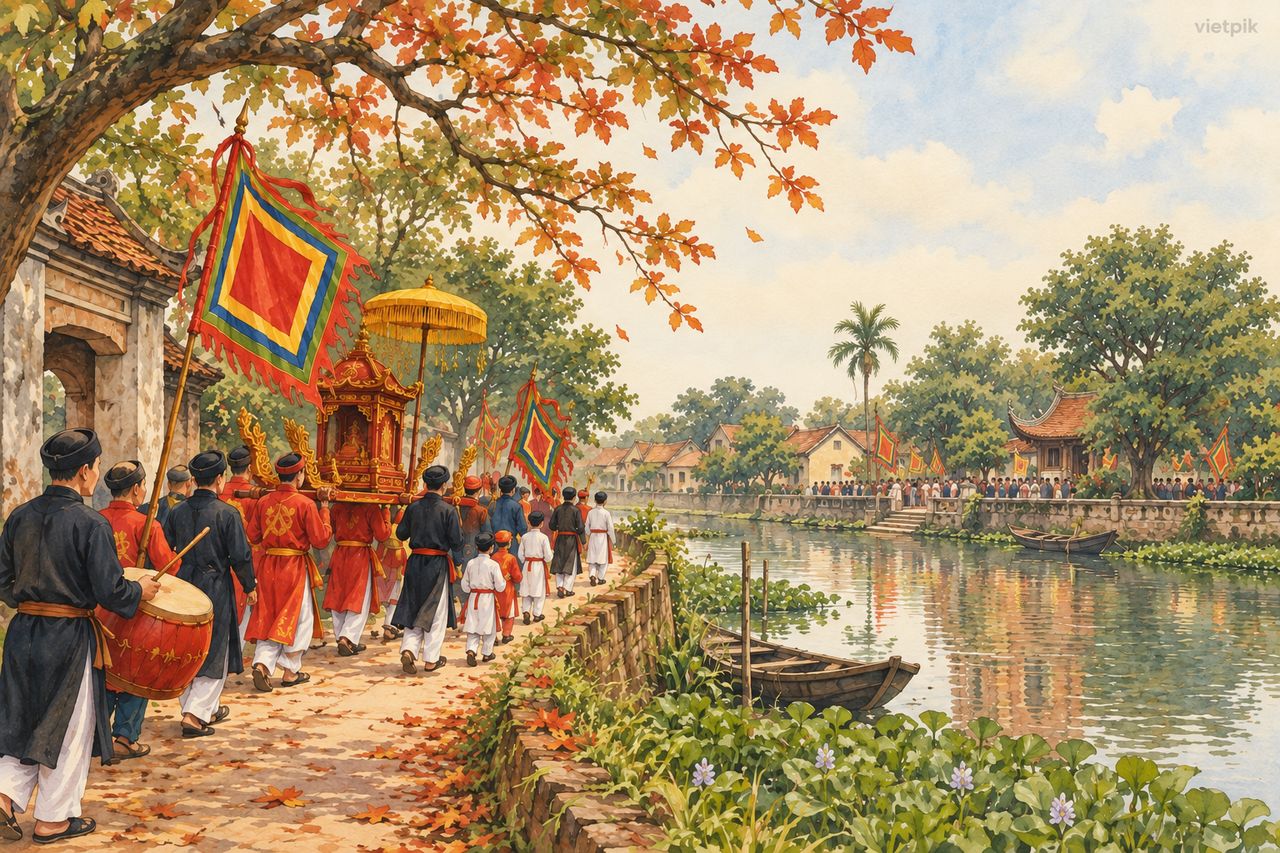
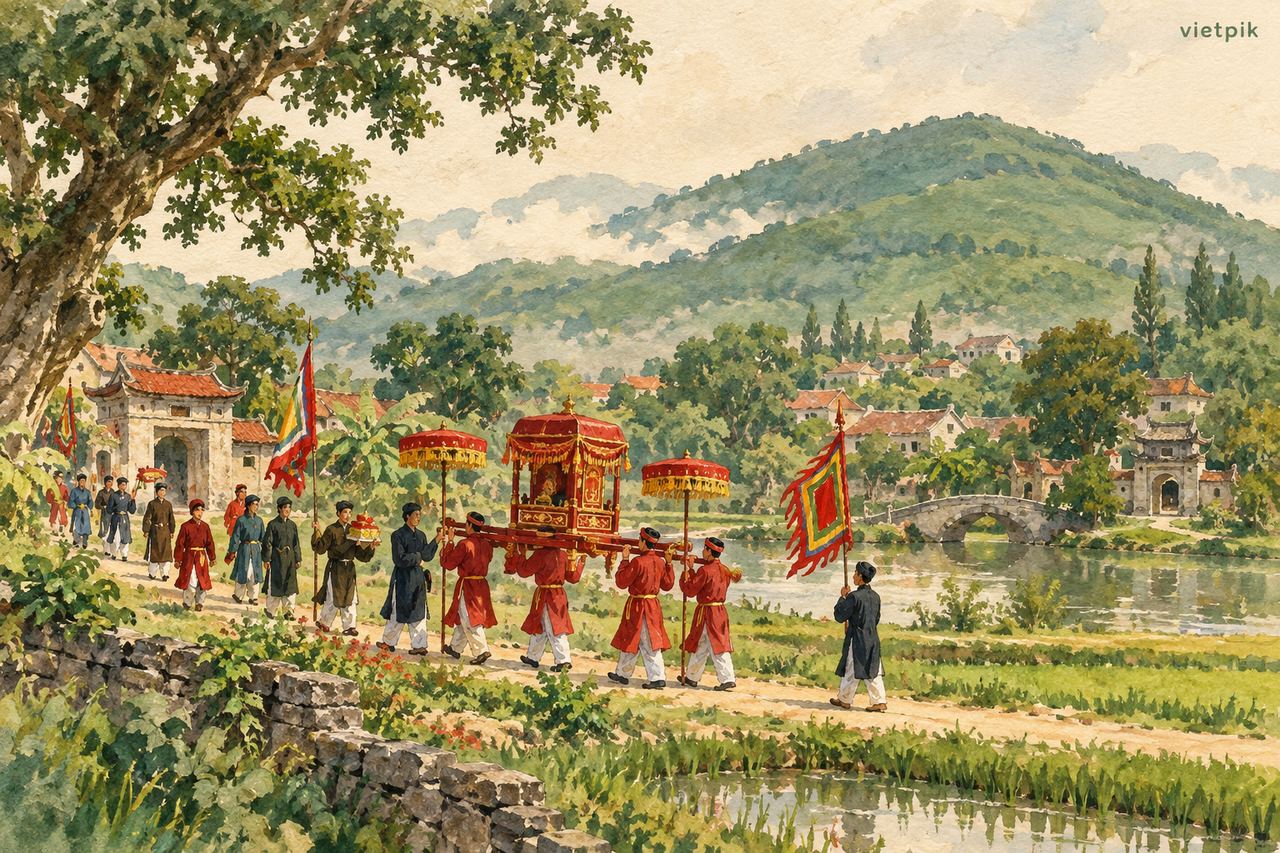
The water procession is one of the festival's distinctive subjects. Local cultural accounts describe water being taken from the river and brought back for temple rites. Rather than viewing the vessels and flags as isolated decorations, notice how a procession links a riverbank with a place of worship. It makes the surrounding environment part of the festival's geography. If the annual programme includes a public viewing section, choose a position before the group reaches you and keep the route open. A patient view from one point can reveal the order of participants more clearly than repeatedly trying to overtake the procession.
3. Keep three kinds of dates apart
The traditional reference is the ninth to eleventh days of the third lunar month. The 2026 edition was announced for 25–27 April, with its opening performance on the evening of 25 April. These are records of that edition, not confirmed dates for 2027. The opening venue may also differ from the temple area used for ritual activities, which matters when arranging a meeting point. For 2027, retain the lunar reference as a research reminder and wait for an organiser's programme before selecting a particular procession or stage event. A calendar conversion alone cannot establish the time, route or public access conditions of a ceremony.
4. Read the festival beyond its opening show
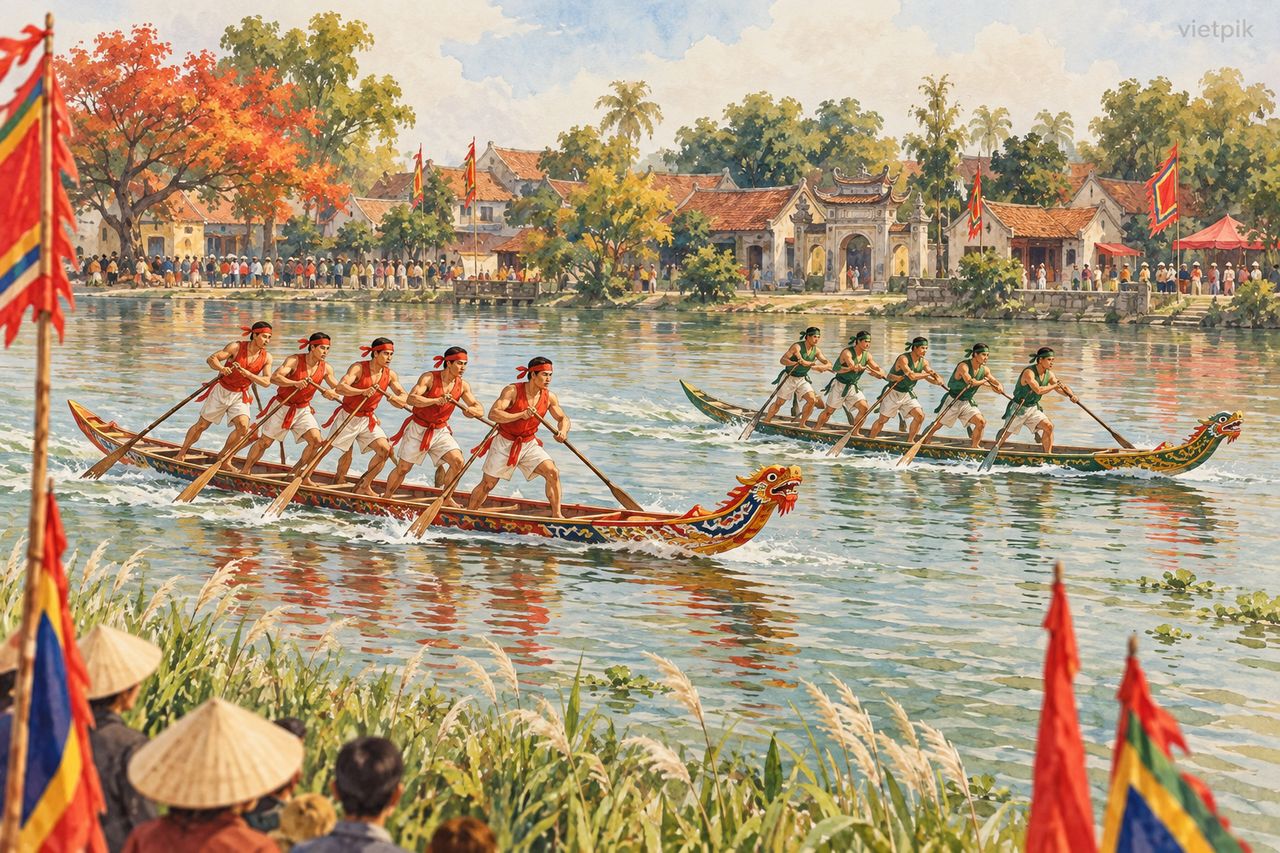
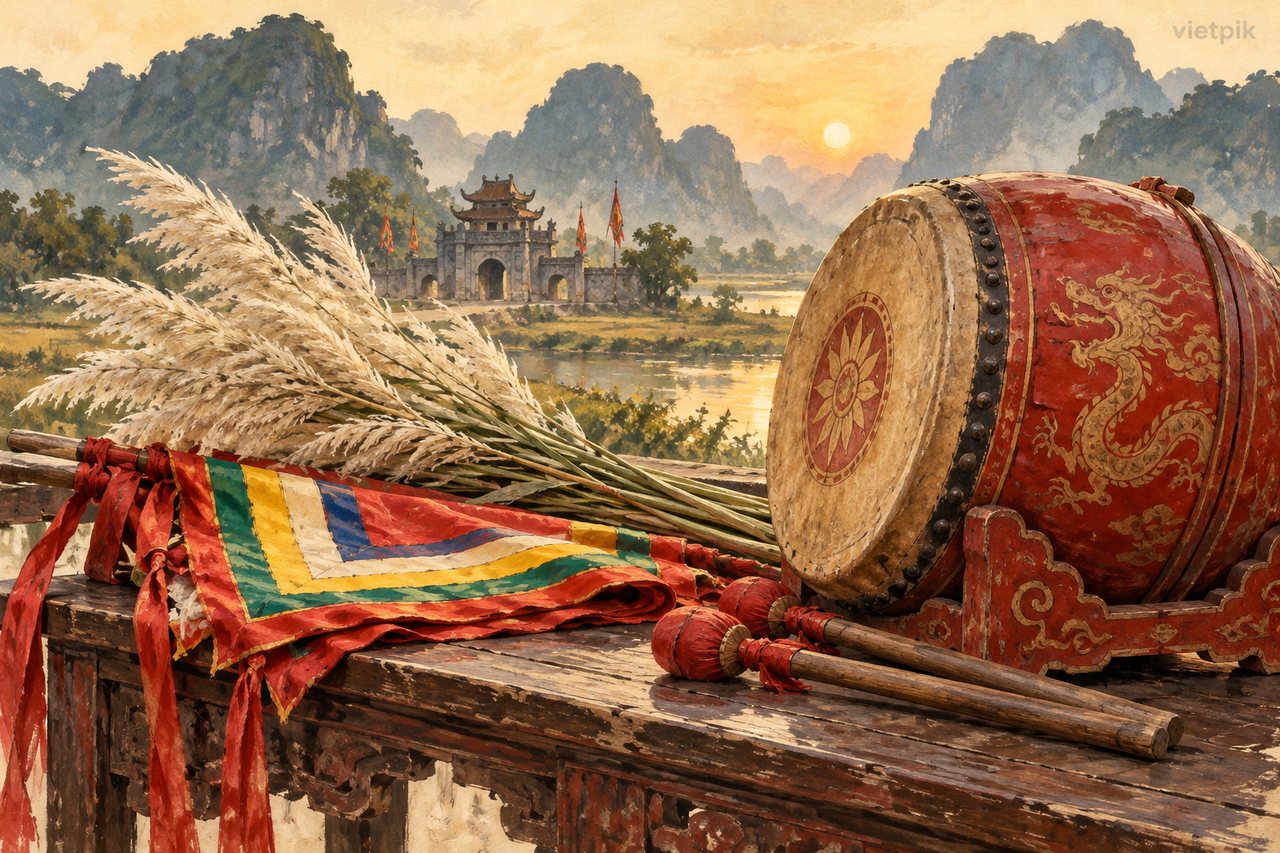
Reed flags evoke the familiar childhood story of Dinh Bo Linh, while drums and ceremonial banners help give public remembrance its visual rhythm. Treat the childhood story as a tradition of cultural memory rather than independently proven detail about every episode. Modern programmes may include folk performance and games, but their selection belongs to each edition. A useful viewing question is what each activity asks people to remember: a ruler, a village relationship, a skill or a shared place. This makes a quieter ceremony or a small performance worth attention even when it lacks the scale of the main stage.
5. Give one ceremony enough time
For a festival-focused day, build the itinerary around one verified activity rather than a long chain of attractions. Arrive with time to identify the public entrance and viewing area, watch that activity, then leave a quieter interval for reading the temple interpretation. If you also want a landscape excursion, make it optional instead of attaching it to an inflexible departure. Moving between a performance square and the historical complex can take longer when access arrangements change. No transfer time or transport price is promised here. The practical aim is to prevent a tightly packed sightseeing list from consuming the very ceremony you came to understand.
6. Photograph relationships, not interruptions
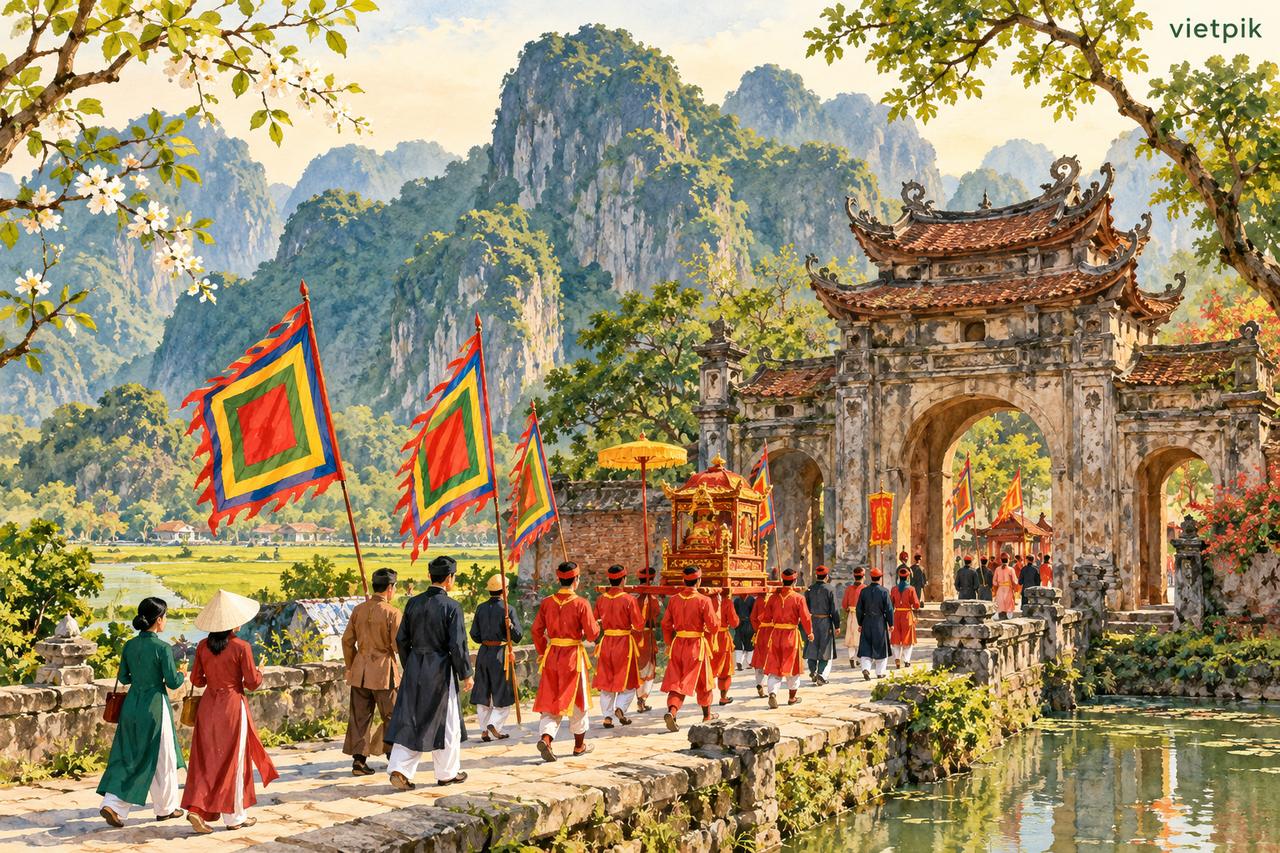
A wide photograph can show the relationship between a temple gate, a procession and the limestone setting without requiring you to step into a ritual space. Ask before taking a close portrait, especially when a participant is concentrating on a formal role. Avoid placing bags on architectural details or using a threshold as an improvised tripod support. For a family group, agree on an easily described meeting point outside the flow of people. Children can look for recurring colours or listen for changes in drum patterns; they do not need to enter restricted areas to have a meaningful festival experience.
7. Leave with a more precise memory
After the visit, identify the ceremony and place in your notes before posting photographs. A caption saying which part of Hoa Lu you observed is more useful than calling every scene the opening festival. Record the year and distinguish a personal impression from information supplied by a guide. If planning ahead, check the provincial tourism portal for the next programme and use its venue names in transport discussions.