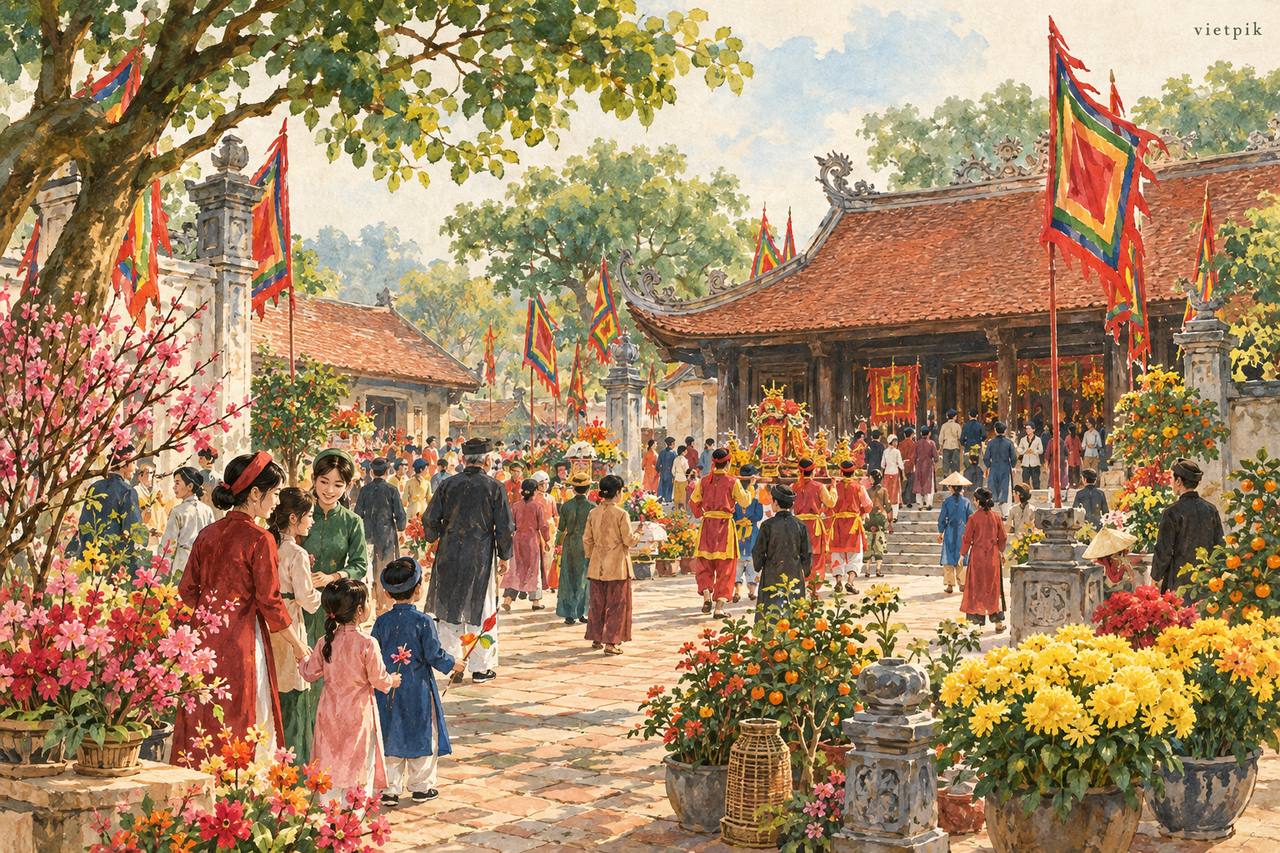
Láng Pagoda Festival is best understood as a route of relationships rather than a single performance in one courtyard. Its worship of Zen master Từ Đạo Hạnh connects pagoda spaces, community roles and processional memory in an area now surrounded by dense Hanoi development. The national heritage description provides a traditional framework, while reporting on the 2026 edition gives a dated programme that cannot simply be copied into 2027. This guide therefore focuses on how to read the route, the people maintaining it and the difference between an annual lunar reference and a confirmed modern schedule.
History & story
The festival honours Từ Đạo Hạnh within a layered religious and local tradition. Stories about his life should be presented as historical record, religious narrative or legend according to the source, not blended into one biography. At Láng, the saint's story is distributed across places rather than contained in a single building. This suggests a useful reading of the festival: movement joins episodes of sacred memory. A visitor need not accept every miraculous account literally to understand why those links matter. Ask which connection a particular procession expresses, and keep the answer attached to that community's account. Láng should also remain distinct from the festival at Chùa Thầy, even though Từ Đạo Hạnh is important to both.
Từ Đạo Hạnh across connected places
The festival honours Từ Đạo Hạnh within a layered religious and local tradition. Stories about his life should be presented as historical record, religious narrative or legend according to the source, not blended into one biography. At Láng, the saint's story is distributed across places rather than contained in a single building. This suggests a useful reading of the festival: movement joins episodes of sacred memory. A visitor need not accept every miraculous account literally to understand why those links matter. Ask which connection a particular procession expresses, and keep the answer attached to that community's account. Láng should also remain distinct from the festival at Chùa Thầy, even though Từ Đạo Hạnh is important to both.
The coordination behind a palanquin
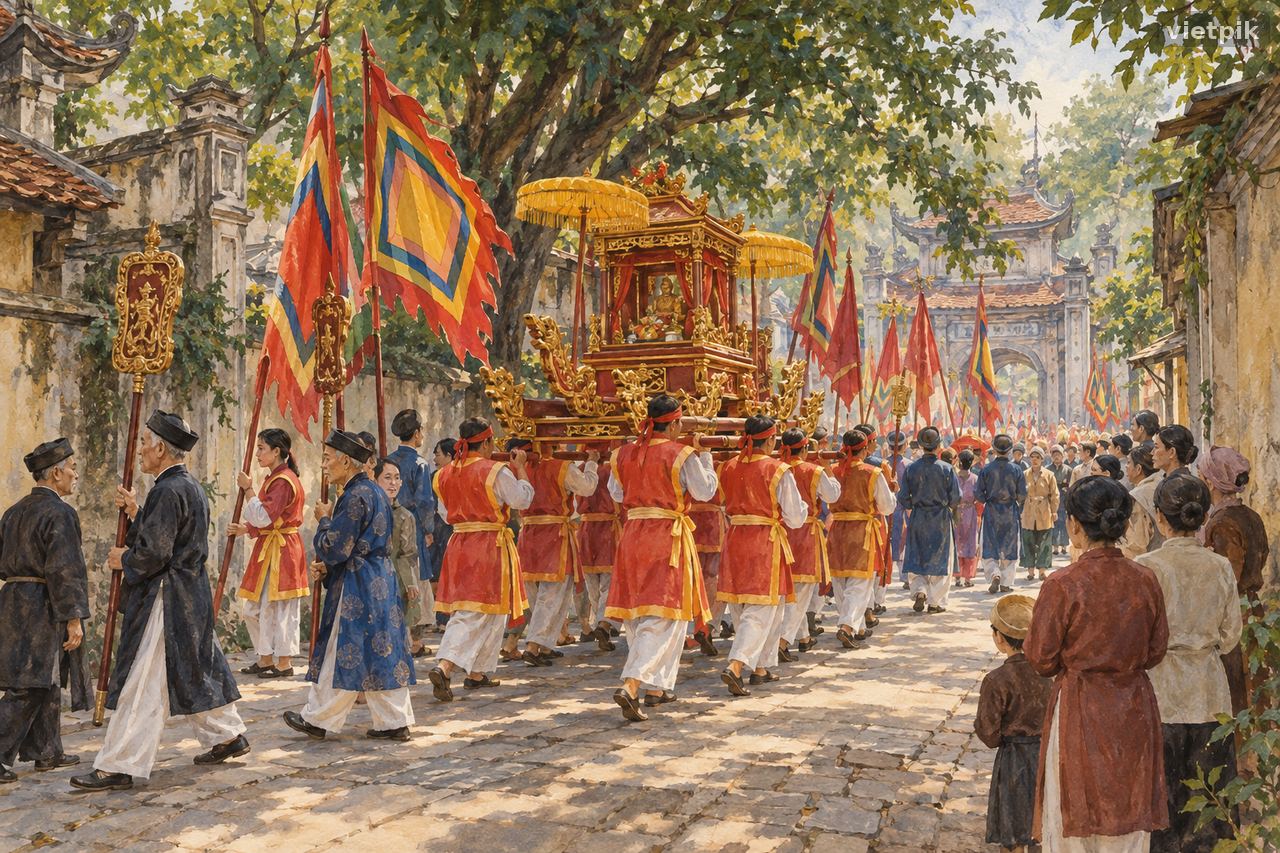
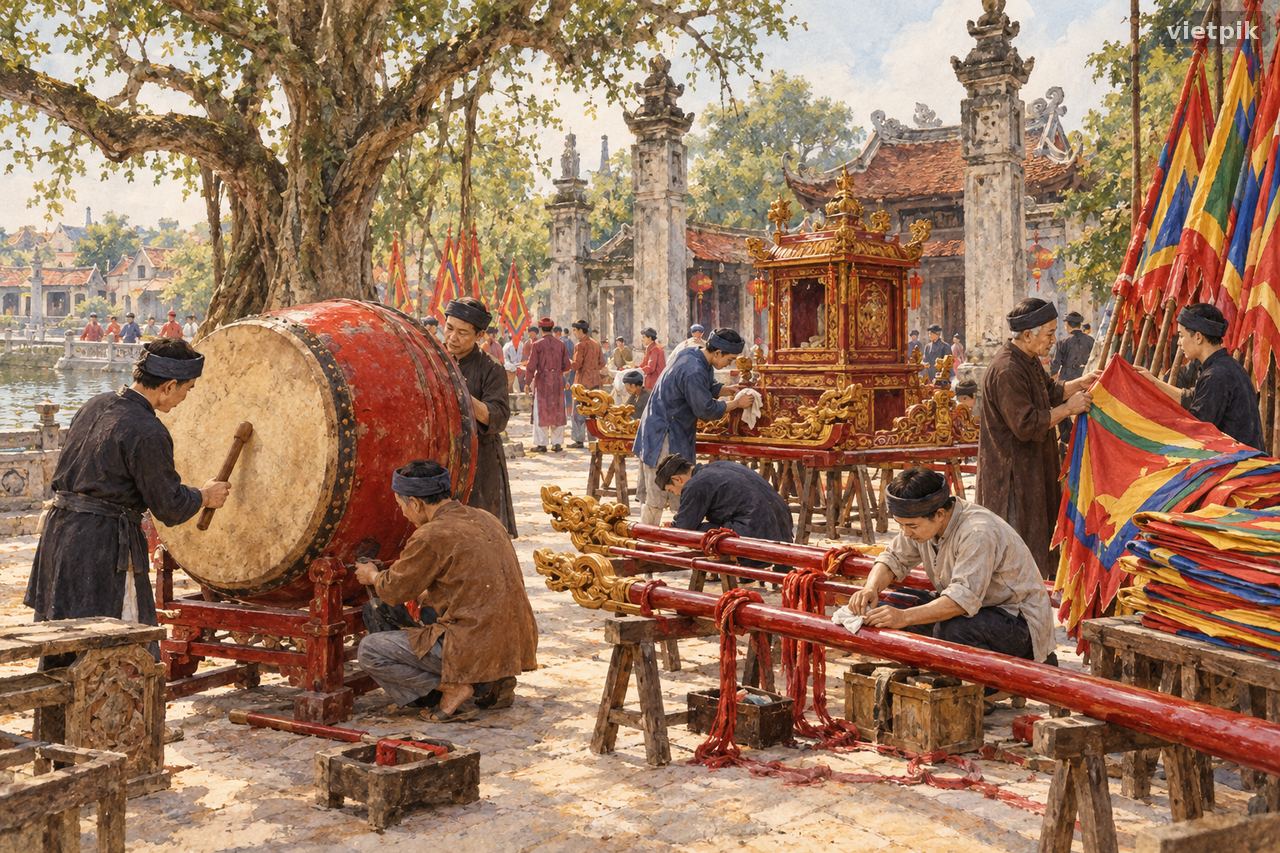
The heritage entry describes teams for palanquins, music, flags and other tasks. Their coordination shows that the procession depends on trained community work long before visitors arrive. A palanquin team is not simply a group carrying weight. Turning, stopping and resuming require people to act together, while musicians and flag bearers help give the movement a public shape. The heritage inventory's division of responsibilities provides a way to look beyond the central shrine. Notice how the work is shared without assuming that every costume identifies a rank you already recognise. Watching a change of pace can reveal preparation that would otherwise disappear behind the finished spectacle.
Lunar framework and a dated edition
The heritage description gives lunar days five to eight of the third month; the 2026 edition ran 22–24 April. These two frames should remain separate until a 2027 announcement exists. The difference between an inherited lunar framework and one year's announced duration is especially useful here. A connected rite at another worship place may sit just outside the main public programme. That does not make either notice incorrect. Keep the name of the venue beside each date, and distinguish the principal day from preparation. For 2027, no full route or event duration is promised in this guide; an old photograph of a large procession is not a timetable for its return.
The remembered Tô Lịch landscape
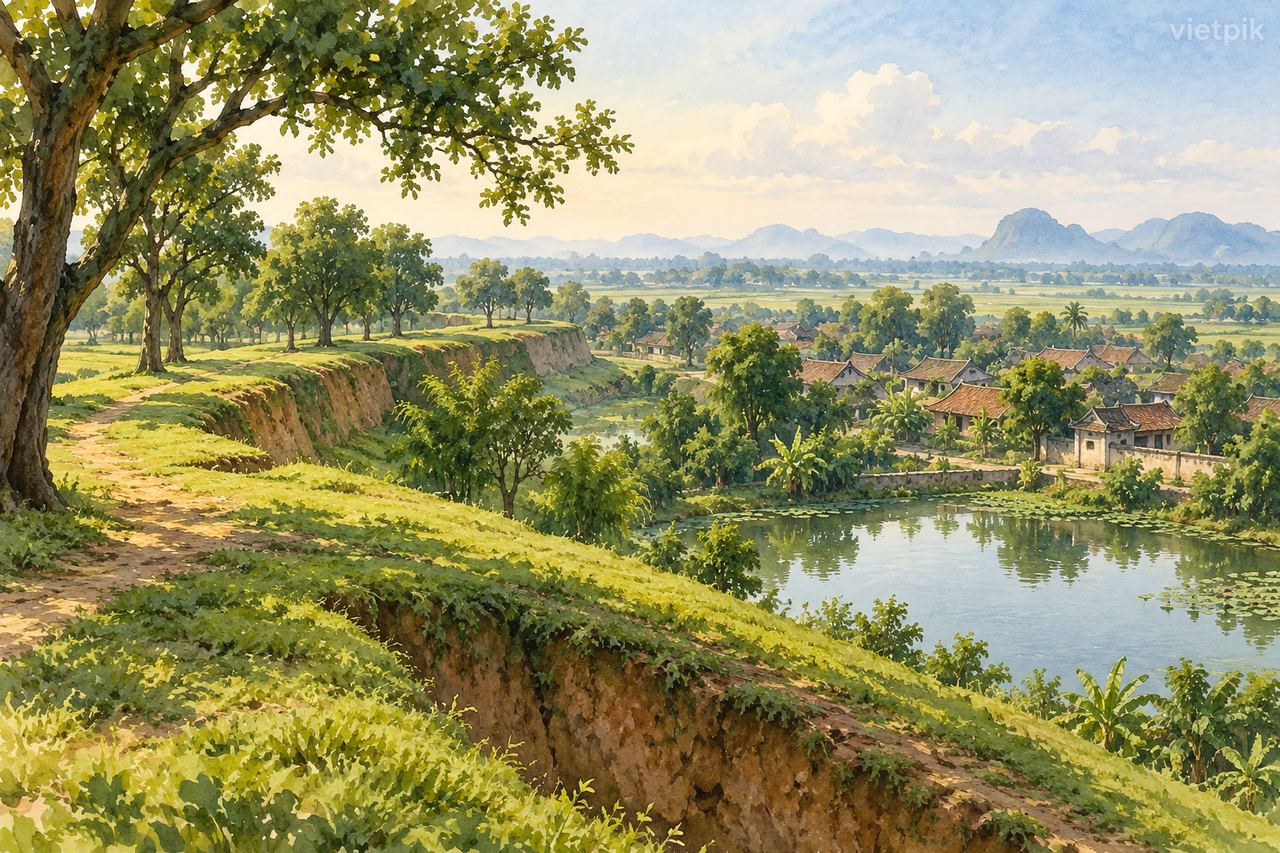
An urban watercourse and connected sites appear in accounts of the route. Do not assume an old path remains continuously open or identical after modern street changes. Accounts of the Tô Lịch relationship invite visitors to think about how water once organised movement and sacred geography. Present-day streets can obscure that relationship, so a modern map alone may not explain an inherited ritual description. Compare the account with publicly accessible viewpoints, without attempting to recreate a river crossing or enter closed land. The interesting question is how the community remembers connections through a changed city, not whether a traveller can repeat every stage of an old description.
Choosing one segment of the route
Choose one confirmed segment, arrive early and identify an exit that does not cross the procession. This is more realistic than trying to follow every stage through crowded streets. If a procession route is announced, mark one arrival point and one place to leave rather than trying to chase the palanquin. At a junction, stand far enough back to see the turn; at a stop, avoid the space into which the team must settle. Companions who want a quieter visit can agree on a later meeting near the pagoda. These choices allow different interests within one group without making the moving ceremony negotiate around a group of lost spectators.
Listening within a working pagoda
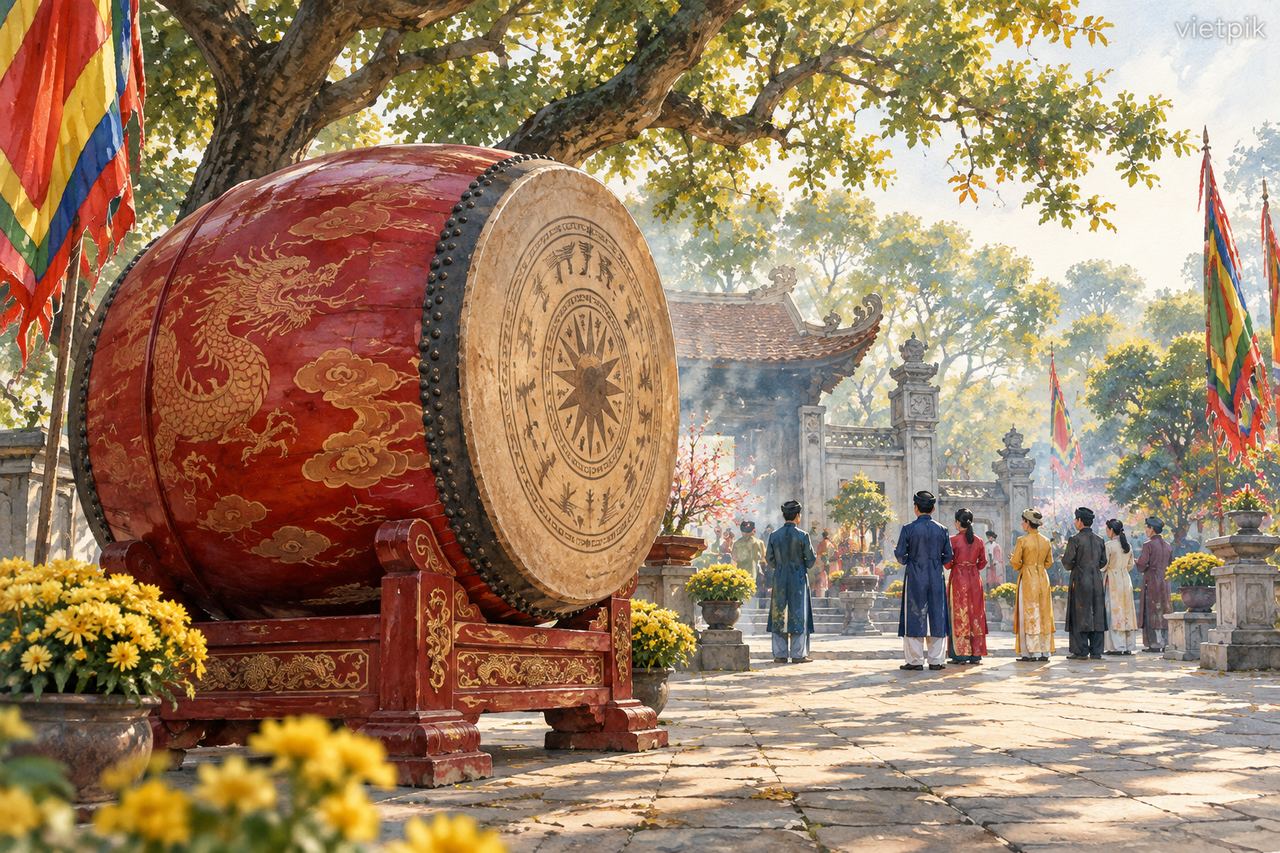
The pagoda remains a place of worship during the festival. Conversation, filming and drone-like overhead ambitions should yield to instructions from custodians and volunteers. Sound is worth attending to as carefully as the route. A drum, a spoken direction and a quiet passage of worship serve different purposes, even when they occur close together. Recording continuously can flatten those changes into background noise. If recording is permitted, choose a short passage and note what was happening at the time. Do not label all music as a single genre or add a religious interpretation to an unfamiliar gesture merely because it appears solemn.
Following the story through a changing city
Afterward, map only the places actually verified. A careful route note can preserve relationships without pretending that a festival-day movement is an everyday tourist circuit. A satisfying account of Láng can connect a remembered life, a sequence of places and the labour of carrying a tradition through today's streets. It need not catalogue every legend or reproduce a heritage dossier. After a visit, separate a route you followed from a route described by a source, especially if access changed. That distinction allows the story to be both personal and useful, while respecting the community's authority over ritual details that may not have been visible to outsiders.