At many village festivals, wrestling is one attraction among several. Lieu Doi asks the visitor to reverse that order: begin with the wrestling itself and read the surrounding celebration through it. In the former Ha Nam area, now Ninh Binh, the festival brings physical skill into the work of community remembrance. It can interest a sports enthusiast, a family or a traveller curious about how a village expresses its identity. None needs to know every technique in advance. Patience, attention to the opening context and respect for the boundary of the arena are better starting points than chasing the most dramatic fall.
History & story
The national tourism introduction identifies the festival with Thanh Ong, a revered figure of the Doan family associated in local tradition with martial prowess and resistance to invaders. Treat that association as community memory, rather than converting every legendary detail into a dated biography. The important relationship for this visit is between a remembered protector and a skill people continue to practise. Ask how the festival makes respect visible through movement and conduct. This leads to a richer reading than assuming that a wrestling contest is simply a modern tournament placed beside an unrelated shrine.
1. Understand the figure being remembered
The national tourism introduction identifies the festival with Thanh Ong, a revered figure of the Doan family associated in local tradition with martial prowess and resistance to invaders. Treat that association as community memory, rather than converting every legendary detail into a dated biography. The important relationship for this visit is between a remembered protector and a skill people continue to practise. Ask how the festival makes respect visible through movement and conduct. This leads to a richer reading than assuming that a wrestling contest is simply a modern tournament placed beside an unrelated shrine.
2. The opening is part of the meaning
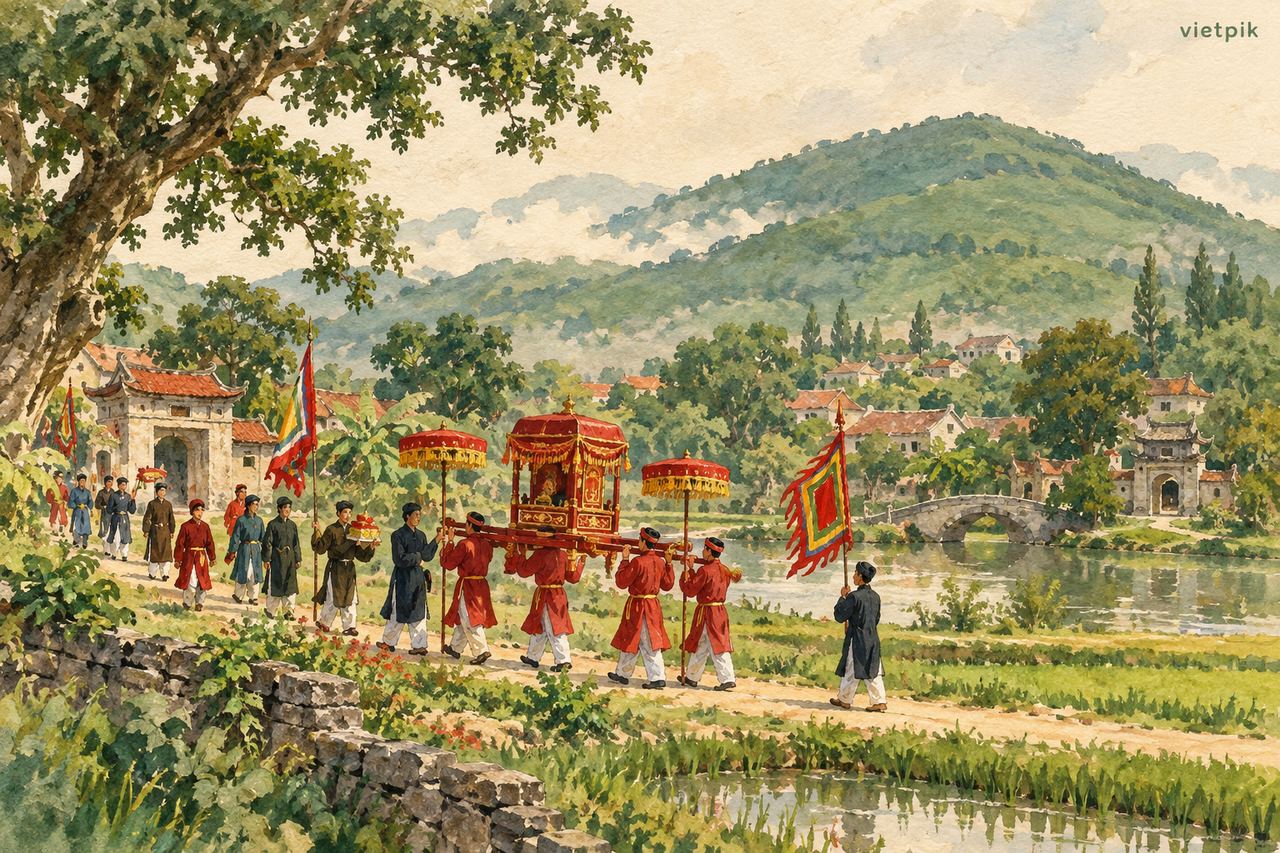
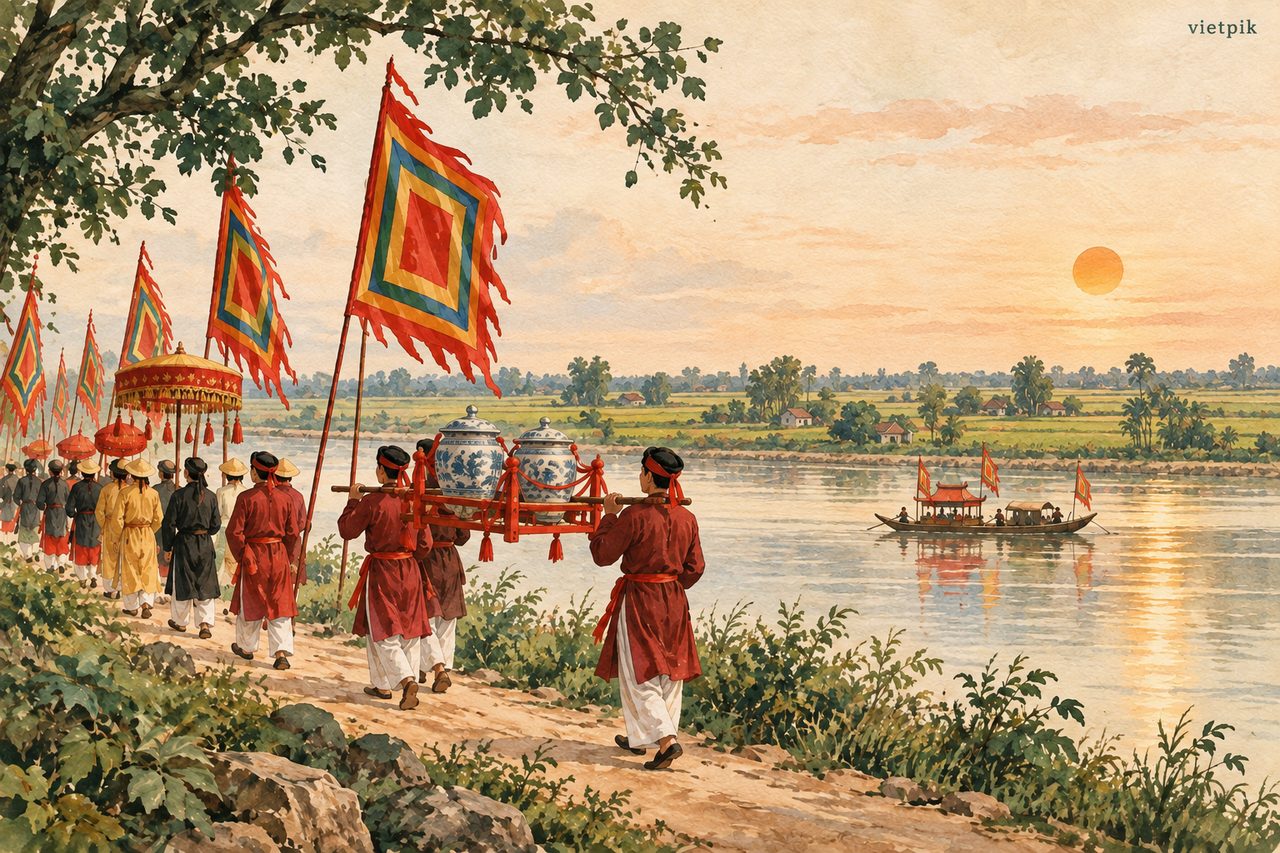
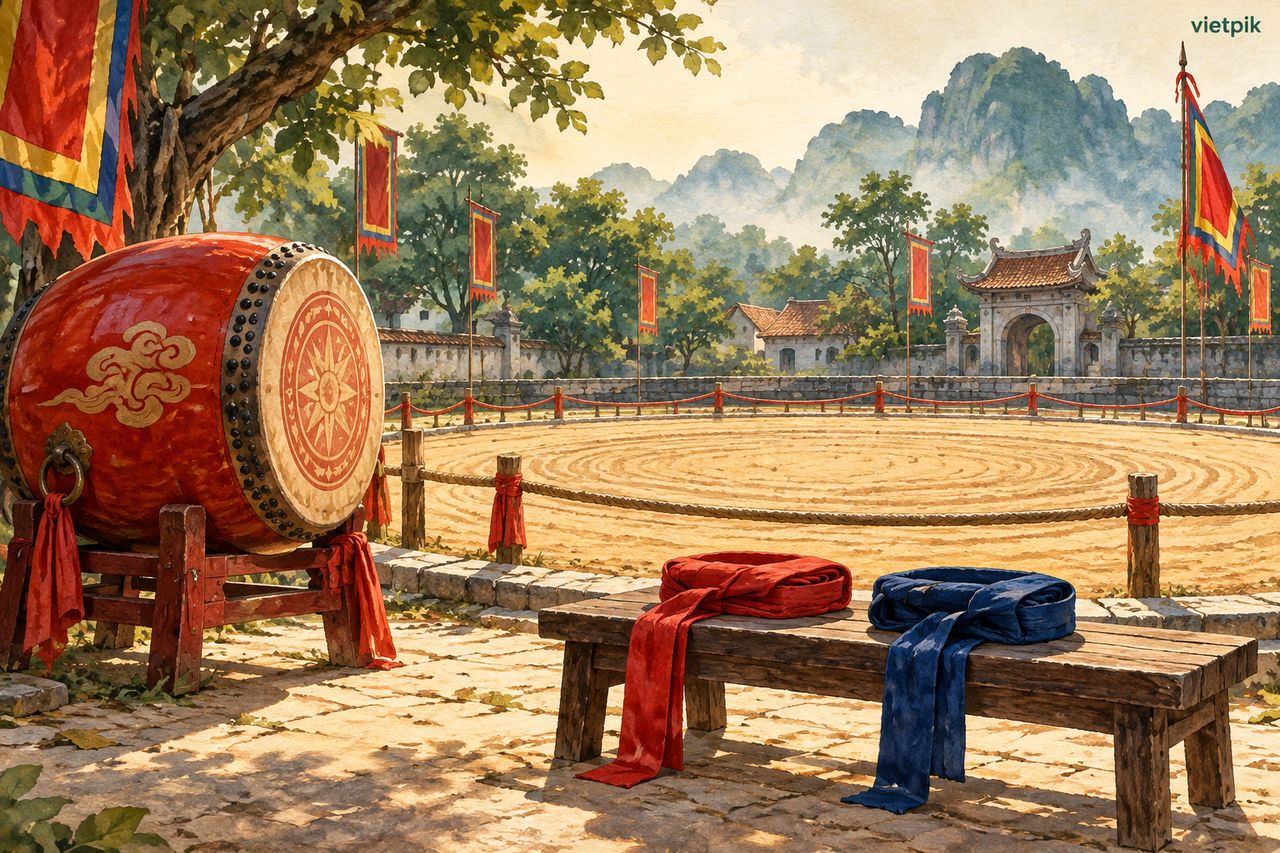
Heritage descriptions mention an opening sequence involving the saint's procession, fire, a sword and a ceremonial sash before bouts begin. These details show why arriving only for the loudest contest may miss the festival's framework. They are not a promise that every edition presents an identical sequence for the public. If the opening is accessible, watch how objects and roles establish attention before bodies enter competition. An observer does not need to reproduce the ritual or claim expert interpretation. Recognising that a transition has been marked is already a useful way to distinguish ceremonial beginnings from sporting action.
3. Use the lunar season as a lead
The national tourism listing and the sports authority's 2020 article give the fifth through tenth days of the first lunar month as the customary festival period. That information identifies a season, not an approved 2027 tournament schedule. At the review on 28 September 2026, the coming edition's bout list, opening time and public access arrangements had not been verified. Before travelling specifically for competition, look for an announcement naming Lieu Doi and the year. A video uploaded during Tet can be older footage, and its upload date alone cannot establish when the filmed contest took place.
4. Watch balance before watching victory
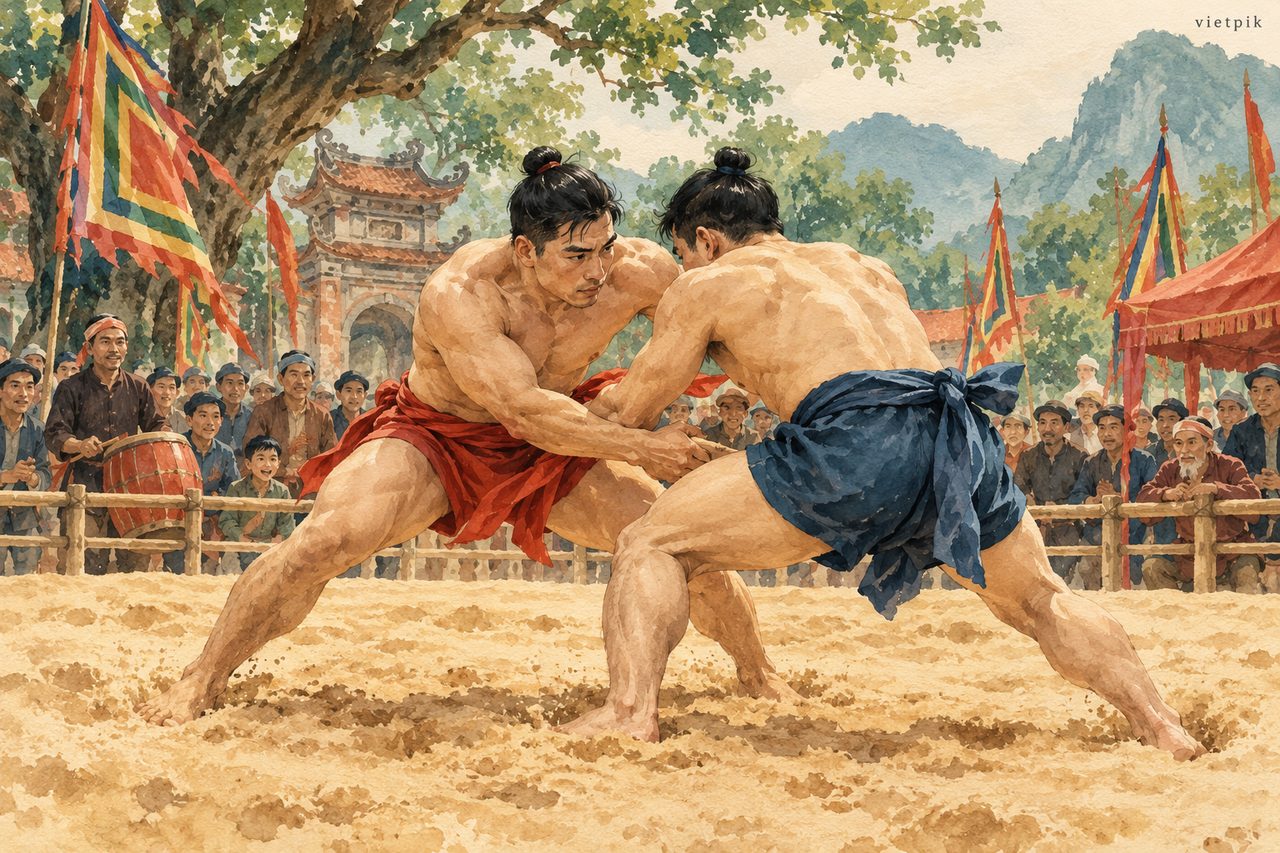
For a first encounter with wrestling, choose one exchange and watch the feet before looking for the finish. Notice how a participant tests distance, changes weight and responds when the opponent moves. This is a viewing exercise, not technical instruction or an assertion about the event's scoring rules. Listen for the referee and ask a knowledgeable organiser about the rules of that edition rather than applying rules from television wrestling. The apparent pause between movements can be as informative as a sudden action. It allows spectators to appreciate judgment and restraint, qualities easily overlooked when every bout is reduced to its winner.
5. The arena belongs to the participants
The best photograph is not worth stepping into a competitor's space. Keep bags, tripods and children outside the arena boundary and avoid leaning across a barrier when an exchange approaches the edge. A long view can show the relationship between competitors, officials and spectators without making anyone perform for the camera. If you want to speak with an athlete, wait until they are away from active duties and ask whether it is convenient. Spectators can contribute to the atmosphere through attention and fair encouragement; they do not need to become unsolicited coaches or challenge participants to prove their strength.
6. Make the visit useful for younger viewers
For children, set a small observation challenge: find a moment when waiting matters, or notice how an official stops and restarts attention. Afterwards, ask them to describe what happened before asking who won. This shifts the conversation towards patience, agreement and the difference between a contest and an uncontrolled quarrel. Avoid asking a child to imitate a hold beside the arena. A festival is not a supervised lesson unless organisers explicitly provide one. If a young viewer becomes tired or overwhelmed, leaving during a suitable pause is reasonable; understanding one bout is better than enduring many without attention.
7. Remember a skill in its own place
Use the complete name Lieu Doi when sharing a photograph or recommendation. A generic caption about northern village wrestling erases the particular community whose festival you attended. Note whether your image shows a ceremonial opening, an actual contest or a quiet preparation scene. A careful record can preserve both excitement and context, allowing the memory of physical skill to remain connected to the people and place that give it significance.