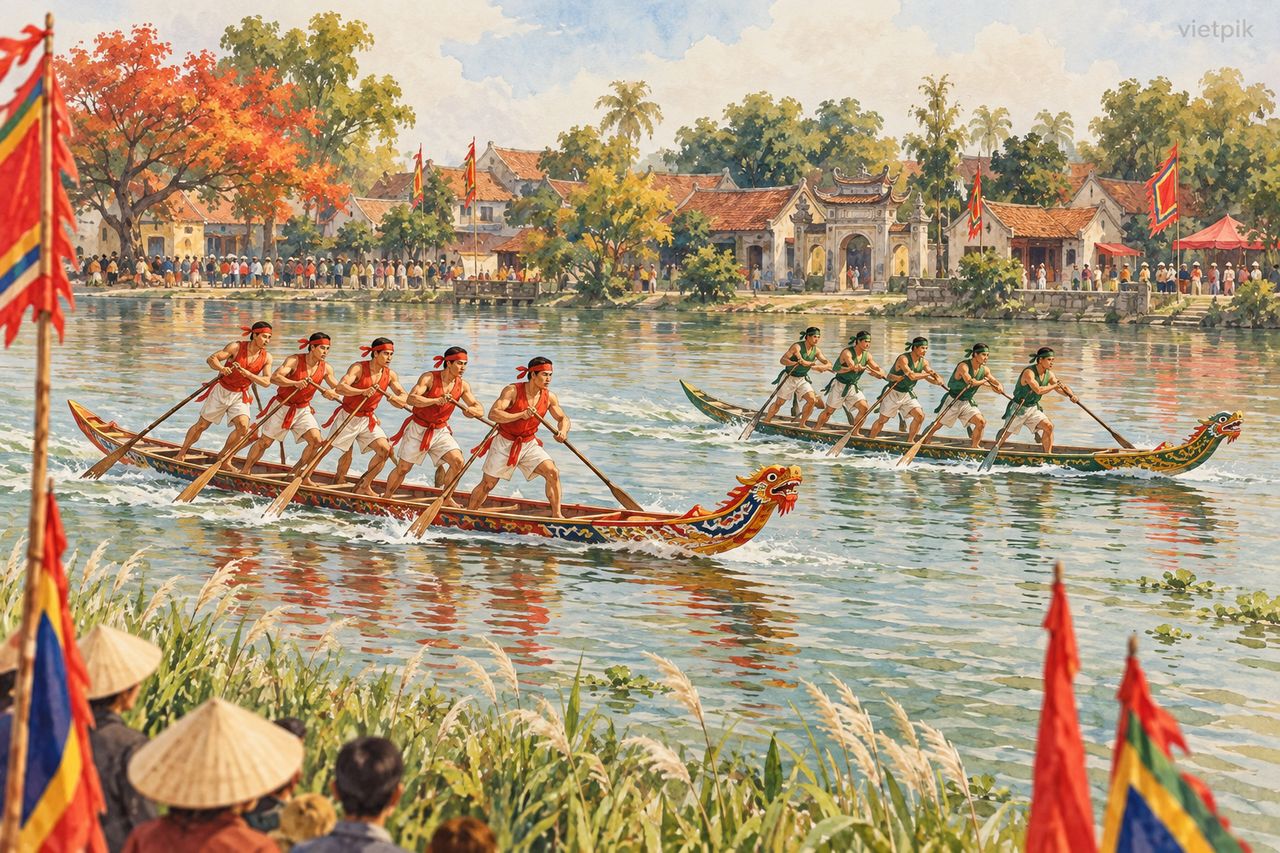
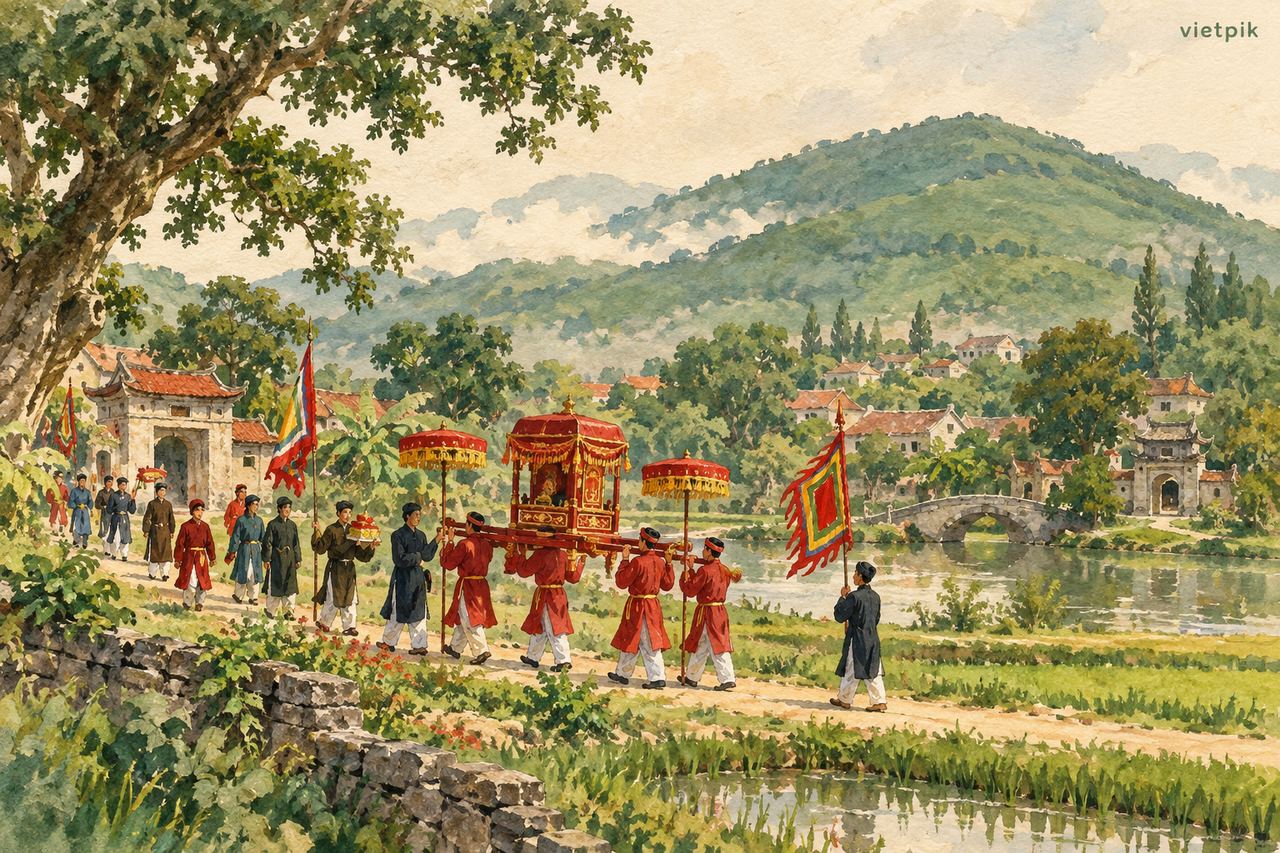
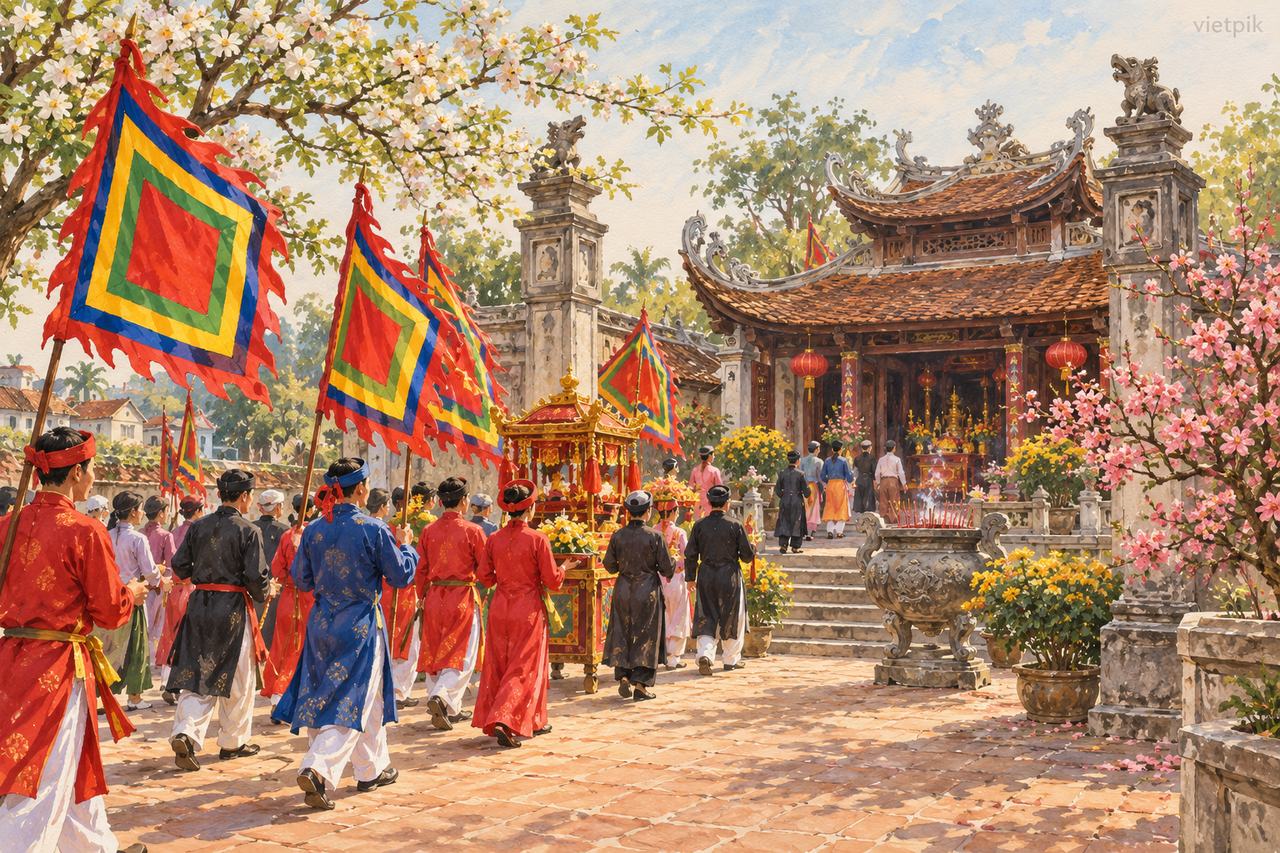
The festival at Thanh Nguyen Temple brings the figure of Nguyen Minh Khong into a recognisably local setting. The interest lies not only in a famous religious name but in how a community organises remembrance around its own temple, processions and shared activities. For a visitor, this is an opportunity to look beyond a single dramatic photograph and ask how the different parts of a festival fit together. The guide uses the documented 2026 edition in Dai Hoang as a recent reference while leaving the 2027 programme open. Stories of extraordinary powers are treated as religious narratives, not as medical or scientific evidence.
History & story
Nguyen Minh Khong is remembered as a monk of the Ly period and is honoured here as Duc Thanh Nguyen. The festival's local importance comes from its relationship with the community associated with his homeland. Rather than compiling every legend attached to the saint across Vietnam, begin with the temple's own interpretation and the current organiser's explanation. This avoids collapsing different places into a single generic pilgrimage story. The present festival is in Dai Hoang, within the former Ninh Binh area of the enlarged province. Older references may use earlier administrative names, so the temple name is useful when reconciling directions.
1. A named person in a named place
Nguyen Minh Khong is remembered as a monk of the Ly period and is honoured here as Duc Thanh Nguyen. The festival's local importance comes from its relationship with the community associated with his homeland. Rather than compiling every legend attached to the saint across Vietnam, begin with the temple's own interpretation and the current organiser's explanation. This avoids collapsing different places into a single generic pilgrimage story. The present festival is in Dai Hoang, within the former Ninh Binh area of the enlarged province. Older references may use earlier administrative names, so the temple name is useful when reconciling directions.
2. Read the sequence before choosing a moment
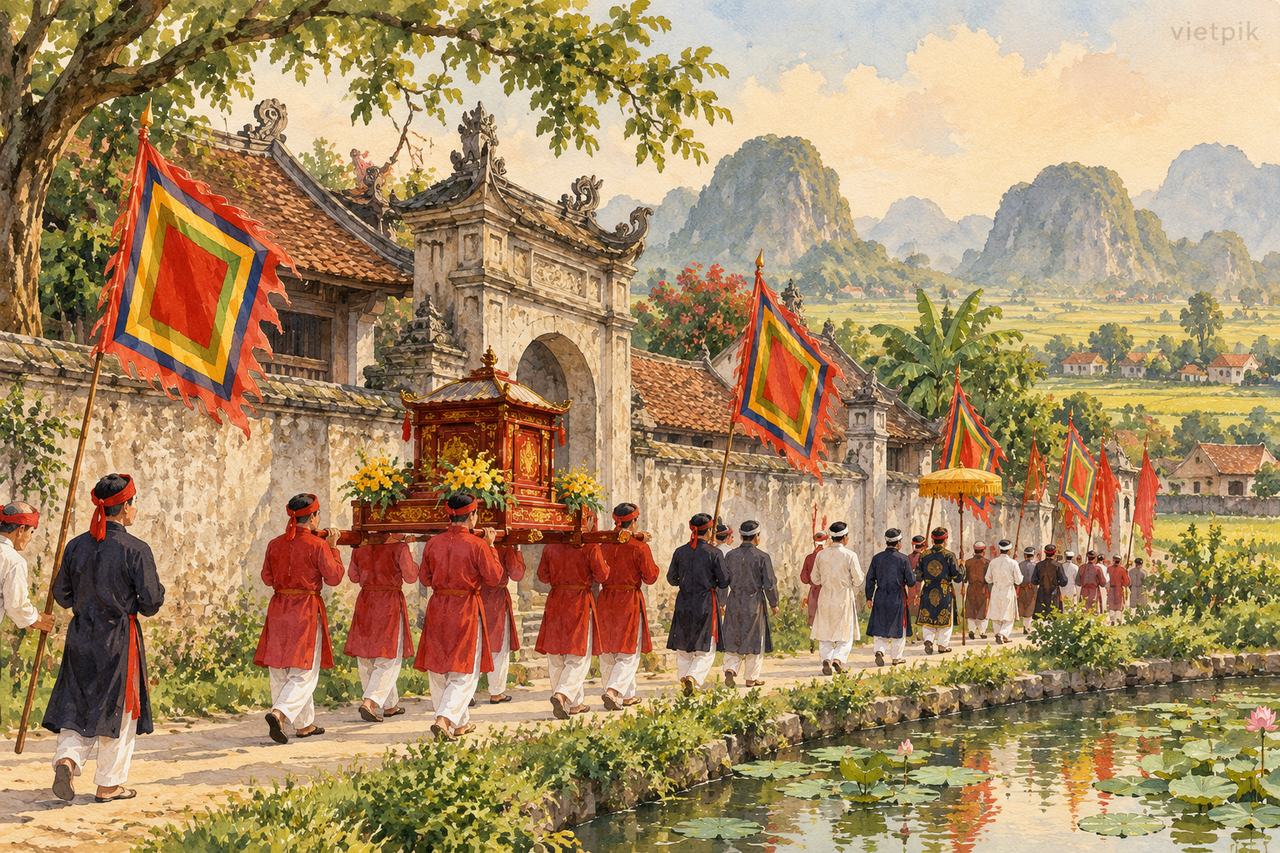
The 2026 programme described a series of rites including temple opening, cleansing, formal reporting, processions, offerings and thanksgiving. A sequence like this gives the event a beginning, an internal order and a conclusion. It should not be treated as a menu from which a visitor can demand a private demonstration at any time. If you want to understand one stage, first establish what precedes it and whether it is publicly observable. Some names require a local explanation that a quick translation cannot supply. Recording the Vietnamese term in a notebook can be more accurate than immediately substituting an approximate foreign label.
3. Use the recent programme precisely
Dai Hoang's official notice placed the 2026 festival on 23–26 April, corresponding to the seventh through tenth days of the third lunar month. News reporting identified the opening ceremony on the evening of 24 April. There is no contradiction in a festival beginning before its main opening show: preparatory and ritual activities can already be under way. The distinction matters when selecting a day to travel. Older general descriptions also differ on frequency and season, so this article does not extrapolate them into a definitive 2027 schedule. The next organiser's announcement must establish that edition's dates and public programme.
4. Water and vessels as a way of looking
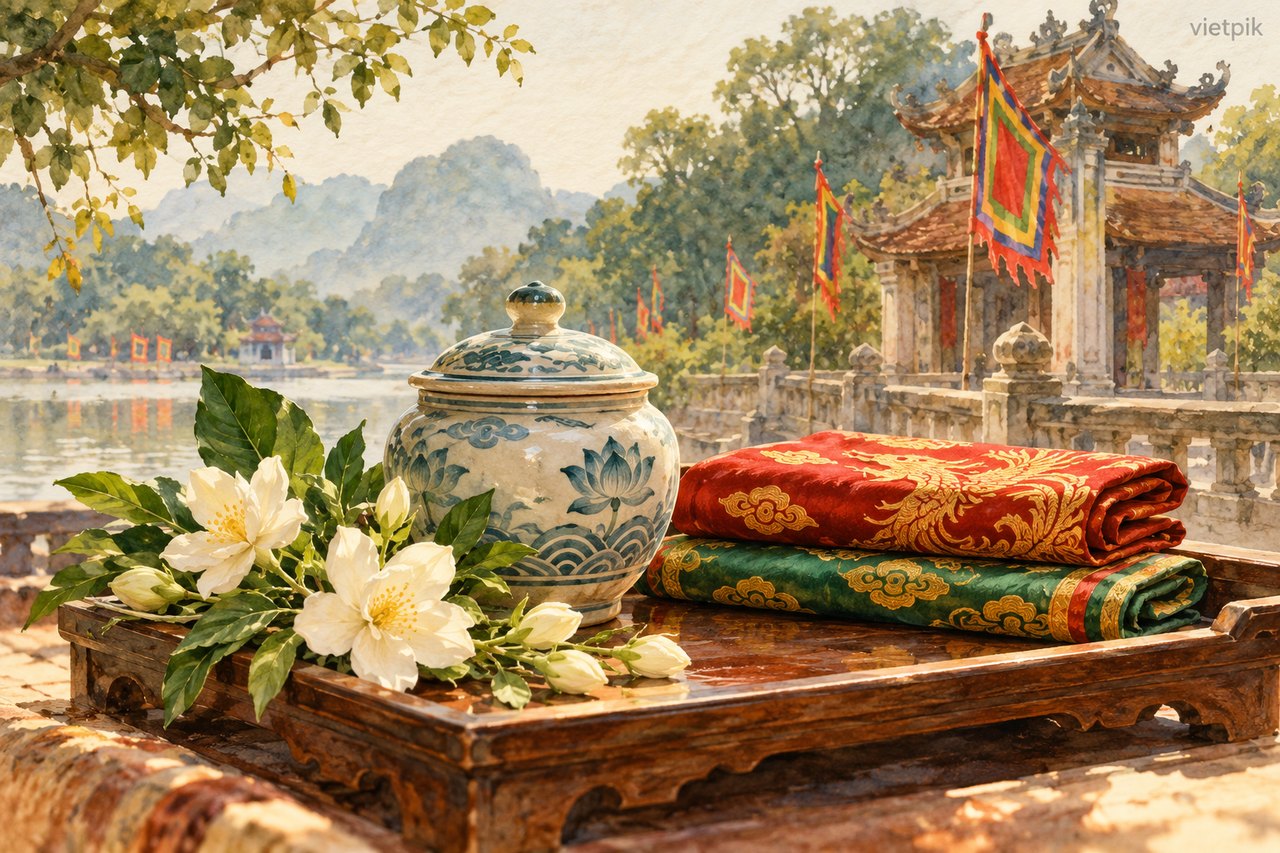
Water-related ritual is part of local descriptions of this festival. A vessel being carried in procession can therefore be understood through its use and destination rather than just its colour or shape. This is a useful observational approach even when you do not know every formal meaning: watch who is responsible for an object, how others make room and where it is taken. Do not touch, rearrange or ask to hold it for a photograph. The still-life illustration accompanying the article uses a covered ceramic vessel and folded cloth as broad visual references; it does not reconstruct an authenticated set of temple ritual objects.
5. Village activities broaden the story
The 2026 edition included community arts, sports, folk games and a village-market element. These activities show how commemoration can share time and space with ordinary skills, sociability and local production. They do not prove that every stall, contest or food offering returns unchanged the following year. If you attend a market component, ask what is produced locally rather than assuming that every item is a regional speciality. A conversation about making, growing or preparing something can reveal the connection with village life more effectively than collecting a list of souvenirs. Keep purchases separate from religious participation; one is not a requirement for the other.
6. Plan for a village event rather than a resort
Choose a verified activity and build a modest visit around it. Ask where public access is arranged, where a group can meet afterwards and whether the chosen viewing point involves steps or an uneven approach. The article does not promise parking capacity, toilets at a specific location, dining availability or a transport service. Those details need local confirmation. If travelling with an older relative, make the ceremony the shared priority and leave the market or sports programme optional. This helps the group remain together for the most meaningful part rather than splitting its energy across every activity mentioned in an old announcement.
7. Keep reverence and evidence in balance
When telling others about the festival, distinguish the historical monk, the saint of local devotion and the programme you observed. These layers can coexist without every legend becoming a verified event or every modern performance becoming ancient practice. Note the source of an explanation and preserve a question when accounts differ. This makes the visit an opportunity to learn rather than a demand for one simplified story.