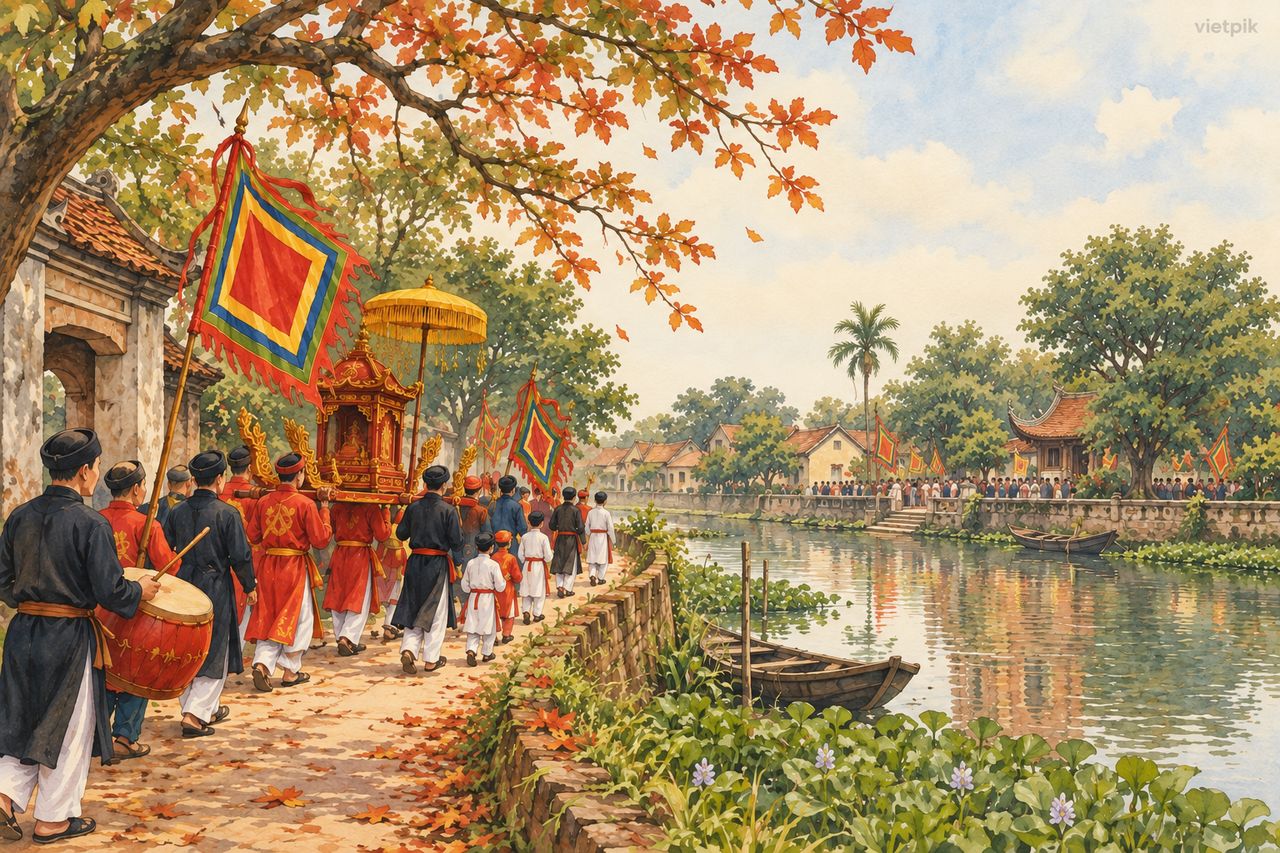
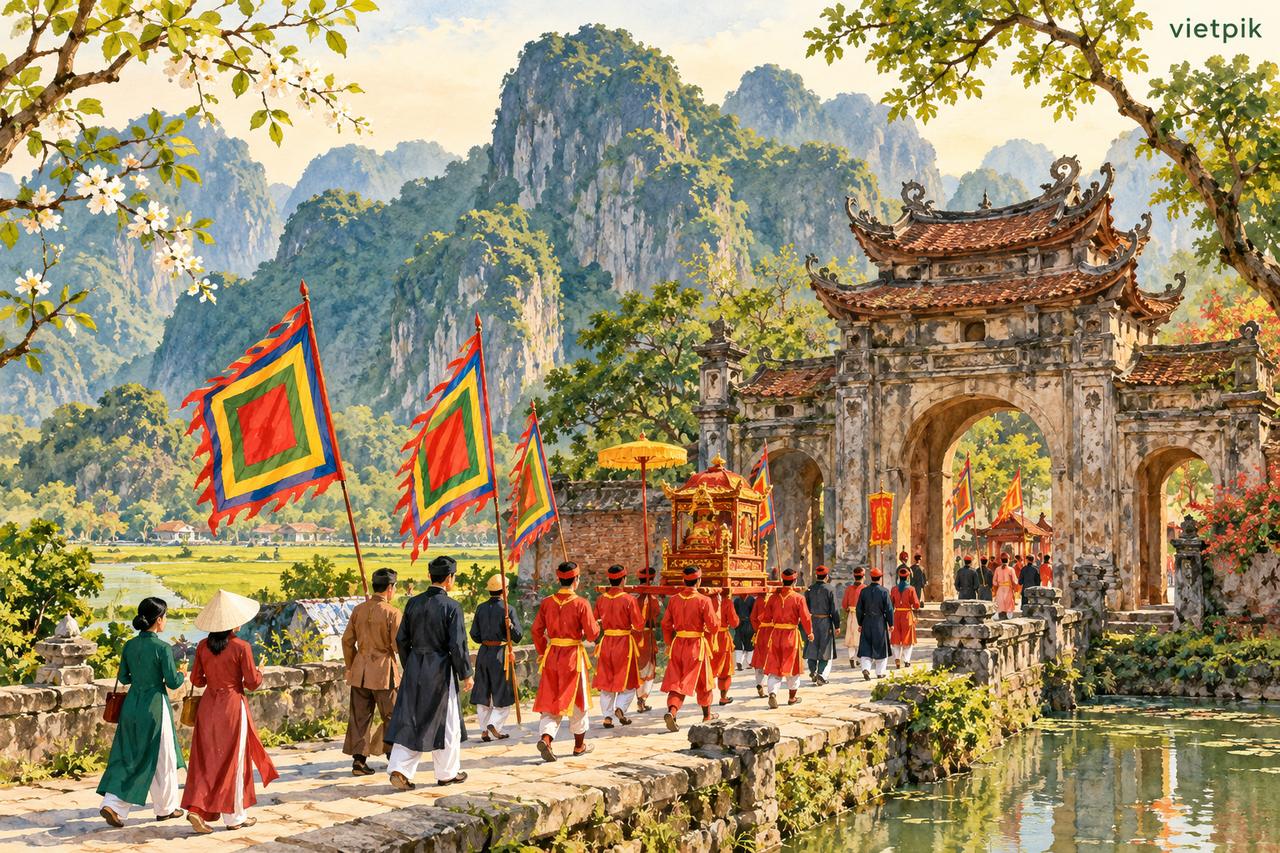
A plough cutting soil is a modest action to place at the centre of a large celebration. That is precisely what makes Tich Dien Doi Son worth understanding. The festival invites attention to the work behind a harvest, rather than only to the ceremony surrounding a ruler. In the former Ha Nam area, now part of Ninh Binh, it offers a way to see agriculture as public memory. For visitors, the most rewarding question is not simply when the buffalo enters the field, but why a society repeatedly chooses this practical act to open its year.
History & story
The provincial cultural account connects the rite with Le Dai Hanh ploughing near Doi mountain in spring 987. It also identifies 2009 as the major modern revival. These two dates describe different things: the remembered historical precedent and the organisation of today's public festival. Keeping them separate makes the story more interesting. A revival requires choices about what to recover, how to involve residents and what a contemporary audience can understand. Read the royal association as an explanation of the festival's central symbol, without assuming that every costume or movement is an unchanged survival from the tenth century.
1. A royal story grounded in work
The provincial cultural account connects the rite with Le Dai Hanh ploughing near Doi mountain in spring 987. It also identifies 2009 as the major modern revival. These two dates describe different things: the remembered historical precedent and the organisation of today's public festival. Keeping them separate makes the story more interesting. A revival requires choices about what to recover, how to involve residents and what a contemporary audience can understand. Read the royal association as an explanation of the festival's central symbol, without assuming that every costume or movement is an unchanged survival from the tenth century.
2. The field is the main stage
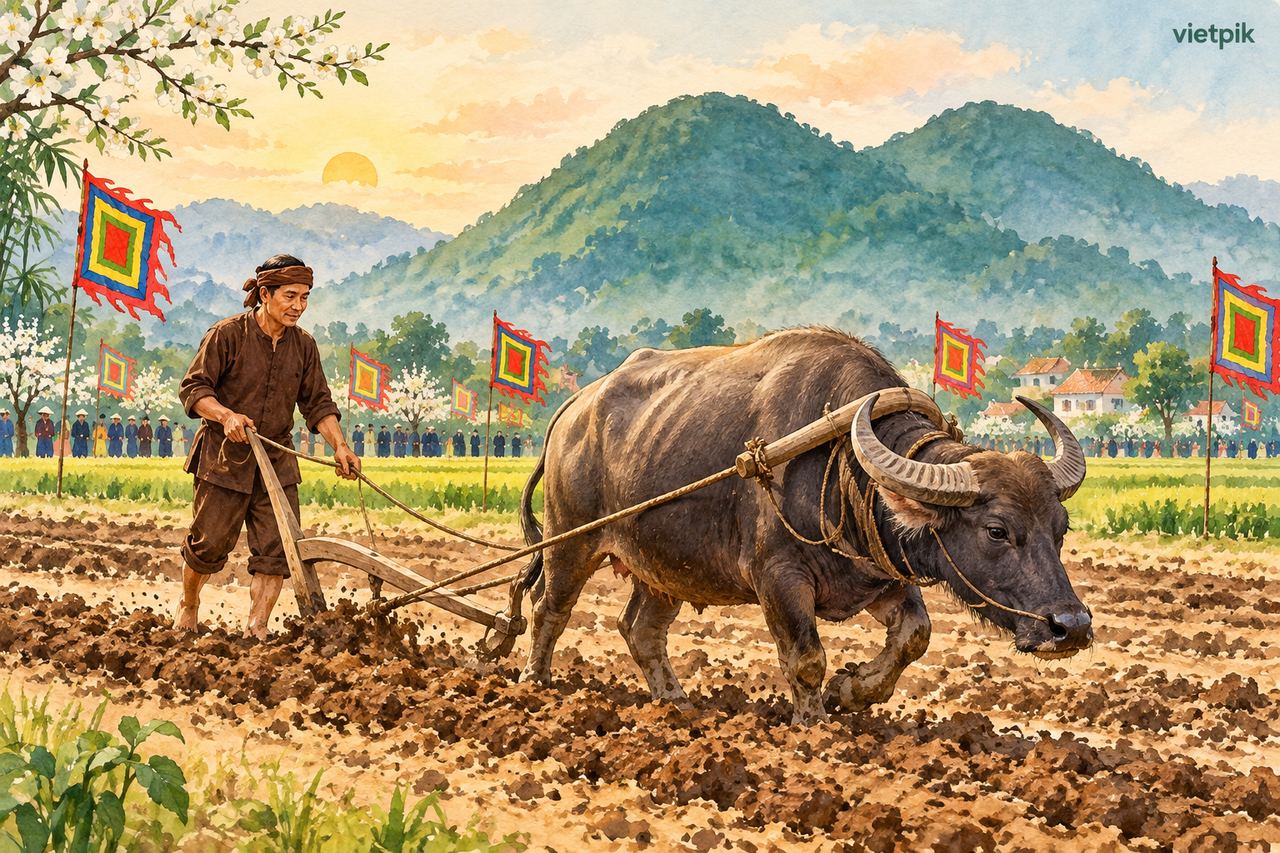
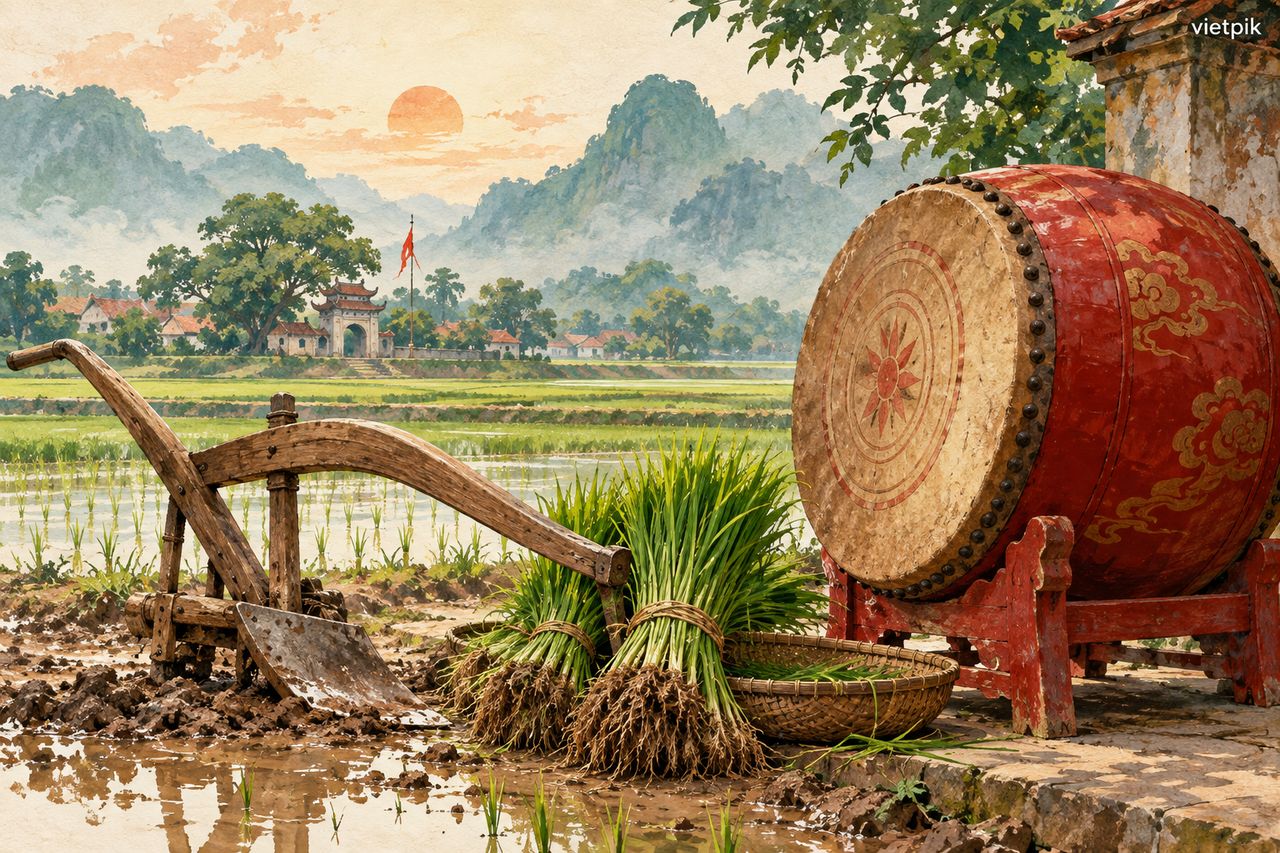
At a ploughing festival, soil is more than a backdrop for photographs. It gives the ceremonial action its resistance, direction and visible result. When watching from the designated public area, follow the relationship between the animal, the handler and the implement. A furrow is a line of coordinated effort, not merely an attractive mark in the ground. This is an editorial way of looking, not a claim about a prescribed ritual interpretation. It can help younger visitors connect the spectacle with familiar questions about food: what must happen before seed grows, and whose labour makes that possible?
3. What the 2026 dates actually tell you
Tien Son's local announcement scheduled the 2026 festival for 21–23 February, corresponding to the fifth through seventh days of the first lunar month. The cultural department reported the opening on 23 February. A programme window and an opening ceremony are therefore not interchangeable. For 2027, this guide leaves the Gregorian dates unresolved because no official programme was verified in the review of 28 September 2026. If ploughing is your priority, ask for the next edition's specific field ceremony time. A general spring festival announcement alone is insufficient for arranging a tightly timed arrival.
4. Listen for the craft behind the sound
The 2026 cultural report includes Doi Tam festival drumming among the activities. This creates an appealing second focus for a visit: sound as skilled work. Rather than treating drums as a constant background, notice changes in pace, pauses and the coordination of several players if a performance is on the programme. Do not assume that a craft workshop visit is included with festival attendance. Any separate visit needs its own confirmation. The connection is interpretive: a day honouring agricultural labour can also invite respect for the work that produces the instruments through which the celebration is heard.
5. Plan around the open ground
An outdoor field changes the practical rhythm of a visit. Choose footwear that you can clean, keep your belongings compact and prepare for the weather forecast of the actual day. Stay behind whatever boundaries organisers establish; a good viewing position does not require approaching an animal or crossing a working furrow. For a mixed-age group, decide in advance whether everyone wants to stand through the same programme. An agreed meeting place beyond the main flow is more useful than assuming a large group can remain shoulder to shoulder. These are planning suggestions, not verified descriptions of a particular year's facilities.
6. Distinguish the two Doi Son festivals
Tich Dien and the Long Doi Son pagoda festival belong to the same cultural landscape, but they are separate subjects. The former centres this article on agricultural renewal; the latter has its own Buddhist and historical associations and a later lunar season. A photograph of steps leading towards the pagoda cannot establish that it shows the ploughing ceremony. When arranging transport, name both the event and the intended entrance or meeting point once these are announced. This small habit reduces a common planning mistake: reaching a familiar landmark while the activity you came for is taking place elsewhere.
7. Carry the question beyond the festival
A useful memory of Tich Dien can be a simple observation recorded carefully: the moment a furrow appeared, the way a drummer signalled a change, or the space spectators left for the field work. Write what you actually saw separately from the historical explanation you read. For families, compare those notes with an ordinary meal afterwards and ask which kinds of labour have become invisible by the time food reaches a table. That conversation keeps the agricultural theme alive without inventing a hands-on farming service or turning participation in a ceremony into a promise of personal good fortune.