Tran Thuong is a useful place to widen the familiar image of a military hero. Remembrance here can lead beyond battles towards provisions, waterways and the communities that sustain collective life. The temple festival in the former Ha Nam area, now Ninh Binh, honours Tran Hung Dao. Its autumn celebration is the focus of this article; the spring grain-distribution rite is introduced only to explain the site's calendar. Neither should be confused with seal-opening at the Tran temple in former Nam Dinh. Similar names and a shared historical figure do not make these occasions the same event.
History & story
Official heritage interpretation connects Tran Thuong with stores serving the Tran resistance. The surviving temple is consequently more than a marker on a military itinerary: it is a place where provision becomes a subject of remembrance. A visitor can use that theme to ask a different historical question. How do food, transport and preparation support achievements usually narrated through commanders? That question is an interpretive suggestion, not proof of the contents of every ancient building. Read the site's introduction before attaching a specific function to a courtyard, vessel or room simply because it looks old.
1. Begin with the idea of provisioning
Official heritage interpretation connects Tran Thuong with stores serving the Tran resistance. The surviving temple is consequently more than a marker on a military itinerary: it is a place where provision becomes a subject of remembrance. A visitor can use that theme to ask a different historical question. How do food, transport and preparation support achievements usually narrated through commanders? That question is an interpretive suggestion, not proof of the contents of every ancient building. Read the site's introduction before attaching a specific function to a courtyard, vessel or room simply because it looks old.
2. Read autumn and spring separately
The national tourism entry gives 18–20 of the eighth lunar month as the traditional autumn festival period and also describes a grain-distribution rite around the first lunar full moon. In contrast, the local report records the 2026 autumn opening on 26 September, the sixteenth day of the eighth lunar month. These statements concern a customary period and an edition-specific opening. They should remain separate in a travel calendar. No official 2027 programme was verified by 28 September 2026, so this draft supplies no confirmed Gregorian dates, performance times or distribution arrangements for that year.
3. Follow the meaning of water
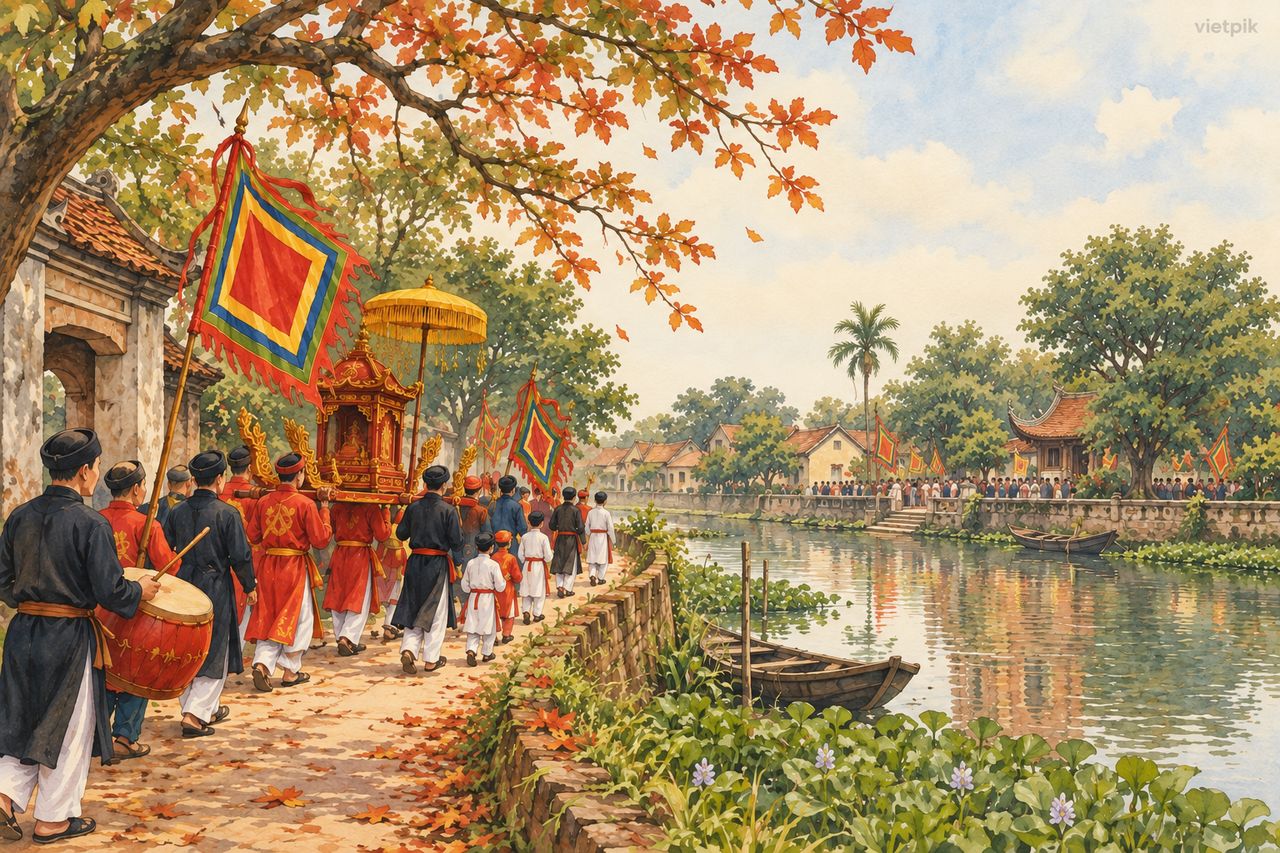
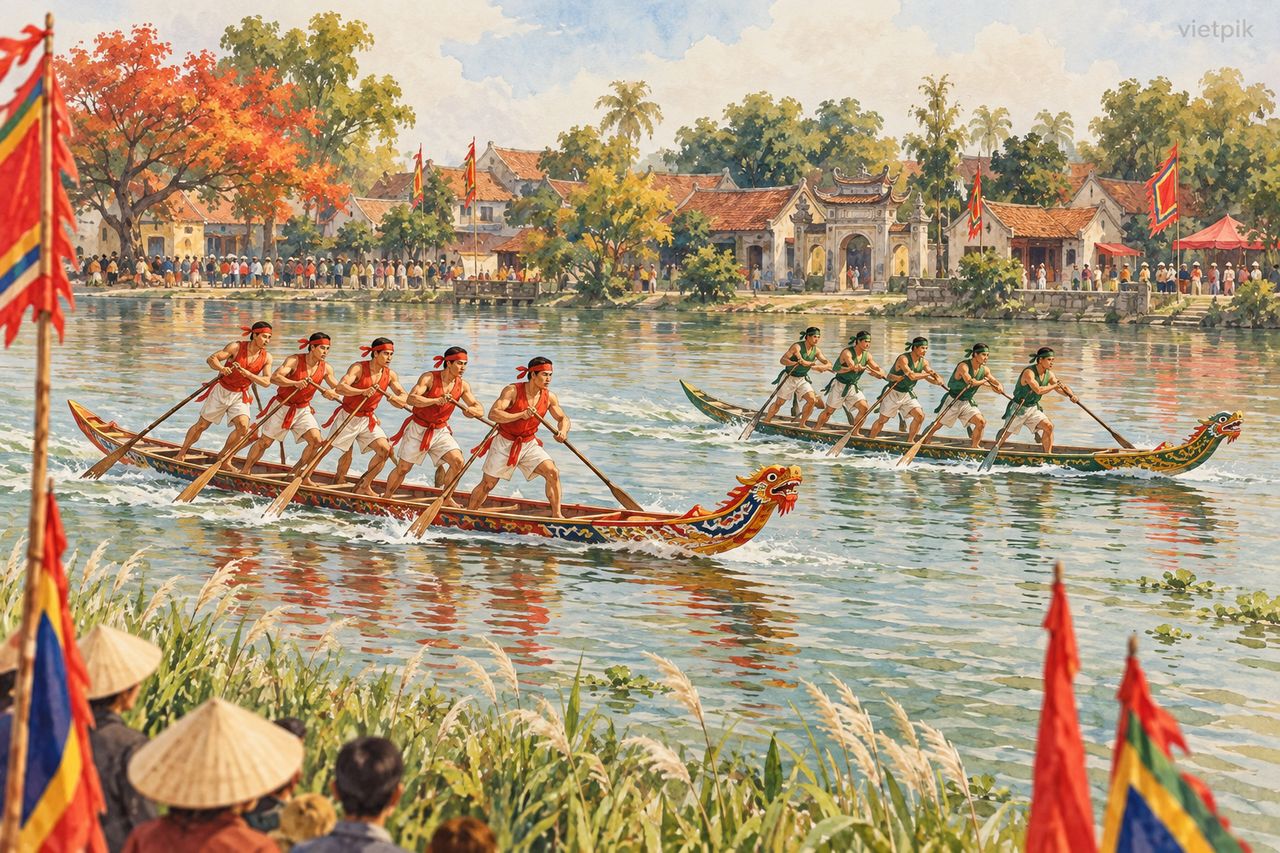
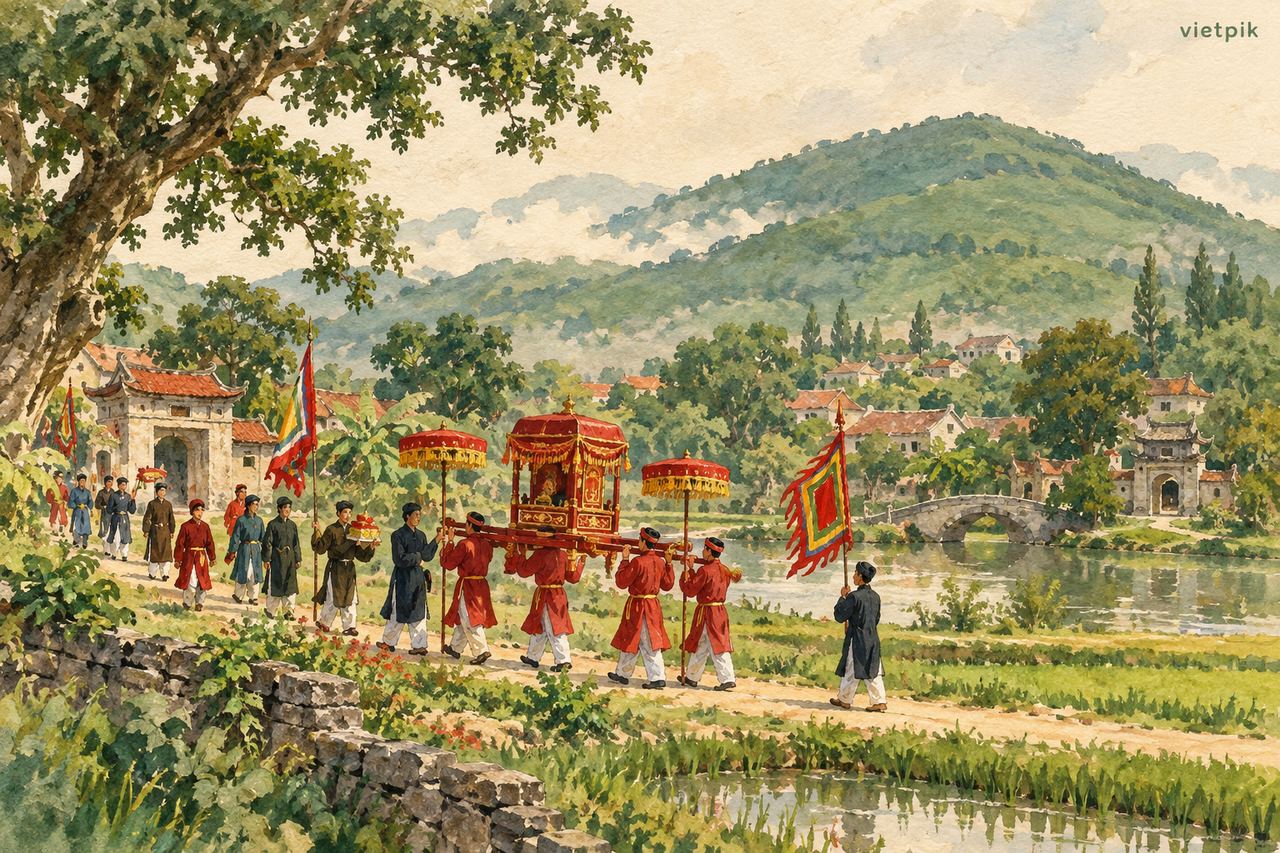
Water processions feature in the tourism account of the autumn festival. For an observer, the interesting relationship is between a river landscape and a sacred destination, rather than only the decoration of a carrying frame. If the current programme includes the rite, identify the public viewing area and let the procession pass without trying to walk within it. A water vessel can provide a focused subject for interpretation, but its appearance alone does not identify the moment or year. Describe a photograph as the activity actually observed; do not use an attractive river scene as evidence that you witnessed a complete ritual.
4. Grain is a cultural symbol, not a guarantee
The spring distribution tradition helps explain why grain is closely associated with Tran Thuong even in an article about autumn remembrance. It encourages an interpretation built around preparedness, gratitude and the wish for an adequate livelihood. This does not require a claim that taking an object home changes a person's wealth or fortune. Visitors interested in the spring rite should verify that edition independently instead of assuming the autumn event includes it. Keeping the symbolic reading separate from service information also prevents misunderstandings about eligibility, quantities, opening hours or any supposed entitlement attached to a donation.
5. Build an observation route with a purpose
A useful visit can move from an introductory panel to one publicly accessible ceremony, then to a quieter moment of reflection. Instead of trying to collect every architectural feature, choose a theme such as provision or the relationship between temple and community. Note which parts of your understanding came from a text and which came from observation. If asking a custodian a question, wait until their ceremonial duties permit a conversation. This approach can make a short visit substantial without inventing access to storerooms, archaeological displays or guided sessions that have not been verified as available.
6. Avoid the wrong Tran temple
When arranging a vehicle or saving a map, use the complete name Tran Thuong and the former Ha Nam area as a historical locator. The 2026 local report identifies Tran Thuong commune in Ninh Binh. Do not use an older district label as though it necessarily describes the current administration. Likewise, a search for Tran temple can return the Nam Dinh complex or a site in former Thai Binh. Compare the event name, place name and article date together. For a festival trip, an accurate destination is more valuable than a confident but unverified estimate of travel time.
7. Give remembrance a precise caption
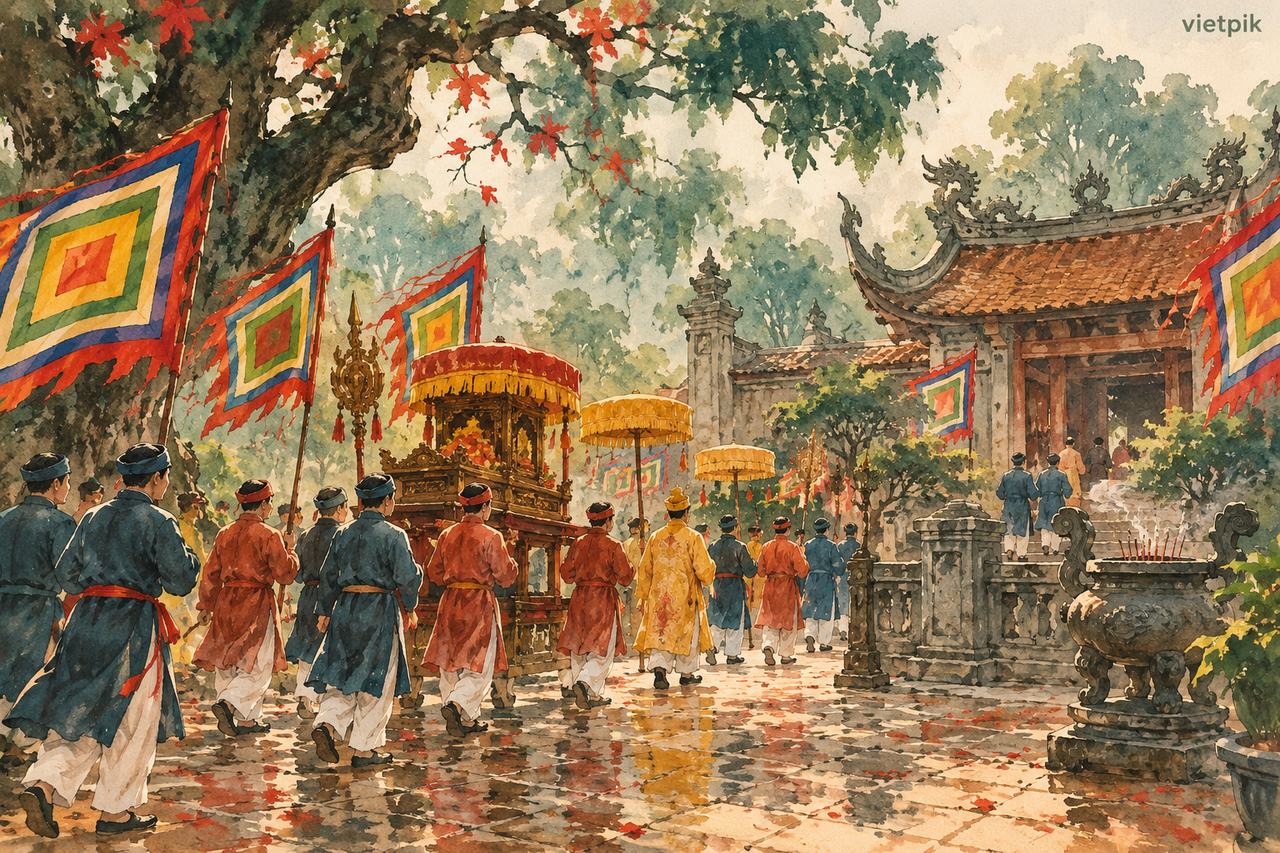
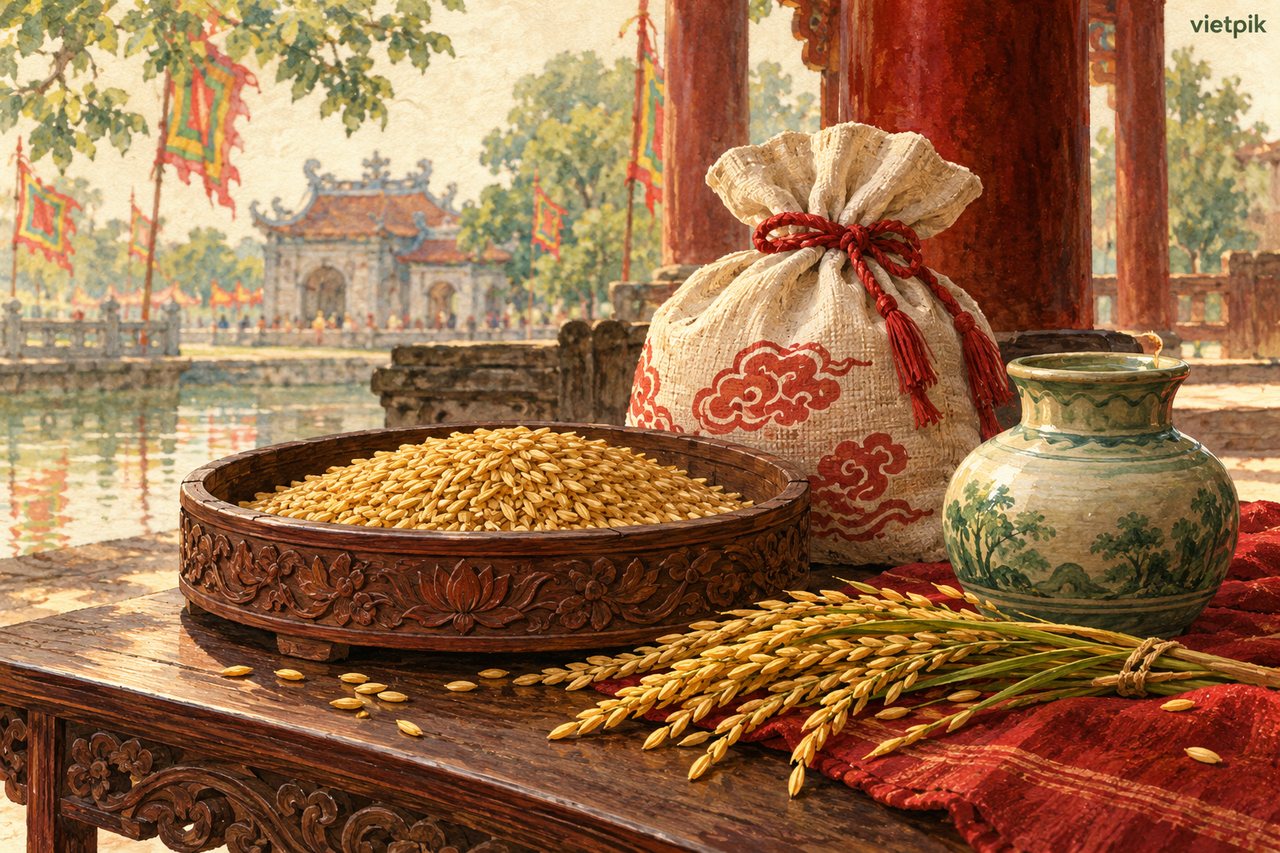
Afterwards, a good caption can be restrained: the full temple name, the edition attended and the particular public activity shown. Avoid describing every gathering as a grain ceremony or every printed token as an official seal. If you did not understand an action, say that you observed it and leave its interpretation open until checked. The same principle guides this article's illustrations: they evoke procession, water and grain, but do not document a real performance. Precision does not diminish the atmosphere. It lets the festival retain its own identity within a region rich in celebrations associated with the Tran dynasty.