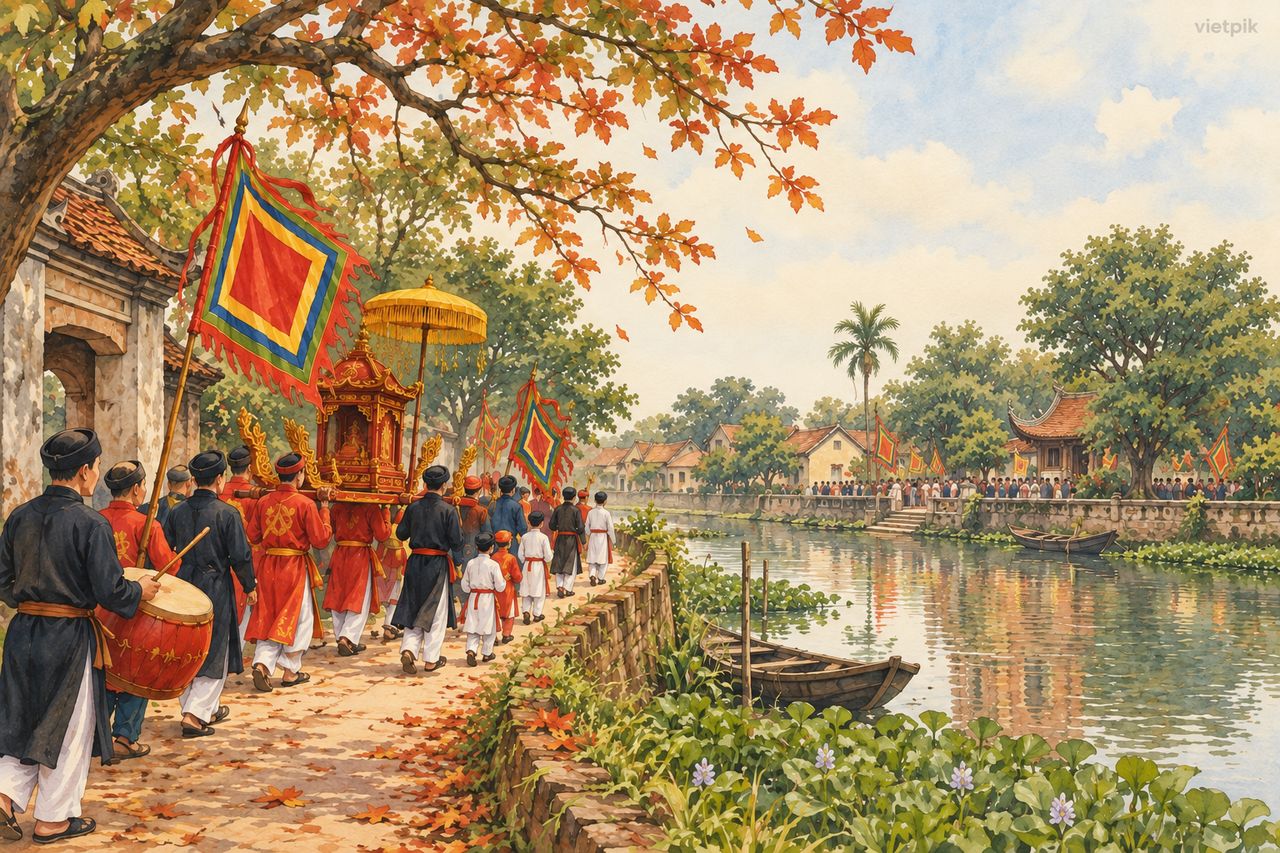
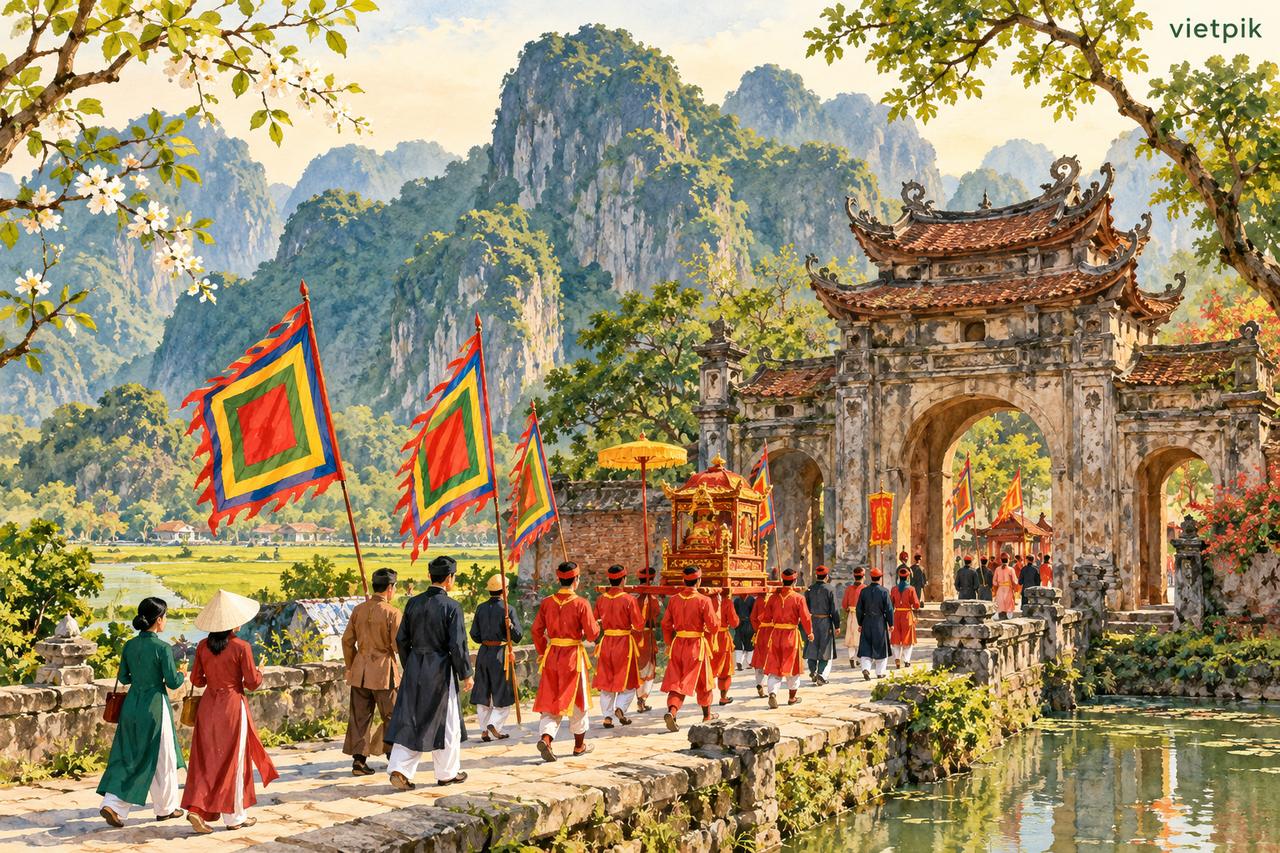
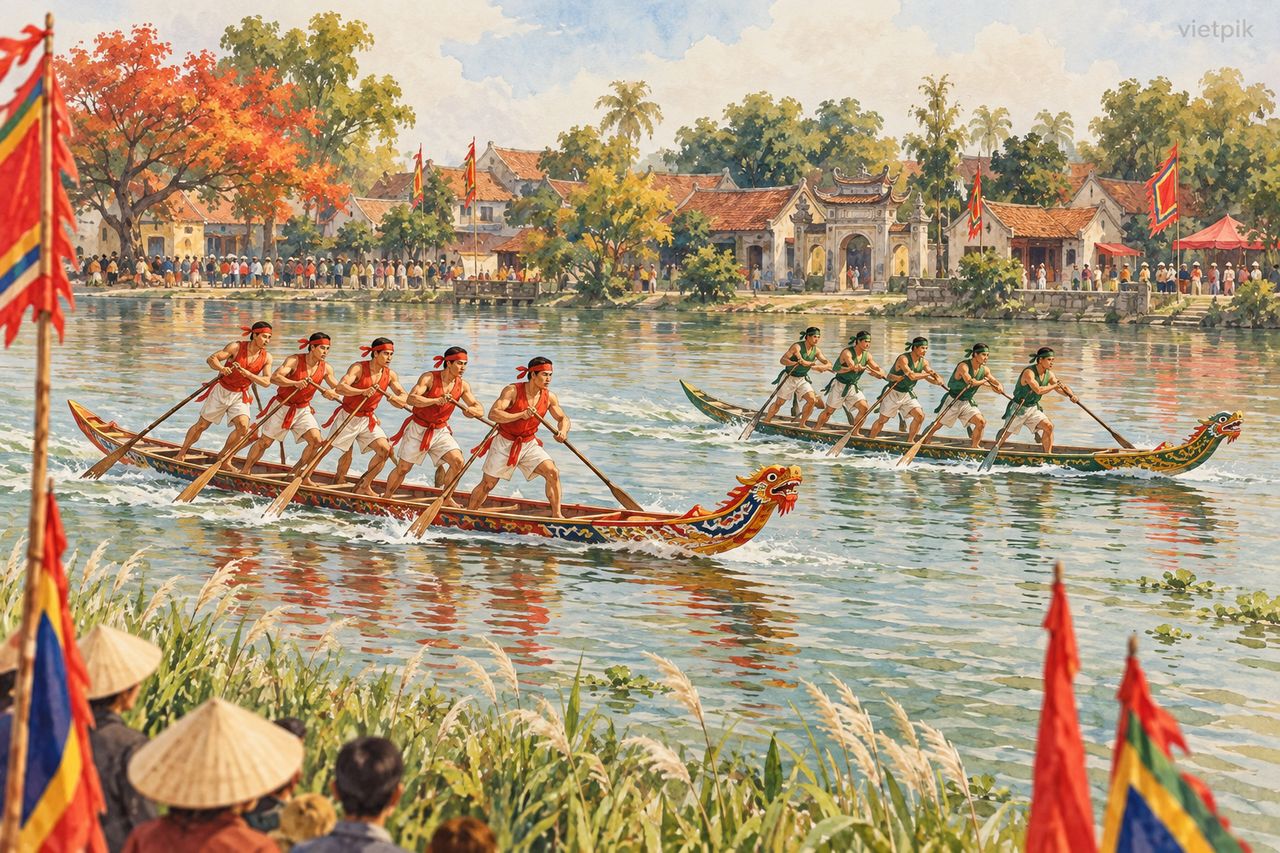
Trang An Festival asks visitors to think about water as a route of remembrance. Boats, narrow passages between limestone hills and places of worship form a connected setting rather than separate attractions. The festival is associated with Duc Thanh Quy Minh Dai Vuong, whose protection is recalled in local belief. Its striking landscape should not distract from that commemorative purpose. For anyone planning a visit, an equally important distinction is practical: seeing photographs of ceremonial boats does not establish that an ordinary sightseeing ticket includes a place in the procession. This guide explains the cultural focus and the questions that should shape a responsible itinerary.
History & story
Tourism accounts also call this the festival of Thanh Quy Minh Dai Vuong and connect it with Tran Temple within Trang An, known as Noi Lam Temple. Keep that location distinct from the Tran Temple seal-opening celebration in the former Nam Dinh area. Similar temple names do not make the events interchangeable. Accounts of Quy Minh belong partly to religious tradition, so expressions of divine protection should be understood as beliefs rather than measurable historical claims. An attentive visitor can appreciate how a community remembers a protective figure without having to turn that belief into a literal explanation of the surrounding landscape.
1. Identify the festival's sacred figure
Tourism accounts also call this the festival of Thanh Quy Minh Dai Vuong and connect it with Tran Temple within Trang An, known as Noi Lam Temple. Keep that location distinct from the Tran Temple seal-opening celebration in the former Nam Dinh area. Similar temple names do not make the events interchangeable. Accounts of Quy Minh belong partly to religious tradition, so expressions of divine protection should be understood as beliefs rather than measurable historical claims. An attentive visitor can appreciate how a community remembers a protective figure without having to turn that belief into a literal explanation of the surrounding landscape.
2. A procession shaped by water
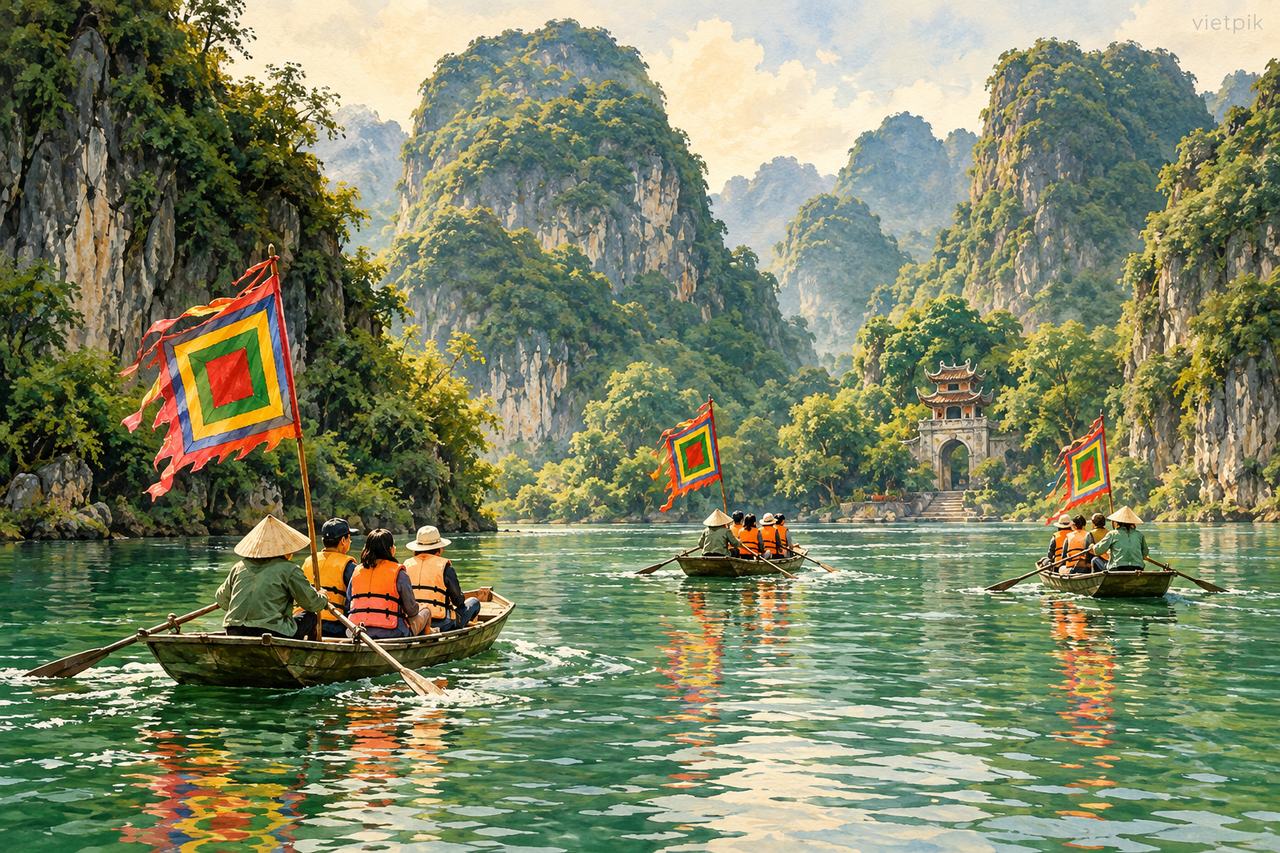
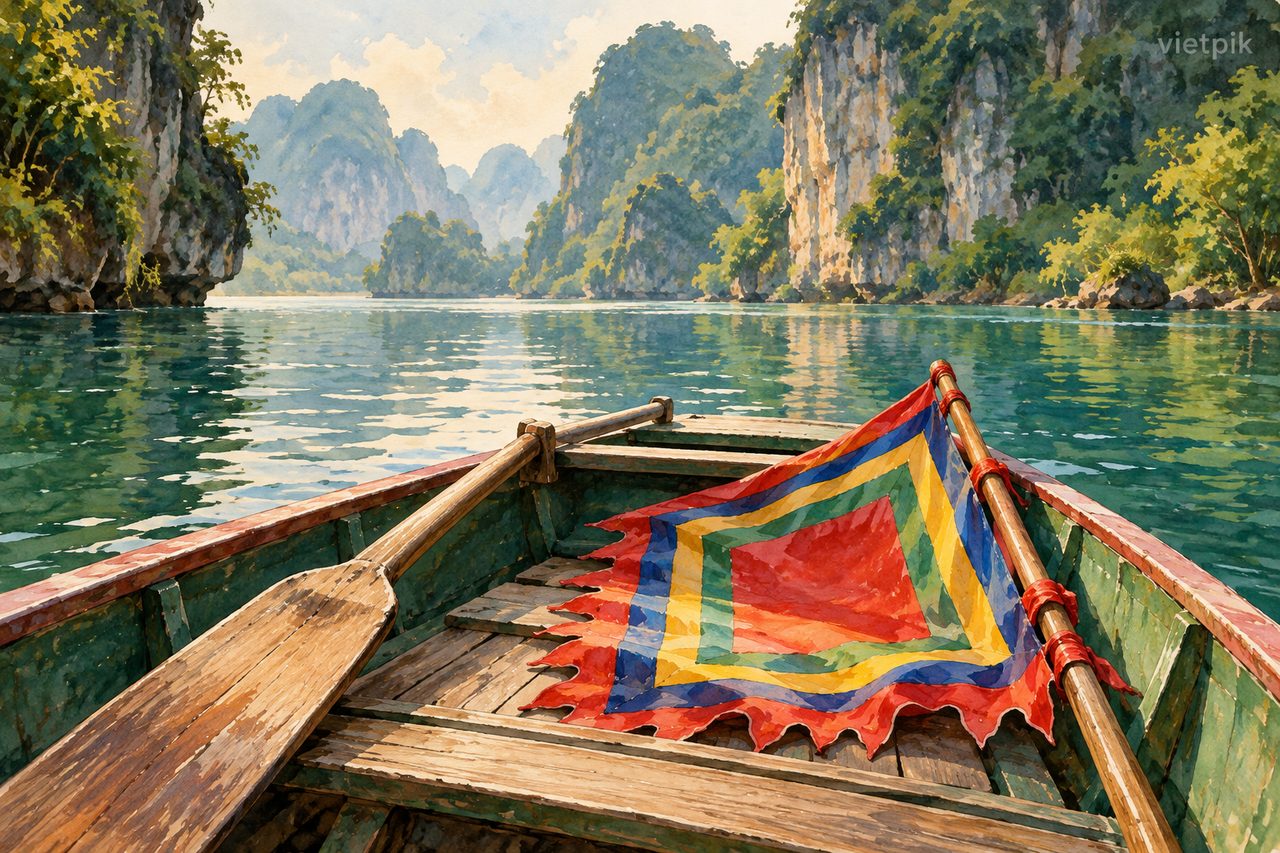
On land, a spectator can often stand beside a route and watch groups pass. A waterborne event changes that relationship: boats share channels, landing points and constrained spaces, and movement depends on the organised flow. This makes distance and patience part of the experience. Notice how flags allow separate boats to be read as a connected group against the limestone setting. Do not ask a rower to leave an authorised route for a photograph or assume that a gap between boats is an invitation to enter. The event's visual coherence depends on coordination that may not be obvious from a single image.
3. The date needs an edition label
Older tourism material commonly uses the eighteenth day of the third lunar month; another overview mentions the eighteenth and nineteenth. The 2026 festival, however, was announced and reported for 3 May, the seventeenth lunar day. That difference is useful evidence that a traditional reference is not enough to schedule a future visit. This article does not select one of those dates and silently declare it the 2027 programme. The official 2027 date remains unconfirmed as of the review. Keep a separate note for the traditional reference and for each dated announcement, including its publication year and the activity to which it refers.
4. Performance and worship have different rhythms
Reports of recent editions describe artistic programmes as well as commemorative rites. A staged performance on or near the water can help communicate a historical theme, but it should not be confused with the entirety of the festival's religious practice. If a programme lists both, decide which you want to understand and where public viewing is arranged. Avoid treating every costumed person as a ritual specialist or every boat as a ceremonial vessel. Those distinctions lead to better captions and better questions. They also prevent a visitor's expectation of continuous spectacle from overwhelming quieter moments of remembrance.
5. Ask the right boat questions
Before paying for any service, ask whether it is an ordinary visitor route, a special event arrangement or an activity restricted to invited participants. Confirm the departure point, return arrangement and any changes caused by the festival programme. This article does not verify current ticket prices, route numbers, travel durations or seat availability. A photograph from a previous edition cannot answer those questions. If the festival-specific option is unavailable, an ordinary landscape trip should be evaluated on its own merits and accurately described as such. It is better to enjoy a clearly understood boat journey than purchase an expectation that nobody actually offered.
6. Keep attention on the boat and the landscape
Follow the operator's instructions, wear the supplied life jacket correctly and keep your body within the boat. Frame photographs from a seated position rather than standing to obtain an uninterrupted view. Secure small items before entering a narrow passage and keep waste with you until it can be disposed of appropriately ashore. The landscape is not merely a backdrop to flags: water, vegetation and stone create the conditions through which the event moves. A quiet interval can therefore be valuable. Listen to the difference between nearby conversation, paddle sounds and a distant performance instead of filling every moment with loud playback.
7. Tell the water story accurately
A useful account of the visit can describe where you were, what sort of boat journey you took and which festival activity was actually visible. Keep those observations separate from legends and from information read before travelling. Do not label ordinary boats as a sacred procession simply because flags appear somewhere in the frame.