A short dance clip can travel much farther than the explanation that makes it meaningful. Triều Khúc is a place to reverse that order: learn whose festival you are attending, then watch the dancers as skilled participants in a local tradition. Múa bồng is visually memorable, but costume alone cannot explain the rhythm, discipline and relationships that keep the practice alive. This guide approaches the village festival through performance and transmission while leaving room for its ceremonial purpose. The current local reporting places the celebration in Thanh Liệt ward, Hanoi. Older sources may use Tân Triều and Thanh Trì; those labels need historical context rather than automatic copying into a present-day itinerary.
History & story
The local 2026 opening report identifies Bố Cái Đại Vương Phùng Hưng as the festival's central commemorated figure. This gives the dancing its broader setting: it belongs within a village observance rather than existing only as a stage attraction. Read the site introduction before making assumptions about a movement's origin. Historical commemorations can contain several layers of later interpretation, and a colourful story about a dance is not automatically a dated historical record. For a first visit, remembering the honoured name and the relationship between the village's ceremonial places is a firmer foundation than memorising an elaborate origin story from social media.
The festival honours Phùng Hưng
The local 2026 opening report identifies Bố Cái Đại Vương Phùng Hưng as the festival's central commemorated figure. This gives the dancing its broader setting: it belongs within a village observance rather than existing only as a stage attraction. Read the site introduction before making assumptions about a movement's origin. Historical commemorations can contain several layers of later interpretation, and a colourful story about a dance is not automatically a dated historical record. For a first visit, remembering the honoured name and the relationship between the village's ceremonial places is a firmer foundation than memorising an elaborate origin story from social media.
See skill before the unusual costume
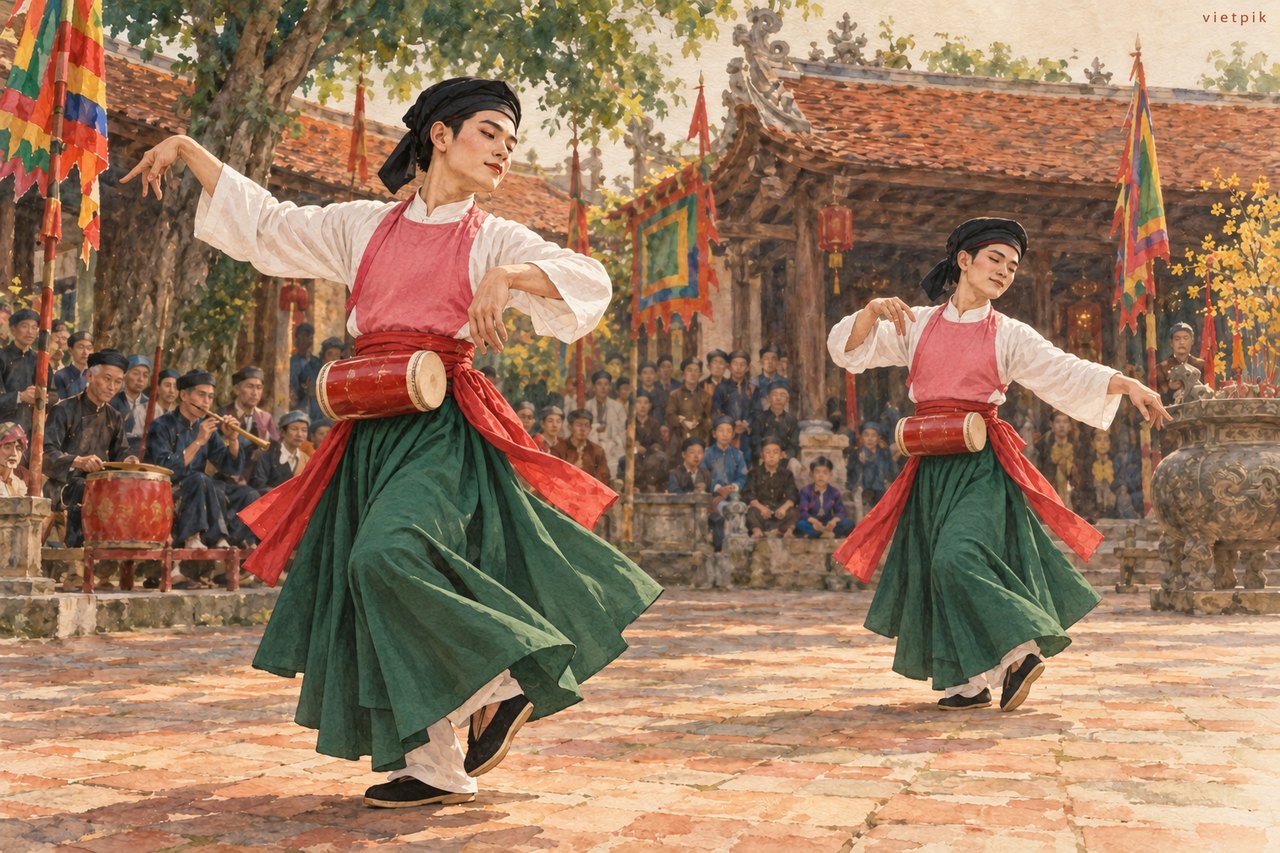
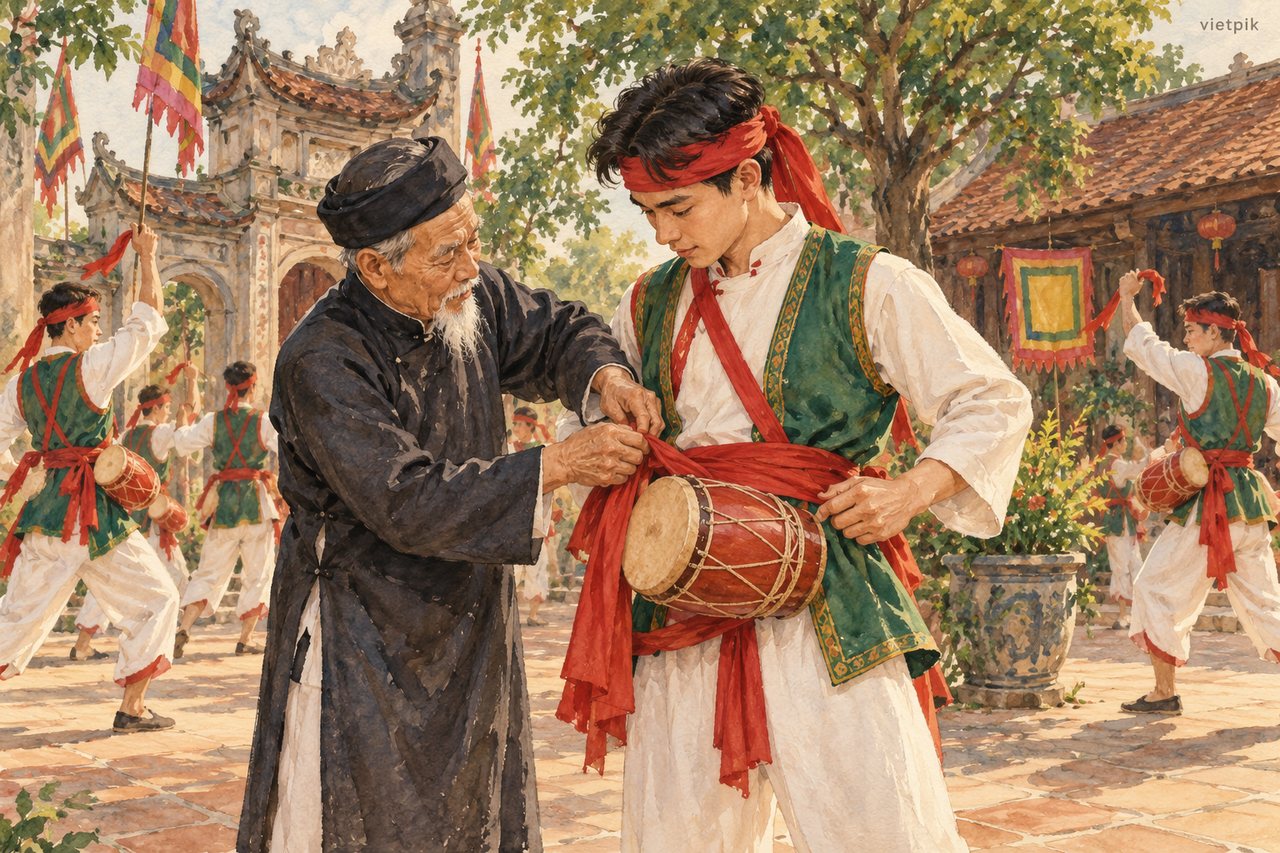
The Hanoi cultural department's account of a heritage encounter describes male practitioners performing múa bồng and explains its local transmission. Visitors should resist turning that fact into a joke about appearance or an assumption about the dancers' personal identities. Watch balance, the relation between hands and drum, and how partners keep time. A performance can be playful and graceful while still demanding serious preparation. If you write about it, describe the role and movement with respect. The point of noticing costume is to understand the artistic convention, not to make the people wearing it the target of a novelty caption.
Four festival days and a separate opening
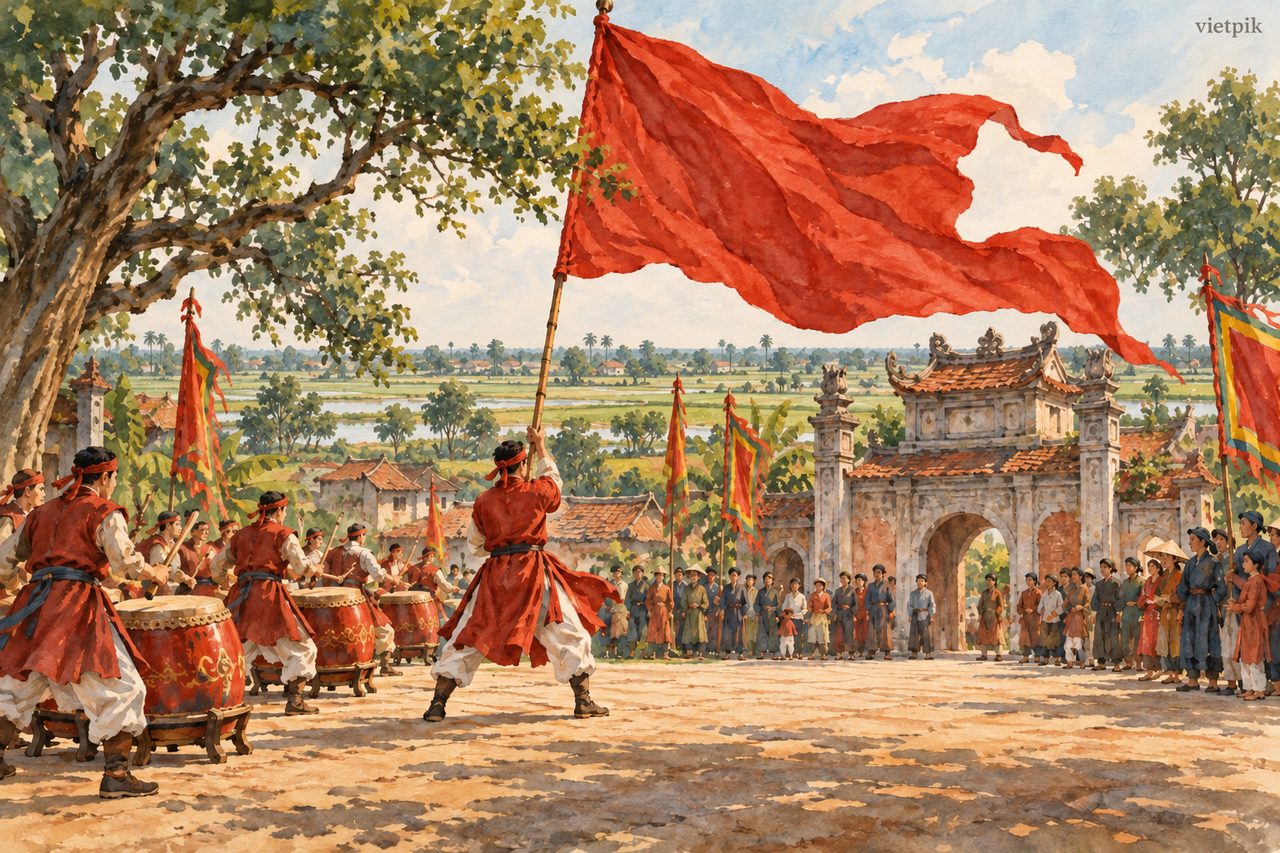
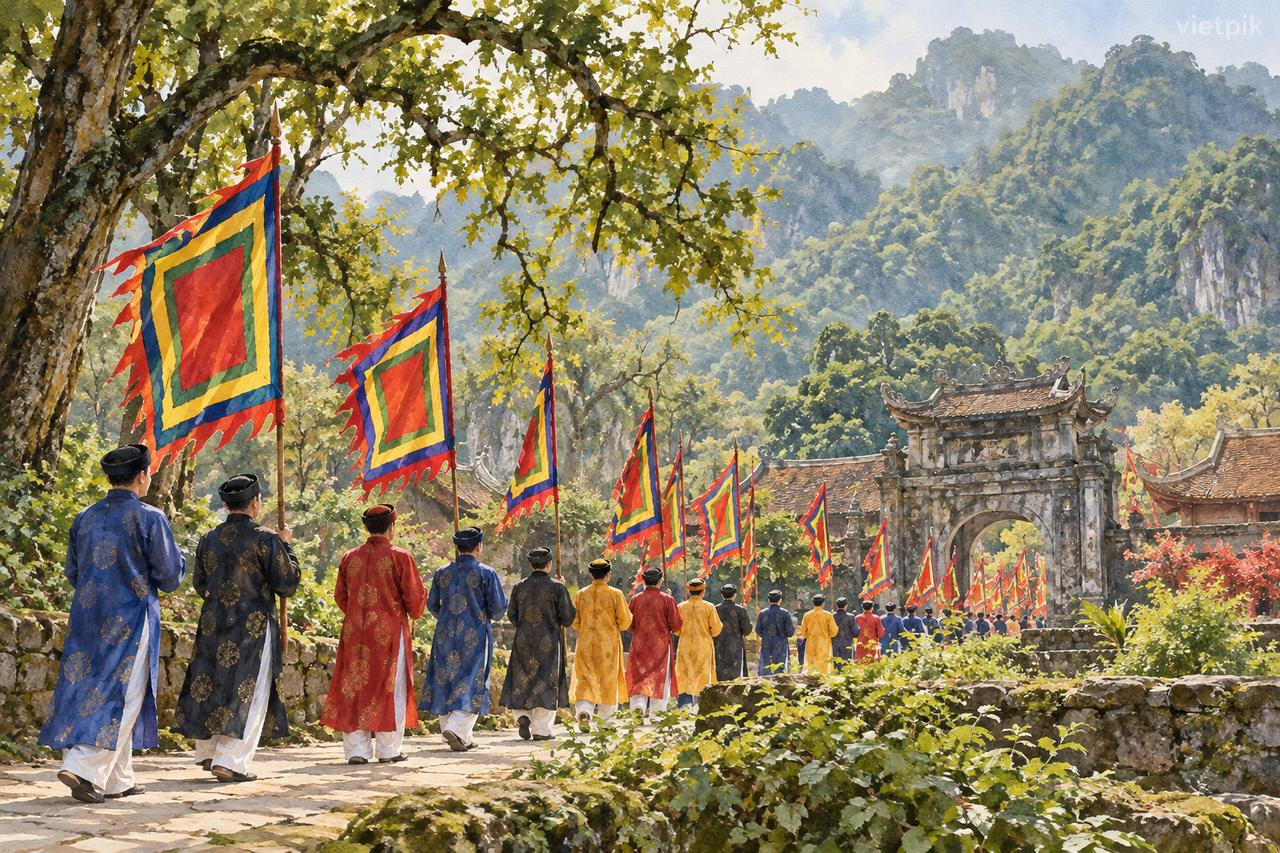
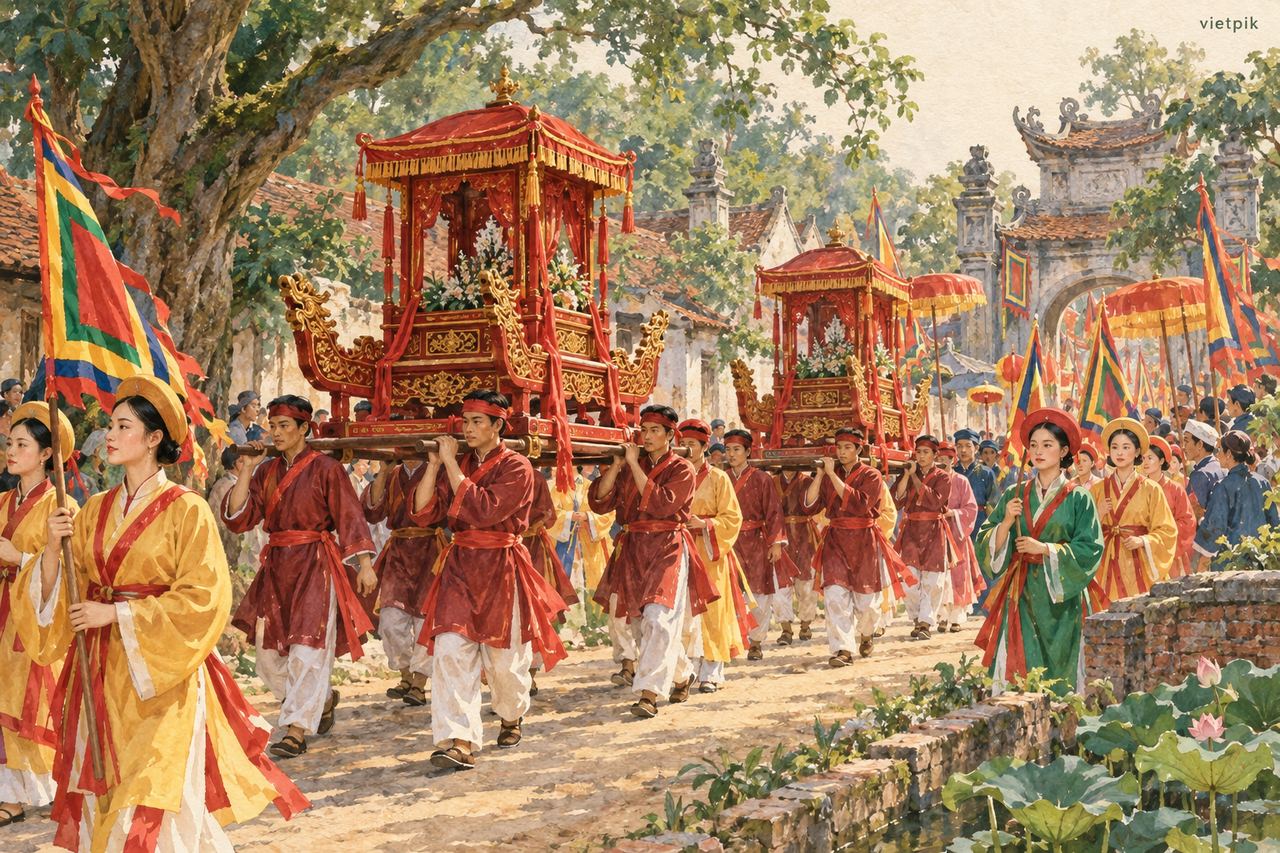
The ward's 2026 plan set the festival over 25–28 February, lunar days nine to twelve of the first month, while the opening was reported on 26 February. An earlier procession on the ninth lunar day connected Đình Sắc with Đại Đình. Keep the programme span, opening and procession as separate fields when planning. No official 2027 schedule was confirmed in the review dated 28 September 2026. If the dance is your main interest, ask where and when it will be presented; do not assume it runs continuously throughout the festival. A rehearsal, a ceremonial appearance and a public performance can have different access arrangements.
Listen for the movement of the pair
Choose a place where you can see the dancers' whole bodies rather than only their faces. Watch how one movement prepares the next and whether partners mirror, answer or support one another. Listen to the percussion before trying to film a close-up. These are ways of paying attention, not claims that every sequence follows the same choreography. Avoid stepping into the dance space for a better angle, and never ask performers to stop midway to pose. A complete phrase seen from farther away can be more informative than a spectacular fragment cut off by the edge of a phone screen.
Transmission is not a drop-in workshop
The cultural department's earlier report discusses community rules around teaching the dance. Those rules should not be converted into a tourism product or a promise that visitors can join a lesson. Ask whether any public explanation is available, and accept a demonstration without requesting access to restricted teaching. An interesting conversation can concern practice, memory or the responsibility of younger performers. Let the practitioner decide which details to share. Buying a souvenir, booking a guide or being enthusiastic does not entitle a guest to take over an instrument. Respect for transmission includes respect for the people who set its boundaries.
The village route beyond the dance
If you have time beyond a confirmed performance, learn the names of the ceremonial places and how they relate during the procession. Do not assume that every open doorway is part of the visitor route. In a lived-in neighbourhood, people may be carrying out ordinary work beside festival activity. Keep entrances clear and ask before photographing inside a house or workshop. For a family visit, one useful task is to sketch a simple route from memory afterwards, marking what each place was used for. This directs attention to the village's organisation rather than collecting unrelated images of colourful clothing.
Share a performance without flattening its meaning
When posting a clip, identify múa bồng, Triều Khúc and the year, and explain whether you filmed a public performance or another permitted setting. Avoid a headline that treats the dancers as an oddity. If you do not know a movement's name, simply describe what you observed rather than inventing a ritual explanation. The best souvenir from the festival may be a new capacity to notice skill: how a body keeps rhythm, how partners listen and how a community values practice. That attention can survive long after the sound of the drums has faded from your recording.