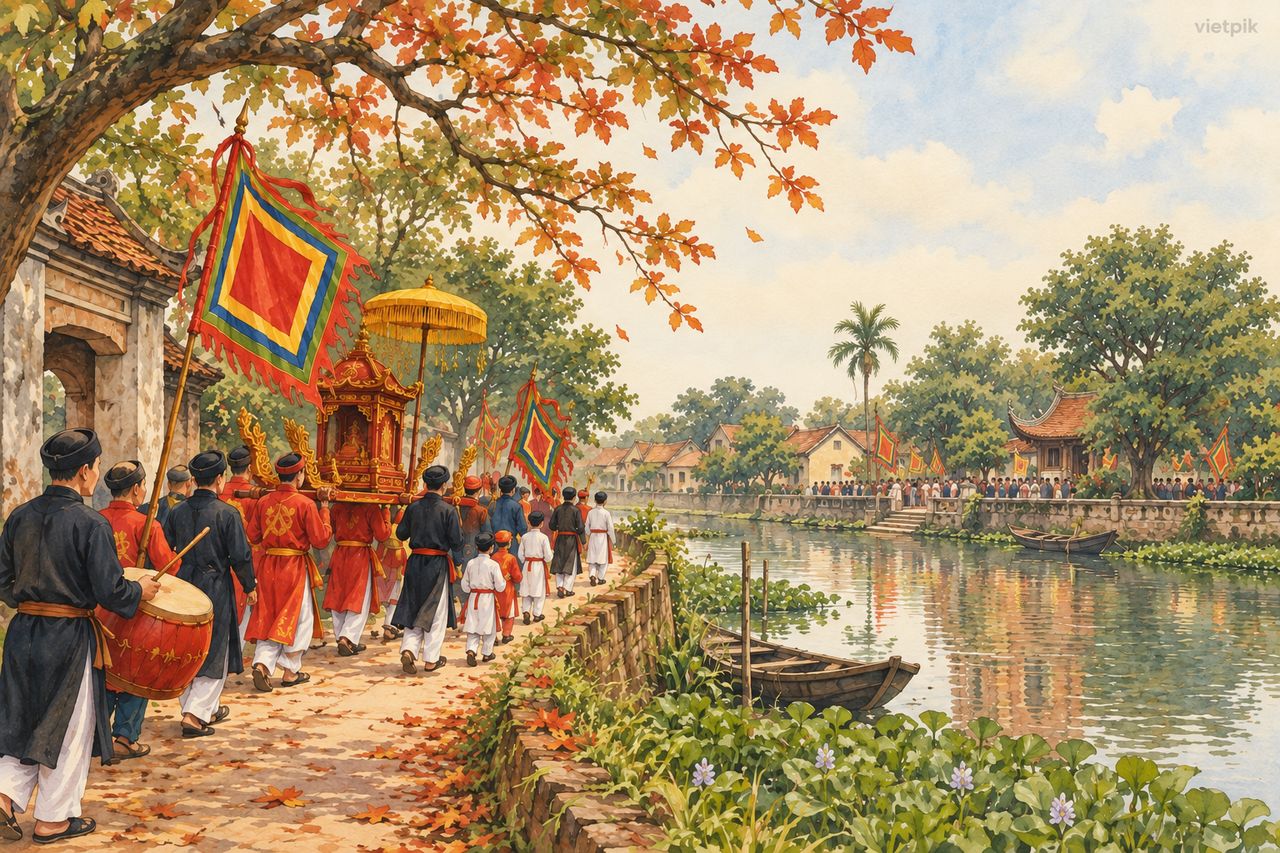
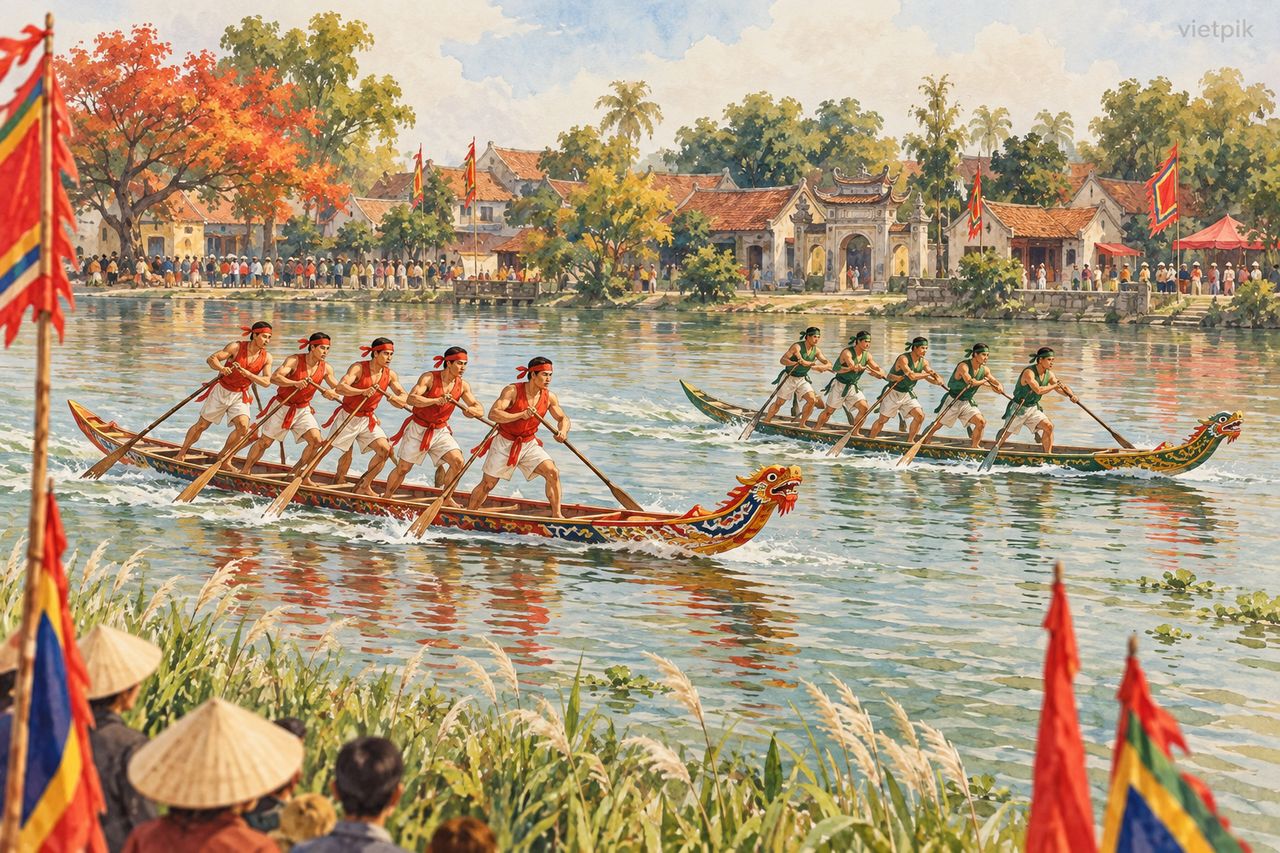
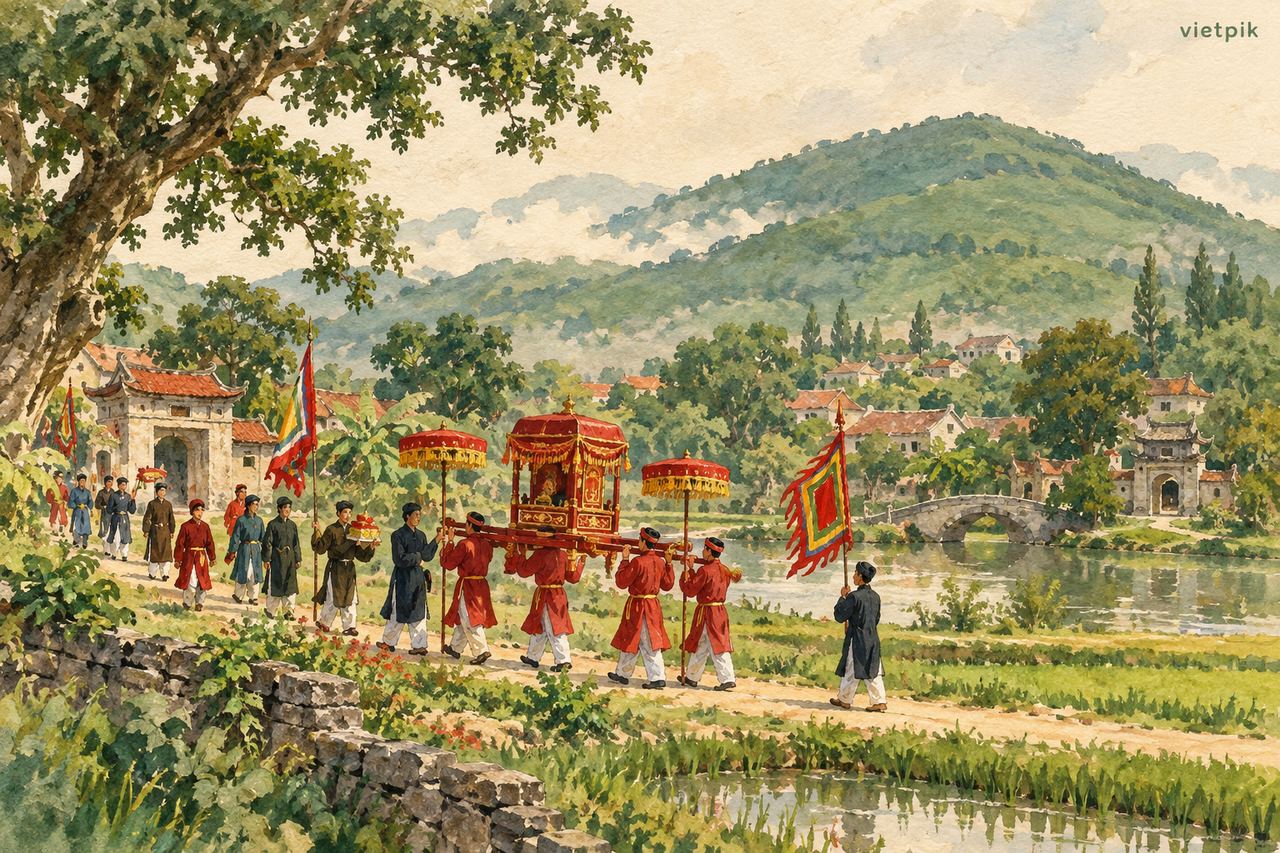
Some festivals are easiest to approach with the ears. At Truc Temple in Quyen Son, the association with hat Dam offers a reason to slow down before reaching for a camera. A visitor can listen for the relationship between voice, movement and a shared place, even without understanding every word. The festival belongs to the former Ha Nam area within present-day Ninh Binh. This guide introduces its connection with Ly Thuong Kiet and suggests a way to encounter a living performance tradition without reducing it to a picturesque interlude between sightseeing stops or an entertainment service available whenever a visitor arrives.
History & story
The national tourism listing calls the occasion both Truc Temple Festival and Quyen Son Festival, and identifies Ly Thuong Kiet as the figure honoured. Keeping both names helps connect the place of worship with the community around it. It also assists practical research: a local article about Quyen Son's singers may tell you more about the festival than a broad guide to Ha Nam attractions. Do not infer that every activity advertised for the surrounding scenic area belongs to the temple's programme. A shared landscape can hold several kinds of visit, each with its own purpose and access arrangements.
1. A temple name and a village name
The national tourism listing calls the occasion both Truc Temple Festival and Quyen Son Festival, and identifies Ly Thuong Kiet as the figure honoured. Keeping both names helps connect the place of worship with the community around it. It also assists practical research: a local article about Quyen Son's singers may tell you more about the festival than a broad guide to Ha Nam attractions. Do not infer that every activity advertised for the surrounding scenic area belongs to the temple's programme. A shared landscape can hold several kinds of visit, each with its own purpose and access arrangements.
2. Listen to movement as well as melody
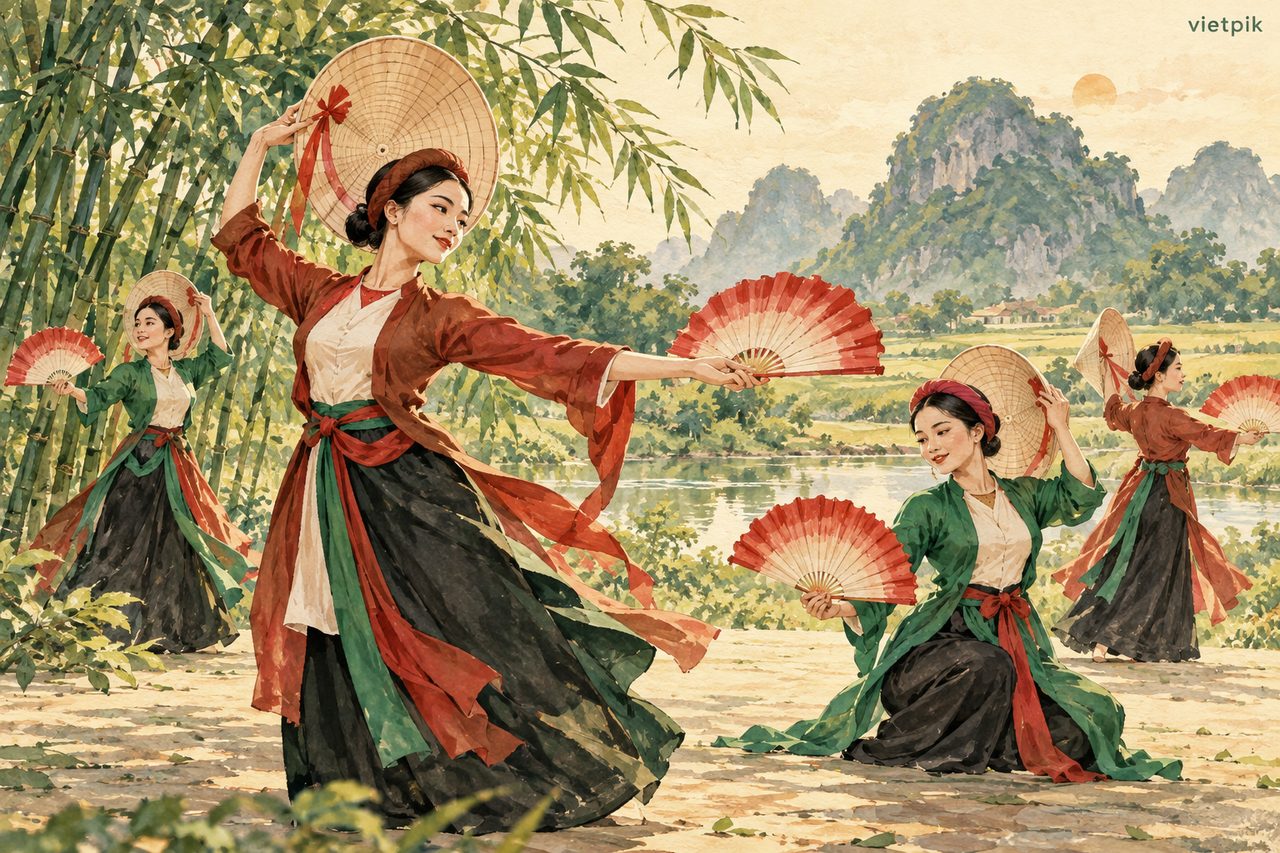
Tourism material singles out hat Dam and rowing-related movement as distinctive elements. Rather than trying to classify the performance immediately, notice how a phrase and a gesture meet. Does a repeated movement help you recognise the return of a musical idea? Where does the group appear to breathe or pause together? These are listening prompts, not a transcription of the art's formal structure. If a programme provides the name of a piece, record it accurately. A short, correctly identified encounter offers more understanding than an elaborate explanation built from guesses about unfamiliar words and gestures.
3. Understand transmission as continuing work
A local feature published in 2023 discusses the challenge of maintaining the singing group as younger members leave for study, employment or family life. That is a useful counterweight to the easy phrase timeless tradition. Continuity requires people to teach, rehearse, recruit and return. When you watch a group, consider the time that made their coordination possible. This does not mean assuming that today's performers have the same biographies as those interviewed in an older report. It means recognising that cultural preservation is practical work carried out by individuals, not an automatic property of an old village name.
4. A customary day is not a complete programme
The national tourism entry gives the sixth day of the second lunar month as a festival marker. Treat it as a traditional reference, not a complete statement of all ceremonies or performances in a future edition. No official 2027 programme was verified in this review on 28 September 2026. Someone travelling mainly to hear hat Dam should seek the performance time as well as the opening date. A temple can be open for a visit when no singing is scheduled. Conversely, an announced performance elsewhere does not prove that the same group will appear at the temple that day. A 2021 local article gives a different broader season; that conflict is retained in the source notes and is another reason not to infer a complete future schedule.
5. Give performers an attentive audience
If recording is permitted, consider listening to one complete passage before deciding what to film. Keeping a phone lowered can make it easier to follow a change that would otherwise be missed while adjusting a frame. Avoid talking across a quiet phrase or requesting a repeated gesture during worship-related performance. Ask separately about interviews or close portraits after the group has finished its duties. An audience can support an unfamiliar art simply by allowing it its own duration. The goal is not to prove that you understand everything, but to make enough room for something unfamiliar to become intelligible.

6. Let the landscape remain a separate experience
Truc Temple is commonly introduced with the Ngu Dong Thi Son landscape. If combining a festival visit with exploration nearby, keep the second activity optional and verify its access independently. Listening closely and rushing towards another appointment work poorly together. A useful plan is to give the confirmed performance a protected block of time, then decide whether energy, conditions and opening arrangements allow more. Do not promise a boat trip or cave route merely because a tourism description names the broader complex. This separation makes the itinerary more honest and keeps the musical encounter from becoming a hurried checkmark.
7. Take home a name, not an invented translation
After the visit, keep the name hat Dam Quyen Son with your notes. If you cannot translate a line, describe its effect on your listening instead of inventing a meaning. You might note a repeated gesture, a collective pause or the way a phrase changed your attention to the surrounding space. These observations belong to you and need not imitate a scholarly interpretation. Any image in this guide is a conceptual illustration, not an exact record of choreography or dress. The most useful souvenir may be a question that sends you back to a reliable explanation or a future public performance.