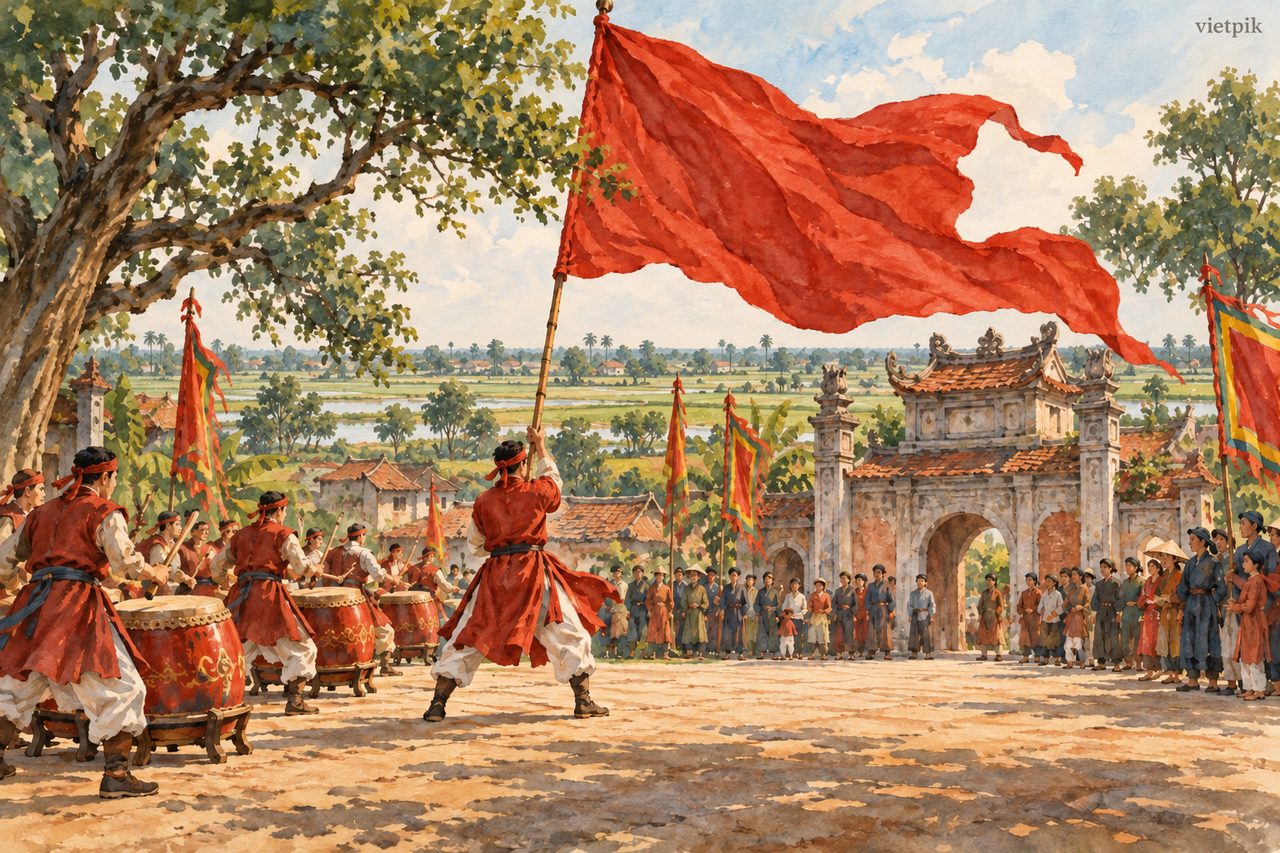
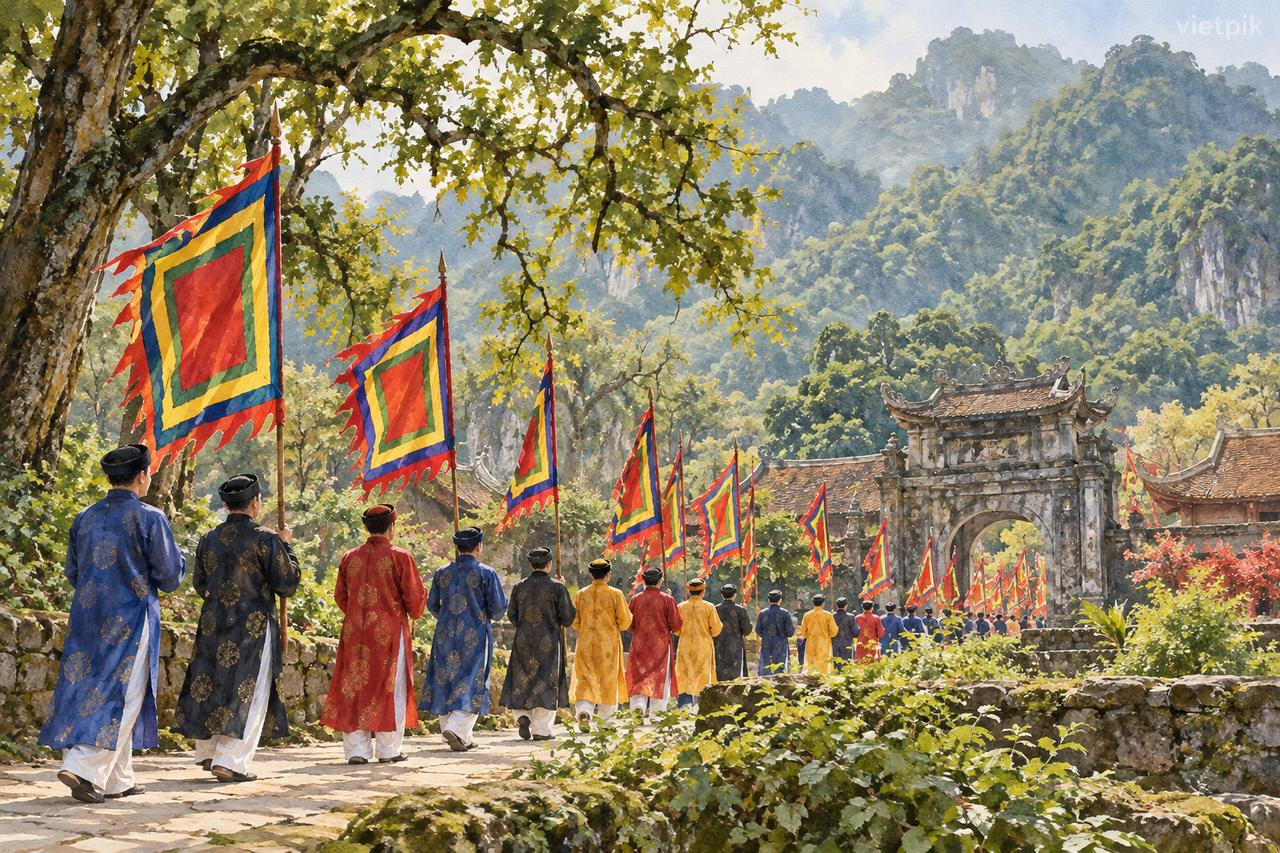
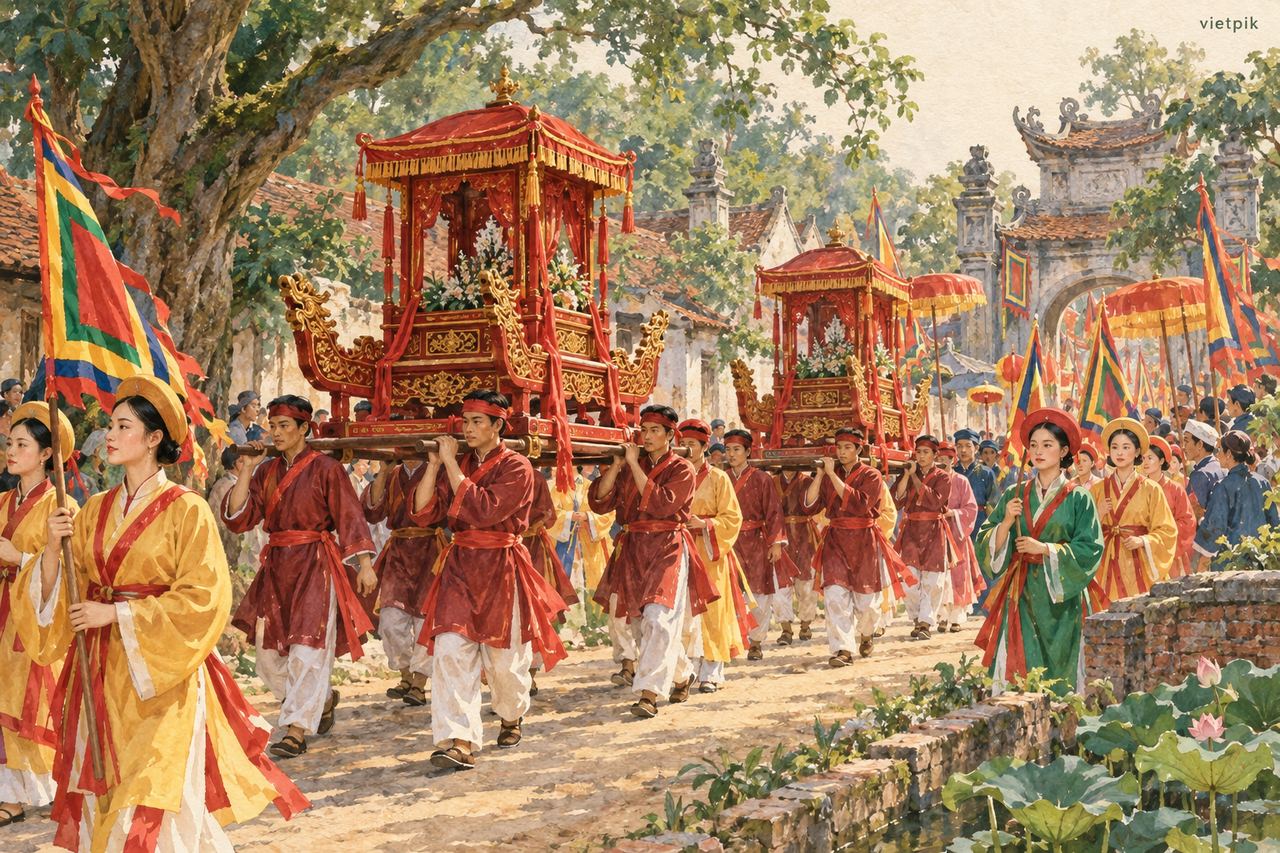
The most useful map of the Đền Và festival is not limited to a temple boundary. It includes paths of movement, gathering places and, in a major festival edition, a relationship across the Red River. That wider setting helps explain why a visitor should think in terms of a cultural landscape rather than a single photo stop. The festival honours Tản Viên Sơn Thánh in the Sơn Tây area of Hanoi. It is a distinct celebration within the wider world of devotion to the mountain saint, so this guide does not combine every Tản Viên temple into one event. Begin with Đền Và, then let verified local explanations show how its connections extend outward.
History & story
Hanoi's cultural department identifies Đền Và, also called Đông Cung, as a place of worship dedicated to Tản Viên Sơn Thánh. The name Đông Cung is useful when consulting older descriptions, but the everyday name Đền Và is often clearer for a travel conversation. The saint belongs to a legendary and devotional tradition; stories about him should be presented as such. Instead of looking for a single literal explanation of every symbol, ask how local people relate the temple to their own settlements. A regional place of worship can connect communities without erasing the particular responsibilities and memories of each village.
A temple with a regional role
Hanoi's cultural department identifies Đền Và, also called Đông Cung, as a place of worship dedicated to Tản Viên Sơn Thánh. The name Đông Cung is useful when consulting older descriptions, but the everyday name Đền Và is often clearer for a travel conversation. The saint belongs to a legendary and devotional tradition; stories about him should be presented as such. Instead of looking for a single literal explanation of every symbol, ask how local people relate the temple to their own settlements. A regional place of worship can connect communities without erasing the particular responsibilities and memories of each village.
Why the river matters
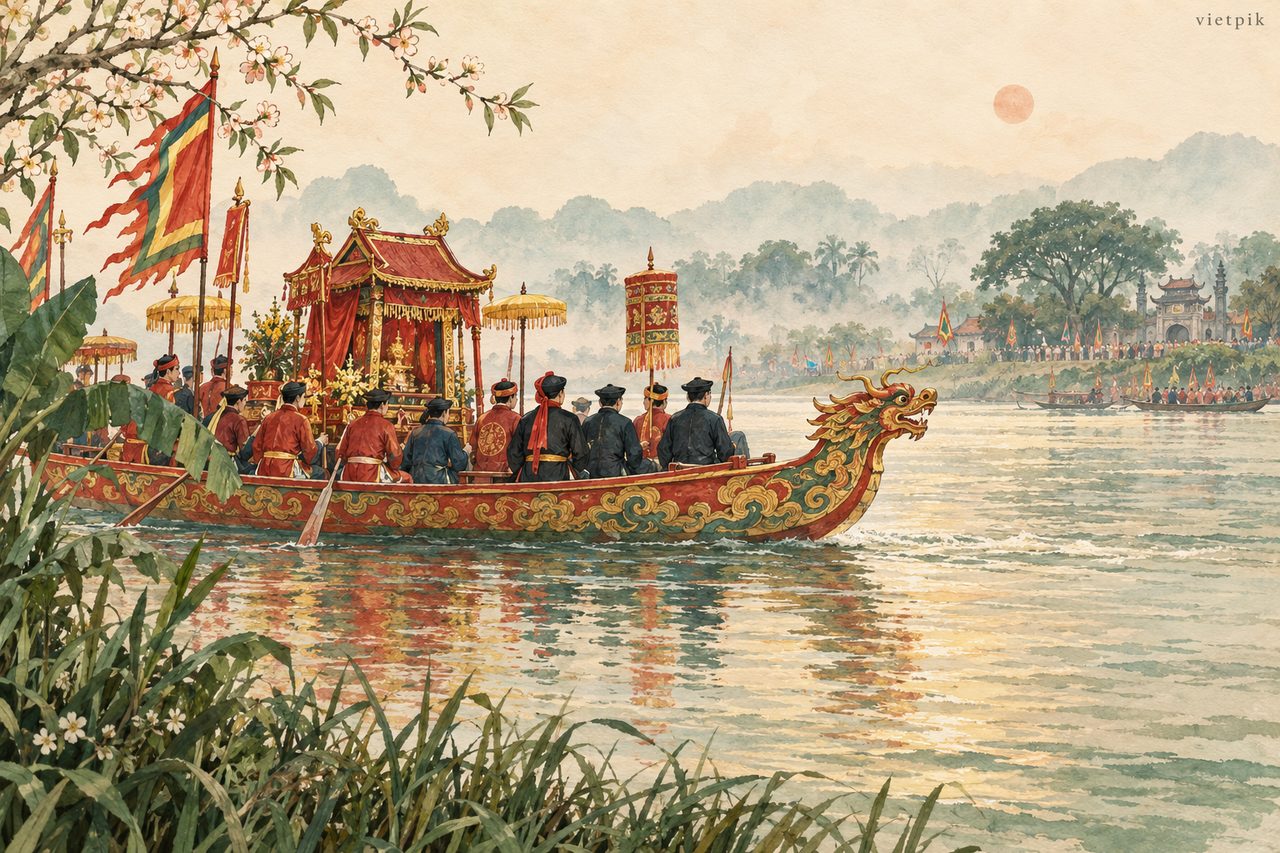
For the 2026 major edition, the cultural department described a procession taking the saint across the Red River to Ngự Dội Temple in Vĩnh Phú, Phú Thọ. That connection gives the festival a reach beyond Hanoi's boundary. It does not mean the event should be counted twice in an editorial catalogue. For a visitor, the river raises a different question: how can a route make relationships visible? Think about departures and arrivals, not only the boat in between. Observing from an authorised bank can be sufficient; a ceremonial crossing is not an advertised passenger excursion or an invitation to arrange an improvised pursuit.
Annual worship and the major cycle
The official cultural account gives a spring reference of lunar days fourteen to seventeen in the first month and describes major editions in Rat, Horse, Cat and Rooster years. The 2026 programme ran from 2 to 5 March and was a major edition. This is precisely why its scale must not be promised for 2027. The same source also notes an autumn observance, which belongs to the same festival tradition rather than a new article made to increase a count. Reviewed on 28 September 2026, this guide leaves official 2027 dates unresolved. Confirm both the date and the scale before choosing which activity to travel for.
Read the shaded space slowly
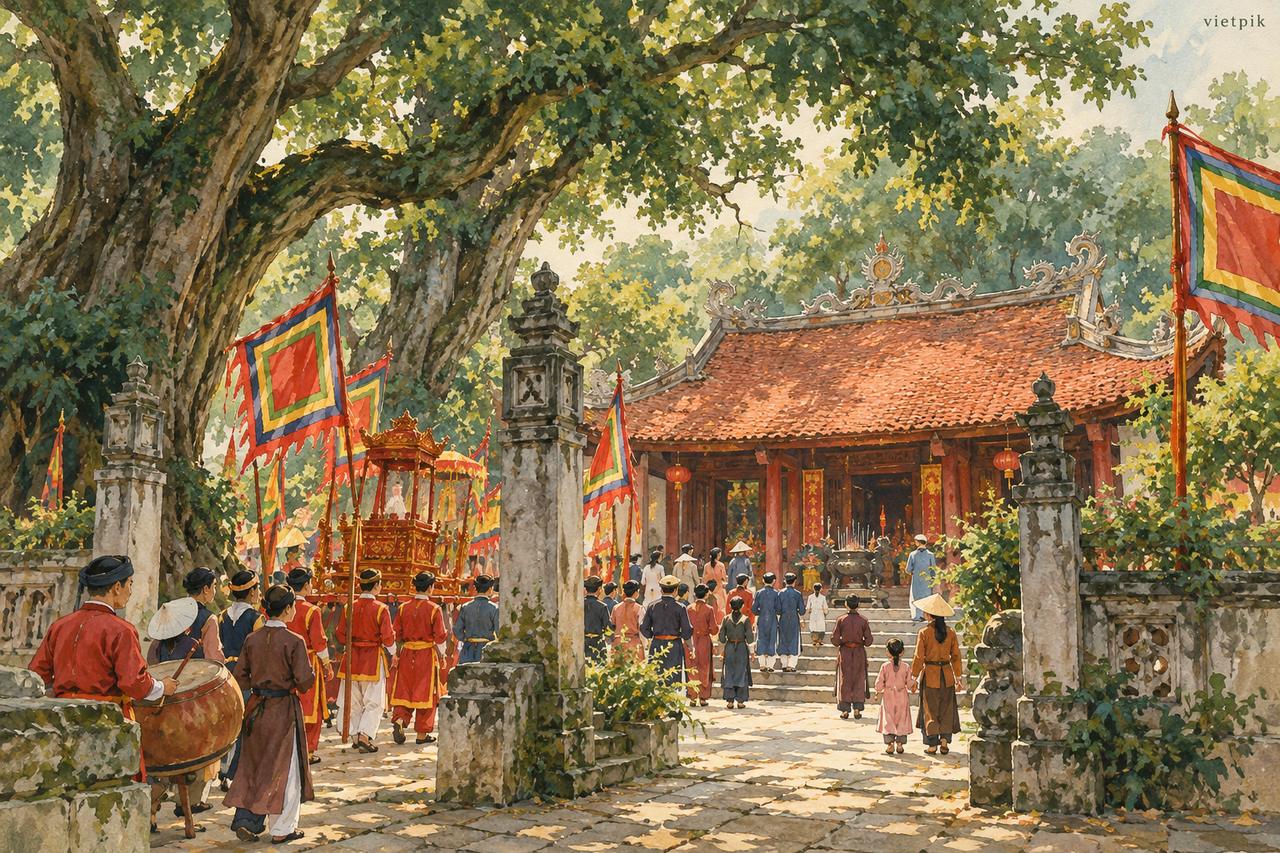
Leave a little time to observe the relationship between the temple approach, trees and gathering space before a procession arrives. Where can groups assemble without blocking worshippers? Which thresholds appear to separate public movement from more restricted activity? Treat these as questions to test against signs and staff guidance, not permission to explore every doorway. A quiet interval can reveal how the site accommodates a busy festival. Avoid leaning equipment against old structures or stepping onto planted areas for height. A careful visitor can appreciate the atmosphere without claiming that every visible building or tree has a known age.
Choose a land-based plan first
A sensible first visit can remain entirely on land. Select the temple or another confirmed public observation point, and make that your main commitment. If you hope to see a river-related sequence, ask whether access is open to spectators and where the safe boundary lies. Do not assume that a photograph from a previous edition identifies a currently usable landing. River conditions, crowd arrangements and local instructions matter more than a saved image. Keep the return journey independent of any ceremonial transport, and leave enough flexibility to stay at one location if movement between points becomes impractical.
Ask about connection rather than spectacle
Good questions here concern relationships: which communities take part, how preparations are shared and why a particular stop matters. Ask one at a time when someone is available, rather than questioning a bearer in motion. If an answer refers to a major edition, note that condition. Otherwise it is easy to publish a description that accidentally promises a grand procession every year. There is also value in asking what happens during a smaller observance. A modest programme may offer a different pace of encounter, and its cultural significance should not be judged only by the number of boats, banners or spectators.
A place in a larger journey
If you later explore other Tản Viên sites, keep a separate note for each place and its own festival identity. Similar devotion can produce different routes, local stories and responsibilities. At Đền Và, the strongest thread to retain is the relationship between a temple community and a wider landscape. You do not need to see every associated site in one day to understand that thread. Finish with one clear observation and one well-attributed explanation. That is a sounder basis for a return to Sơn Tây than treating the whole region as a collection of interchangeable sacred stops.